
If you run a high-mix job shop, the best 5-axis CNC machining center may be the one your team can change over and program quickly. If you make medical components, you may care more about whether a thin wall stays within tolerance after you release the clamps. For a large aerospace part, the deciding factor may be whether you can reach a deep pocket with the part tilted and the full tool assembly in place.
Start by comparing specific machines. Give the finalists the same part brief, agree on how you’ll judge the test cut, and get service and installation terms for your ZIP code. That gives you a way to choose between two machines that both look good in a brochure.
Which Industrial CNC Machine Brands Should You Shortlist?
These six manufacturers publish industrial 5-axis product lines you can use to start your search. The models and series below give you a place to begin. Ask the supplier to confirm the exact machine and options it would quote for your work.
Swipe to compare →
Pick a part that could rule out a machine
Choose a part that exposes a constraint you’ll face in production. For a job shop, that might be an awkward changeover. Ask the supplier to show what it takes to go from the last good piece of one job to the first accepted piece of the next. Include the time to swap fixtures, set offsets, and check the first piece.
For a medical component with a thin wall or critical bore, agree on when you’ll measure it. If the drawing requires you to inspect the part after unclamping, build that condition into the trial. For a large aerospace part, include the move that needs the greatest tilt or longest tool assembly. Ask to see the clearances through that move.
If your hardest part to fit and your hardest tolerance are on different jobs, use two representative parts. Send the same pair to every finalist.
How Do You Rule Out the Wrong 5-Axis Machine?
Decide whether you need 3+2 or simultaneous 5-axis machining
With 3+2 machining, the rotary axes position the part or tool at a fixed angle, then hold that orientation while the linear axes cut. If your part has holes and flats at several angles, you may be able to machine them from one clamping. The fixture has to leave each face accessible at the necessary orientation.
With simultaneous 5-axis machining, the machine can change the tool’s orientation relative to the workpiece during the cut. That matters when the tool needs to follow a sculpted surface or keep changing angle to clear nearby geometry. It also calls for a suitable control, a proven CAM post processor, and a program your team can verify and run. Mark the features that require this motion and have the supplier identify the options and programming support needed to cut them.
Check the usable work envelope with your fixture in place
A blank can fit the published travel limits and still run out of room when the part tilts. A tall fixture, for example, can push the toolholder into the workholding even when the tool tip reaches the feature. Ask for a clearance review of the complete setup through the required moves.
Give the supplier enough information to check the setup
-
Include the blank dimensions, fixture height, and combined weight. Show where the load sits if it’s off-center.
-
Identify the deepest feature, the longest tool assembly, and the rotary angles you expect to use.
-
Include clearance for the spindle nose, toolholder, and probe. Show how you’ll load and unload the part.
If the supplier proposes a longer tool or an extra setup to gain clearance, use that proposal in the trial. A longer tool can affect finish or cutting time. A second setup can add handling time and make it harder to hold the relationship between features on different faces.
Confirm the configuration your team will run
Have your programmer review the proposed control, probing routines, and CAM post before you sign off. Ask who supplies the post, who proves it on the machine, and who helps if it needs to change after installation. If your application needs heavy stock removal, ask the supplier to match the spindle and coolant setup to the material and operation you’ll actually run.
If you plan to automate later, find out which provisions need to be ordered with the machine. Get the machine supplier and integrator to agree on who handles the interface, workholding, guarding, and final prove-out. Put those responsibilities in the quote while both parties are involved.
How Do You Prove Accuracy and Cycle Time Before Buying?
Ask for a machine test report and a part inspection report
A machine positioning report tells you how accurately and repeatedly the axes reach commanded positions under the test conditions. ISO 230-2 describes methods for measuring these characteristics on numerically controlled axes. Ask what the supplier tests, under what conditions, and which records you’ll receive for the machine you’re buying.
A part inspection report shows what the proposed process produced with the chosen material, tools, fixture, program, and measurement method. If two bores on different faces must hold a tight relationship, identify that requirement and agree on the datums before the trial. If you expect operators to reload the fixture or run the machine across shifts, ask for repeat pieces under representative conditions. One passing part shows what the setup achieved once. Repeat pieces help you judge whether the process can keep doing it.
Give every supplier the same test-cut brief
-
Set the conditions. Share the same drawing revision, material and blank specification, critical features, sample count, and inspection requirements. State any surface finish or geometric tolerances that determine acceptance.
-
Ask the supplier to document its process. Let each supplier propose its own tooling, fixture, and machining sequence. Have it identify the machine, control options, and any software, tooling, or engineering support used in the trial that you’d need to buy separately.
-
Define the cycle before anyone starts a timer. Agree on what counts as loading, machining, probing, and unloading. Track deburring, separate inspections, and other secondary operations if they consume labor or affect output.
-
Review the results piece by piece. Ask for the measurements on each sample, the recorded cycle, and any adjustments or rework. If a supplier stopped to change an offset or had an applications engineer handle a manual step, find out how your operators would deal with it in production.
If one supplier reports program time and another reports the full load-to-unload cycle, ask both for the same breakdown. Then check what happens when you add the time your shop spends on work outside the machine.
Agree on factory and site acceptance before issuing the order
The factory acceptance test (FAT) takes place before shipment. The site acceptance test (SAT) takes place after installation. Agree on which checks happen at each stage, what passing looks like, and who signs off. If you need to see the representative part run again at your facility, put that requirement in the purchase documents.
| What you need to accept | What to put in writing |
|---|---|
| Quoted configuration | List the controls, functions, accessories, and options the supplier must demonstrate or deliver. |
| Representative part | Specify where you’ll run it, which drawing revision applies, how you’ll inspect it, and which results count as a pass. |
| Installed operation | Identify checks you’ll repeat after installation, including any required run with your utilities, fixtures, or production workflow. |
| Handoff | List the records, program and control backups, training, and commissioning documents due at sign-off. |
| A failed check | Agree on who corrects the issue, how you’ll retest, and how an open item affects acceptance. |
Swipe to compare →
What Support Will You Have at Your U.S. Facility?
Ask for service terms for your ZIP code
Start with a concrete question. If a rotary-axis fault takes the machine down at our plant, who answers the first call, who can come on-site, and where would a replacement part ship from? Ask for the service provider’s name, hours, escalation contact, and written response terms. Find out whether a quoted response time refers to a callback, remote troubleshooting, or a technician arriving at your facility.
Review the warranty against that same scenario. Confirm when it starts, who handles parts and labor, and whether you’d pay for travel or work on third-party components. If your production plan depends on a particular service commitment, include it in the purchase agreement.
Give each installation task an owner
Bring your facilities team in before you commit to a delivery date. Assign responsibility for unloading, rigging, floor or foundation requirements, electrical service, compressed air, and any other specified utilities. Ask when the supplier will check site readiness and who handles work that falls outside the installation quote.
Define what your team should be able to do when training ends. Your operators may need to recover from an interrupted cycle. Your programmers may need to post and prove out a revised job. Your maintenance team may need to back up the control and collect diagnostic information. Ask the supplier to cover those tasks and specify who will help your team through first-part production.
How Do You Compare Quotes and Cost per Accepted Part?
Bring each quote to the same installed scope
Put the machine, control options, tooling, fixtures, probing, software, and post processor on separate lines. Do the same for freight, rigging, installation, training, and acceptance. For imported equipment, confirm the delivery point, who handles customs clearance, and who pays the applicable charges. Ask each supplier to list what you’ll have to buy separately before the first production job.
An item marked “optional” can still be essential to your process. If the supplier uses a specific probe package or fixture in the trial, make sure the quote includes it or gives you a price for it.
See what happens when output falls short
Compare cost per accepted part over the same period. Divide the costs you’ve included by the number of parts you expect to pass inspection in that period. Treat the machine investment consistently across quotes so it enters the calculation once. Estimate output from the measured cycle, then account for changeovers, scheduled hours, downtime, and yield.
Run the comparison again using the hours you can reliably staff and the changeover time your shop actually sees. A faster machine may still win. You’ll be able to see how much of that advantage depends on keeping it loaded. For a used machine, include inspection, likely repairs, control or software work, and the cost of confirming the machine still meets your requirements after it’s moved.
What Should You Include in a 5-Axis CNC Machine RFQ?
Copy these fields into your request for quote. Ask each supplier to reply against the same items and call out anything it has assumed, excluded, or left for you to supply.
| Item | What you send | What the supplier should return |
|---|---|---|
| Part and setup | Drawing or shareable model, material, blank dimensions and weight, critical tolerances, and fixture assumptions | Exact model and options, proposed setup, and a clearance review for the critical operation |
| Production | Batch size, planned shifts, target output, CAM package, and automation plans | Proposed process, cycle estimate and timing assumptions, and who handles the CAM post and integration |
| Trial and acceptance | Test part, measurement method, sample requirements, and timing boundaries | Test plan, inspection report, and proposed FAT and SAT checks with pass criteria |
| Site and service | Installation ZIP code, target production date, and facility constraints | Site requirements, installation scope, named service provider, response terms, and spare-parts arrangements |
| Commercial terms | Required options, delivery location, and purchasing schedule | Itemized quote, estimated delivery, warranty, exclusions, and buyer-paid charges |
Swipe to compare →
Review the replies with engineering and operations before comparing totals. Resolve any unanswered question that could disqualify a machine, such as clearance at a required angle or an acceptance criterion the supplier hasn’t agreed to. Then compare the price, delivery, and service terms for the machines that can do the work.
Where Does DEPU Fit on Your 5-Axis Shortlist?
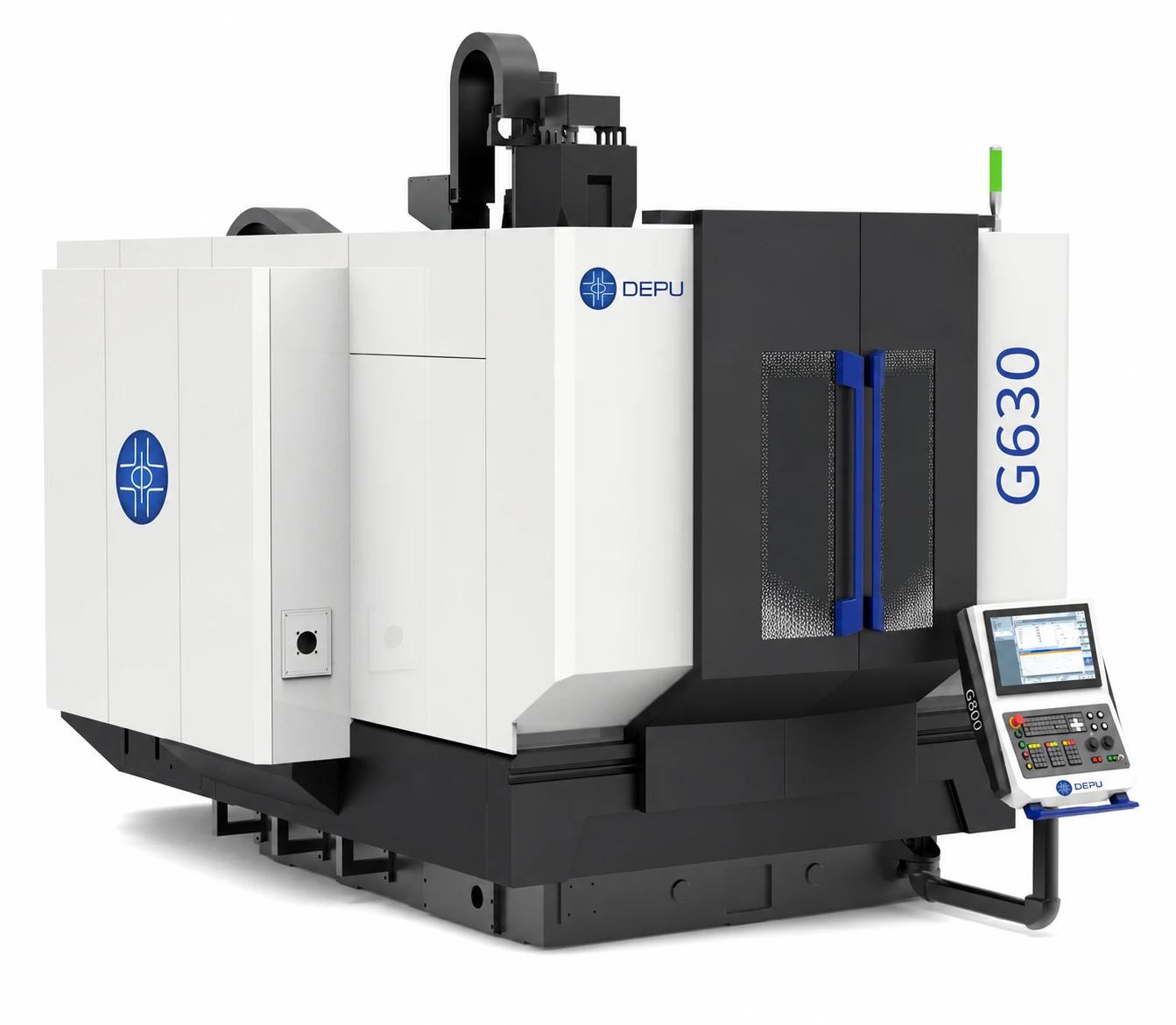
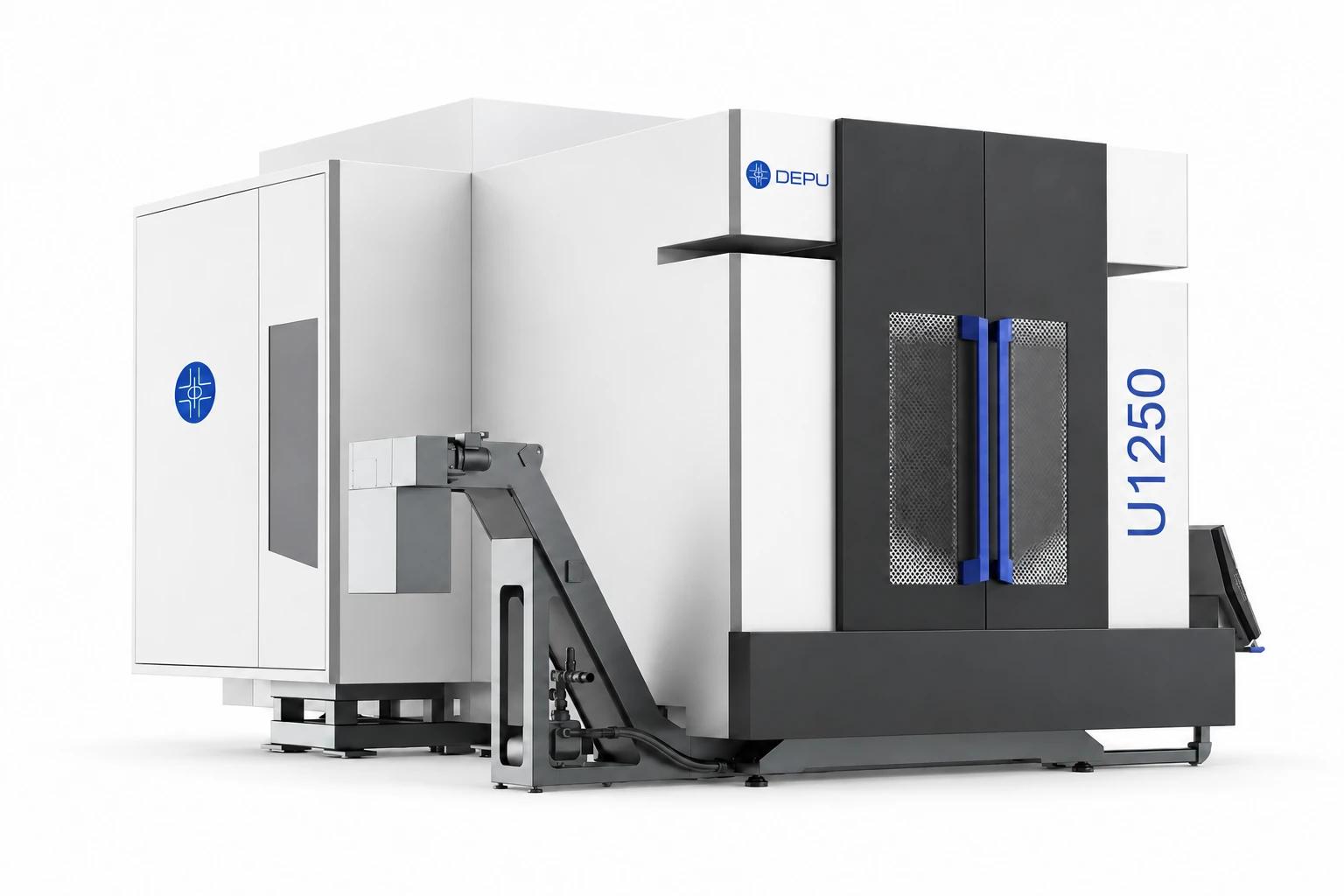
DEPU has specialized in 5-axis CNC machine tools and core components since its founding in 2014. It has an R&D center in Shenzhen and a manufacturing base in Haining, Zhejiang. If you’re comparing a cradle-style vertical machine, review the G Series with your fixture, workpiece weight, and tilted cutting positions in mind. If you’re evaluating a larger or heavier workpiece, or your process would benefit from vertical and horizontal machining, review the U Series. Ask for the usable envelope, load limits, and available configuration of the exact model under consideration. · ·
Give DEPU the same brief you give the other suppliers. Start with your material, part dimensions, critical tolerances, expected batch size, and installation ZIP code. Ask which configuration it would quote, how it would demonstrate the hardest operation, and what installation and service arrangements are available for your plant.
FAQ
What are the top CNC machine brands to compare for 5-axis machining?
Haas, Mazak, DMG MORI, Okuma, DN Solutions, and Makino are starting points. To narrow the list, look for specific machines that can handle your loaded fixture, reach your critical features, and support the machining mode you need. Then verify service coverage for your installation address.
What is the most accurate 5-axis CNC machine?
For your purchase, look for the machine that can repeatedly hold your critical features under agreed test conditions. Review axis positioning records, then ask for measured results on representative parts. If your operation involves repeated setups or long runs, include those conditions in the trial.
Is 3+2 machining enough for my parts?
It can be enough if each feature can be cut at a fixed tool angle. A part with holes on several angled faces is a good example. If the tool orientation must change during a cut to follow the surface or maintain clearance, ask the supplier to demonstrate that operation with simultaneous motion.
Should you buy a new or used 5-axis CNC machine?
A used machine can make sense if you can inspect its condition, confirm control and parts support, and budget for any repairs or upgrades. A new machine may fit better when you need a specific option package or want training, warranty, installation, and acceptance covered together. Set site acceptance criteria for either purchase.
What should a U.S. 5-axis CNC machine quote include?
Originally published by DEPU on 27 Nov 2026.