
This guide is written for the people who actually sign off on these purchases: manufacturing engineers building a justification, shop owners evaluating an upgrade, and procurement teams at medical, aerospace, and precision equipment companies comparing quotes. It will not tell you which brand to buy. It will tell you what to put in the budget, what the line items look like, where quotes diverge, and how to build a payback number your CFO will accept.
The quick answer: price ranges by machine class
Published price guides and builder list prices put the market into roughly these bands. Treat every figure as a starting point for a conversation, not a quote — configuration changes move these numbers more than brand does.
| Machine class | Typical new price | Typical used price | What it’s usually for |
|---|---|---|---|
| Desktop / benchtop 5-axis | From about $10,000 up | Limited resale market | Education, prototyping, small non-metallic parts |
| 5-axis router / gantry class | Roughly $85,000–$130,000 | Varies widely by condition | Large panels, composites, wood, plastics, foam |
| Compact entry 5-axis machining center | From about $110,000 | Around $90,000–$130,000 | Small precision parts, job shop entry point |
| Mid-range production 5-axis | Roughly $160,000–$300,000 | Machine-specific | Repeat production, medical, general precision |
| High-end simultaneous 5-axis / multi-tasking | $500,000 and up | Depends heavily on age and hours | Complex contoured work, tight-tolerance production |
| Large aerospace / medical platforms | $1 million to $2 million+ | Rarely available used | Large structural parts, five-face work on big envelopes |
Swipe to compare →
A few observations that matter more than the numbers.
First, the jump from “3-axis VMC” to “5-axis machining center” is not a smooth curve. A basic vertical machining center can start near $50,000. Adding two rotary axes, the accuracy to make them useful, and the control software to drive them simultaneously roughly doubles or triples the entry point. You’re not paying for two extra motors; you’re paying for an entirely different kinematic and control problem.
Second, “5-axis” covers two very different machines. A 3+2 machine positions the part at an angle and then cuts in three axes. A simultaneous 5-axis machine moves all five axes at once through a contoured path. The first is materially cheaper — in machine price and especially in programming cost. If your parts are prismatic with features on five faces, 3+2 will do the job and you should not be paying simultaneous prices.
Third, the used market is real but narrow. Used 5-axis inventory exists at dealers who specialize in it, and the discount versus new can be substantial on a well-supported model. It can also be a trap on a machine whose builder has exited the market or whose control no longer has parts support. We’ll come back to that.
What actually drives the price
When two quotes for “a 5-axis machining center” come back 40% apart, buyers assume someone is padding. Usually nobody is. The gap comes from specification, and it’s worth knowing which levers move the number so you can tell a genuine requirement from a nice-to-have.
Machine architecture
Trunnion-style (a rotating table sitting inside a tilting cradle), swivel-head (the spindle tilts and rotates), gantry, and cradle designs all solve the same kinematic problem differently, and they cost differently. Trunnion machines are common in the compact-to-mid range. Swivel-head designs handle larger, heavier parts because the table stays flat. Architecture affects price, rigidity, work envelope, and how much floor space you need — and it’s very hard to change later, so it’s the first decision to get right.
Work envelope and load capacity
This is the single biggest price driver after architecture. A machine that swings a 400mm part and a machine that swings a 1,000kg part are not in the same product category, even if both are called 5-axis. Buyers routinely oversize here “for future work” and then pay for capacity, floor space, power, and foundation work they never use. Size to your part family plus a realistic growth margin, not to your most optimistic five-year plan.
Spindle
Taper, top RPM, torque curve, and tool interface (HSK, Capto, BT, CAT) all move the price. High-speed spindles for aluminum and small tools are a different product from high-torque spindles for steel and titanium. A machine spec’d for the wrong material will either be slow or underpowered, and neither shows up on the quote as an error.
Accuracy grade, thermal compensation, and feedback
Linear scales, thermal growth compensation, and tighter geometric tolerances are optional on many machines and expensive on all of them. If your prints call for true position in the tens of microns on a contoured surface, this is where the money goes — and it’s also where the difference between a machine that holds tolerance in July and one that doesn’t becomes visible.
The control and the 5-axis function package
The control platform and, critically, whether simultaneous 5-axis functions are included or licensed as an option. This is a recurring theme: on several machine lines, the 5-axis capability you assumed was standard is an activated option. Ask specifically what is enabled, not what is capable.
Automation
Pallet pools, robot loading, and lights-out operation can add more to the price than the machine base itself. They also change the payback math completely, because they attack the labor cost per part rather than the cycle time. Worth it for high-mix repeat work; often not worth it for one-off and small batch.
Brand tier and country of build
Brand carries a price premium that is partly support network and resale value, and partly marketing. Machines built outside the US can offer strong price-to-capability, but the total landed cost includes items that domestic quotes fold in — we cover those in detail later.
The full budget: what you’ll actually spend to reach the first good part
This is the part most buyers get wrong, and it’s the reason this article exists. The number you approve should not be the machine price. It should be the cost to reach a point where the machine is running production parts at rate, at tolerance, with an operator and programmer who know what they’re doing.
Here is the list. Fill it in before you submit anything.
Machine base price. The quoted number. Confirm what’s included: coolant system, chip conveyor, spindle chiller, work light, air gun, documentation, and control options.
Configuration and options. Rotary axis specifications, tool magazine size, through-spindle coolant, probe packages, scales, extra M-codes, transformer. Ask for the quote itemized, not bundled — bundled quotes hide what you’re paying for.
Freight. Machine tools are heavy, and heavy things ship on flatbeds with permits and escorts. Distance, weight, and delivery access all matter.
Rigging and site entry. Getting a machine off the truck and into position is a specialty trade with its own price. Door widths, ceiling height, floor load ratings, and whether a crane or a forklift can reach the spot all change the bill. If you have to remove a wall, you should know that before the machine arrives.
Import duty and customs, if the machine is built outside the US. Duty depends on the machine’s classification and country of origin, and tariff treatment for machine tools has been shifting — the rate you were quoted two years ago may not be the rate that applies now. Do not estimate this from memory. Work with a customs broker, and where the number matters to the deal, get a binding ruling before you sign.
Foundation and floor. Some machines need a isolated slab or a specific thickness. Most need a floor that can take the static and dynamic load. Concrete work is not cheap and not fast.
Power. Voltage, phase, and amperage requirements may force a panel upgrade or a transformer. This is a frequent surprise in older buildings, and it’s a hard stop if you don’t plan for it.
Air, coolant, chip handling, and mist extraction. Compressed air quality, coolant supply and disposal, chip removal strategy, and — increasingly — mist and oil smoke collection for indoor air quality compliance.
CAM software and the multiaxis module. This is the line item that most often gets omitted. Simultaneous 5-axis toolpath capability is commonly a separately licensed module on top of the base CAM seat, and on some platforms it’s a significant additional cost. You also need post-processor development for your specific machine and control combination, and ideally machine simulation with collision checking. Budget the seat, the module, the post, and the training.
Toolholding. HSK or Capto holders, shrink-fit or hydraulic chucks, and enough of them to keep the magazine loaded. Precision toolholding is not optional on 5-axis work — runout and holder stiffness directly affect surface finish and tool life on contoured cuts.
The first tooling package. You’re not just buying cutters; you’re buying the range of cutters, the spare inserts, and the fixtures to hold your parts. First-time 5-axis buyers consistently underestimate this.
Workholding and fixturing. Vises, tombstones, zero-point clamping systems, custom fixtures. Zero-point systems are popular on 5-axis because they let you move a part between setups without re-indicating it — which is the whole point of buying the machine — but they cost real money.
Metrology. If you’re holding 5-axis tolerances, you need to be able to verify them. That may mean a CMM, a tool presetter, or at minimum a probe and the software to use it well. If you already have metrology capability, this line drops to near zero. If you don’t, it doesn’t.
Training and programmer ramp-up. This is the biggest hidden cost and the least visible on any quote. A 5-axis programmer is not a 3-axis programmer with extra training. Toolpath strategy, stock modeling, collision avoidance, and tolerance stack-up on contoured surfaces are different skills. Expect a real learning period, and expect it to cost you throughput — not just tuition. If you’re hiring instead of training, expect a search.
Warranty, spares, and insurance. Extended warranty, a starter spares kit, and the insurance rider for a machine of this value. Also confirm what the warranty actually covers — spindle and rotary axis coverage varies significantly.
A note on ratios. Sellers sometimes cite rules of thumb like “the machine is X% of the total.” Resist them. The ratio swings enormously depending on whether you already own CAM, whether you already have metrology, whether the building needs work, and whether you’re training or hiring. Build your own total from the list; don’t borrow someone else’s percentage.
New, used, or retrofit
New gets you warranty, current control software, factory support, and training. It also gets you the longest lead time and the largest capital outlay.
Used can save meaningful money — on a well-supported model, a used compact 5-axis in good condition can land well under the new price. What used does not reliably save you: the cost of discovery. You’re buying someone else’s maintenance history, and rotary axis wear, spindle condition, and control software versions are not always visible on inspection. If you go used, budget for a qualified third-party inspection before purchase, and price in the possibility of a rotary axis rebuild.
Retrofit — adding 5-axis capability to an existing machine — sounds attractive and occasionally works. It works when the base machine is mechanically sound and the control supports the upgrade path. It fails when the iron wasn’t designed for the loads or the accuracy, or when the control vendor no longer supports that generation. Get a written scope and a firm price from the retrofit vendor before you commit, and compare it honestly against what a used machine would cost.
One risk that never appears on a balance sheet: builder continuity. A 5-axis machine with a discontinued control or a builder that has left your market can still cut parts beautifully for years — and then a board fails and you’re searching for a used one. Before you buy anything used or from an unfamiliar brand, verify parts availability, service coverage in your region, and whether software updates are still being issued.
How US buyers actually pay for it
Three structures dominate.
Equipment loan. You own the machine and depreciate it. Best when you have taxable income to offset and expect to keep the machine well past the loan term.
FMV lease (fair market value). Lower payments, and at the end you either return the machine, buy it at fair market value, or roll into a new one. Better for shops that turn equipment over on a cycle or want to preserve working capital.
$1 buyout lease. Higher payments than FMV, but you own it at the end for a dollar. Often structured to match the depreciation schedule.
On the tax side, Section 179 and bonus depreciation are the two mechanisms most buyers ask about. Both can be substantial, and both have eligibility conditions — business income limits, placed-in-service rules, and, for bonus depreciation, a percentage that depends on the tax year the machine is placed in service, which has been changing under current law. This is not tax advice. The right move is to get your CPA involved before you choose a financing structure, because the structure and the tax election interact, and the numbers are large enough that getting it wrong is expensive.
Also price the soft costs of owning: preventive maintenance contracts, spindle rebuild interval, rotary axis service, coolant and filter consumables, and calibration. These are not trivial on a 5-axis machine, and they should appear in your cost-per-part model.
The cost of not buying
The payback model only works if the denominator is honest. Most buyers build it from savings on work they currently do in-house. That’s incomplete.
Ask instead: what are you paying right now because you don’t have this capability?
-
Outsourced 5-axis work. Your current supplier’s price includes their margin, their machine payment, and their risk. Every hour you outsource is an hour you’re funding someone else’s capital.
-
Quotes you never bid. This is the largest and least measurable number. Work you don’t quote because you can’t make it doesn’t show up in any report — but it’s real revenue.
-
Setup time you’re absorbing. If you’re flipping parts across three operations on a 3-axis machine, you’re paying for setup labor, fixturing, and the scrap that comes with re-clamping.
-
Lead time you’re quoting. Longer lead times lose work in competitive bids, particularly in aerospace and medical where schedule adherence is part of the award criteria.
Building your payback number
You need five inputs, and you can get all of them from your own books.
-
Fully loaded machine cost. Total from the budget section above, not the sticker price.
-
Annual hours of 5-axis-capable work you currently outsource, turn away, or make inefficiently across multiple setups.
-
Contribution per hour on that work — revenue minus material, tooling, and variable labor. Not revenue.
-
Setup hours saved per part, multiplied by your loaded labor rate, for work you bring in-house.
-
Scrap and rework reduction, if you can measure it. If you can’t, leave it out rather than guessing.
Divide the fully loaded cost by the annual contribution from items 2 through 5. That’s your payback in years. Then run it three ways: at your current outsourcing volume, at half of it, and at 130% of it. If the model only works at 130%, you don’t have a business case — you have a hope.
A worked example, clearly labeled as illustrative rather than a benchmark: suppose a $250,000 fully loaded investment (machine plus CAM, tooling, installation, training) supports 1,200 hours a year of work carrying $180 per hour in contribution. That’s $216,000 a year against $250,000 — payback slightly over a year, before any setup savings. Change the assumption to 600 hours at $140, and the same machine takes nearly three years. The machine didn’t change. The assumption did. That’s why the sensitivity analysis matters more than the headline number.
If the machine is built outside the US: the add-ons that surprise buyers
A meaningful share of the 5-axis market is built outside the United States, and the price advantage is real. But the total landed cost includes items that a domestic quote typically folds into the machine price. If you’re evaluating a non-US builder, put these on the worksheet explicitly.
Duty, freight, and landed cost. Base price plus international freight plus insurance plus duty plus port fees plus inland transport plus rigging. The duty component is the one most often estimated from outdated information; confirm it with a broker for your specific classification and origin.
Lead time and shipping terms. Understand whether the quote is FOB origin or delivered, who arranges freight, and who carries risk in transit. A quote that looks 15% cheaper FOB may not be cheaper delivered.
Installation and commissioning. Who unpacks, levels, powers up, aligns, and proves out the machine? Is that included, and is it performed by the builder’s own engineers or a third party? Get it in the contract.
Spare parts and spindle rebuild turnaround. Ask for a parts list with lead times for the wear items — spindle, rotary axis components, ballscrews, amplifiers, and the control hardware. Ask where the parts ship from and what the typical turnaround is for a spindle rebuild. This is the single most important question for any non-domestic machine, and the answer should be specific, not reassuring.
Remote diagnostics and software updates. Can the builder connect remotely to troubleshoot? Are control software updates included, and for how long? Does the machine’s control platform have an independent support ecosystem in the US, or is the builder the only path?
Reference customers. Ask for US customers running the same model for a comparable application, and call them. Ask specifically about service response, parts availability, and whether they’d buy again. If a builder can’t produce references in your market, that’s an answer.
Acceptance testing. Define what “the machine works” means before it ships and again after installation. Cut test parts to your prints, measure them, and document the results. This protects both sides.
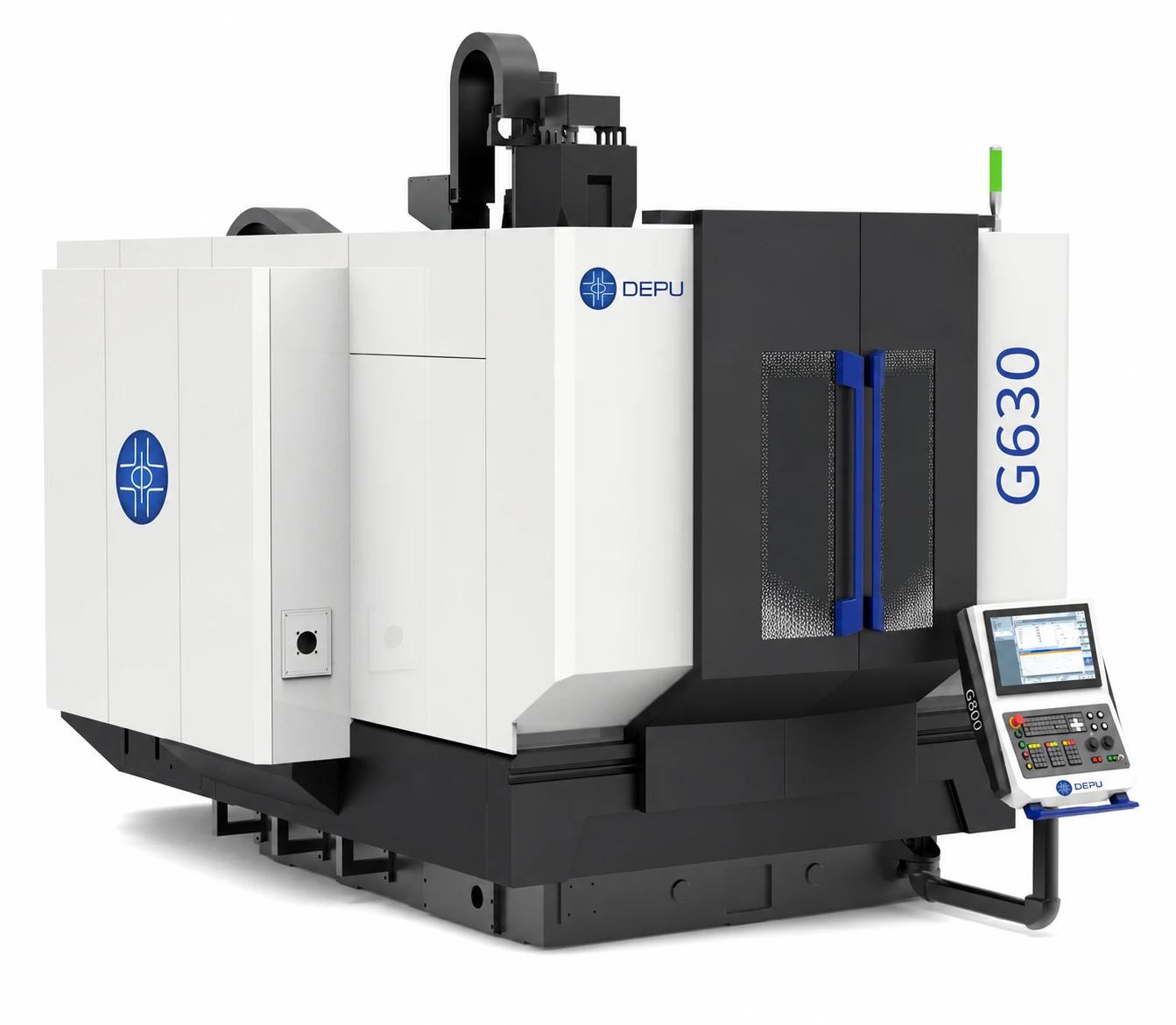
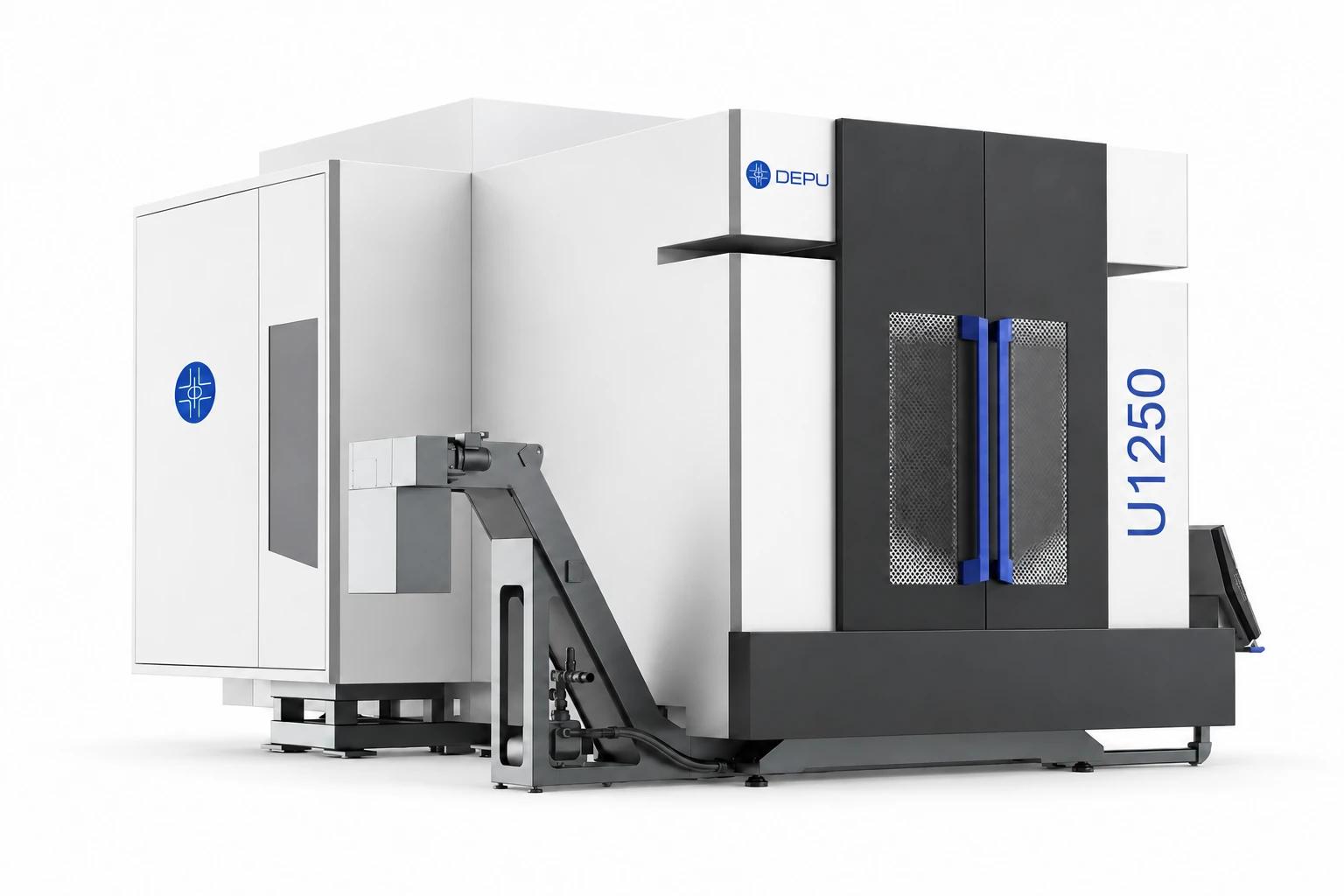
To be concrete about what this looks like from the builder’s side: DEPU has been manufacturing 5-axis machining centers and their core components since 2014, with a global R&D center in Shenzhen and its headquarters and manufacturing base in Haining, Zhejiang, on a site exceeding 30,000 square meters. That’s the kind of background to verify and interrogate when you’re assessing any overseas builder — years in the market, where engineering actually happens, and whether the manufacturing site is owned and operated rather than assembled from purchased modules.
Seven budgeting mistakes we see repeatedly
-
Budgeting the machine price and calling it the budget. The gap between machine price and total cost to first good part is routinely large enough to require a second approval.
-
Forgetting the multiaxis CAM module. Simultaneous 5-axis toolpaths are commonly a separate license. Confirm the price before you commit to the machine.
-
Not budgeting the post-processor. A post built for your exact machine and control combination is not free and not instant.
-
Assuming your 3-axis programmer becomes a 5-axis programmer on schedule. They will get there. The schedule is usually optimistic.
-
Using 3-axis shop rates to model 5-axis payback. Published comparisons put 5-axis hourly rates roughly 30–60% above 3-axis. If your model uses 3-axis rates, it’s wrong in the optimistic direction.
-
Oversizing the envelope. Capacity you don’t use still costs money in purchase price, floor space, power, and foundation.
-
Skipping the parts and service conversation. Especially on non-domestic machines. Ask for lead times on wear items in writing.
FAQ
How much does a 5-axis CNC machine cost?
New machines range from about $110,000 for a compact entry-level 5-axis machining center to over $1 million for large simultaneous 5-axis platforms, with mid-range production machines commonly in the $160,000–$300,000 band. Desktop and router-class machines sit below that, starting around $10,000 for hobby and education units and roughly $85,000–$130,000 for capable industrial 5-axis routers. Configuration moves these numbers more than brand.
Why are 5-axis machines so much more expensive than 3-axis?
You’re paying for two additional controlled axes, the mechanical structures that hold them rigid, the accuracy needed to make them useful, and the control capability to interpolate all five axes at once. Simultaneous 5-axis control, thermal compensation, and precision feedback are meaningful engineering, not add-on features. The programming side is also more expensive, which is a separate cost from the machine.
What’s the difference between 3+2 and simultaneous 5-axis in cost?
3+2 positions the part at an angle and then machines in three axes; simultaneous moves all five axes through a contoured path. 3+2 machines are cheaper to buy and considerably cheaper to program. If your work is prismatic with features on multiple faces, 3+2 is often the right answer and you should not pay for simultaneous capability.
Is a used 5-axis machine worth it?
Sometimes, on a well-supported model with a documented service history and an independent inspection. The savings are real; so is the risk of hidden rotary axis or spindle wear and of a control platform that’s nearing end of support. Verify parts availability before you buy, not after.
What’s the monthly payment on a 5-axis machine?
It depends on the amount financed, term, rate, and structure (loan, FMV lease, or $1 buyout), and rates move. Build the payment from your actual quote and your lender’s terms rather than from an industry average — the variables are too wide for a rule of thumb to be useful.
How much does 5-axis machining cost per hour?
Published comparisons put 5-axis shop rates roughly 30–60% above 3-axis rates, but that’s a job-shop pricing question, not a machine purchase question. If you’re comparing buying versus outsourcing, use your own outsourced invoices as the baseline.
What do I need to buy besides the machine?
At minimum: CAM software with a multiaxis module, a post-processor, toolholding, a first tooling package, workholding, installation and rigging, power and foundation work, training, and metrology if you don’t already have it. On non-domestic machines, add duty and freight and confirm service and parts coverage.
How long does it take to reach payback?
There’s no reliable industry average, and anyone quoting one is guessing. Build it from your own numbers: fully loaded cost divided by annual contribution from work you’d bring in-house, work you’d stop outsourcing, and setup and scrap savings. Then stress-test the volume assumption.
Before you request a quote, fill in the budget list above with your own numbers. The blanks you can’t fill are the questions to ask each builder — and the answers will tell you more about the machine than the spec sheet does.
Originally published by DEPU on 27 Nov 2026.