
Several manufacturers are worth comparing, including Haas, DMG MORI, Mazak, Hermle, and DEPU. Their machines cover different production needs, from compact precision parts to large, heavy workpieces. The right choice depends on your application—not simply the machine’s axis count or advertised accuracy.
This guide explains what to look for, compares representative 5-axis CNC machines, and helps you narrow down the right configuration for your shop.
What Makes a Good 5-Axis CNC Machine for Metal?
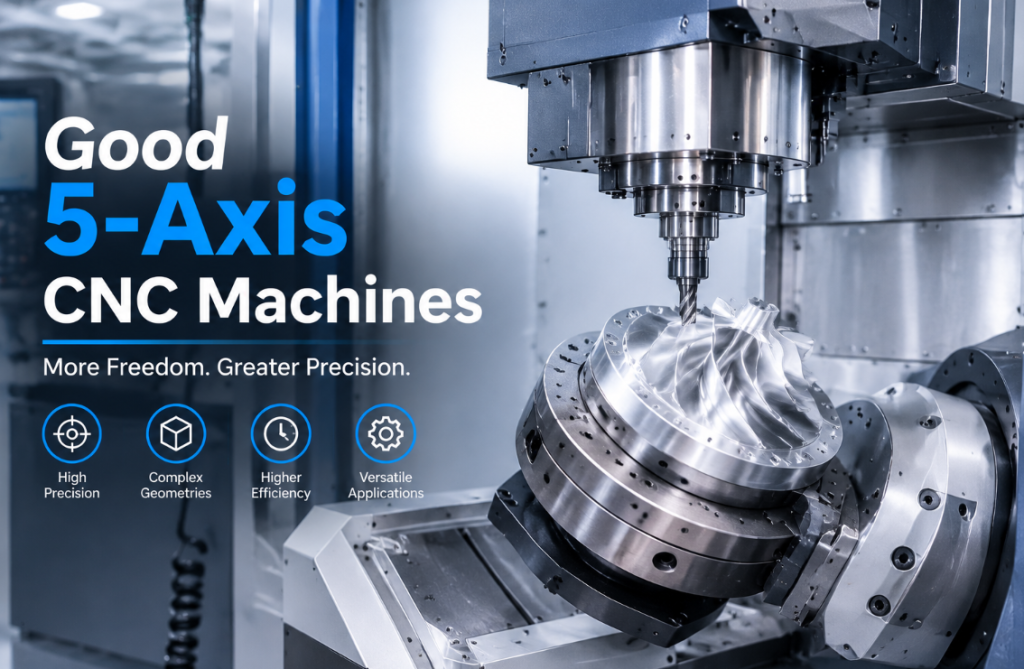
A 5-axis CNC machine moves along three linear axes (X, Y, and Z) and two rotary axes. This lets you machine multiple faces of a component and reach complex surfaces with fewer setups.
However, having five axes does not automatically make a machine suitable for every metal. When you evaluate a machine for metal cutting, pay attention to these factors.
1. Machine Rigidity and Structural Stability
Rigidity is essential when you’re cutting steel, stainless steel, titanium, or other materials that generate substantial cutting forces.
A rigid machine structure helps reduce vibration, tool deflection, and dimensional variation. Look at the machine bed, column design, guideways, ball screws, rotary-axis support, and overall structural layout.
Cast-iron structures are common in industrial machining centers because of their mass and vibration-damping characteristics. However, the material alone does not determine performance. The complete machine design matters.
2. Spindle Power, Torque, and Speed
Spindle specifications should match your cutting strategy.
-
High spindle speed: Useful for small tools, aluminum machining, and finishing operations.
-
High torque: Important for larger cutters, heavier cuts, and many steel-machining applications.
-
Spindle power: Helps determine the machine’s ability to sustain material removal at the required cutting conditions.
Don’t compare spindle speed alone. A 24,000-rpm spindle is not automatically better for steel than a lower-speed spindle with a more suitable torque curve.
Check the spindle’s continuous and short-term power ratings, torque curve, tool interface, cooling system, and recommended cutting applications.
3. Rotary-Axis Design and Load Capacity
The rotary axes determine how the workpiece or spindle changes orientation during machining.
Two common configurations are:
-
Trunnion or cradle-table design: The workpiece rotates on a tilting rotary table. This configuration is widely used for complex parts that fit within the machine’s rotary-table capacity.
-
Swivel-head design: The spindle head tilts while the workpiece remains on a fixed table. This can be advantageous when you’re machining large or heavy components.
Check the maximum workpiece dimensions, table load, rotary travel, and clearance around the part. A machine’s nominal table diameter does not tell you whether your actual component will clear the rotary structure throughout the toolpath.
4. CNC Control and Five-Axis Functions
The CNC control system coordinates the linear and rotary axes. Functions such as RTCP (Rotating Tool Center Point) help maintain the programmed tool position as the machine changes tool orientation.
You should also check:
-
Five-axis simultaneous machining capability
-
Kinematic calibration and compensation functions
-
Tool and workpiece probing options
-
CAM software and postprocessor compatibility
-
Collision detection and simulation
-
Thermal compensation, where available
Make sure the machine supports the type of five-axis machining you need. Some jobs only require 3+2 positioning, while others depend on continuous simultaneous movement of all five axes.
5. Accuracy, Repeatability, and Thermal Control
Accuracy specifications are useful, but they need context.
Check positioning accuracy and repeatability for both linear and rotary axes. Also ask how the manufacturer measures these values, under what environmental conditions, and whether the figures apply to the standard or optional machine configuration.
For tight-tolerance metal parts, temperature control matters. Spindle heat, changes in shop temperature, and machine operating conditions can all affect dimensional stability.
5-Axis CNC Machines Worth Comparing for Metalworking
The following machines represent different approaches to five-axis metal machining. They are not a universal ranking: each model has its own work envelope, spindle configuration, and application range.
1. Haas UMC Series
The Haas UMC Series is worth considering if you need a versatile five-axis machining center for general production.
The UMC-750, for example, has a 762 × 508 × 508 mm work envelope, a 500 mm rotary platter, and a maximum evenly distributed table load of 300 kg. Its standard configuration includes an 8,100-rpm spindle and a 30+1 side-mount tool changer. Haas also identifies the machine as suitable for both 3+2 and simultaneous five-axis machining.
Why consider it:
-
A practical option for multi-sided machining.
-
Integrated dual-axis trunnion table.
-
Available probing and tool-management functions.
-
A familiar platform for shops already using Haas equipment.
What to evaluate:
The UMC-750’s standard spindle speed and table capacity may not suit every heavy-cutting or large-part application. Review the available spindle and machine options against your material and production requirements.
2. DEPU G and U Series
DEPU offers two different machine architectures for five-axis metal machining:
-
G Series: Vertical five-axis machining centers with a dual-supported cradle rotary table.
-
U Series: Large-scale swivel-head five-axis machining centers, in which the spindle head moves while the workpiece remains on a fixed table.
DEPU G300: Compact Parts and Precision Work
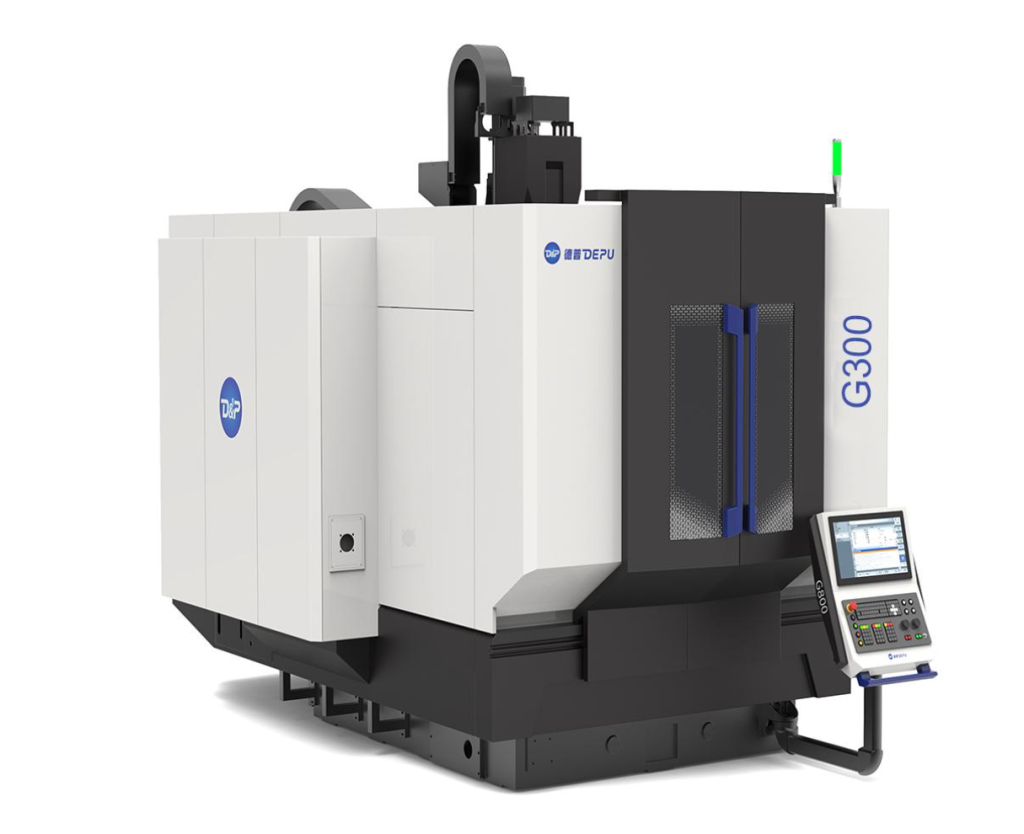
The G300 is designed for smaller, complex components. Its published specifications include:
| Parameter | G300 |
|---|---|
| X/Y/Z travel | 300/580/300 mm |
| Maximum workpiece size | Ø390 × 250 mm |
| Maximum uniform table load | 50 kg |
| Tool interface | HSK-E50 |
| Standard spindle speed | 24,000 rpm |
| Spindle power (S1/S6) | 13/19.5 kW |
| Spindle torque (S1/S6) | 20/30 N·m |
| Tool magazine | 24/32 tools |
| CNC system | Siemens ONE |
Swipe to compare →
The G300’s compact work envelope and high-speed spindle configuration make it worth considering for smaller precision parts, molds, and components that benefit from multi-axis access. DEPU also lists optional spindle configurations, so confirm the exact spindle specification in your quotation.
DEPU G630: Medium-Sized Components
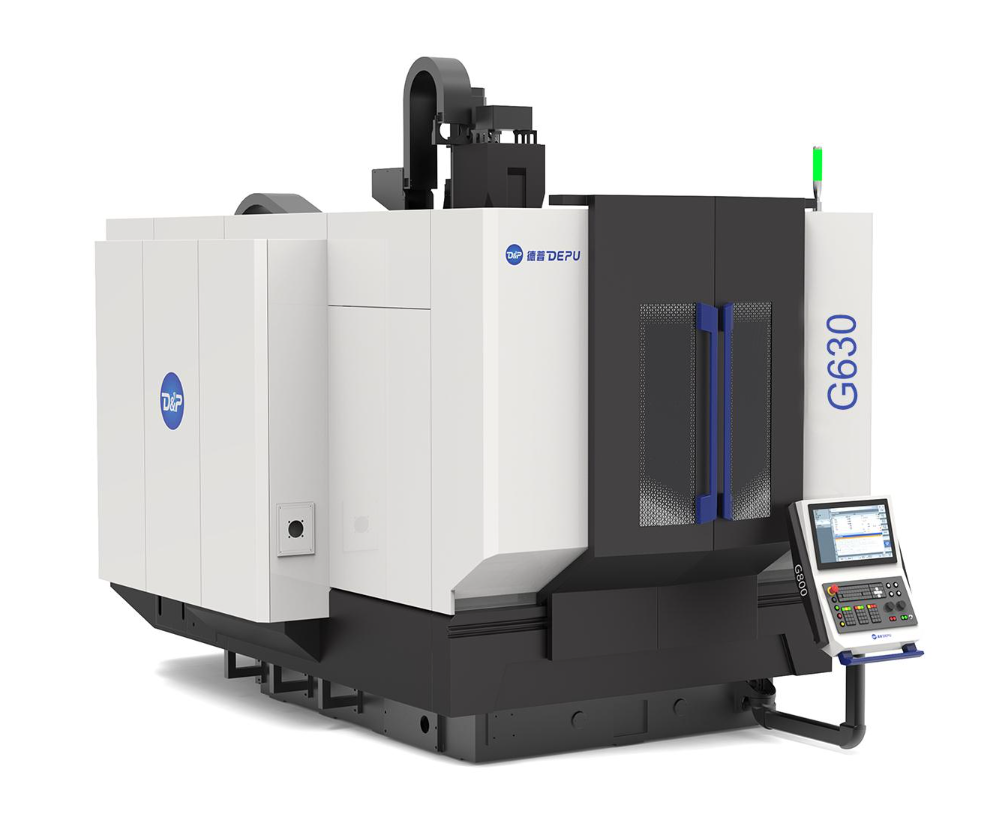
The G630 provides a larger work envelope and higher table capacity than the G300.
| Parameter | G630 |
|---|---|
| X/Y/Z travel | 650/650/500 mm |
| Maximum workpiece size | Ø700 × 400 mm |
| Table diameter | Ø630 mm |
| Maximum uniform table load | 850 kg |
| Tool interface | HSK-E63 |
| Maximum spindle speed | 24,000 rpm |
| Rated spindle power | 40 kW |
| Spindle torque (S1/S6) | 72/94 N·m |
| Tool magazine | 40 tools |
Swipe to compare →
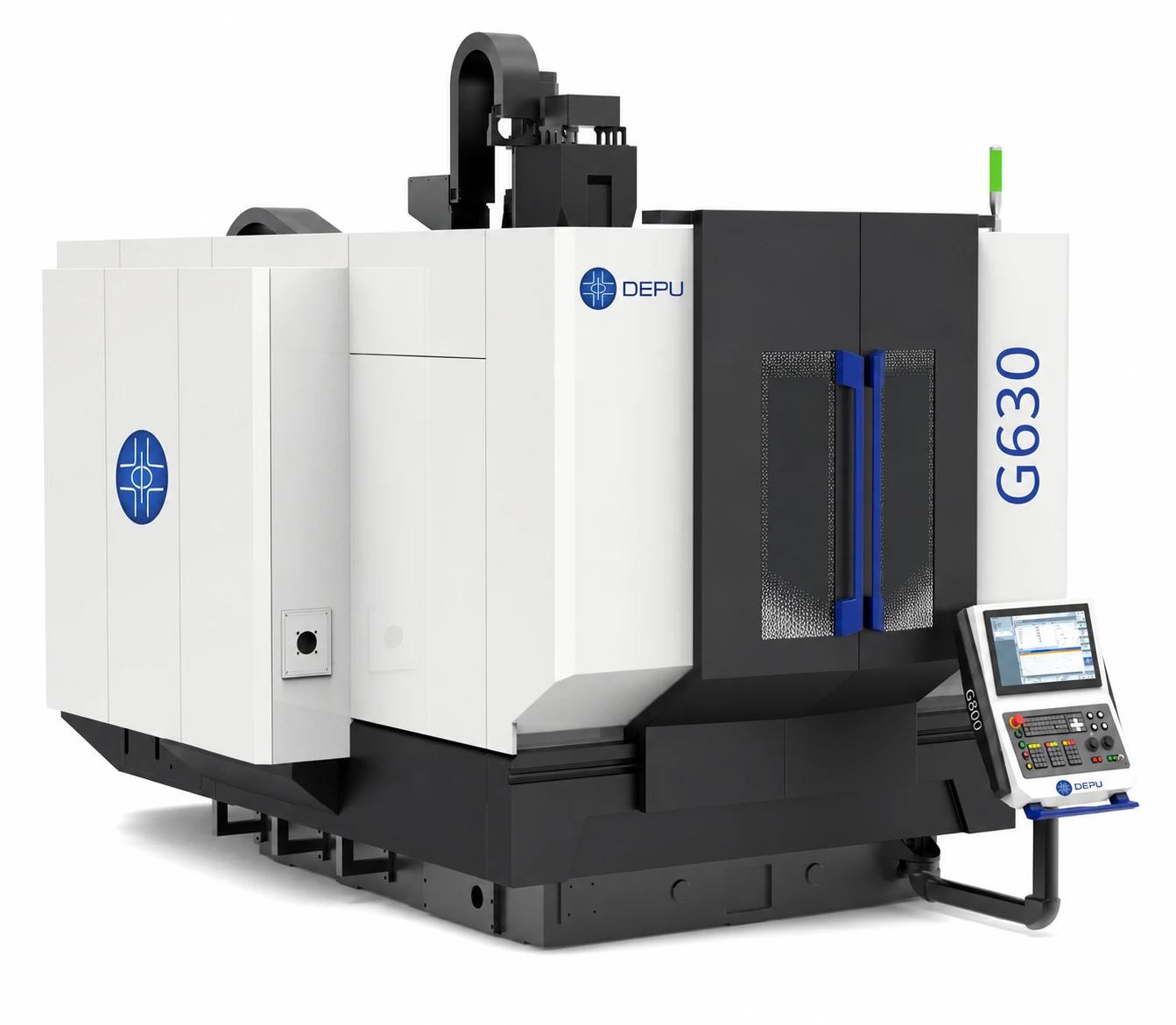
The G630 may be a candidate for medium-sized components in automotive, aerospace, mechanical engineering, and mold manufacturing. Its dual-supported cradle rotary table and gantry structure are intended to support precision five-axis machining.
The published product page also describes multiple spindle options. Ask DEPU to confirm the spindle configuration and corresponding torque curve for your intended material and cutting conditions.
DEPU G800: Larger Workpieces and Higher Table Loads
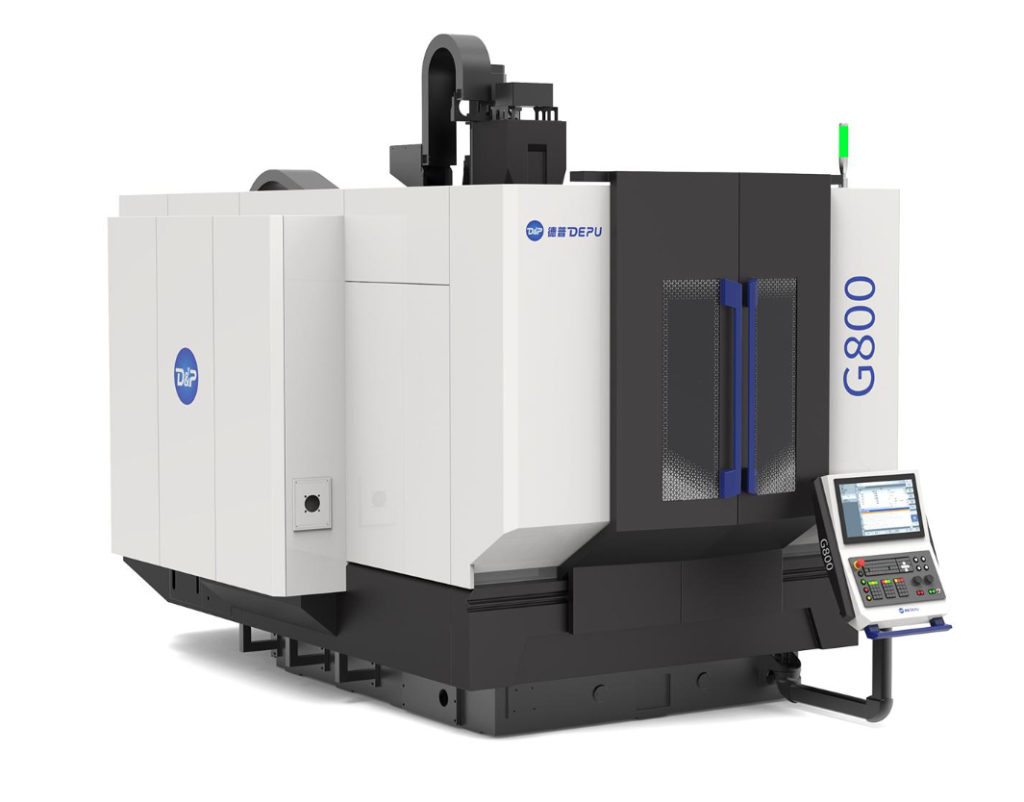
If your parts exceed the G630’s work envelope or require a higher table load, the G800 is another option to compare.
| Parameter | G800 |
|---|---|
| X/Y/Z travel | 800/900/600 mm |
| Maximum workpiece size | Ø900 × 500 mm |
| Table diameter | Ø800 mm |
| Maximum uniform table load | 1,200 kg |
| Tool interface | HSK-A100 |
| Maximum spindle speed | 10,000 rpm |
| Rated spindle power | 40 kW |
| Spindle torque (S1/S6) | 170/224 N·m |
| Tool magazine | 32/40 tools |
Swipe to compare →
Compared with the G300 and G630 configurations listed above, the G800 uses a larger tool interface and offers higher published spindle torque. This makes it worth evaluating for applications that need larger tools or more demanding cutting conditions.
However, spindle torque alone does not establish whether a machine can handle a particular steel or titanium operation. You should validate the complete cutting process with the manufacturer.
DEPU U Series: Large and Heavy Workpieces
The U Series uses a different architecture from the G Series. Instead of rotating the workpiece on a cradle table, the spindle head swivels while the workpiece stays on the fixed table.
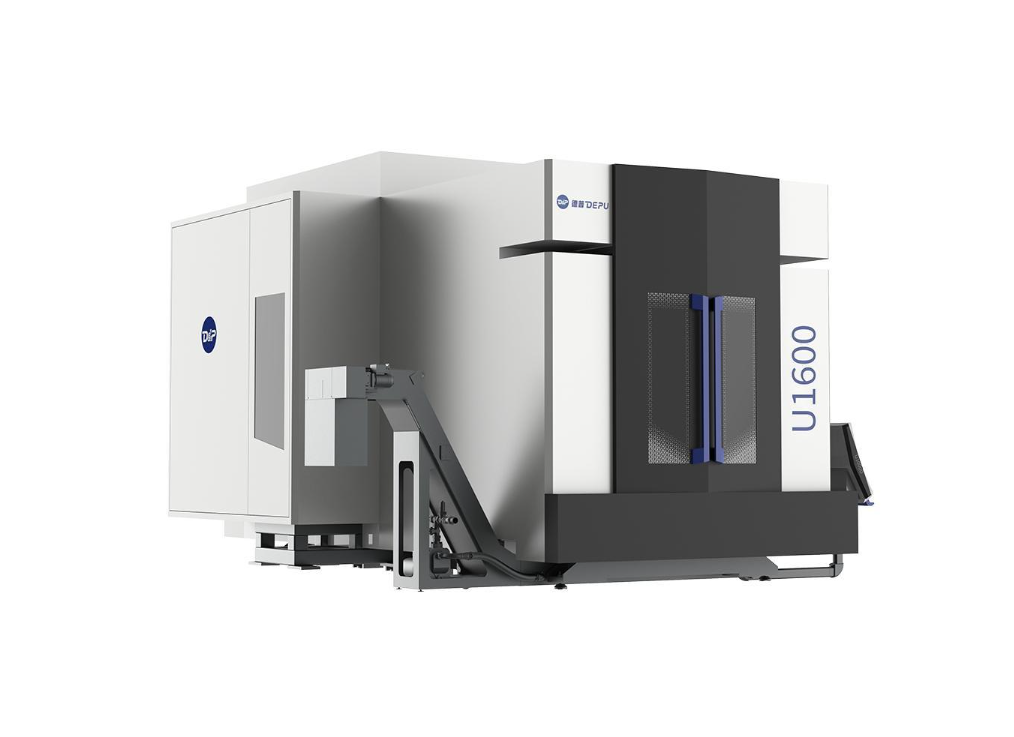
This can be useful when you’re machining large or heavy components that are difficult to rotate.
The U1000 is one example. Its published specifications include:
| Parameter | U1000 |
|---|---|
| X/Y/Z travel | 1,000/1,000/1,000 mm |
| Maximum workpiece size | Ø1,000 × 1,000 mm |
| Table diameter | Ø1,000 mm |
| Maximum uniform table load | 1,800 kg |
| Tool interface | HSK-A100 |
| Maximum spindle speed | 10,000 rpm |
| Spindle power (S1/S6) | 50/70 kW |
| Spindle torque (S1/S6) | 400/560 N·m |
| Tool magazine | 40 tools |
| CNC system | Siemens ONE |
Swipe to compare →
The U1000 is worth considering for large, heavy components that need vertical and horizontal machining access. Its swivel-head arrangement allows the machine to change tool orientation without relying on a tilting workpiece table.
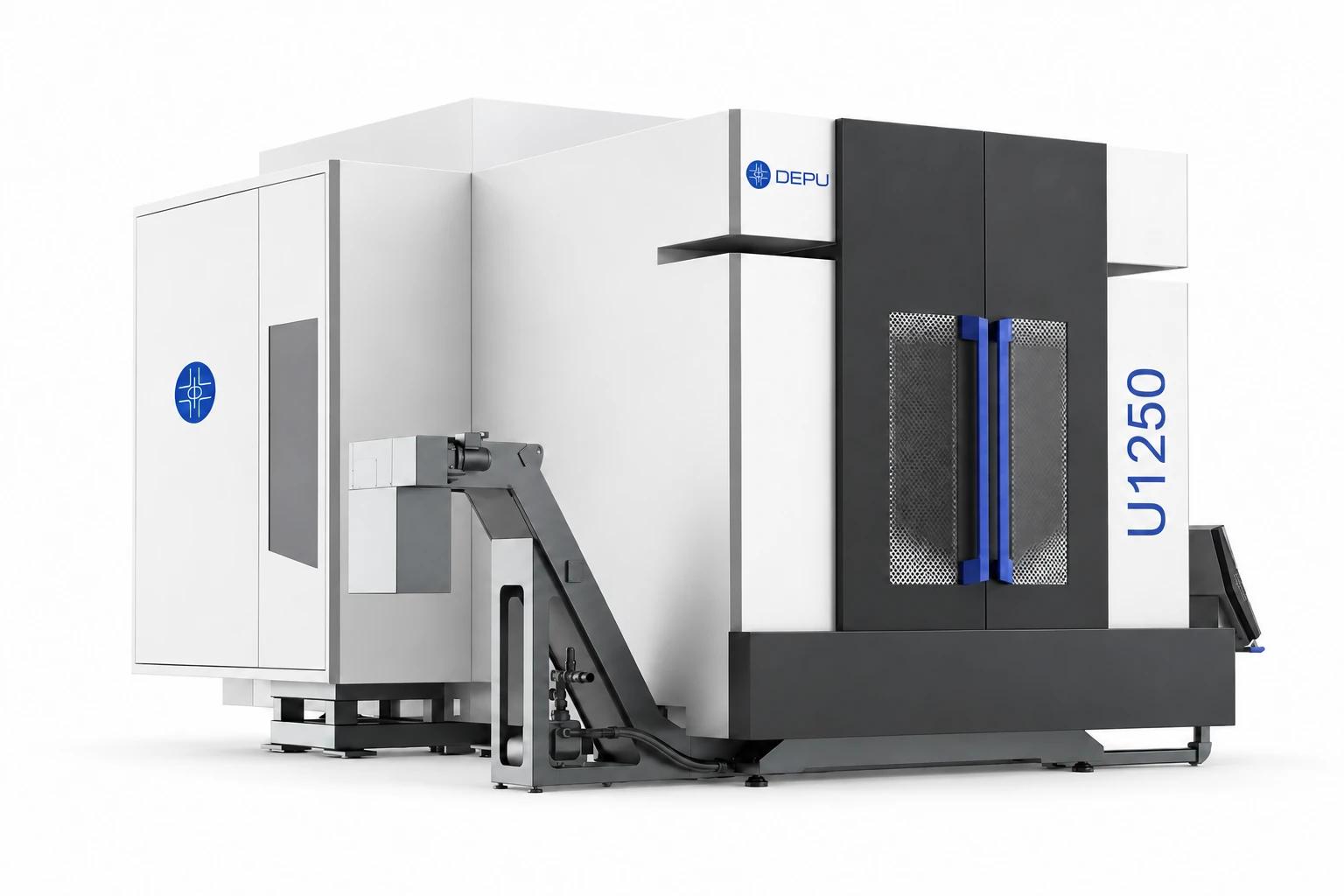
For larger workpieces, DEPU also lists U1250, U1600T, and U2000T configurations. The company’s published series comparison gives maximum uniform table loads of 2,500 kg, 4,000 kg, and 8,000 kg, respectively. These figures are model-specific, so verify the current configuration and workpiece envelope directly with DEPU before using them for machine selection.
Which 5-Axis CNC Machine Is Suitable for Different Metals?
The material you’re machining should influence your spindle, tooling, machine-structure, and coolant requirements.
Aluminum
Aluminum is generally easier to machine than many steels and titanium alloys, but high productivity still requires the right spindle and cutting strategy.
When you’re machining aluminum components, look for:
-
High spindle speed appropriate for your tool diameters.
-
Adequate acceleration and feed capability.
-
Effective chip evacuation.
-
Coolant delivery suited to your cutting process.
-
Sufficient work envelope for the part.
A compact five-axis machine may be a good fit for small aluminum housings, impellers, and precision components. For larger aluminum parts, prioritize workpiece clearance and table capacity.
Carbon Steel and Stainless Steel
Steel and stainless steel can place greater demands on machine rigidity, spindle torque, tooling, and thermal management.
When you’re comparing machines for these materials, pay attention to:
-
Spindle torque at the cutting speed you plan to use.
-
Machine and rotary-axis rigidity.
-
Toolholder and cutting-tool compatibility.
-
Coolant pressure and delivery.
-
Chip removal and enclosure design.
Don’t assume that a high-speed spindle is automatically the best choice for steel. Your cutter diameter, material grade, engagement, and depth of cut all affect the spindle requirements.
Titanium Alloys
Titanium is challenging because it has relatively low thermal conductivity and can generate high cutting temperatures at the tool-workpiece interface.
For titanium machining, you should evaluate:
-
Spindle torque across the intended operating range.
-
Machine rigidity and vibration control.
-
Tooling designed for titanium alloys.
-
High-pressure or otherwise suitable coolant delivery.
-
CAM strategies that control tool engagement and heat.
-
The machine’s ability to maintain stable cutting conditions.
A machine’s advertised spindle power does not prove that it can efficiently machine titanium. Ask the manufacturer to review your actual part, material grade, tooling, and cutting strategy.
Hardened Steel and Mold Materials
If you’re machining hardened steel or mold materials, precision, toolpath control, and thermal stability become especially important.
Look for:
-
A spindle suited to your finishing tools and cutting conditions.
-
High-quality rotary-axis positioning.
-
Stable machine geometry.
-
Appropriate toolholding and runout control.
-
Reliable probing and measurement functions.
For mold machining, the ability to reach complex surfaces with fewer setups can also reduce repositioning errors and improve process consistency.
Which Machine Architecture Is Better: Trunnion or Swivel Head?
A trunnion machine and a swivel-head machine can both perform five-axis machining, but they handle the workpiece differently.
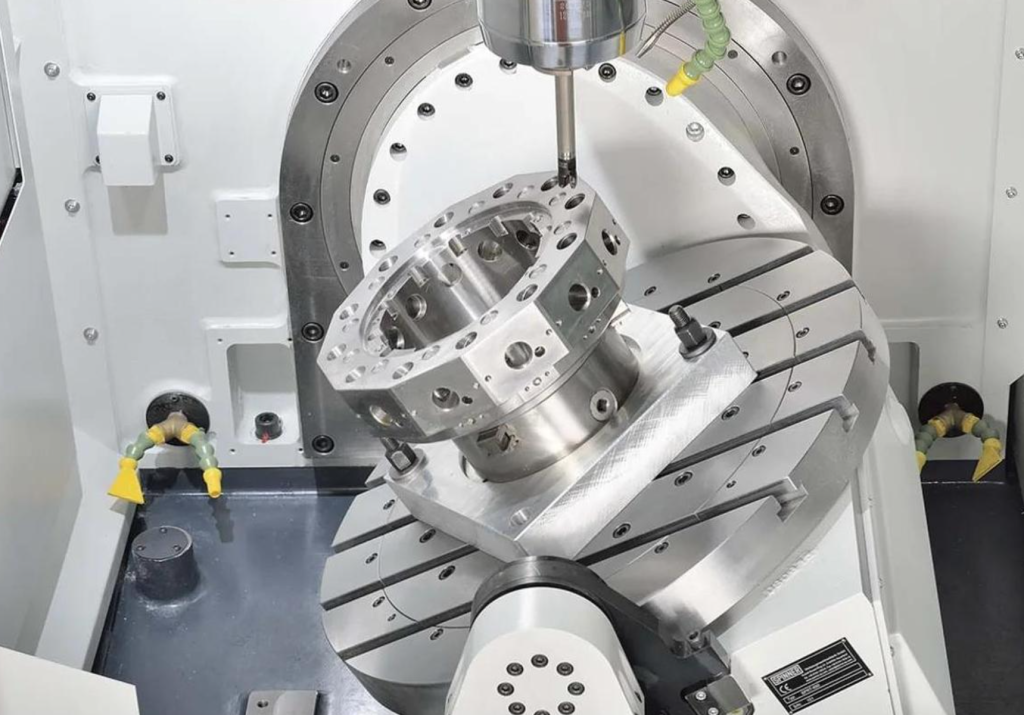
Trunnion or cradle table
The workpiece rotates on a tilting table. This arrangement is useful for complex parts that fit within the rotary table’s size and load limits.
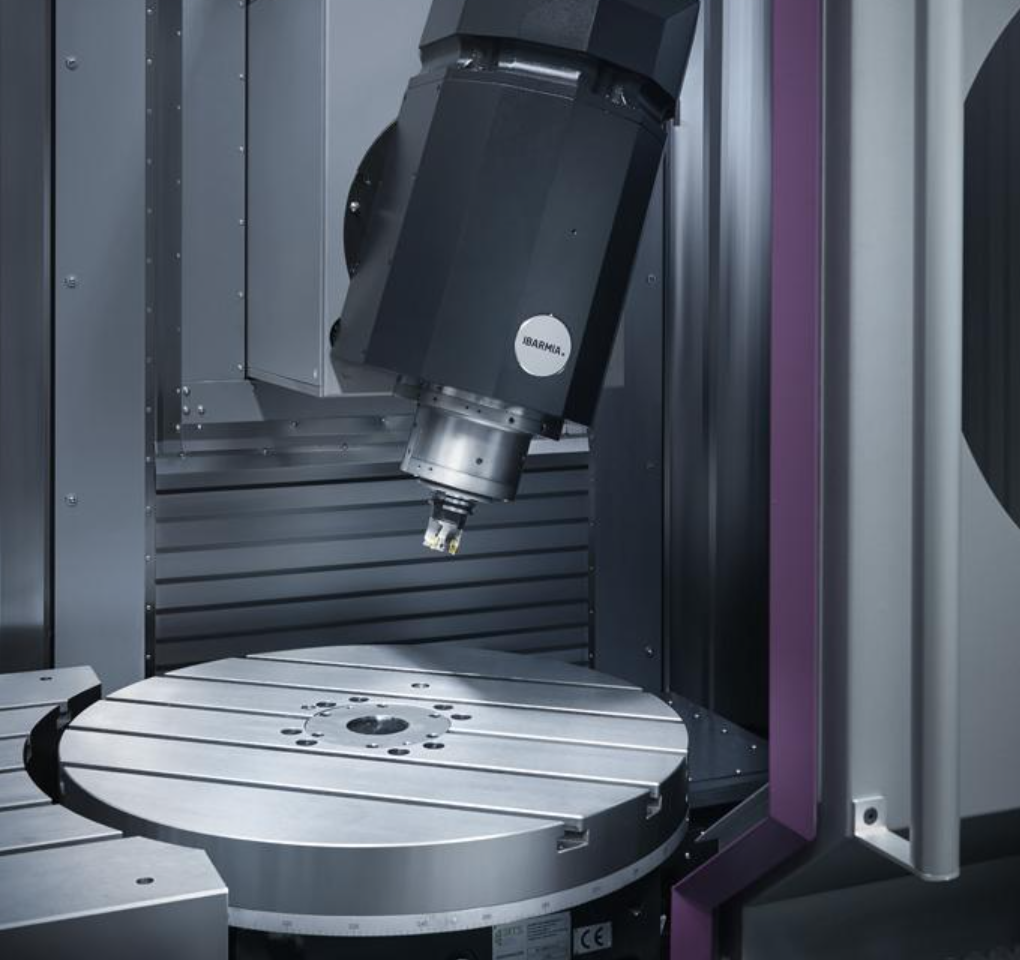
Swivel-head design
The spindle head changes orientation while the workpiece remains on a fixed table. This can be advantageous for large or heavy components.
When Should You Choose a Trunnion Machine?
A trunnion-style five-axis machine may suit your shop if:
-
Your parts are relatively compact or medium-sized.
-
You need to machine multiple faces in one setup.
-
The workpiece can be safely mounted on a rotary table.
-
The table’s load capacity and rotary clearance meet your requirements.
The DEPU G Series is an example of this architecture.
When Should You Choose a Swivel-Head Machine?
A swivel-head machine may be worth considering if:
-
Your components are large or heavy.
-
Rotating the workpiece would be difficult.
-
You need different tool orientations around a fixed workpiece.
-
Your production process benefits from a larger fixed worktable.
The DEPU U Series is an example of this approach.
Neither architecture is automatically better. You should compare the part’s geometry, weight, machining access, fixture design, and required tolerances.
How to Choose the Right 5-Axis CNC Machine for Your Factory
Before requesting a quotation, define your machining requirements. This helps you avoid paying for capacity you don’t need—or purchasing a machine that cannot handle your most demanding parts.
Step 1: Define Your Materials and Part Dimensions
List the materials you machine regularly, including their grades and hardness where relevant.
Then document:
-
Maximum part length, width, and height.
-
Maximum workpiece weight.
-
Required machining faces and angles.
-
Deep cavities or difficult-to-reach features.
-
Required tolerances and surface finishes.
Don’t rely on the nominal table diameter alone. Ask the manufacturer to check the full workpiece envelope at different rotary-axis positions.
Step 2: Identify Your Cutting Requirements
Determine whether your work mainly involves:
-
High-speed finishing.
-
Heavy roughing.
-
Drilling and tapping.
-
Five-axis contouring.
-
Impeller or blade machining.
-
Mold and die finishing.
-
Multi-sided machining with 3+2 positioning.
Your cutting strategy will help determine the spindle speed, torque, power, tooling interface, and machine structure you need.
Step 3: Check the Rotary-Axis Capacity
For a trunnion machine, verify the maximum part dimensions, table load, rotary range, and clearance around the cradle.
For a swivel-head machine, check the spindle-head travel, worktable capacity, spindle access, and clearance between the head and workpiece.
Ask the manufacturer to review a representative part model or machining simulation. This is more reliable than choosing a machine based on table diameter alone.
Step 4: Review the CNC Control and CAM Compatibility
Make sure your CAM software supports the machine’s kinematics and that the manufacturer can provide a suitable postprocessor.
You should also confirm:
-
RTCP or equivalent tool-center-point functions.
-
Rotary-axis calibration procedures.
-
Probing and tool measurement options.
-
Collision checking and simulation workflow.
-
Operator training and technical support.
A capable machine can still create production problems if your programming and setup workflow is not properly supported.
Step 5: Evaluate the Complete Cost of Ownership
The purchase price is only one part of your investment.
Consider:
-
Installation and foundation requirements.
-
Electrical and compressed-air requirements.
-
Tooling, fixtures, and workholding.
-
Coolant and chip-management equipment.
-
CAM software and postprocessor costs.
-
Operator training.
-
Preventive maintenance and spare parts.
-
Local technical support and service response.
If you’re comparing overseas manufacturers, clarify who will handle installation, commissioning, training, warranty service, and replacement parts in your region.
Step 6: Request a Machining Test
Before making a final decision, provide the manufacturer with a representative part drawing or 3D model.
Ask for a machining evaluation that addresses:
-
The proposed machine and spindle configuration.
-
The workholding and tool requirements.
-
The machining sequence and estimated cycle time.
-
The expected dimensional accuracy and surface finish.
-
Any operations that may require additional setups.
-
The inspection method used to verify the finished part.
If possible, request a sample part or an acceptance test based on your own requirements. This gives you a more meaningful basis for comparison than a general product demonstration.
Why Consider DEPU as a 5-Axis CNC Machine Manufacturer?
If you’re comparing five-axis machine manufacturers, DEPU is one option to evaluate, particularly if you need to compare both trunnion and swivel-head machine architectures.
DEPU focuses on the research, development, and manufacturing of five-axis CNC machine tools and core components. Its product range includes the G Series vertical trunnion machines and the U Series large-scale swivel-head machines.
According to company information supplied by DEPU, its engineering work involves participation from engineers in Germany and Taiwan, and the company reports approximately 3,800 active customers in Europe. DEPU also identifies cooperation with research and academic institutions, including Chongqing University’s School of Mechanical Engineering.
These are company-provided background details rather than independent performance assessments. When evaluating DEPU—or any other manufacturer—you should verify the specific machine configuration, technical documentation, certifications, customer references, and local service arrangements.
You can compare the available models on the DEPU 5-axis CNC machine product pages.
5-Axis CNC Machine Buying Checklist
Use this checklist when comparing quotations from different manufacturers.
Does the machine accommodate your largest workpiece?
Is the table or workpiece load capacity sufficient?
Have you checked clearance throughout the rotary-axis range?
Does the spindle provide the required speed, power, and torque?
Is the tool interface suitable for your cutting tools?
Can the machine handle your material and cutting strategy?
Does the CNC control support your required five-axis functions?
Is your CAM software compatible with the machine?
Are probing, tool measurement, and collision-checking options available?
Can the manufacturer demonstrate machining on a representative part?
Are installation, training, maintenance, and service arrangements clear?
Final Thoughts
A good 5-axis CNC machine for metal is one that matches your actual production requirements. Spindle speed, torque, structural rigidity, rotary-axis capacity, and thermal stability all affect machining performance—and no single specification tells you the whole story.
Before you make a purchase, compare the complete machine configuration and validate it against your own parts. A machining test, a clear technical specification, and a reliable service plan will help you choose a machine that fits your production needs—not just one that looks impressive on paper.
Frequently Asked Questions
1. What is the best 5-axis CNC machine for metal?
There is no single best machine for every metalworking application. A compact five-axis machining center may suit small precision components, while larger machines with higher torque and greater load capacity may be more appropriate for heavy steel or titanium parts. Compare the work envelope, spindle characteristics, rigidity, rotary-axis design, and support options against your actual requirements.
2. Can a 5-axis CNC machine cut steel?
Yes. Many industrial five-axis machining centers can machine carbon steel and stainless steel when configured with suitable spindle characteristics, tooling, workholding, coolant, and cutting parameters. However, the machine’s five-axis capability alone does not establish its ability to perform heavy steel cutting. You should verify the spindle torque, structural rigidity, and cutting performance for your specific material and operation.
3. Can a 5-axis CNC machine cut titanium?
Yes, but titanium machining requires careful machine and process selection. You need suitable spindle torque, rigid workholding, appropriate cutting tools, effective coolant delivery, and a machining strategy that manages heat and tool wear. Ask the manufacturer to evaluate your actual titanium grade and part geometry before purchasing.
4. Is a trunnion or swivel-head 5-axis CNC machine better?
Neither design is universally better. A trunnion machine rotates the workpiece and can be effective for compact and medium-sized components. A swivel-head machine changes the spindle orientation while the workpiece remains on a fixed table, which can be advantageous for large or heavy parts. Choose based on your part dimensions, weight, machining access, and required accuracy.
5. What should you check before buying a 5-axis CNC machine?
Start with your material, part dimensions, workpiece weight, tolerances, and cutting operations. Then check the spindle power and torque, rotary-axis capacity, workpiece clearance, CNC control, CAM compatibility, and service support. If possible, request a machining test using a representative part before placing your order.
Originally published by DEPU on 13 Nov 2026.