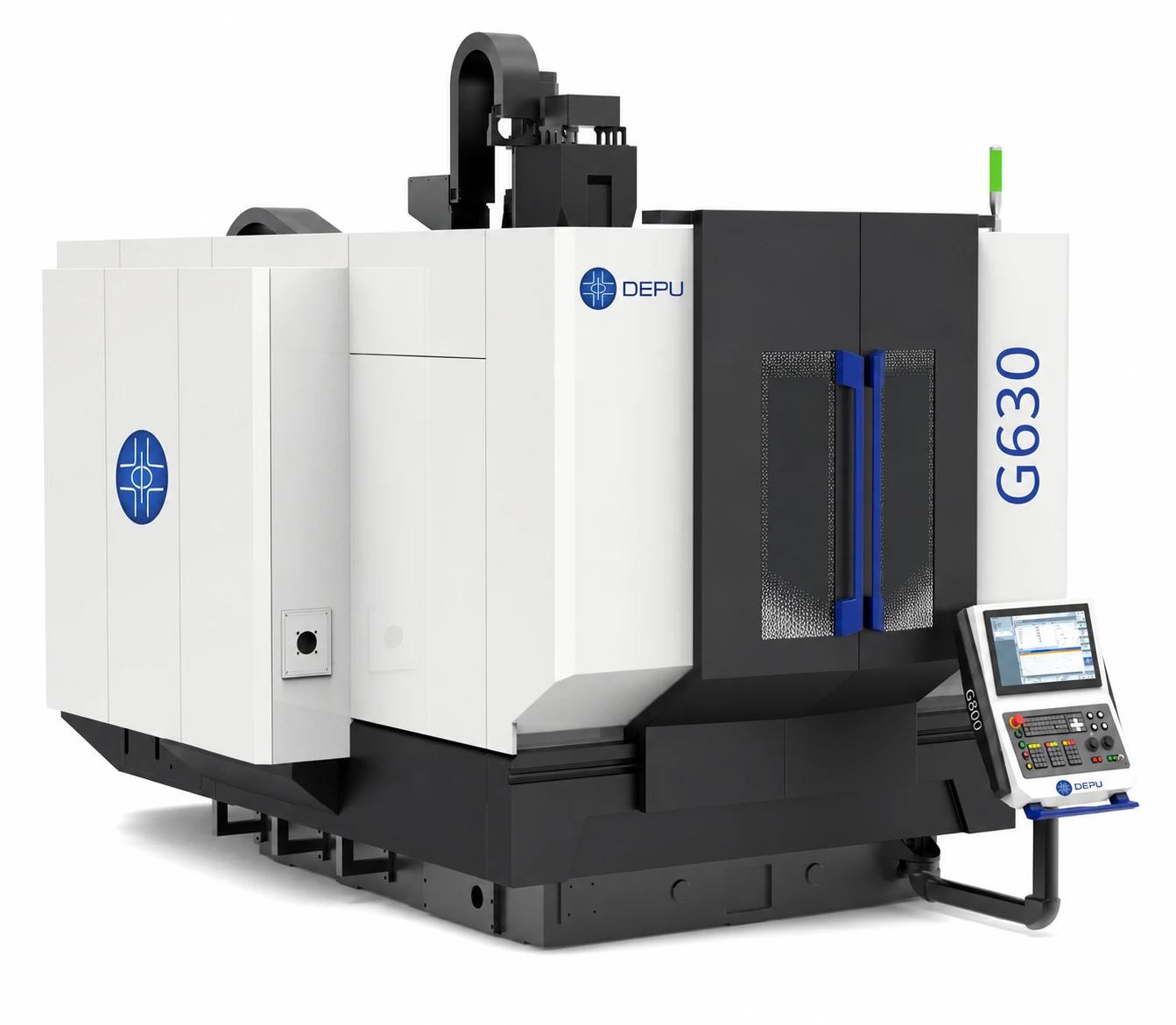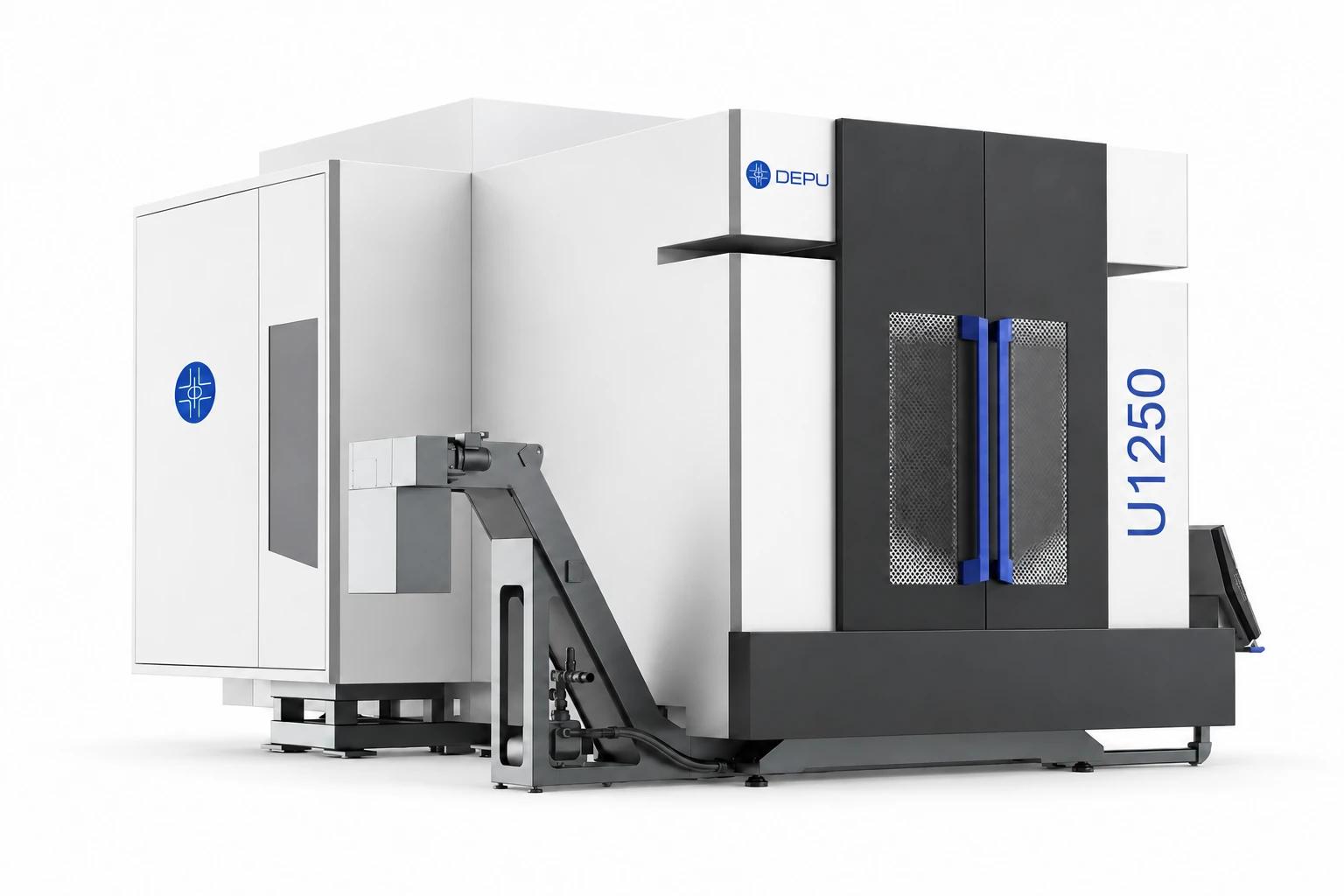

When comparing a desktop 5-axis CNC machine on a tight budget, an entry-level industrial machine, and a used 5-axis CNC machine for sale, look beyond the price tag. True simultaneous 5-axis capability, machine rigidity, spindle performance, work envelope, software, tooling, and technical support all affect what you can actually produce.
What Is the Cheapest 5-Axis CNC Machine You Can Buy?
For a documented desktop option, the Pocket NC V2-50 is listed by its manufacturer starting at $9,999. It supports both 3+2 machining and full simultaneous 5-axis machining, with a compact work envelope designed for small parts. This is a manufacturer’s listed price, not a complete installed cost.
Industrial machines are in a different price category. Haas lists the UMC-400 starting at $110,995 and the UMC-500 starting at $156,995. Both are compact industrial five-axis machining centers, but they are substantially different from desktop machines in size, intended use, and production capability.
Used industrial machines may cost less than new ones. For example, used-equipment dealer Meadoworks lists broad estimated ranges of $75,000–$450,000 or more for used five-axis machines, depending on brand, model, condition, and configuration. These are market estimates, not guaranteed prices or confirmed transaction values.
| Machine category | Example price reference | Typical application |
|---|---|---|
| Desktop 5-axis CNC | Around $10,000 and up | Education, prototypes, small parts, and light machining |
| Compact industrial 5-axis | Around $110,000 and up for documented new examples | Small-part industrial machining and job shops |
| Larger industrial 5-axis | Varies substantially by size and configuration | Production machining, molds, and complex metal parts |
| Used industrial 5-axis | Dealer estimates range from about $75,000 to $450,000+ | Buyers who can inspect and evaluate used equipment |
Swipe to compare →
These figures are reference points, not a complete market survey or a guarantee of the lowest available price. Prices and configurations can change. Freight, taxes, rigging, installation, tooling, and other options may not be included.
Why the Cheapest Machine Is Not Always the Best Deal
A low-priced machine may have limitations that become expensive once you start producing parts.
For example, a desktop machine may support five-axis motion but have a small work envelope, limited workholding capacity, or insufficient rigidity for your intended cutting conditions. A used industrial machine may offer a much larger working area but require repairs, control upgrades, or recalibration.
Before choosing a machine, ask yourself:
-
Can it machine the materials you actually use?
-
Does it support simultaneous five-axis cutting or only indexed 3+2 machining?
-
Is the work envelope large enough for your parts and fixtures?
-
Can it maintain the required accuracy under your intended cutting conditions?
-
Are the controller, CAM software, and postprocessor compatible?
-
Can you get replacement parts and technical support?
The advertised price tells you very little about a machine’s value if you cannot verify these details.
Desktop vs. Industrial 5-Axis CNC Machines: Which Is Better for Your Budget?
The biggest mistake you can make when comparing budget five-axis machines is treating every machine in this category as equivalent.
A desktop micro-machining center and an industrial vertical machining center may both have five axes, but they are designed for different work.
Desktop 5-Axis CNC Machines
Desktop machines provide multi-axis machining in a compact footprint. They are often used by engineering schools, research teams, product developers, and small workshops.
The Pocket NC V2-50 is one example. Its manufacturer lists a starting price of $9,999, a 50,000 rpm spindle, and a compact working range. It supports both 3+2 and full simultaneous five-axis machining. The manufacturer describes it as suitable for Delrin, aluminum, and softer steels, with capabilities extending to G5 titanium under appropriate conditions. It also specifies that CAM software is not included.
Advantages:
-
Lower initial investment than most industrial five-axis machining centers
-
Compact footprint
-
Useful for learning multi-axis machining and developing prototypes
-
Suitable for certain small components and light-machining applications
Limitations:
-
Restricted work envelope
-
Limited workholding capacity compared with industrial equipment
-
Not designed to replace a full-size production machining center
-
Software and accessories may add to the total cost
-
Material capability does not automatically mean high-volume production capability
A desktop machine can be a sensible purchase if you need to produce small parts and understand its operating limits. It is less suitable if your business depends on continuous heavy cutting, large workpieces, or demanding production throughput.
Compact Industrial 5-Axis Machining Centers
Compact industrial machines occupy a different position. They are designed for more demanding machining environments, although their capabilities and work envelopes vary considerably.
The Haas UMC-400, for example, is listed with simultaneous five-axis machining, a 30+1 side-mount tool changer, and a starting price of $110,995. Haas positions it for smaller shops and small-part machining.
The DEPU GM130 takes a different approach. It is a compact five-axis micro-machining center designed for small precision workpieces, complex micro-geometries, and applications where floor space is limited.
These machines are not direct substitutes. The UMC-400 is an industrial vertical machining center, while the GM130 is a specialized micro-machining platform with a much smaller work envelope.
Advantages of compact industrial or micro-machining platforms:
-
More specialized five-axis capability than a basic hobby machine
-
Professional machining workflows and dedicated control systems
-
Suitable for specific precision-part applications
-
Smaller footprint than many conventional industrial machining centers
Limitations:
-
Compact machines cannot accommodate every workpiece
-
Material and production capabilities depend on the structure, spindle, tooling, and cutting conditions
-
Options, software, and accessories can change the total investment
-
A machine optimized for micro-machining is not automatically suitable for heavy-duty metal removal
Full-Size Industrial 5-Axis CNC Machines
If you manufacture larger or heavier components, a full-size industrial five-axis machine may be the more appropriate investment.
These machines are used for applications such as:
-
Aerospace structural components
-
Complex molds and dies
-
Automotive and energy equipment parts
-
Large precision mechanical components
-
Medical and industrial components with demanding geometries
You generally get a larger work envelope, more substantial machine construction, and a broader range of production options. However, you also need to budget for installation, tooling, workholding, coolant management, maintenance, and operator training.
The important distinction: Choose according to the parts you need to make, not simply whether a machine is marketed as desktop, industrial, or entry-level.
What Are Some Cheap 5-Axis CNC Machines Worth Considering?
There is no single best budget five-axis machine for every buyer. The following examples illustrate different price and application categories rather than a universal ranking.
1. DEPU GM130: A Compact Five-Axis Micro Machining Center
Price: Check DEPU’s official store or request a current configuration-specific quote.
The DEPU GM130 is designed for users who need five-axis simultaneous micro-machining in a compact space.
Rather than competing directly with large industrial machining centers, the GM130 focuses on small precision workpieces and complex features that benefit from five-axis access in a single setup.
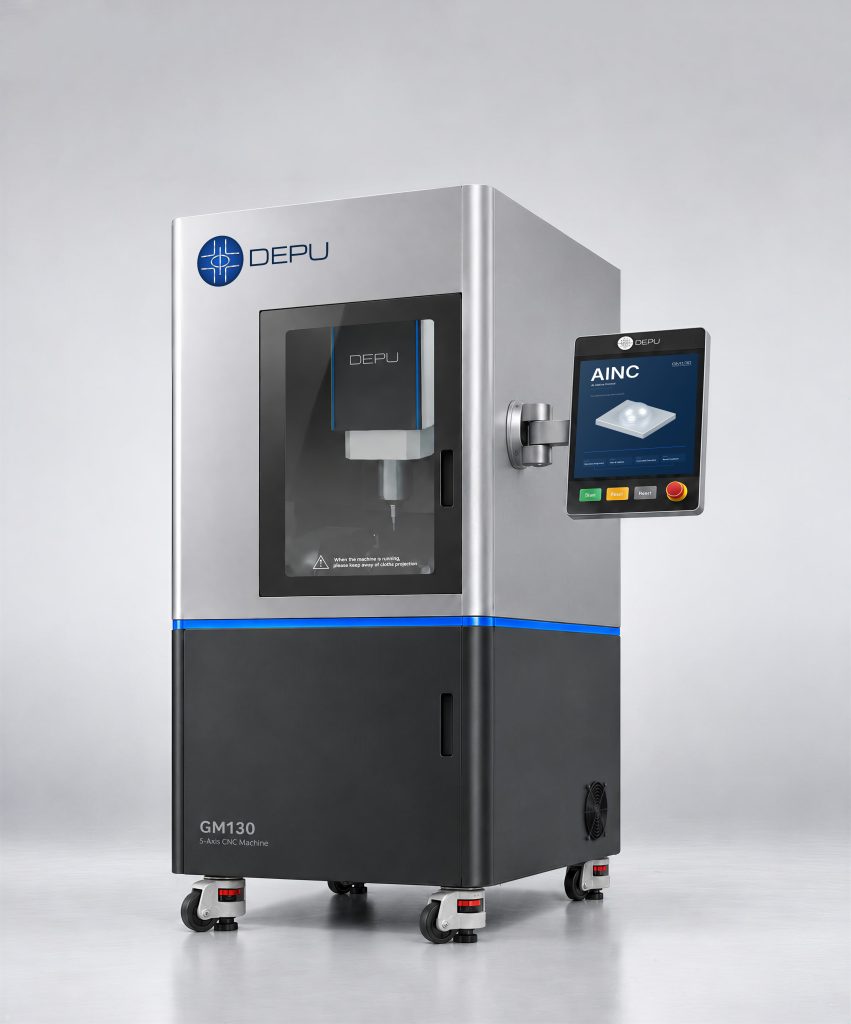
According to DEPU’s current product page, the reference configuration includes:
| Specification | GM130 |
|---|---|
| X/Y/Z travel | 300 / 140 / 140 mm |
| Maximum workpiece size | Ø130 × 120 mm |
| Maximum table load | 10 kg |
| Standard spindle speed | 24,000 rpm |
| Spindle interface | ISO20 |
| Spindle power | 3.5 kW |
| Positioning accuracy | ±0.008 mm |
| Repeatability | ±0.005 mm |
| Tool magazine | 6-station servo carousel ATC |
| Machine weight | Approx. 250 kg |
| Machine dimensions | 860 × 1,104 × 1,064 mm |
Swipe to compare →
These are the published reference-configuration specifications. Confirm the spindle, tooling, workholding, and other options for your application when requesting a quote.
The product page describes a rigid cast-iron body, ZEISS-verified 0.01 mm precision, integrated in-machine probing, and a proprietary five-axis CNC system. Its detailed specification table separately lists ±0.008 mm positioning accuracy and ±0.005 mm repeatability. These figures describe different performance measures and should not be treated as interchangeable.
Where the GM130 may make sense:
-
Small precision mechanical components
-
Micro-geometries and complex small parts
-
Prototyping and product development
-
CNC education and technical training
-
Selected watch, medical, and precision-part applications
What you should consider before buying:
The GM130’s maximum workpiece size and table load define its application range. It is not intended for large molds, heavy aerospace structures, or high-volume machining of large steel components.
It is also important to distinguish positioning accuracy from actual part accuracy. Your results depend on the complete machining process, including material, tooling, workholding, temperature, calibration, and inspection methods.
For current pricing and configuration details, visit the .
2. Pocket NC V2-50: A Desktop Option for Small Parts
Manufacturer-listed starting price: $9,999
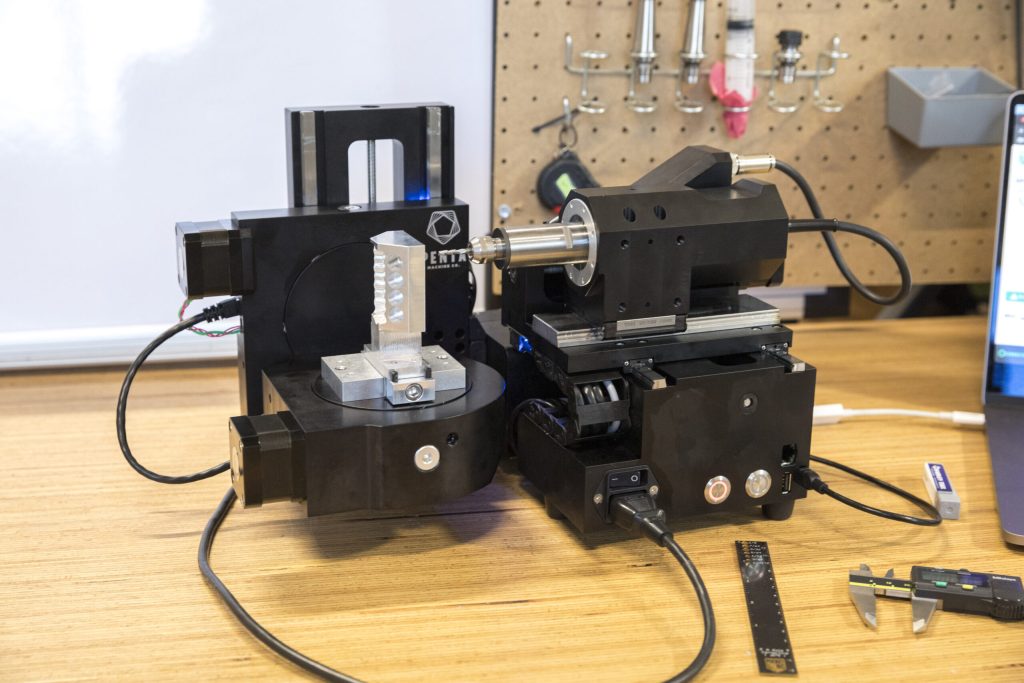
The Pocket NC V2-50 is worth considering if your budget is limited and you want to learn or use five-axis machining without purchasing a full-size industrial machine.
Its manufacturer lists a 50,000 rpm spindle and a working range of approximately 115.5 mm in X, 128.3 mm in Y, and 90.1 mm in Z. It supports 3+2 and full simultaneous five-axis machining.
Consider it if you:
-
Need a compact machine for education or research
-
Produce small prototypes or precision components
-
Work primarily with suitable light-machining materials
-
Want to develop five-axis programming skills
Think carefully if you:
-
Need high-volume production
-
Regularly machine large or heavy workpieces
-
Expect industrial-level material removal rates
-
Need a machine for demanding continuous production
The V2-50 is a desktop machine, not a direct replacement for an industrial five-axis machining center. Also, include the cost of CAM software and any additional accessories in your budget.
3. Haas UMC-400: A Compact Industrial Five-Axis Option
Manufacturer-listed starting price: $110,995
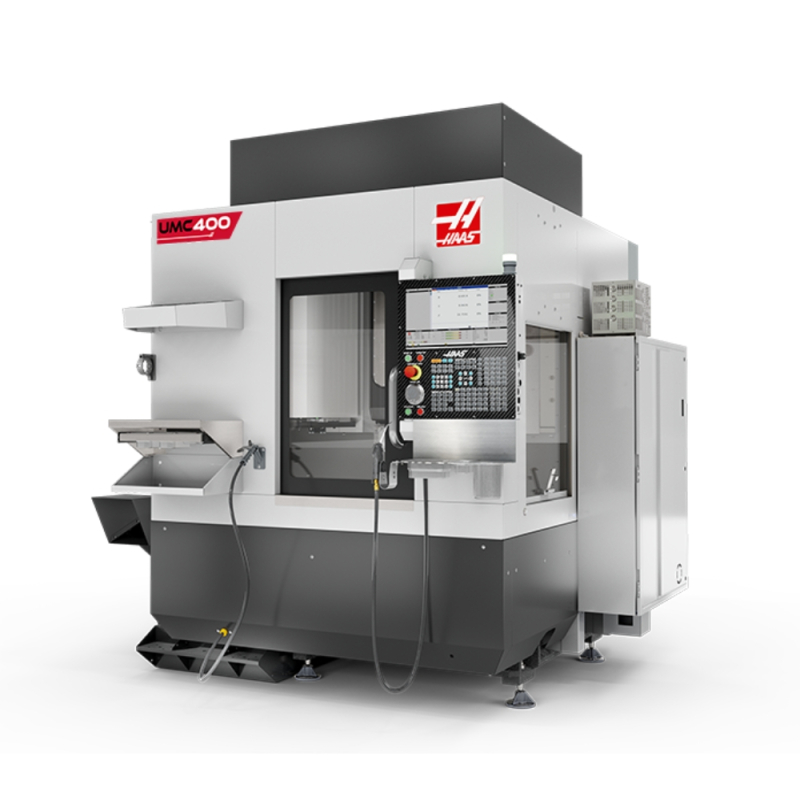
The Haas UMC-400 provides a useful price reference if you need an industrial machine rather than a desktop platform.
Haas lists simultaneous five-axis machining, a 30+1 side-mount tool changer, and a 15 hp spindle for the UMC-400. The UMC-400SS is a separate configuration with a higher maximum spindle speed. The published starting price is subject to change and excludes applicable taxes, rigging, freight, and installation.
It may be worth evaluating if you need a compact industrial platform for multi-sided machining and complex small parts.
However, the starting price does not represent the full cost of a production-ready installation. Freight, rigging, installation, tooling, workholding, and selected options can add to your budget.
Request a configuration-specific quote rather than assuming the advertised base price includes everything you need.
4. Haas UMC-500: A Larger Compact Industrial Option
Manufacturer-listed starting price: $156,995
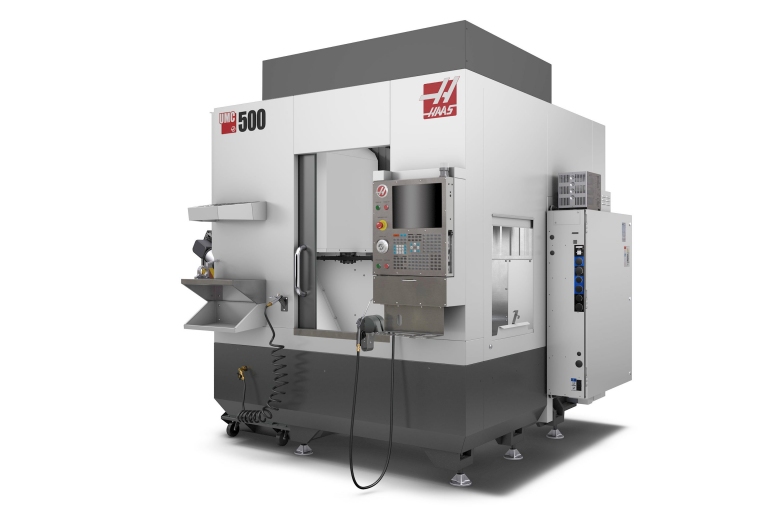
The UMC-500 offers a larger working range than the UMC-400, with published X/Y/Z travels of 610 × 406 × 406 mm.
Haas lists simultaneous five-axis machining, a 30+1 tool capacity, and an 8,100 rpm spindle for the standard UMC-500 configuration. It is intended for 3+2 and simultaneous five-axis machining of smaller industrial parts.
Consider it if your parts need more room than a micro-machining platform can provide and you want an industrial machine with an established manufacturer support structure.
The trade-off is a higher purchase price and greater requirements for shop space, installation, and operating resources. Confirm current pricing and available options with your local Haas Factory Outlet.
5. Used 5-Axis CNC Machines: A Lower-Cost Industrial Route
If you need industrial capacity but cannot justify the cost of a new machine, a used five-axis CNC may be worth considering.
Used equipment dealers list machines from manufacturers such as Haas, DMG MORI, Mazak, Makino, and Okuma. Pricing varies widely according to model, age, condition, configuration, and service history.
For reference, Meadoworks’ 2026 used-equipment guide lists estimated ranges of $75,000–$150,000 for used Haas UMC-500 and UMC-750 machines. Its broader estimate for used five-axis machines is $75,000–$450,000 or more. These are dealer estimates, not guaranteed asking prices for every machine or confirmed sale prices.
A used machine can offer substantial savings, but only if its condition and remaining service life justify the purchase.
Before you buy, inspect the machine and request evidence of its operating condition. A low asking price can quickly lose its appeal if the machine needs a spindle rebuild, rotary-axis repair, control replacement, or extensive calibration.
How to Find an Entry-Level 5-Axis CNC Machine That Isn’t Garbage
A budget machine does not have to be a poor machine. The key is to understand which specifications directly affect your parts and which features are less important for your application.
Use the following checklist before you request a quote.
1. Verify True Simultaneous 5-Axis Capability
First, establish what the manufacturer means by five-axis machining.
There are two common approaches:
3+2 machining (indexed five-axis): The machine positions the workpiece or tool using two rotary axes, then performs the cutting operation using the three linear axes. The rotary axes generally remain stationary during that cutting operation.
Simultaneous five-axis machining: The three linear axes and two rotary axes can move in coordination during cutting. This allows the tool to maintain changing orientations along complex surfaces and geometries.
Both approaches are useful, but they solve different machining problems.
If you need to machine complex freeform surfaces, impellers, or other geometries requiring continuous tool-orientation changes, confirm that the machine supports the required simultaneous motion.
Do not rely on the phrase “five-axis” alone. Ask for a demonstration, control-system documentation, or a sample machining program that confirms the capability.
2. Check Machine Rigidity and Rotary-Axis Performance
Machine rigidity influences how consistently the machine handles cutting forces.
A lightweight machine may be suitable for small tools and light cuts, but it may struggle with heavier cutting conditions if its structure and drive systems are not designed for them.
Check:
-
Machine frame and structural design
-
Rotary-table construction
-
Rotary-axis positioning and repeatability
-
Backlash and compensation
-
Thermal stability
-
Workholding and fixture support
Do not judge rigidity by machine weight alone. Ask the manufacturer how the machine is designed for your materials, cutting forces, and workpiece size.
3. Evaluate Spindle Performance
A high spindle speed does not automatically make a machine suitable for every material.
Small cutting tools used in micro-machining may benefit from high spindle speeds. Larger tools and more demanding metal-removal operations may need a different balance of speed, torque, and power.
Check the following:
-
Maximum spindle speed
-
Spindle power and torque
-
Tool interface
-
Cooling method
-
Tool-changing capability
-
Supported tool sizes and weights
If you plan to machine stainless steel, titanium, or other difficult materials, ask for application-specific cutting recommendations rather than relying on spindle speed alone.
4. Check the Controller and CAM Software
Five-axis machining requires more than five mechanical axes.
Your controller and CAM workflow need to support the toolpath strategies, kinematics, and postprocessing required for your parts.
Before purchasing, confirm:
-
Whether the machine supports simultaneous five-axis control
-
Which CAM systems are compatible
-
Whether a suitable postprocessor is available
-
How tool-center-point control is handled
-
Whether simulation and collision checking are available
-
What training and technical support are provided
A machine that fits your hardware budget but requires expensive software or custom programming support may not be the cheapest solution in practice.
5. Confirm After-Sales Support and Spare Parts
For a business, machine downtime can be more expensive than the original equipment discount.
Ask the supplier:
-
What warranty is included?
-
Are critical spare parts available?
-
Who handles installation and commissioning?
-
Is remote technical support available?
-
Can technicians provide on-site service?
-
Is operator and programming training provided?
A supplier’s ability to support the machine over its working life should be part of your purchasing decision.
What Is the Total Cost of Owning a Budget 5-Axis CNC Machine?
The purchase price is only the starting point. To understand whether a machine is affordable, estimate the total cost of ownership (TCO).
Your actual costs will depend on the machine and your production requirements, but the following categories are worth including.
| Cost category | What to consider |
|---|---|
| Machine purchase | Base machine, selected options, and control configuration |
| CAM software | Software licenses, five-axis modules, and postprocessors |
| Tooling | Cutting tools, holders, collets, and tool-setting equipment |
| Workholding | Fixtures, vises, rotary-table accessories, and custom setups |
| Installation | Freight, rigging, leveling, electrical work, and commissioning |
| Auxiliary equipment | Coolant systems, chip management, air supply, and extraction where needed |
| Training | Operator, setup, programming, and maintenance training |
| Maintenance | Lubricants, filters, replacement parts, inspections, and service |
| Inspection | Probes, measuring equipment, and calibration |
Swipe to compare →
A Practical Way to Compare Two Machines
Suppose Machine A costs less upfront but requires additional software, tooling, and installation work. Machine B has a higher purchase price but includes more of the equipment and support you need.
Comparing only the machine prices would not give you a fair picture.
Instead, prepare a complete quotation checklist for both suppliers. Ask each one to specify what is included and what you must purchase separately.
You should also consider production costs. If one machine requires more setups, longer cycle times, or additional manual inspection, it may cost more to operate even if the initial purchase price is lower.
What Is the Smallest 5-Axis CNC Machine Available?
There is no universally recognized smallest five-axis CNC machine. Manufacturers offer different desktop, micro-machining, and compact industrial platforms, and their dimensions are not directly comparable.
The more useful question is: What is the smallest machine that can reliably produce your parts?
When evaluating a small five-axis CNC machine, look at:
-
Linear-axis travel
-
Rotary-axis range
-
Maximum workpiece diameter and height
-
Table load capacity
-
Tool and fixture clearance
-
Spindle specifications
-
Required accuracy and surface finish
For example, the DEPU GM130 has a published maximum workpiece size of Ø130 × 120 mm and a maximum table load of 10 kg in its reference configuration.
That makes it a compact option for small precision parts, but it is not appropriate for components that exceed its work envelope or loading capacity.
Remember that a small machine is not automatically a less capable machine. It may be the right solution when the parts are small and the machining requirements match its design.
Can a Cheap 5-Axis CNC Machine Cut Aluminum, Steel, or Titanium?
Sometimes, yes. But you need to distinguish between a machine’s ability to cut a material and its ability to machine that material reliably under your production conditions.
Aluminum
Aluminum is commonly machined on desktop and industrial CNC equipment.
For a budget five-axis machine, check spindle speed, rigidity, workholding, chip evacuation, and the recommended cutting conditions.
A compact machine may handle small aluminum parts effectively if the tooling and cutting strategy are appropriate.
Steel and Stainless Steel
Steel generally places greater demands on machine rigidity, cutting tools, spindle torque, and thermal management than light machining materials.
A desktop machine may be able to cut certain steels under suitable conditions, but that does not mean it can perform heavy or continuous steel machining.
If your business regularly machines steel, evaluate the machine under realistic cutting conditions and ask for evidence relevant to your part geometry and material grade.
Titanium
Titanium can be challenging to machine because of its strength, heat generation, and cutting-tool demands.
Do not choose a five-axis machine for titanium production based only on its advertised spindle speed or a statement that it can cut titanium.
Evaluate:
-
Machine rigidity
-
Spindle torque and power
-
Tooling and tool life
-
Coolant delivery
-
Cutting strategy
-
Workholding
-
Required production rate
If titanium is a core production material, a purpose-built industrial machining center may be a better investment than an entry-level desktop machine.
Is a Used 5-Axis CNC Machine a Better Deal?
A used machine can be a good way to access industrial five-axis capability at a lower initial cost. However, you need to evaluate the equipment carefully.
When Buying Used Makes Sense
A used five-axis machine may be worth considering if:
-
You need a larger work envelope than a new budget machine offers
-
You have experienced maintenance and programming staff
-
The machine has a documented service history
-
Replacement parts and technical support remain available
-
You can inspect and test the machine before purchase
It may be less suitable if you need a full warranty, predictable commissioning, or a machine that can enter production quickly without significant repair work.
What to Inspect Before Buying
Use this checklist when evaluating a used machine:
-
Spindle condition: Check for unusual noise, vibration, heat, and evidence of previous repairs.
-
Rotary axes: Inspect positioning, repeatability, backlash, and clamping performance.
-
Linear motion systems: Check guideways, ball screws, lubrication, and axis movement.
-
Machine geometry: Request a suitable accuracy inspection and verify alignment.
-
Control system: Confirm that the control is supported and that required software and options are functional.
-
Maintenance records: Review service history, previous collisions, and replaced components.
-
Tool changer: Check tool-changing operation and magazine condition.
-
Test machining: When possible, arrange a test cut or sample-part inspection.
-
Installation costs: Include transportation, rigging, leveling, commissioning, and recalibration.
For a used five-axis machine, also ask about rotary-axis calibration, pivot-point accuracy, and any available kinematic calibration reports. If possible, arrange an independent inspection and a suitable five-axis test cut before committing to the purchase.
New vs. Used: Which Offers Better Long-Term Value?
| Factor | New machine | Used machine |
|---|---|---|
| Initial purchase price | Usually higher | Often lower |
| Warranty | Typically available | Depends on seller |
| Machine condition | New equipment | Must be inspected |
| Technology | Current configuration | May use older controls or software |
| Downtime risk | Depends on support and commissioning | Can be harder to predict |
| Customization | Often more options | Limited by existing configuration |
Swipe to compare →
A used machine is not automatically a better bargain. Compare the total cost of making it production-ready with the price of a new machine.
Which 5-Axis CNC Machine Is Considered the Best?
There is no single best five-axis CNC machine for every manufacturer.
The right machine depends on your workpiece dimensions, material, tolerances, production volume, and budget.
| Your main requirement | Machine category to consider |
|---|---|
| Learning five-axis machining | Desktop five-axis CNC |
| Small prototypes and micro-components | Desktop or micro-machining center |
| Small precision parts for business production | Compact industrial or specialized micro-machining center |
| Complex metal parts and regular production | Industrial five-axis machining center |
| Larger aerospace or mold components | Larger industrial five-axis platform |
| Industrial capacity at a lower purchase price | Carefully inspected used five-axis machine |
Swipe to compare →
Before choosing a brand or model, define your actual machining requirements. A machine with more travel, a faster spindle, or a larger tool magazine is not necessarily better if you do not need those features.
Is a 6-Axis CNC Machine Possible?
Yes. CNC systems with six or more controlled axes exist, and some specialized machines use additional linear or rotary movements to handle complex parts.
However, a six-axis machine is not automatically better than a five-axis machine.
A conventional five-axis machining center combines three linear axes with two rotary axes. Additional axes may be useful in specialized applications, such as certain mill-turn operations, robotic machining, or machines with additional positioning and handling systems.
For most milling applications, the key question is not how many axes a machine has. It is whether its kinematics and control system can produce your required geometry accurately and efficiently.
If your parts can be completed with five-axis machining, adding another axis may increase complexity and cost without providing a meaningful production advantage.
How to Choose the Best Budget 5-Axis CNC Machine for Your Business
Before you request quotations, follow these steps to narrow down your options.
Step 1: Define Your Actual Parts
Prepare drawings or 3D models of representative components.
Identify their maximum dimensions, critical features, required tolerances, and surface-finish requirements.
Do not select a machine based on a general description such as “small precision parts.” Specific part requirements make it easier to evaluate whether a machine is suitable.
Step 2: Identify Your Materials
List the materials you need to machine regularly.
A machine suitable for plastics and aluminum prototypes may not be suitable for continuous steel or titanium production.
Ask the supplier to evaluate your actual materials and cutting requirements.
Step 3: Decide Whether You Need Simultaneous Five-Axis Machining
Not every five-sided part requires simultaneous five-axis movement.
If your parts can be completed using indexed 3+2 machining, you may have more equipment options.
If you need continuous tool-orientation changes, confirm that the machine supports simultaneous five-axis machining and that your CAM workflow can generate the required toolpaths.
Step 4: Calculate the Complete Budget
Include the machine, software, tooling, workholding, installation, training, maintenance, and inspection equipment.
Set aside a realistic allowance for the items not included in the base quotation.
Step 5: Compare Suppliers, Not Just Machines
Ask suppliers to explain how their machines meet your requirements.
A useful quotation should clarify:
-
Machine configuration
-
Work envelope and load capacity
-
Spindle and rotary-axis specifications
-
Positioning and repeatability specifications
-
Controller and software compatibility
-
Included tooling and accessories
-
Warranty and technical support
-
Delivery, installation, and training
If possible, provide a representative part and request an application review or sample machining demonstration.
The best purchase is the machine that can produce your parts consistently, with an acceptable total cost and a support structure you can rely on.
FAQ
What Is the Typical Price Range for a 5-Axis Milling Machine?
The price varies significantly by machine category.
A desktop five-axis CNC may start around $10,000. Compact industrial machines can start above $100,000, while more capable production systems can cost several hundred thousand dollars or more.
Large, highly customized, or automated machines may cost substantially more. Always request a configuration-specific quote.
What Are Some Cheap 5-Axis CNC Machines Available?
Examples include the Pocket NC V2-50 for desktop machining, compact machines such as the DEPU GM130 for small precision work, and industrial models such as the Haas UMC-400.
Used five-axis machines are another option if you can verify their condition and service history.
These machines serve different applications, so compare them according to your workpieces and production requirements rather than price alone.
Is a Desktop 5-Axis CNC Machine Worth Buying?
It can be worth buying if you need to produce small parts, develop prototypes, teach multi-axis machining, or perform light machining.
It is generally not a substitute for an industrial production machine when you need a larger work envelope, heavy cutting, or continuous high-volume manufacturing.
Can a Beginner Operate a 5-Axis CNC Machine?
Yes, but you should expect a learning curve.
You need to understand CNC fundamentals, workholding, tool offsets, coordinate systems, machine safety, and the basics of CAM programming.
Five-axis work adds complexity because you must also understand rotary-axis movements, tool orientation, and collision avoidance.
Training and proper simulation are important before running unfamiliar programs.
Is a Cheap 5-Axis CNC Machine Suitable for Production?
It depends on what you produce.
A compact machine may be suitable for small-batch precision parts if its rigidity, accuracy, tooling, and reliability meet your requirements.
However, a low purchase price does not guarantee production suitability. Evaluate cycle time, machine availability, maintenance, quality consistency, and total operating costs before committing.
Conclusion
The cheapest five-axis CNC machine is not necessarily the one with the lowest advertised price. It is the machine that can produce your parts reliably without forcing you to spend more on limitations, upgrades, repairs, or production inefficiencies.
If you need a desktop machine for education and small prototypes, a model such as the Pocket NC V2-50 may fit your budget. If you need a compact platform for small precision parts, evaluate specialized machines such as the DEPU GM130. If you need regular industrial production, compare compact industrial machines and carefully inspected used equipment.
Before making a decision, verify simultaneous five-axis capability, machine rigidity, spindle performance, work envelope, software compatibility, and after-sales support.
Originally published by DEPU on 25 Nov 2026.