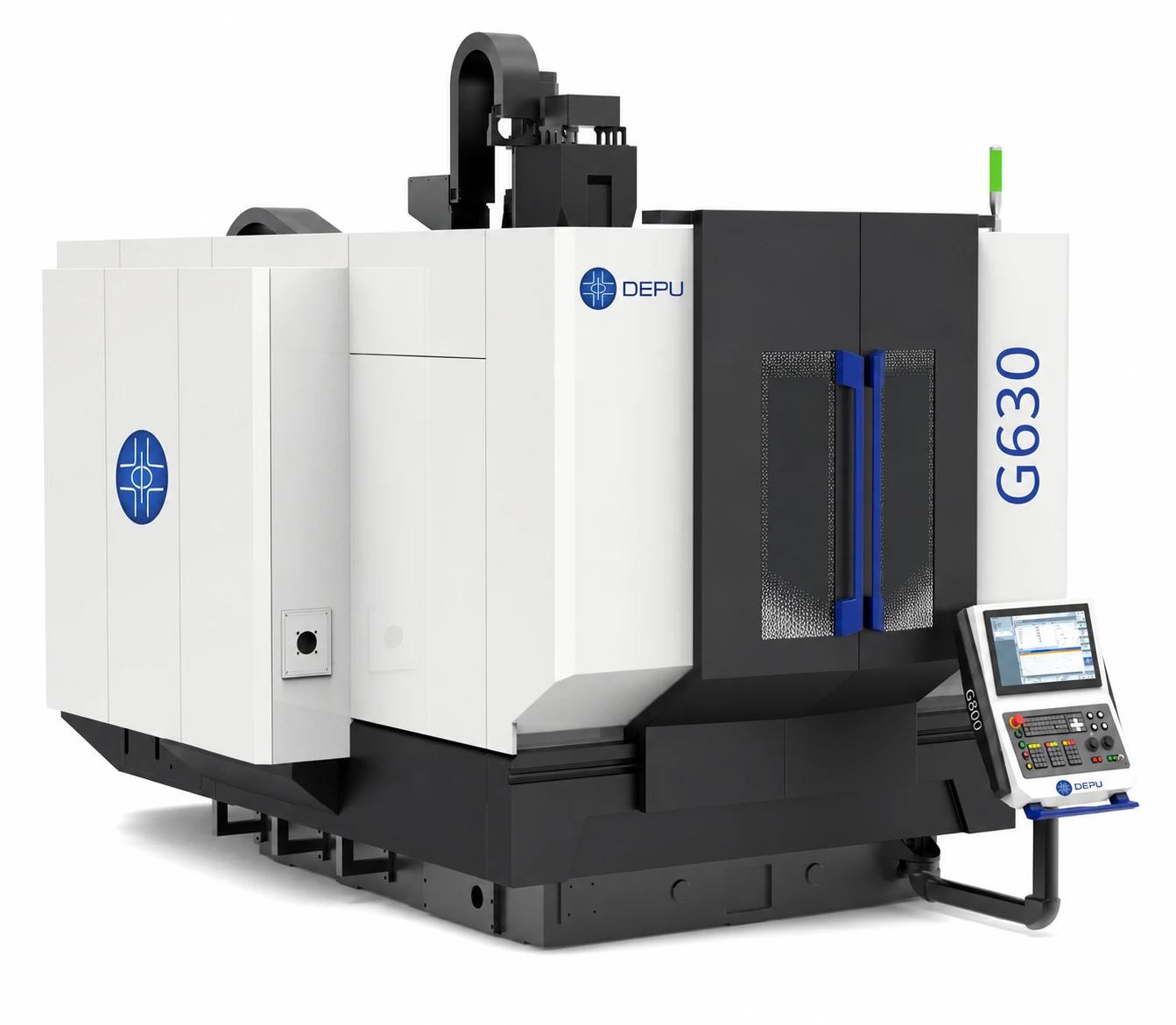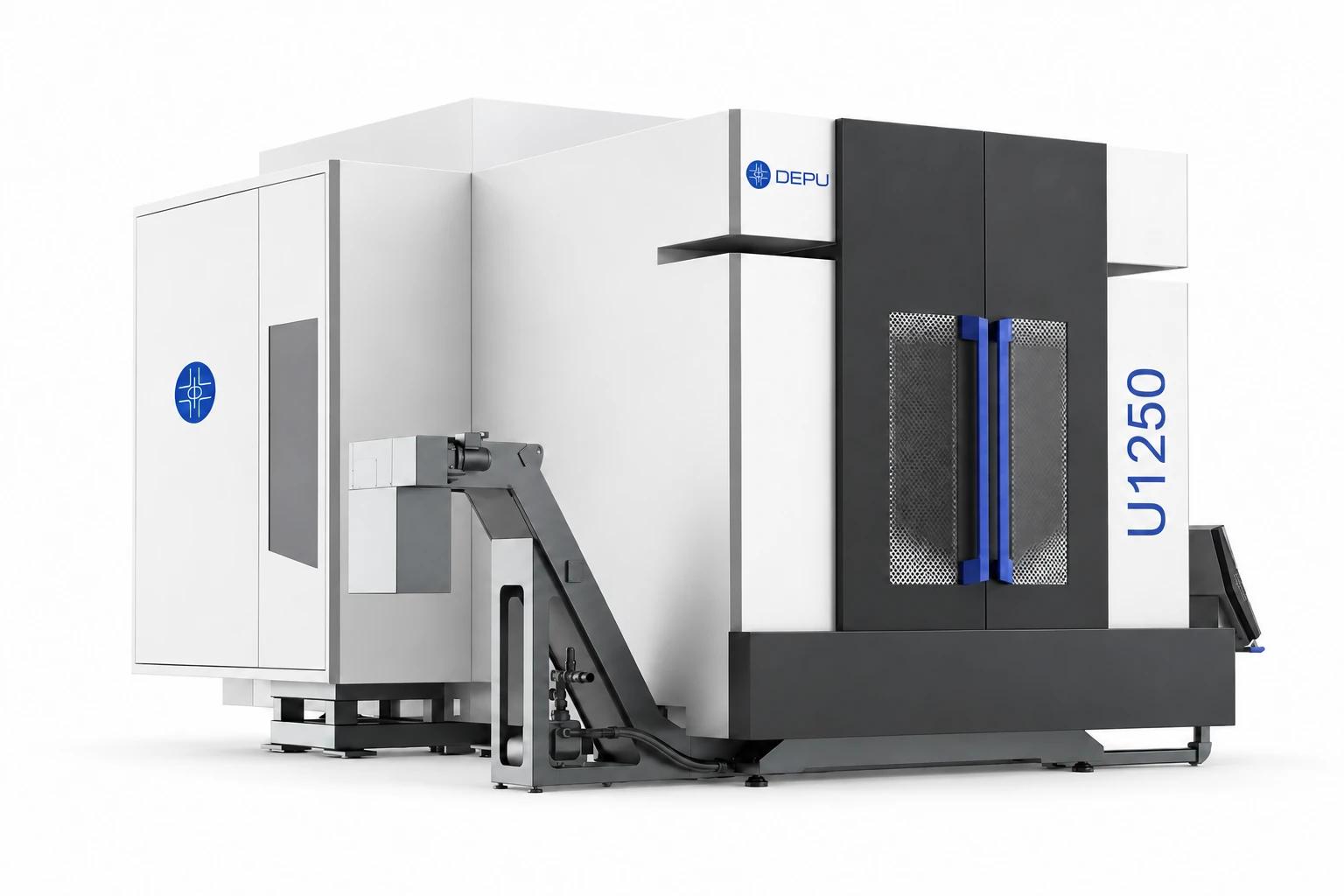

If you’re considering a 5-axis CNC machine for your shop, you need to look beyond spindle speed and feed rate. A machine that removes material quickly during one operation may still take longer to produce a finished part if it requires repeated repositioning, additional fixtures, or secondary machining.
This guide explains when 5-axis machining can save time, when it may be slower, which machine and process factors affect performance, and how you can determine whether investing in five-axis technology makes sense for your production.
Is 5-Axis CNC Machining Faster Than 3-Axis Machining?
It depends on the part geometry, machining strategy, material, and production workflow.
For simple parts with flat surfaces, basic holes, and features that are easy to reach from one direction, a 3-axis CNC machine may be faster and more economical. It has fewer axes to coordinate, and the programming and setup requirements may be simpler.
For complex parts, a 5-axis machine can often reduce total production time by allowing you to machine multiple faces and angled features without repeatedly removing and repositioning the workpiece.
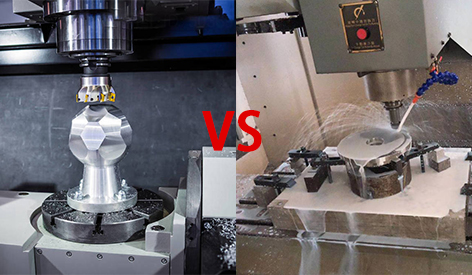
Consider the difference:
| Production requirement | 3-Axis CNC Machining | 5-Axis CNC Machining |
|---|---|---|
| Simple flat surfaces | Often efficient | May offer little additional benefit |
| Basic holes and pockets | Usually straightforward | May be unnecessary |
| Multiple angled features | May require additional setups | Can access different orientations in one setup |
| Complex curved surfaces | May require specialized fixtures or multiple operations | Can continuously adjust tool orientation |
| Machining several sides | Often requires repositioning | Can often reach more sides without manual repositioning |
| Programming complexity | Generally lower | Generally higher |
| Overall production time | Depends on the number of operations and setups | Can be shorter for complex parts |
Swipe to compare →
The important distinction is that faster machining and faster production are not the same thing.
A 5-axis machine may not remove material faster during every individual cut. But if it eliminates several setups and reduces manual handling, it can produce the finished part in less total time.
You should also distinguish between 3+2 machining and simultaneous five-axis machining. In 3+2 machining, the rotary axes position the tool or workpiece at a fixed angle before the three linear axes perform the cutting operation. In simultaneous five-axis machining, the linear and rotary axes coordinate continuously during cutting.
These methods serve different purposes, and the more complex approach is not automatically the faster one.
Why Can 5-Axis Machining Reduce Production Time?
The productivity advantage of five-axis machining comes from how you organize the entire manufacturing process. Its additional rotary axes allow the tool and workpiece to be positioned in ways that are difficult or impractical on a conventional three-axis machine.
Here are the main ways this capability can save time.
1. Fewer Workpiece Setups
One of the most significant time savings can come from reducing the number of times you need to remove, reposition, and re-clamp a workpiece.
Imagine machining a component with features on its top, sides, and angled surfaces.
With a conventional 3-axis machine, you may need to:
-
Clamp the workpiece for the first operation.
-
Machine the accessible surfaces.
-
Remove the workpiece.
-
Reposition it to reach another side.
-
Establish the datum again.
-
Repeat the process for additional features.
Each setup requires operator time and may involve fixture changes, alignment checks, and additional inspection.
With a suitable 5-axis machining center, you can often access more of these features while keeping the workpiece in one primary setup.
This can reduce:
-
Workpiece handling
-
Fixture changes
-
Repeated alignment
-
Datum re-establishment
-
Intermediate inspection
-
Machine downtime between operations
The actual savings depend on the part geometry and fixture design. Not every five-axis job can be completed in a single setup, but reducing unnecessary repositioning can make a substantial difference to the production workflow.
2. Better Tool Access to Complex Features
Tool accessibility directly affects how efficiently you can machine a part.
On a 3-axis machine, the cutting tool generally approaches the workpiece along a fixed orientation relative to the machine. If a feature is angled or difficult to reach, you may need a special fixture, a longer tool, or another setup.
A five-axis machine can change the relative orientation between the cutting tool and workpiece.
This gives you more options for machining:
-
Angled holes and surfaces
-
Deep cavities
-
Undercut features
-
Complex contours
-
Multi-sided components
-
Aerospace structural parts
Better access can reduce the need for special fixtures and additional operations. It can also make certain toolpaths more practical.
However, the machine must have enough rotary travel, work envelope, and clearance to reach the required features safely.
3. Shorter Tools Can Improve Machining Stability
When you machine deep cavities or surfaces that are difficult to reach, a long cutting tool may be necessary on a conventional three-axis machine.
Longer tool overhang can increase deflection and vibration, especially when cutting forces are high.
With five-axis positioning, you may be able to approach the same feature from a more favorable direction and use a shorter tool.
A shorter, more rigid tool setup can help you:
-
Reduce tool deflection
-
Control vibration
-
Maintain dimensional accuracy
-
Improve surface finish
-
Use more suitable cutting conditions
This is a potential process advantage, not an automatic result of having five axes. It depends on the workpiece geometry, tool orientation, fixture clearance, and machine design.
4. More Efficient Machining of Complex Surfaces
Complex curved surfaces can be difficult to finish efficiently with a fixed tool orientation.
For example, when using a ball-nose end mill, the contact point between the tool and workpiece changes depending on the tool orientation. Cutting near the center of the ball-nose tool can result in less favorable cutting conditions because the effective cutting speed approaches zero at the tool tip.
A five-axis machine can tilt the tool to maintain a more favorable contact position on suitable surfaces.
This can help you:
-
Improve cutting conditions
-
Reduce unnecessary tool movement
-
Use more suitable finishing strategies
-
Improve surface quality
-
Reduce some finishing and polishing work
The benefit is particularly relevant for molds, dies, aerospace components, and other parts with complex contours.
5. Fewer Secondary Operations
When a part requires machining from multiple directions, a conventional process may involve several machines or separate operations.
A suitable five-axis machining center can consolidate some of these operations.
For example, you may be able to complete several angled holes, side features, and contoured surfaces without transferring the part to another machine.
Reducing secondary operations can save time associated with:
-
Moving workpieces between machines
-
Re-establishing workpiece datums
-
Changing fixtures
-
Waiting for machine availability
-
Performing additional setup inspections
The goal is not necessarily to eliminate every secondary operation. It is to identify which operations can be combined without compromising accuracy, surface quality, or process reliability.
Does 5-Axis CNC Machining Increase Cutting Speed?
Not automatically.
A five-axis CNC machine does not inherently have a higher spindle speed or feed rate than a three-axis machine. Cutting speed depends on the machine’s mechanical capabilities, cutting tools, material, and machining conditions.
To evaluate machining performance correctly, you should understand four different terms.
Spindle Speed (RPM)
Spindle speed describes how fast the spindle rotates.
A higher spindle speed can be useful for certain tools, materials, and finishing operations, but it does not guarantee faster material removal.
The appropriate spindle speed depends on tool diameter, cutting speed requirements, workpiece material, tool specifications, and machine capability.
Feed Rate
Feed rate describes how quickly the cutting tool advances along its programmed path.
A five-axis machine can move along several axes simultaneously, but the actual feed rate depends on the programmed toolpath and the motion capabilities of the machine.
During complex five-axis movements, rotary axes may need to accelerate, decelerate, or change direction frequently. These movements can limit the achievable tool-center-point feed rate.
Material Removal Rate (MRR)
Material removal rate describes how much material is removed over a given period.
It is influenced by:
-
Cutting speed
-
Feed per tooth
-
Number of effective cutting edges
-
Axial depth of cut
-
Radial width of cut
-
Tool and workpiece material
-
Machine rigidity
Five-axis positioning may help you use a more suitable tool orientation or reduce tool overhang, but the axis count alone does not determine material removal rate.
Machining Cycle Time
Cycle time is the time required for a machine to execute a particular production cycle.
It can include cutting movements, non-cutting movements, tool changes, positioning, and other programmed machine actions, depending on how the cycle is defined.
For production planning, you should also consider the time outside the machine cycle, such as workpiece loading, setup, inspection, and transfers between machines.
The most useful comparison is the total time required to produce an acceptable finished part, not just the programmed cutting time.
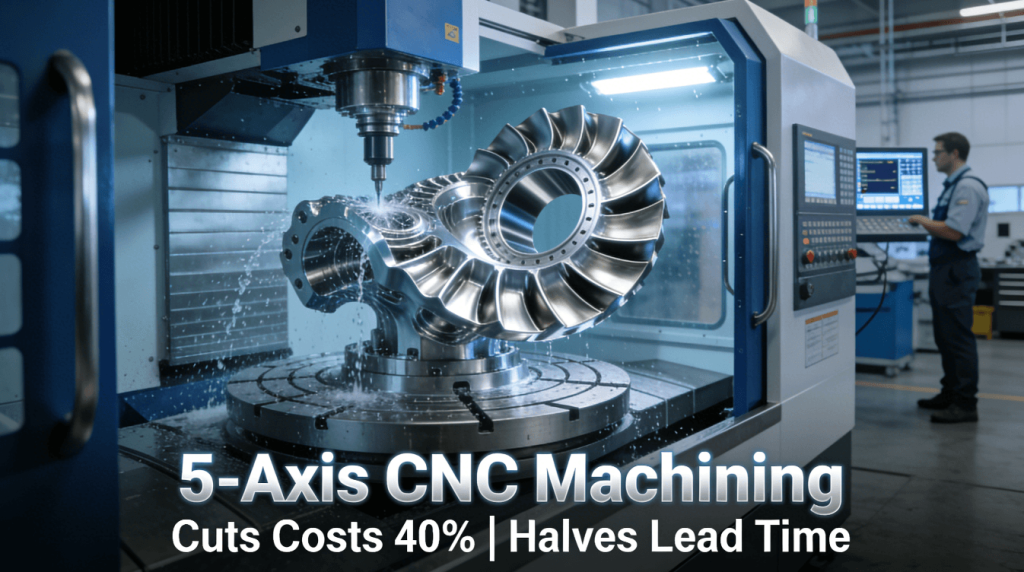
When Is 5-Axis Machining Faster?
Five-axis machining is most likely to provide a time advantage when the part geometry makes additional tool orientations valuable.
Complex Aerospace Components
Aerospace components often contain curved surfaces, angled features, pockets, and complex geometries.
Machining these features on a three-axis machine may require multiple setups and specialized fixtures.
A five-axis machine can approach more surfaces from different directions while maintaining the same primary workholding relationship.
This can reduce repositioning and simplify the machining workflow.
Precision Medical Components
Some medical components require complex contours, angled features, and tight dimensional relationships between multiple surfaces.
Five-axis machining can provide more flexible tool access and reduce the need to reposition certain workpieces.
However, the appropriate process still depends on the material, component geometry, tolerance requirements, and validation procedures.
Complex Molds and Dies
Molds and dies often contain deep cavities, curved surfaces, and difficult-to-reach features.
Five-axis machining can provide better tool orientation and access to these areas. In suitable applications, it can also support shorter tools and more efficient surface finishing.
This may reduce machining interruptions and the amount of manual finishing required.
Multi-Sided Industrial Components
If your parts require machining on several sides, five-axis positioning may allow you to complete more operations in one setup.
This is especially useful when multiple features must maintain precise positional relationships.
The fewer times you reposition a workpiece, the fewer opportunities there are to introduce setup-related variation.
When Can 5-Axis Machining Be Slower?
Five-axis technology offers more machining flexibility, but that flexibility comes with additional technical requirements.
There are situations where using a five-axis machine can take longer than using a three-axis machine. This is particularly important when comparing simultaneous five-axis machining with simpler 3-axis or 3+2 strategies.
1. Simple Parts Do Not Need Additional Axes
If your component has only flat surfaces, standard holes, and straightforward pockets, a three-axis machine may complete the job efficiently.
Using a five-axis machine may add programming and setup work without providing enough benefit to justify the extra complexity.
2. Five-Axis CAM Programming Takes More Preparation
Simultaneous five-axis machining requires more than generating a basic three-axis toolpath.
Your programming team must consider:
-
Tool orientation
-
Rotary-axis limits
-
Machine kinematics
-
Collision avoidance
-
Fixture clearance
-
Postprocessor configuration
-
Toolpath smoothing
The CAM system must also be configured for the specific machine and CNC control.
If your team has limited five-axis programming experience, developing and verifying a new machining process may take longer.
3. Rotary-Axis Movement Can Limit Actual Feed Rate
This is an important technical factor that is easy to overlook.
During simultaneous five-axis machining, the tool may need to change both its position and orientation. The CNC control system must coordinate the linear and rotary axes while respecting their velocity, acceleration, and other motion limits.
A toolpath with frequent direction changes or short segments can cause repeated acceleration and deceleration.
As a result, the actual feed rate may be lower than the feed rate programmed in the CAM software.
A 2024 study published in the CIRP Journal of Manufacturing Science and Technology examined this issue in complex five-axis toolpaths. The researchers found that actual feed rates can fluctuate because of interpolation and machine-motion constraints. Their work demonstrates why programmed feed rate alone is not a reliable way to estimate machining time.
The practical implication is that you should evaluate actual machine performance using representative toolpaths rather than relying only on nominal specifications.
4. Simultaneous Five-Axis Machining Is Not Always Faster Than 3+2
More axis movement does not automatically mean a shorter cycle time.
In 3+2 machining, the rotary axes position the workpiece or tool at a fixed angle, while the three linear axes perform the cutting operation. This can simplify programming and reduce the amount of coordinated motion required during cutting.
Simultaneous five-axis machining is useful when the tool orientation must change continuously, such as when machining certain complex curved surfaces or undercuts.
However, continuous rotary movement introduces additional kinematic constraints. Depending on the machine and toolpath, these movements may require compensatory motion and reduce the achievable feed rate.
Siemens’ SINUMERIK milling technology manual discusses these trade-offs. It recommends using 3-axis, 3+1-axis, or 3+2-axis machining for roughing and semi-finishing where the part geometry and machine kinematics permit, reserving simultaneous five-axis machining for operations such as complex finishing when needed.
For your production process, the most efficient approach may be a combination of machining strategies rather than using simultaneous five-axis movement for every operation.
5. Poor Workholding Can Reduce Efficiency
Five-axis machining requires careful workpiece positioning.
The fixture must hold the component securely while providing sufficient clearance for rotary-axis movement.
If the workpiece is positioned poorly, the machine may encounter:
-
Tool or fixture interference
-
Rotary-axis travel limitations
-
Unnecessary tool repositioning
-
Difficult machining angles
-
Reduced accessibility
Good fixture design is therefore essential to getting the most from a five-axis machine.
6. The Machine May Not Be Optimized for the Application
Not every five-axis machine is designed for the same type of work.
A machine intended for high-speed finishing of small components may not be the right choice for heavy-duty roughing of large steel parts.
Similarly, a machine with insufficient rotary-axis dynamics or spindle torque may struggle to deliver the cycle times you expect.
You need to match the machine architecture and performance to your actual materials, workpiece dimensions, and machining operations.
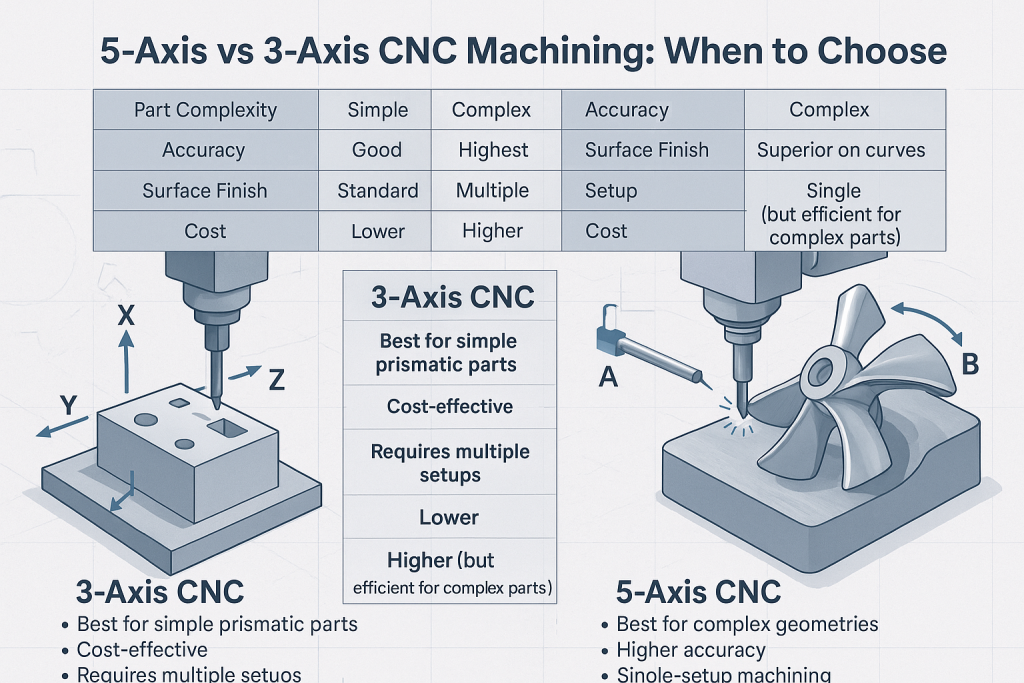
3-Axis vs. 5-Axis Machining: A Production Workflow Comparison
To understand where five-axis machining saves time, consider a component with features on the top, sides, and angled surfaces.
The following is an illustrative workflow comparison, not a measured production-time result.
Typical 3-Axis Workflow
-
Clamp the workpiece and establish the initial datum.
-
Machine the accessible top surfaces and features.
-
Remove and reposition the workpiece.
-
Re-establish the datum and machine the side features.
-
Repeat repositioning if additional surfaces require access.
-
Complete final machining and inspection.
Potential 5-Axis Workflow
-
Secure the workpiece in a fixture designed for five-axis access.
-
Establish the work coordinate system and verify clearances.
-
Machine multiple accessible surfaces by changing tool or workpiece orientation.
-
Complete the remaining operations that require separate access or workholding.
-
Perform final inspection.
The five-axis process may require more preparation before machining begins, particularly when developing a new program or fixture.
However, once the process is validated, fewer manual repositioning steps can make production more efficient and repeatable.
There is one important qualification: a five-axis machine does not guarantee that every face can be completed in one setup. Workpiece geometry, fixture interference, machine travel, and tool access may still require additional setups.
What Factors Affect 5-Axis CNC Machining Speed?
If you want to improve five-axis machining efficiency, look at the complete machine and process rather than focusing on one specification.
1. Machine Rigidity
Machine rigidity affects how well the machine maintains its geometry under cutting forces.
A rigid structure can help control vibration and deflection, particularly when machining hard materials or removing substantial amounts of material.
When comparing machines, consider the structural design, spindle support, axis construction, and intended cutting applications.
2. Spindle Power, Torque, and Speed
Spindle specifications should match the materials and cutting operations you plan to perform.
High spindle speed can be valuable for small-diameter tools and finishing operations. Higher torque may be more important for certain heavy-duty cutting applications.
Neither specification should be evaluated in isolation. The usable spindle performance across the operating speed range matters.
3. Rotary-Axis Performance
Rotary-axis performance has a direct effect on simultaneous five-axis machining.
Pay attention to:
-
Rotary-axis speed
-
Acceleration and deceleration
-
Positioning accuracy
-
Repeatability
-
Clamping performance
-
Travel range
-
Dynamic behavior under machining conditions
A machine may have five controlled axes but still struggle to maintain the required feed rate on demanding toolpaths if its axis dynamics are not suitable.
4. Cutting Tools and Toolholders
The right cutting tool can make a significant difference to machining efficiency.
Consider:
-
Tool material and coating
-
Tool diameter
-
Cutting-edge geometry
-
Tool overhang
-
Toolholder rigidity
-
Recommended cutting conditions
For deep or angled features, five-axis positioning may allow you to use a shorter tool, improving stability in suitable applications.
5. Material and Coolant Strategy
Aluminum, stainless steel, titanium, and tool steel have different machining requirements.
The cutting strategy must account for material properties, heat generation, tool wear, chip evacuation, and the machine’s capabilities.
For example, machining titanium requires careful control of cutting conditions and heat. Simply increasing feed rate or spindle speed does not necessarily improve productivity.
Your coolant delivery and chip-removal strategy also need to support the machining process.
6. CAM Software and CNC Control
Your CAM software, postprocessor, and CNC control system must work together correctly.
A good five-axis programming workflow should account for:
-
Machine kinematics
-
Tool orientation
-
Collision detection
-
Rotary-axis limits
-
Smooth toolpath transitions
-
Feed-rate optimization
-
Machine simulation
Poorly optimized toolpaths can create unnecessary movements and frequent slowdowns, reducing the productivity advantage of five-axis machining.
How to Improve 5-Axis CNC Machining Efficiency
Buying a five-axis machine is only part of the process. You also need a machining strategy that makes effective use of its capabilities.
Here are practical steps you can apply.
Step 1: Review the Part Geometry Before Programming
Identify which features actually require five-axis positioning.
Not every operation needs simultaneous five-axis movement. Some features may be completed more efficiently with fixed tool orientation.
Separating these operations helps you choose the right machining strategy instead of using the most complex toolpath for every feature.
Step 2: Optimize Workpiece Positioning
Plan the workpiece position to provide access to as many required surfaces as practical.
Check:
-
Rotary-axis travel
-
Tool and fixture clearance
-
Workpiece center of gravity
-
Clamping stability
-
Collision risks
-
Required machining angles
A well-planned setup can reduce unnecessary rotary movement and help maintain a stable machining process.
Step 3: Use the Right Tool Length
Avoid using unnecessarily long tools when a shorter tool can reach the feature.
Long tool overhang can increase deflection and vibration.
Five-axis positioning may allow you to approach a feature from a better angle, but you still need to verify tool clearance and cutting stability.
Step 4: Choose the Right Machining Strategy for Each Operation
You do not need to use simultaneous five-axis movement for every operation.
Where the geometry permits, consider:
-
3-axis machining for straightforward features
-
3+2 machining for angled features and fixed tool orientations
-
Simultaneous five-axis machining for continuously changing tool orientations and complex surfaces
This approach can reduce unnecessary rotary motion and programming complexity.
Step 5: Optimize Toolpaths and Feed Rates
Use CAM strategies that suit the part geometry and machine capabilities.
Pay attention to short toolpath segments, sudden changes in tool orientation, and unnecessary repositioning.
Simulate the toolpath and review the actual machine movements. Where possible, evaluate the resulting cycle time rather than relying only on the programmed feed rate.
Step 6: Validate the Process With Representative Parts
Before using a new process for production, test it with representative workpieces and machining operations.
Review:
-
Actual cycle time
-
Tool wear
-
Surface finish
-
Dimensional accuracy
-
Machine loading
-
Collision clearance
-
Workpiece stability
This helps you identify whether the new process genuinely improves production efficiency.
Is a 5-Axis CNC Machine Worth the Investment?
A five-axis CNC machine can be a worthwhile investment if your production regularly involves complex parts, multiple machining directions, difficult tool access, or repeated workpiece setups.
However, the investment should be based on your actual production requirements, not simply the assumption that five axes are faster than three.
A 5-Axis Machine May Be a Good Investment If:
-
You regularly machine complex geometries.
-
Your parts require machining on multiple sides.
-
Repeated setups consume substantial production time.
-
You need better access to angled features and curved surfaces.
-
You manufacture high-value components where setup consistency matters.
-
Your business has the CAM programming and technical support needed to use the machine effectively.
A 5-Axis Machine May Not Be Necessary If:
-
Most of your parts have simple geometries.
-
Your existing three-axis machines complete jobs efficiently.
-
Your production relies on high-volume, repetitive operations.
-
The additional programming and equipment costs outweigh the expected process savings.
-
Your team does not yet have the skills or support needed for five-axis machining.
How to Evaluate the Investment
Before purchasing a machine, compare the complete production cost of your existing process with the proposed five-axis process.
Include:
| Cost or performance factor | What to evaluate |
|---|---|
| Setup time | How many setups are required per part? |
| Machining time | What is the actual machine cycle time? |
| Labor | How much operator involvement is needed? |
| Tooling | Will tool consumption or tool changes increase or decrease? |
| Fixtures | Can you simplify or reduce workholding requirements? |
| Quality | Will fewer setups improve consistency or reduce rework? |
| Programming | How much time is required to create and verify toolpaths? |
| Equipment cost | What are the purchase, installation, and operating costs? |
| Maintenance | What service and calibration requirements should you expect? |
Swipe to compare →
A useful comparison is the total cost per acceptable finished part.
If a five-axis process reduces handling, setup, and secondary operations enough to offset its higher equipment and programming costs, it may offer a strong long-term business case.
What Should You Look for in a 5-Axis CNC Machine Manufacturer?
If you’re purchasing a five-axis CNC machine, its long-term performance depends on more than the number of axes or the advertised spindle specifications.
You should also evaluate the manufacturer’s engineering experience, structural design, manufacturing environment, assembly standards, and technical support.
For heavy-duty, high-precision equipment, the machine foundation and installation environment are particularly important. Uneven foundation settlement can affect machine geometry and long-term stability.
DEPU Group was established in 2014 and focuses on the research, development, production, and sales of five-axis CNC machine tools and core components. Its core team brings experience from established machine-tool companies in China and overseas.
The group has production facilities in Shenzhen and Haining, Jiaxing, Zhejiang, with a combined area exceeding 30,000 m², alongside a global R&D network.
At its Haining facility, DEPU has incorporated a high-load foundation solution for heavy-duty, high-end machine tools. According to the company, its construction and inspection procedures are designed to keep differential settlement between machine support points within the micrometer range during equipment assembly, commissioning, and machining tests.
This type of manufacturing and infrastructure consideration matters because a machine’s ability to maintain stable geometry is part of its long-term precision performance.
When evaluating a supplier, ask for relevant technical documentation, inspection records, installation requirements, and evidence that the machine can meet your actual production and accuracy requirements.
Conclusion
5-axis CNC machining can be faster, but its main advantage is not simply higher cutting speed. For complex parts, it can reduce setups, improve tool access, simplify machining strategies, and consolidate operations.
For simple components, a three-axis machine may still be the faster and more economical option. Even when you need five-axis positioning, 3+2 machining may be more efficient than continuous five-axis movement for certain operations.
If you’re considering a five-axis CNC machine, evaluate your part geometry, production workflow, actual cycle times, machine dynamics, and total manufacturing costs. The right machine is the one that helps you produce acceptable parts more efficiently—not necessarily the one with the highest specifications.
FAQ
Is 5-Axis CNC Machining Faster Than 3-Axis Machining?
It can be, especially for complex parts that require machining on multiple sides or at different angles. Five-axis machining can reduce setups and workpiece repositioning. However, three-axis machining may be faster for simple parts that do not need additional tool orientations.
Does 5-Axis Machining Reduce Cycle Time?
It can reduce the overall time required to produce a finished part by combining operations and reducing manual repositioning. However, the actual machine cycle time depends on the toolpath, machine dynamics, material, tooling, and machining conditions.
Is 5-Axis Machining Faster for Aluminum?
Not automatically. Aluminum can often be machined at high cutting speeds, but the actual performance depends on the spindle, cutting tool, toolpath, workpiece geometry, and machine capabilities. Five-axis positioning may improve access and reduce setups for complex aluminum components, while a three-axis machine may remain more efficient for simple parts.
Does 5-Axis Machining Improve Cutting Speed?
Five-axis machining does not inherently increase spindle speed or feed rate. It can improve tool orientation and access, potentially allowing more favorable cutting conditions. Actual cutting speed still depends on the material, tool, machine, and machining strategy.
Why Is 5-Axis CNC Machining Sometimes Slower?
Five-axis machining may take longer when the part is simple, the toolpath requires frequent rotary-axis movements, programming is inefficient, or the machine’s axis dynamics limit the actual feed rate. Additional setup and verification time can also affect the overall process.
Is Simultaneous 5-Axis Machining Faster Than 3+2 Machining?
Not necessarily. Simultaneous five-axis machining continuously coordinates the linear and rotary axes during cutting. In 3+2 machining, the rotary axes position the workpiece or tool at a fixed angle before three-axis cutting begins.
Simultaneous machining can be useful for complex contours and continuously changing tool orientations. For many angled features and multi-face operations, 3+2 machining may be simpler and more efficient.
The best approach depends on the part geometry, tool access, surface requirements, machine dynamics, and machining strategy.
How Can You Measure Whether a 5-Axis Machine Is Actually Faster?
Compare the complete production process using representative parts.
Measure setup time, actual machining cycle time, operator handling, tool changes, inspection, rework, and total time per acceptable finished part.
This gives you a more realistic comparison than looking only at spindle speed or programmed feed rate.
Originally published by DEPU on 23 Nov 2026.