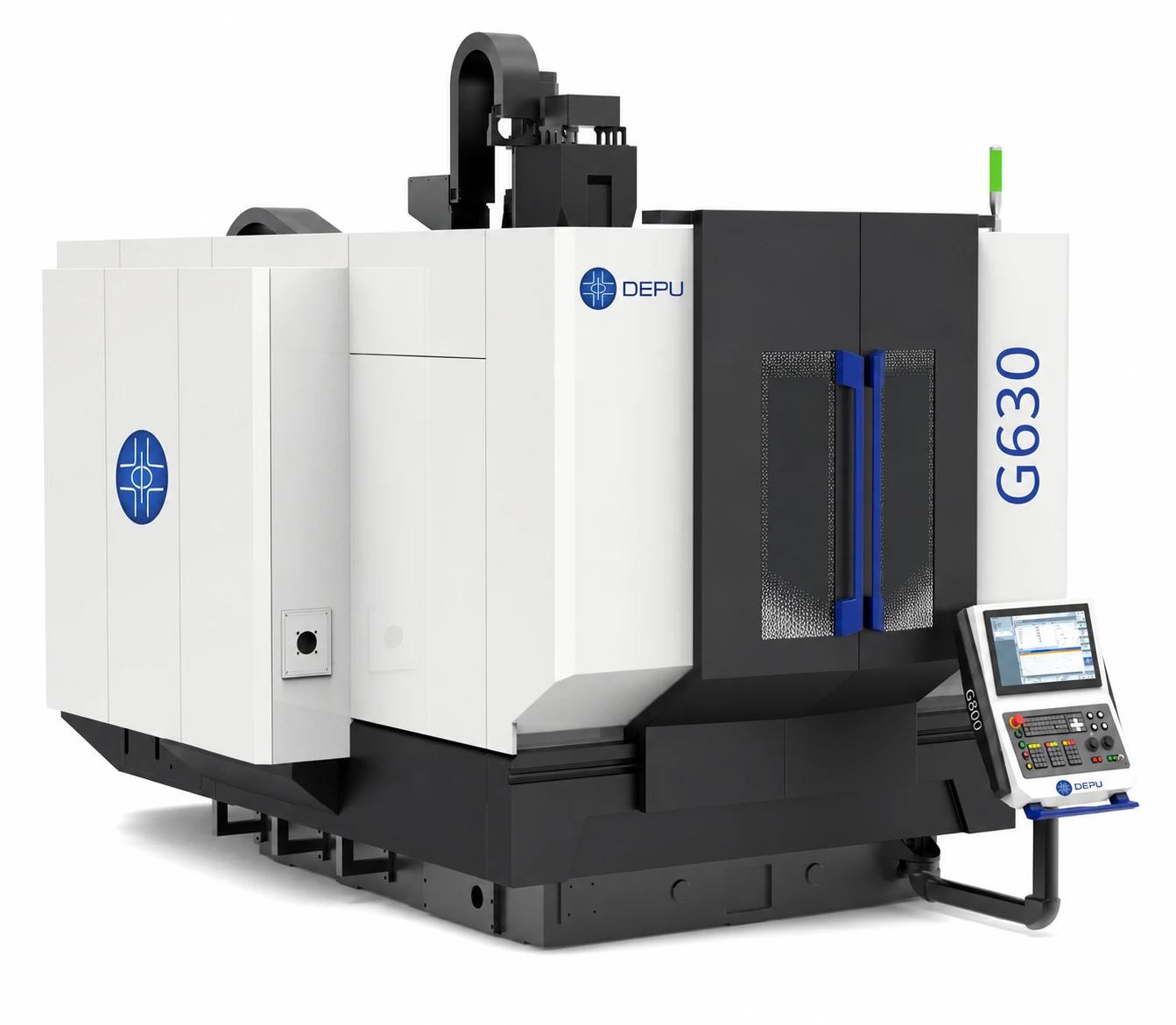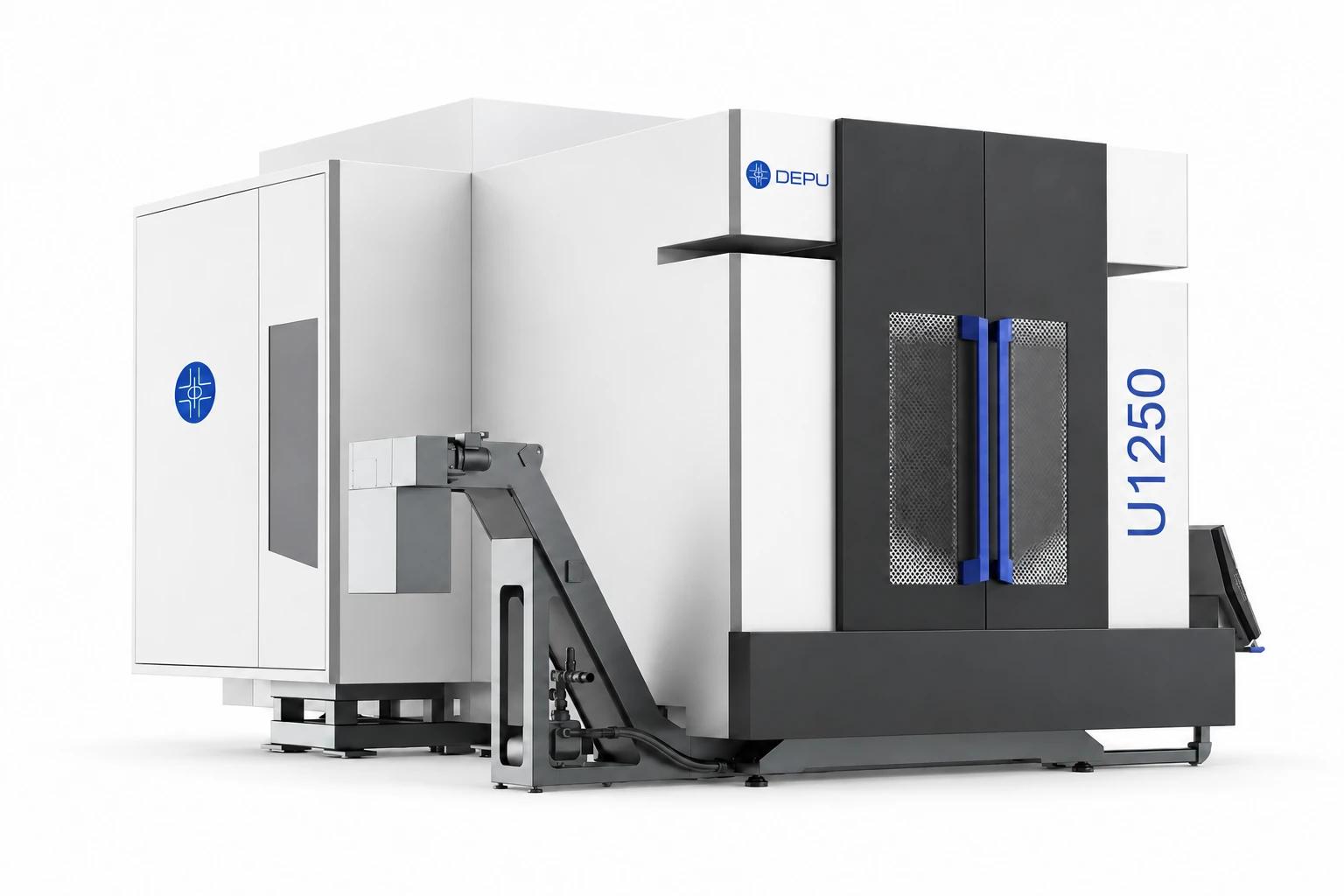

If you’re evaluating CNC equipment for your manufacturing business, understanding this distinction is important. The number of axes alone does not tell you what a machine can produce, how efficiently it can work, or whether it is the right investment for your parts.
In this guide, you’ll learn how nine-axis CNC machines are configured, how their axes work together, what types of components they can produce, and when a five-axis machining center may be a more practical choice.
What Is a 9-Axis CNC Machine?
A 9-axis CNC machine is a computer-controlled machine tool with nine controlled motion axes. These axes may combine linear movements, rotary movements, and independent movements from multiple machining units.
Unlike a conventional three-axis milling machine, which moves along the X, Y, and Z directions, a nine-axis machine can coordinate several machining elements to position cutting tools and workpieces during different operations.
There is no single mechanical configuration used by every nine-axis CNC machine. The arrangement depends on the machine’s design and intended applications.
Understanding the nine axes
One way to understand a nine-axis configuration is through the following axis naming convention:
| Axis group | Axis names | Function |
|---|---|---|
| Primary linear axes | X, Y, Z | Provide movement along three perpendicular directions |
| Rotary axes | A, B, C | Rotate around the X, Y, and Z axes, respectively |
| Additional linear axes | U, V, W | Provide secondary linear movement parallel to X, Y, and Z |
Swipe to compare →
This XYZ + ABC + UVW arrangement is a useful way to explain nine different motion directions. However, it is not a universal layout for commercial nine-axis machines.
In practice, manufacturers may count axes from different machine components, including:
-
Main and sub-spindles
-
Upper and lower turrets
-
Independent tool slides
-
Linear positioning axes
-
Rotary positioning axes
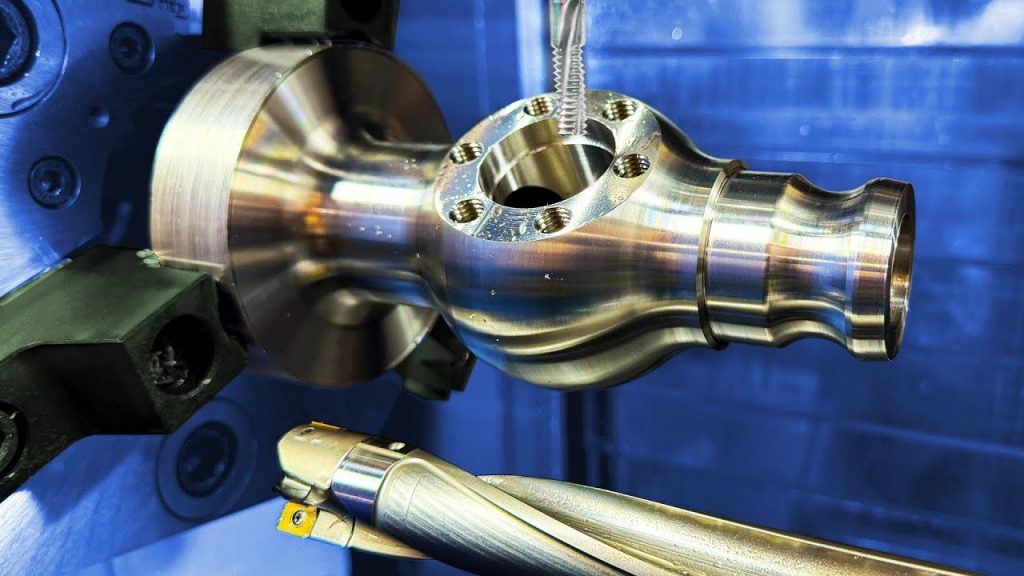
For example, a multitasking turning center may achieve a nine-axis configuration through the coordinated movements of two spindles and multiple tool units rather than through one machining head with nine motion directions.
When comparing machines, always check the manufacturer’s axis configuration diagram and technical documentation. Also confirm whether the listed axes are standard or optional.
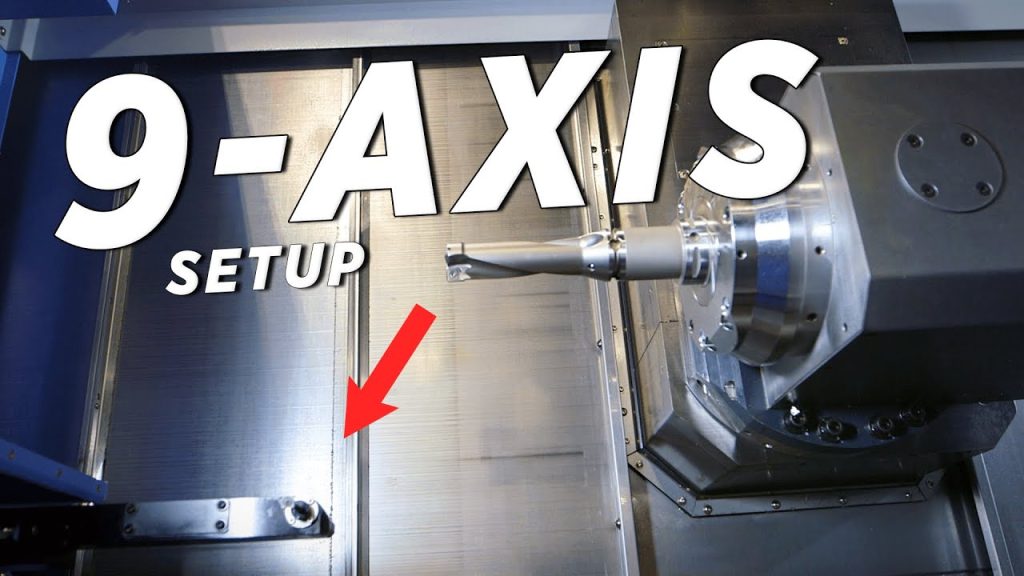
How Does a 9-Axis CNC Machine Work?
A nine-axis CNC machine works by coordinating multiple machine components to position the workpiece and cutting tools. Depending on the configuration, it may combine turning, milling, drilling, and other machining operations in one integrated system.
A common example is a multitasking CNC turning center with two spindles and multiple turrets.
1. Multiple spindles handle different machining stages
A machine with a main spindle and a sub-spindle can hold a workpiece at different stages of production.
The main spindle performs the initial machining operations. The sub-spindle can then take over the workpiece so that additional features can be machined from the opposite end.
This arrangement can reduce the need to remove a part from the machine and manually reposition it for another operation.
However, the actual transfer process and available operations depend on the machine’s configuration.
2. Multiple turrets provide additional tool access
Some multitasking machines use upper and lower turrets or multiple independent tool units.
Each turret can carry different cutting tools and may have its own controlled movements. This allows the machine to perform different operations on the same workpiece or, on suitable configurations, work on different parts of the production cycle at the same time.
The practical benefit is greater process integration. Instead of transferring a component between separate turning and milling machines, you may be able to complete more operations in one machine.
3. Turning and milling can be combined
A multitasking CNC machine may combine:
-
External and internal turning
-
Face machining
-
Milling of flats and slots
-
Drilling and tapping
-
Cross-hole machining
-
Machining of features on different sides of a component
The available operations depend on the machine’s spindle, turret, tooling, and axis configuration.
This is particularly useful when your parts require both rotational machining and features that cannot be produced efficiently through turning alone.
A real-world example of a nine-axis configuration
Nine-axis configurations are not just theoretical. TAKISAWA’s TM Series catalog describes a machine configuration with up to nine controlled axes for integrated turning and milling operations. The listed arrangement includes multiple linear and rotary axes distributed across the machine’s spindles and turrets.
There is an important model-specific distinction, however. TAKISAWA’s official TM-4000ⅡY2 product page describes that model as a four-axis combined-machining CNC lathe. Its TM Series catalog also discusses configurations with up to nine control axes.
These descriptions should not be treated as interchangeable specifications for every TM-4000ⅡY2 machine. They illustrate why you need to check the exact model, configuration, and available options before using an advertised axis count to compare equipment.
The broader lesson is that a nine-axis machine can distribute its controlled axes across several machine components. It does not necessarily have nine axes on one cutting head.
Do All Nine Axes Move at the Same Time?
No. Having nine controlled axes does not mean that all nine axes move simultaneously during every machining operation.
This is one of the most important distinctions to understand when comparing multi-axis CNC machines.
1. Total controlled axes
This refers to the total number of axes that the CNC system can control within the machine configuration.
A machine may have nine controlled axes distributed across several spindles, turrets, or slides.
2. Simultaneously interpolated axes
These are axes that the CNC control system can coordinate during a programmed movement.
For example, a machining operation may require several linear and rotary axes to move together to maintain the correct relationship between the cutting tool and workpiece.
The number of axes that can be interpolated simultaneously depends on the CNC control system, machine configuration, and software capabilities.
3. Simultaneous cutting operations
This refers to whether multiple cutting tools or machining units can perform material-removal operations at the same time.
A machine with multiple turrets and spindles may support overlapping machining operations, but the exact possibilities depend on its mechanical design and control capabilities.
These three concepts are not interchangeable.
When evaluating a nine-axis CNC machine, ask the manufacturer for its total controlled-axis count, simultaneous interpolation capabilities, and available simultaneous machining combinations. This will tell you much more than the nine-axis label alone.
What Is the Difference Between 5-Axis and 9-Axis CNC Machines?
A five-axis CNC machining center and a nine-axis CNC machine can both handle complex manufacturing tasks, but they are often designed around different machining requirements.
A typical five-axis machining center focuses on controlling the position and orientation of a cutting tool relative to a workpiece. A nine-axis multitasking machine may combine several machining units to integrate turning, milling, and other operations.
| Comparison | 5-Axis CNC Machining Center | 9-Axis CNC Machine |
|---|---|---|
| Typical configuration | Three linear axes and two rotary axes | Multiple linear and rotary axes across different machine components |
| Main machining focus | Complex milling and multi-face machining | Often integrated turning, milling, and multitasking |
| Tool orientation | Can change through rotary-axis movement | Depends on the individual tool units and machine configuration |
| Spindle arrangement | Often one main machining spindle | May include main and sub-spindles |
| Tool arrangement | Typically one main tool system with a tool magazine | May use multiple turrets or independent tool units |
| Typical applications | Complex molds, aerospace structures, medical components, and contoured parts | Complex turned-and-milled components and parts requiring multiple integrated operations |
| Main selection factor | Part geometry and tool-access requirements | Process integration and the need for multiple machining units |
Swipe to compare →
When should you choose a 5-axis machine?
A five-axis machining center is often a practical choice when your parts require:
-
Complex curved surfaces and freeform geometries
-
Machining from multiple directions
-
Deep cavities and angled features
-
Precision mold and die manufacturing
-
Aerospace structural components
-
Complex parts that benefit from fewer setups
For these applications, the ability to control tool orientation is particularly valuable.
When should you consider a 9-axis machine?
A nine-axis multitasking machine may be more suitable when your production requires:
-
Both turning and milling operations
-
Machining on opposite ends of a component
-
Multiple tool units working within one machine
-
Reduced transfers between separate machines
-
Integrated production of complex rotational components
For example, if you manufacture a component that requires turning its main diameter, milling flats, drilling cross-holes, and machining features on the opposite end, a multitasking machine may consolidate several operations.
The best choice depends on your actual process. A nine-axis machine is not automatically better for complex five-axis milling, just as a five-axis machining center is not necessarily the most efficient choice for a component dominated by turning operations.
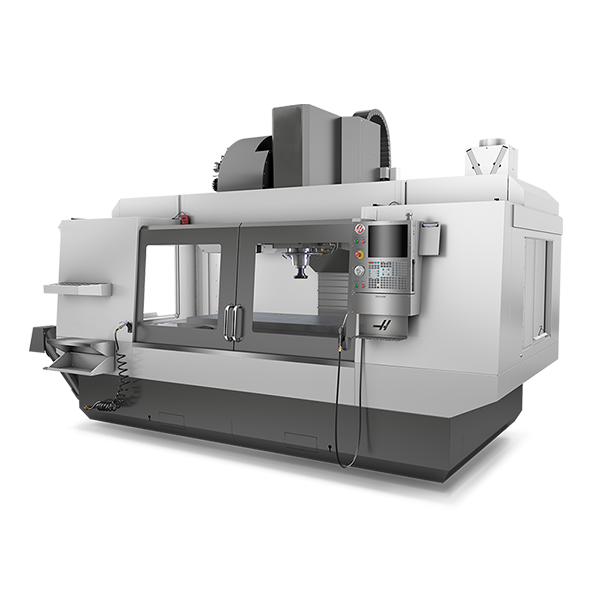
What Parts Can a 9-Axis CNC Machine Produce?
Nine-axis multitasking machines are particularly useful for components that combine rotational geometry with additional milled or drilled features.
The following applications illustrate where their integrated machining capabilities may be valuable.
1. Complex shafts and rotational components
Shafts and other rotational components may require several operations, including turning, drilling, milling, and machining features at different positions.
A suitable multitasking machine can combine many of these operations without requiring the part to move between separate machines.
2. Hydraulic and pneumatic components
Some hydraulic and pneumatic components combine cylindrical surfaces, threaded connections, ports, and cross-holes.
Depending on the geometry and machine configuration, a multitasking CNC machine may handle several of these features in one production sequence.
3. Automotive and industrial components
Automotive and industrial parts often require consistent machining across multiple surfaces.
Components such as transmission-related parts, rotating elements, and precision mechanical fittings may benefit from integrated turning and milling operations.
4. Components requiring machining from multiple sides
When a component has features on both ends or around its circumference, a machine with multiple spindles and tool units may reduce the need for repeated manual handling.
However, not every multi-sided part requires nine axes. Depending on its geometry, a three-axis or five-axis machine may complete the job more economically.
Advantages and Limitations of 9-Axis CNC Machining
Nine-axis CNC machining can offer substantial manufacturing flexibility, but its advantages depend on whether your production actually uses the machine’s additional capabilities.
Advantages
1. Greater process integration
A suitable multitasking machine can combine turning, milling, drilling, and other operations in one system. This can reduce transfers between separate machines.
2. Fewer manual setups
Dual-spindle configurations may allow machining on different ends of a workpiece without removing it for manual repositioning.
3. Better production flow
Multiple tool units can support overlapping operations where the machine is designed for them. This may reduce idle time between machining stages.
4. More machining flexibility
Additional controlled axes and machining units provide more ways to access different features of a component.
Limitations
1. Higher equipment investment
Machines with multiple spindles, turrets, and coordinated axes are mechanically and electronically complex. Their purchase and implementation costs need to be evaluated against the production benefits.
2. More demanding programming
Your programmers must understand the relationships between multiple machining units, spindle synchronization, axis coordination, and machine-specific operating limits.
3. More complicated setup and maintenance
Additional machine components create more systems to configure, inspect, and maintain. You should evaluate service availability and maintenance requirements before purchasing.
4. Not every part benefits from nine axes
If your parts mainly require complex surface milling, a dedicated five-axis machining center may be a better fit. If your parts are simple rotational components, a conventional CNC lathe may be more economical.
The important question is not how many axes a machine has, but how effectively its configuration supports your production process.
Is a 9-Axis CNC Machine Better Than a 5-Axis Machine?
Not necessarily. A nine-axis machine has more controlled axes in its configuration, but that does not automatically mean it offers better accuracy, faster machining, or greater suitability for every complex part.
The two machine types often solve different manufacturing problems.
| Your production requirement | Machine type worth evaluating |
|---|---|
| Complex curved surfaces and multi-directional milling | 5-axis machining center |
| Precision molds and complex cavity machining | 5-axis machining center |
| Turning combined with milling and drilling | Multitasking CNC machine |
| Machining both ends of a rotational component | Dual-spindle multitasking machine |
| Simple shafts and cylindrical parts | Conventional CNC lathe |
| Complex parts with both rotational and freeform milled features | Evaluate both machine types based on the complete process |
Swipe to compare →
You should also avoid assuming that a machine with more axes will automatically produce tighter tolerances.
Accuracy depends on the machine’s mechanical structure, axis positioning performance, calibration, thermal behavior, tooling, workholding, and machining conditions.
For high-precision manufacturing, evaluate the actual machine specifications and verification records against the tolerances required by your parts.
How to Choose the Right CNC Machine for Your Production
If you’re comparing five-axis and nine-axis equipment, start with your workpieces rather than the machine specifications.
The following steps can help you make a more practical decision.
Step 1: Review your part drawings
Identify the features that determine the machining process:
-
Are the parts primarily rotational or prismatic?
-
Do they require turning and milling?
-
Are there features on opposite ends?
-
Do they contain complex curved surfaces?
-
Do you need to machine several faces in one setup?
This will help you determine whether you need multiple machining units or greater control over tool orientation.
Step 2: Map the complete machining process
List every operation required to produce a finished part.
For example:
-
Initial turning
-
Face machining
-
Drilling and tapping
-
Milling slots or flats
-
Opposite-end machining
-
Final finishing and inspection
Then determine which operations could be integrated into one machine and which would still require separate equipment.
A nine-axis machine may offer an advantage if it can consolidate several operations. A five-axis machining center may be more suitable if the main challenge is accessing complex surfaces.
Step 3: Check the actual machine configuration
Do not rely only on the advertised axis count.
Ask the manufacturer for:
-
A complete axis configuration diagram
-
The total number of controlled axes
-
The number of simultaneously interpolated axes
-
Spindle and turret arrangements
-
Available machining combinations
-
Maximum workpiece dimensions and weight
-
Tool magazine or turret capacity, where applicable
This information helps you understand what the machine can actually do.
Step 4: Compare total production costs
A machine that combines several operations may reduce workpiece transfers and manual handling. However, it may also require more complex programming, setup, and maintenance.
Compare the total cost of producing a finished part, including:
-
Programming time
-
Setup and changeover
-
Machining cycle time
-
Labor
-
Tooling and fixtures
-
Inspection
-
Maintenance
-
Rework and scrap
Use representative production parts rather than relying on general claims about productivity.
Step 5: Evaluate technical support and long-term reliability
For complex CNC equipment, the manufacturer’s engineering and service capabilities matter.
Ask about installation, commissioning, operator training, preventive maintenance, spare parts, and technical support.
You should also understand how the machine’s mechanical structure and installation environment support the accuracy required by your production process.
What Should You Look for in a High-Precision CNC Machine Manufacturer?
Whether you choose a five-axis machining center or a nine-axis multitasking machine, the manufacturer’s engineering and manufacturing capabilities deserve careful evaluation.
A machine’s long-term performance depends on more than its CNC control system or advertised specifications. Its structural design, assembly conditions, calibration, and manufacturing quality all contribute to the result.
For example, the foundation supporting a heavy machine is an important part of the installation environment. Uneven settlement can affect machine geometry and long-term stability, particularly for large, high-precision equipment.
DEPU Group was established in 2014 and focuses on the research, development, production, and sales of five-axis CNC machine tools and core components. Its core team brings experience from established machine-tool companies in China and overseas. The group has production facilities in Shenzhen and Haining, Jiaxing, Zhejiang, with a combined area exceeding 30,000 m².
At its Haining facility, DEPU says it incorporated a high-load foundation solution into the factory design for heavy-duty, high-end machine tools. According to the company’s facility information, construction and acceptance procedures are designed to keep differential settlement between machine support points at the micrometer level during equipment assembly, commissioning, and machining tests.
This is a relevant manufacturing consideration when evaluating the infrastructure behind large precision machine tools.
When evaluating any machine manufacturer, ask for relevant engineering documentation, installation standards, inspection records, and evidence that its machines can meet your actual production requirements.
Conclusion
Yes, nine-axis CNC machines exist, and they are particularly useful in advanced multitasking applications that combine multiple spindles, tool units, and machining operations.
However, nine axes do not automatically mean nine-axis simultaneous movement, higher precision, or better productivity. You need to understand the actual machine configuration and determine whether its capabilities match your parts.
If your main requirement is complex surface milling and multi-directional tool access, a five-axis machining center may be the more practical solution. If your production involves complex rotational components that require integrated turning, milling, and machining from multiple sides, a nine-axis multitasking machine may deserve consideration.
Before investing, compare your part drawings, machining operations, required tolerances, production volume, and total manufacturing costs. The right CNC machine is the one that solves your production challenges—not simply the one with the highest axis count.
FAQ
Is a 9-axis CNC machine real?
Yes. Nine-axis CNC configurations exist, particularly in advanced multitasking turning centers. They may combine multiple spindles, turrets, and linear and rotary axes to integrate several machining operations.
What are the nine axes on a CNC machine?
There is no universal nine-axis configuration. One conceptual naming convention uses XYZ for three linear axes, ABC for three rotary axes, and UVW for three additional linear axes. Commercial machines may use a different arrangement based on their spindles, turrets, and independent slides.
Can a 9-axis CNC machine perform both milling and turning?
Yes, many nine-axis multitasking machines are designed to combine turning and milling. Their exact capabilities depend on the spindle arrangement, tool units, and available axis movements.
Do all nine axes move simultaneously?
No. The total number of controlled axes is different from the number of axes that can be interpolated simultaneously. A machine may also have multiple machining units that perform operations at the same time. You need to check the manufacturer’s specifications to understand these capabilities.
Is 9-axis CNC machining more accurate than 5-axis machining?
Not automatically. Accuracy depends on machine construction, axis positioning, calibration, thermal stability, tooling, workholding, and process control. A higher axis count does not guarantee tighter tolerances.
Do you need a 9-axis CNC machine for complex metal parts?
Not necessarily. A five-axis machining center may be sufficient for complex molds, contoured surfaces, and multi-face milling. A nine-axis multitasking machine is worth considering when your parts require integrated turning, milling, and machining from multiple directions.
The best choice depends on your part geometry and manufacturing process.
Originally published by DEPU on 20 Nov 2026.