
If you’re considering a career in machining, or you’re wondering whether CNC machinists will still be needed in the next decade, the answer depends partly on the skills you develop. Simply operating a machine may become less valuable over time. Understanding machining processes, programming, precision measurement, and automated production can make you much more adaptable.
The U.S. Bureau of Labor Statistics (BLS) projects that employment for machinists will grow by 1% from 2025 to 2035. When machinists and tool and die makers are combined, employment is projected to decline by 1%. However, the BLS still projects approximately 30,400 openings per year across these two occupations, primarily because workers leave their jobs or retire. These figures suggest a changing occupation rather than one that is disappearing.
Facts Behind Many CNC Machining Misconceptions
Concerns about CNC machining often come from confusing different manufacturing jobs or assuming that automation eliminates the need for skilled workers.
To understand the outlook, you need to distinguish between the work a CNC machine performs and the work a machinist is responsible for.
The BLS reports that machinists set up and operate manual, automatic, and computer-controlled machine tools. Their responsibilities can include interpreting engineering drawings, adjusting cutting tools, monitoring machining operations, and checking finished parts against specifications.
Automation can reduce the amount of repetitive manual work involved, but it does not automatically eliminate the need for people who understand the entire machining process.
Myth 1: CNC Machines Have Replaced All Machinists
CNC machines automate many cutting movements, but they still require people to prepare and manage the process.
Before production begins, someone needs to understand the part drawing, select suitable tooling, establish workholding, prepare the program, and verify that the machine is configured correctly.
During production, machinists may need to monitor cutting conditions, identify tool wear, respond to unexpected vibration, and check whether parts meet dimensional requirements.
A machine can follow programmed instructions, but it cannot always determine whether those instructions are appropriate for a new material, an unusual part geometry, or an unexpected production problem.
Myth 2: CNC Machining Is Just Pressing a Button
Modern CNC equipment can automate a large portion of the cutting process, but successful machining involves much more than starting a cycle.
A machinist needs to understand:
-
Workpiece materials and their machining characteristics
-
Cutting tools, tool geometry, and tool life
-
Cutting speeds, feed rates, and depth of cut
-
Workholding and part positioning
-
Coordinate systems, offsets, and tool compensation
-
Dimensional tolerances and inspection methods
A simple, repeatable production job may require limited intervention once everything is properly configured. A complex aerospace component, precision mold, or difficult-to-machine metal part can demand considerable technical judgment.
The more challenging the machining requirements, the more important process knowledge becomes.
Myth 3: AI Can Run an Entire Machine Shop Without Human Supervision
AI can help manufacturers analyze machine data, optimize processes, identify unusual operating conditions, and improve production planning. However, these capabilities should not be confused with fully autonomous manufacturing.
Real production environments involve changing materials, worn tools, fixture problems, machine conditions, quality requirements, and unexpected interruptions.
AI-assisted software can provide recommendations, but manufacturers still need qualified people to validate results, make process decisions, and take responsibility for production quality and safety.
Myth 4: Traditional Machining Skills Are No Longer Useful
Traditional machining knowledge remains relevant because CNC equipment still relies on fundamental manufacturing principles.
Understanding how materials respond to cutting forces, how tools wear, how fixtures affect rigidity, and how tolerances influence part quality helps you make better CNC decisions.
The difference is that modern machinists increasingly combine these skills with digital tools such as CAD/CAM software, CNC programming systems, and computerized measurement equipment.
Myth 5: CNC Machining Has No Long-Term Career Opportunities
The employment outlook is not identical across every machining-related occupation.
According to the BLS, machinist employment is projected to increase by 1% between 2025 and 2035, while tool and die maker employment is projected to decline by 9%. The combined category is projected to decline by 1%.
These projections do not mean every region, industry, or employer will experience the same trend. They do show that you should evaluate the specific skills and manufacturing sectors you want to enter rather than assume every machining job has the same future.
Will AI Take Over CNC Machinists?
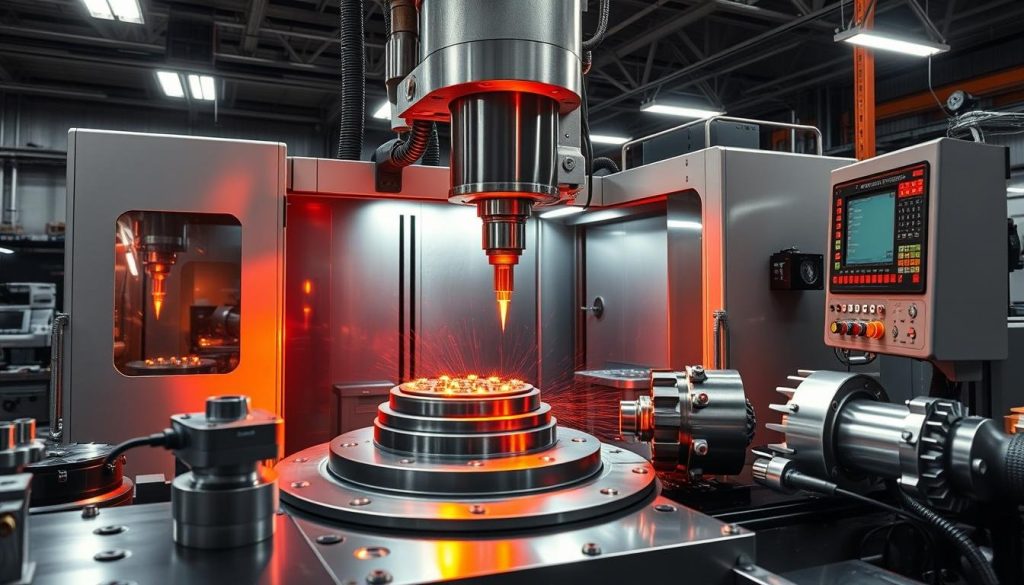
AI is likely to change how CNC machinists work, but replacing the entire occupation is a different matter.
The most useful way to understand AI’s impact is to look at which tasks it can assist with and which still require practical manufacturing experience.
What AI Can Help CNC Machinists Do
AI-enabled manufacturing software can support several parts of the production process.
1. Programming and toolpath assistance
CAD/CAM systems can help generate machining strategies and toolpaths. AI-assisted features may help programmers compare alternatives, identify potential inefficiencies, and improve programming workflows.
However, generated toolpaths still need to be checked against machine capabilities, tooling, workholding, and the actual part requirements.
2. Production monitoring
Machine monitoring systems can collect information about spindle loads, operating conditions, cycle times, and equipment status. Analytical software can help identify unusual patterns that may indicate a developing problem.
3. Quality control
Computer vision and automated measurement systems can support inspection by identifying visible defects or comparing measured dimensions with specified requirements.
Human review remains important, particularly when inspection methods, tolerances, or product requirements are complex.
4. Production planning
Manufacturers can use data-driven systems to improve scheduling, estimate production requirements, and coordinate machine utilization.
These applications can reduce repetitive work and help teams make better decisions. They do not remove the need for machinists who understand how to turn engineering requirements into reliable production processes.
What Still Requires Skilled Machinists?
Some machining decisions depend heavily on practical experience and an understanding of real production conditions.
For example, a machinist may need to determine why a part is vibrating, whether a fixture is sufficiently rigid, or why a cutting tool is wearing faster than expected.
Other situations require someone to evaluate whether a machining strategy is appropriate for a particular material or whether a finished component actually meets its engineering requirements.
These responsibilities involve more than following instructions. They require technical judgment, problem-solving, and accountability.
The more valuable career path is therefore not to compete with automation on repetitive tasks. It is to learn how to operate, program, troubleshoot, and improve automated manufacturing systems.
Does CNC Have a Future in Modern Manufacturing?
Yes. CNC technology remains important because manufacturers need repeatable, accurate ways to produce complex components.
The future of CNC machining is closely connected to the development of manufacturing equipment, digital production systems, and more demanding part requirements.
Several industries illustrate why machining capabilities remain relevant.
Aerospace and Defense
Aerospace manufacturers produce components with demanding requirements for dimensional accuracy, material performance, and traceability.
Aircraft structural components, turbine-related parts, and other complex metal components may require specialized machining processes. Five-axis CNC machining can help access multiple surfaces and complex geometries while reducing the need for repeated setups.
These applications still require skilled people to establish processes, verify quality, and manage production risks.
Medical Device Manufacturing
Medical components can involve small features, complex geometries, and tight dimensional requirements.
CNC machining is used to produce a range of precision metal components, including certain surgical instruments and orthopedic implant components.
Manufacturers must also pay attention to material selection, surface finish, inspection, and applicable regulatory requirements.
Automotive and Electric Vehicles
Automotive manufacturers need machining capabilities for components such as housings, shafts, transmission parts, and precision structural components.
Electric vehicle production also creates demand for specialized components used in motors, battery systems, and power electronics.
The exact machining requirements vary by component, but consistency, productivity, and dimensional control remain important.
Energy and Industrial Equipment
Energy systems and industrial machinery often contain large or heavy components that require reliable machining processes.
CNC lathes, milling machines, and large machining centers help manufacturers produce parts with demanding size, strength, and dimensional requirements.
As equipment designs evolve, manufacturers need machining processes that can accommodate different materials and increasingly complex geometries.
Is CNC Machining a Good Trade to Get Into?
CNC machining can be a good trade if you enjoy practical problem-solving, mechanical systems, precision work, and learning new technology.
It can also provide a path into several manufacturing-related careers. However, you should understand the training requirements, working environment, and long-term skill expectations before entering the field.
How Much Do CNC Machinists Make?
The BLS reported a median annual wage of $58,750 for machinists in May 2025.
The lowest 10% earned less than $39,200, while the highest 10% earned more than $80,010.
These figures cover machinists as an occupational category, not exclusively CNC machinists. Actual earnings vary depending on location, industry, experience, technical skills, employer, and job responsibilities.
Machinists working with complex parts, advanced equipment, specialized materials, or demanding production requirements may have opportunities to develop higher-value skills.
What Education or Training Do You Need?
You generally do not need a four-year college degree to enter the machining trade.
According to the BLS, machinists typically need a high school diploma or equivalent and receive long-term on-the-job training. Other entry routes include:
-
Community college or technical school programs
-
Vocational training
-
Employer-sponsored apprenticeships
-
Entry-level machine operator positions
-
CNC operation and programming courses
Useful subjects include mathematics, blueprint reading, metalworking, CAD/CAM, and measurement techniques.
Practical experience is especially important. Learning how to set up a machine, inspect a part, and identify machining problems takes time.
CNC Machining Career Paths
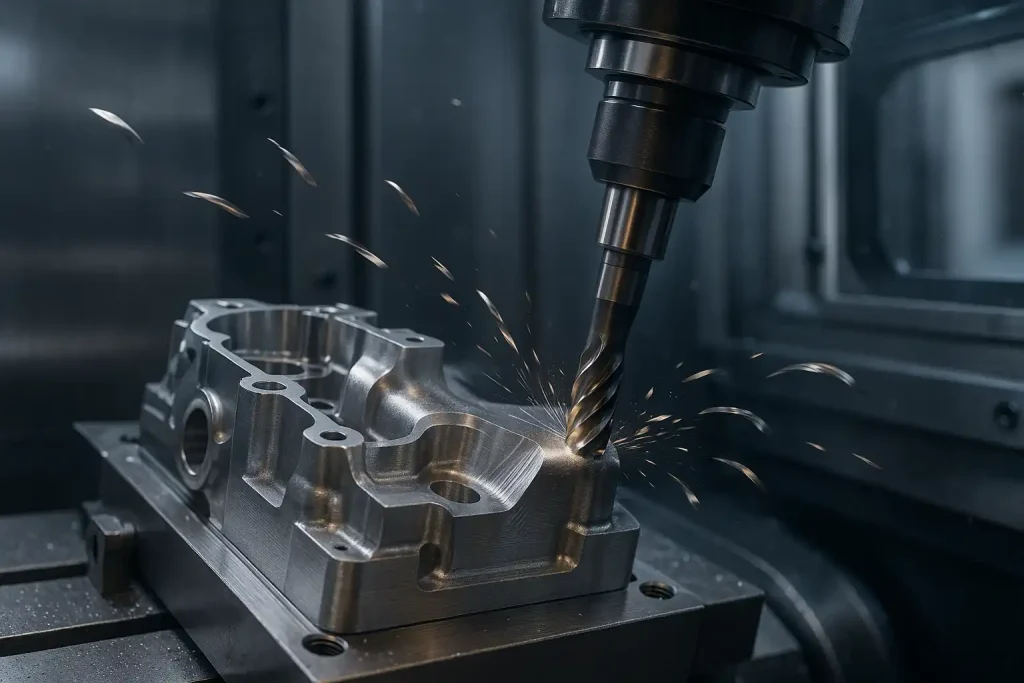
You do not have to remain in an entry-level operating position throughout your career. With experience and additional training, you can move into more specialized roles.
| Career stage | Typical responsibilities |
|---|---|
| CNC Machine Operator | Loads workpieces, starts cycles, monitors production, and performs basic checks |
| CNC Setup Technician | Prepares tooling, fixtures, offsets, and machine configurations |
| CNC Machinist | Operates and adjusts machines, troubleshoots problems, and verifies part quality |
| CNC Programmer | Develops and modifies CNC programs and machining strategies |
| Manufacturing or Process Specialist | Improves machining processes, supports complex production, and works with advanced equipment |
Swipe to compare →
These are illustrative career stages, not a fixed progression. Job titles and responsibilities vary between employers.
Is Learning 5-Axis CNC Machining Worth It?
If you want to work with more complex manufacturing applications, five-axis machining is a valuable skill to consider.
A conventional three-axis milling machine moves along the X, Y, and Z linear axes. A five-axis machine adds two rotary axes, allowing the cutting tool or workpiece to approach different surfaces and angles.
This capability can help manufacturers machine complex geometries, reduce repeated setups, and improve access to difficult-to-reach features.
For machinists, learning five-axis equipment can involve:
-
Understanding rotary-axis movements and machine kinematics
-
Working with advanced CAD/CAM software
-
Understanding tool orientation and collision risks
-
Planning workholding for complex components
-
Verifying toolpaths and machining strategies
-
Inspecting parts with demanding geometric tolerances
Five-axis machining is not necessary for every job. However, experience with it can broaden your opportunities in industries that produce complex, high-value components.
What Are the Challenges of Becoming a CNC Machinist?
CNC machining is not an effortless career.
You may spend long periods standing, working around noisy equipment, handling materials, and following strict safety procedures. Some manufacturing facilities also operate shifts, including nights and weekends.
The technical learning curve can be demanding. You need to understand measurements, drawings, machine behavior, cutting tools, and production requirements.
You also need to keep learning as equipment and software change.
If you prefer work that involves practical skills, technical problem-solving, and continuous improvement, these challenges may be worthwhile. If you want a job with little hands-on involvement or technical training, machining may not be the right fit.
What Skills Will CNC Machinists Need in the Future?
The most competitive machinists will be those who can combine traditional machining knowledge with modern manufacturing technology.
You do not need to master everything at once. Start with the fundamentals and gradually develop more advanced capabilities.
1. CNC setup and troubleshooting
Learn how to prepare machines, select tools, set work offsets, establish workholding, and identify common machining problems.
2. CAD/CAM and CNC programming
Understanding how digital designs become machining instructions helps you work more effectively with modern production systems.
You should also understand how to verify programs rather than relying entirely on automatically generated toolpaths.
3. Precision measurement and GD&T
Manufacturers need parts that meet engineering specifications. Skills in dimensional inspection, geometric dimensioning and tolerancing (GD&T), and measurement equipment are therefore important.
4. Cutting tools and material knowledge
Different materials require different machining strategies. Understanding tool selection, cutting conditions, tool wear, and workpiece behavior helps you improve both productivity and quality.
5. Multi-axis machining and automation
Experience with four-axis and five-axis machines, robotic loading systems, and automated production can help you work in more advanced manufacturing environments.
6. Data and process improvement
As manufacturers collect more production data, machinists who can interpret machine conditions, recognize process variations, and improve workflows will be increasingly useful.
The goal is not simply to learn how to operate newer machines. It is to understand how the entire production process works.
What Is the Average Lifespan of a CNC Machine?
There is no single reliable lifespan that applies to every CNC machine.
A machine’s useful life depends on its design, build quality, operating conditions, maintenance history, workload, and the availability of replacement parts and technical support.
You should also distinguish between physical service life and economic service life.
A machine may continue operating for many years after its original purchase, but that does not necessarily mean it remains the most productive or cost-effective option for the work you need to perform.
What Affects CNC Machine Lifespan?
Several factors influence how long a CNC machine can remain productive.
-
Machine construction: Structural rigidity, component quality, and manufacturing standards influence long-term stability.
-
Operating conditions: Heavy cutting, high production loads, difficult materials, and continuous operation can increase wear.
-
Maintenance: Regular lubrication, inspection, alignment checks, and timely replacement of worn components help preserve performance.
-
Operating practices: Incorrect tool use, poor workholding, collisions, and improper machine operation can cause premature damage.
-
Technical support: Spare parts availability, service response, and control-system support affect how easily a machine can be maintained.
When Should You Repair, Upgrade, or Replace a CNC Machine?
The decision should be based on production requirements and total operating costs rather than age alone.
| Situation | Possible decision |
|---|---|
| The machine remains accurate and reliable, with manageable maintenance costs | Continue using it |
| A worn component is affecting performance but can be replaced economically | Repair or replace the component |
| The control system or software limits productivity, but the machine structure remains sound | Evaluate an upgrade |
| Accuracy, reliability, or capacity no longer meets production requirements | Consider replacement |
| Maintenance costs and downtime consistently outweigh the machine’s production value | Compare replacement with continued operation |
Swipe to compare →
If you are purchasing a CNC machine, consider long-term serviceability before making a decision. Ask about maintenance requirements, critical components, spare parts, technical support, and the manufacturer’s ability to support the equipment over time.
How CNC Technology Is Changing Manufacturing—and What Companies Should Do
For manufacturing companies, the future of CNC is not simply about buying machines with more advanced features. It is about building a production system that combines suitable equipment, skilled people, reliable processes, and effective maintenance.
Before investing in new CNC equipment, consider the following.
Match Machine Capability to Your Parts
Start with the components you actually produce.
Consider part dimensions, materials, tolerances, geometric complexity, batch sizes, and production targets.
A three-axis machine may be sufficient for relatively straightforward components. More complex parts may benefit from four-axis or five-axis machining, particularly when multiple surfaces or compound angles need to be machined.
Choosing a machine based on real production requirements is more useful than selecting one simply because it has more axes or a higher spindle speed.
Invest in Workforce Training
New equipment does not automatically create a capable production team.
Your machinists need training in machine setup, programming, tooling, inspection, and troubleshooting. If you introduce automation, employees also need to understand how to monitor and manage the connected production system.
Investing in people helps you get more value from your equipment.
Evaluate Long-Term Manufacturer Support
Machine selection should include more than purchase price and technical specifications.
Evaluate the manufacturer’s engineering capabilities, quality control, commissioning support, spare parts availability, and after-sales service.
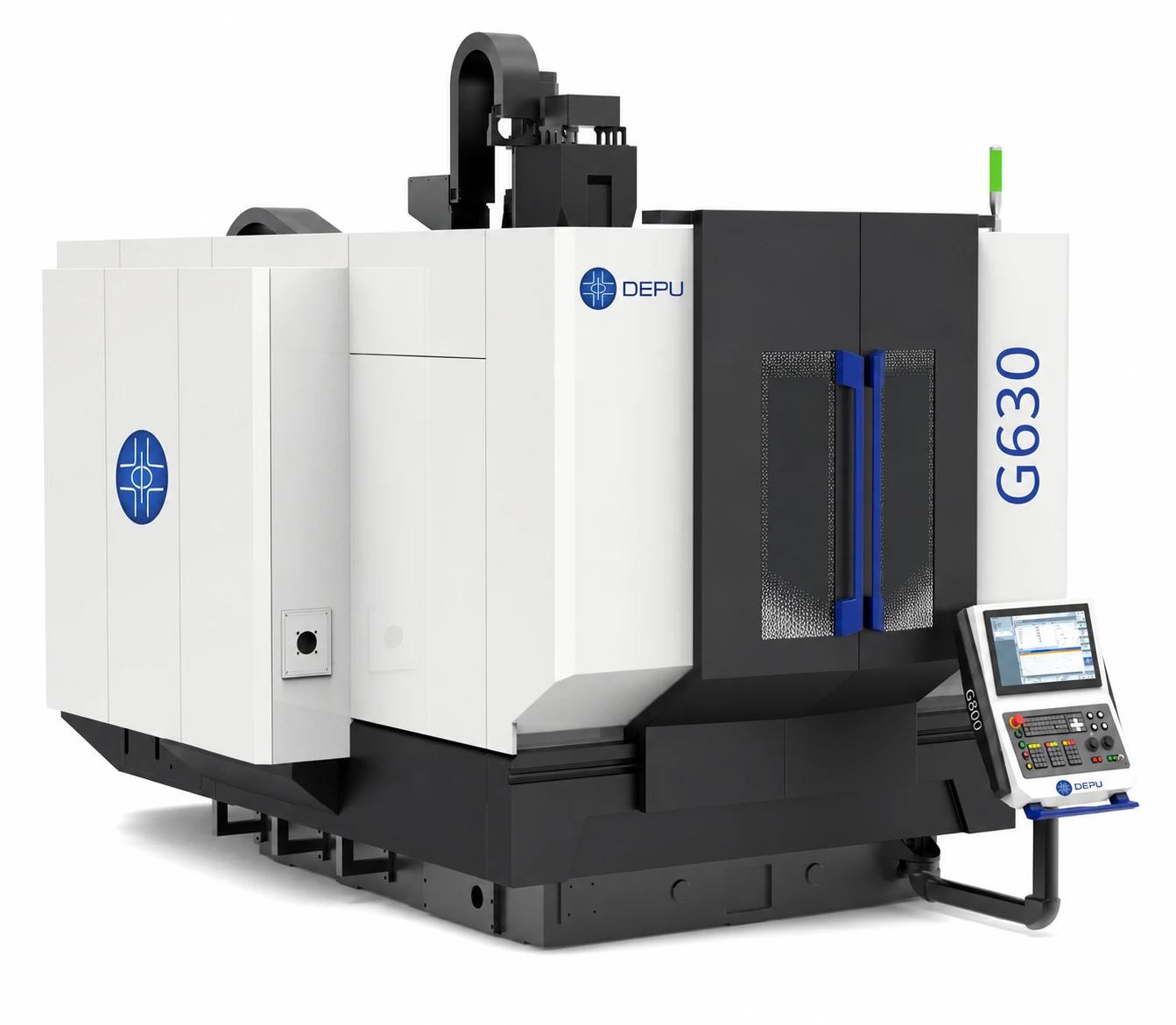
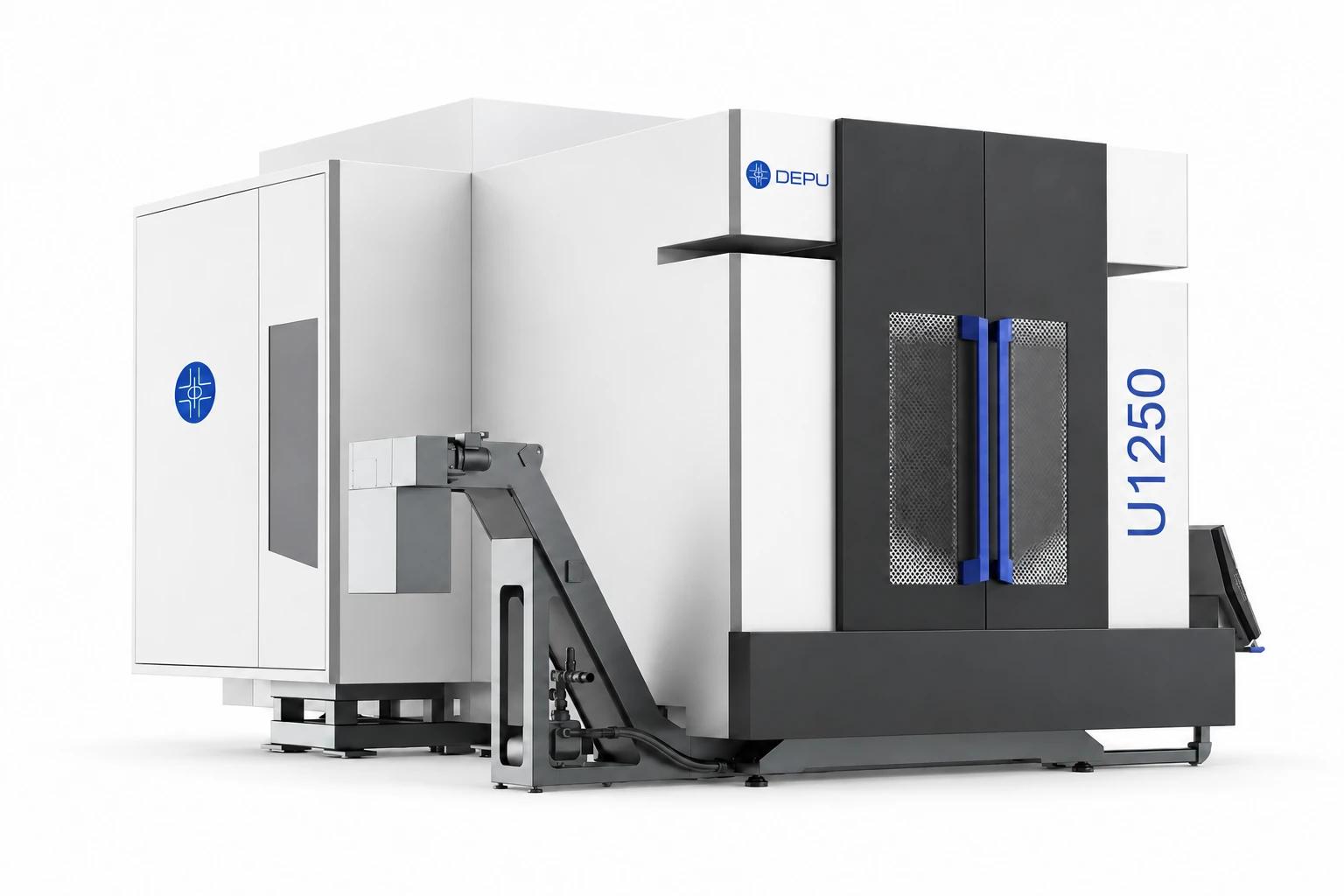
For example, DEPU Group, founded in 2014, operates a global R&D center in Shenzhen and its global headquarters and manufacturing base in Haining, Jiaxing, Zhejiang. The company reports that these facilities cover more than 30,000 m² combined.
For manufacturers evaluating five-axis equipment, the important questions remain practical: Does the machine suit your parts? Can it maintain the required accuracy? Is the manufacturer able to support your production needs over the long term?
So, Is CNC Machining a Dying Trade?
No. CNC machining is evolving, not disappearing.
Automation and AI are changing how manufacturers program, operate, monitor, and maintain machine tools. Some repetitive tasks may require fewer workers, and employment trends differ between machining-related occupations.
However, manufacturers still need people who understand materials, tooling, machine setup, programming, inspection, and process improvement.
If you are considering entering the trade, focus on developing skills beyond basic machine operation. Learn CNC programming, CAD/CAM, precision measurement, troubleshooting, and advanced machining technologies.
If you already work in manufacturing, continuing to develop these capabilities can help you adapt as production systems become more automated.
Originally published by DEPU on 24 Nov 2026.