
How the DEPU U Series Machine Structure Delivers Micron-Level Machining Accuracy in 5-Axis Operations
Introduction: Why Machine Structure Is the Precision Ceiling
In modern precision manufacturing, achieving micron-level machining accuracy is no longer a competitive advantage — it is a baseline requirement. Aerospace brackets, medical implants, automotive molds, and marine structural components all demand tolerances that leave no room for structural compromise.
Yet across the industry, many manufacturers overlook a fundamental truth: no matter how advanced the CNC control system or how optimized the toolpath, the machine structure itself defines the upper limit of achievable precision. Spindle speed and software intelligence cannot compensate for a chassis that flexes under load or drifts with temperature change.
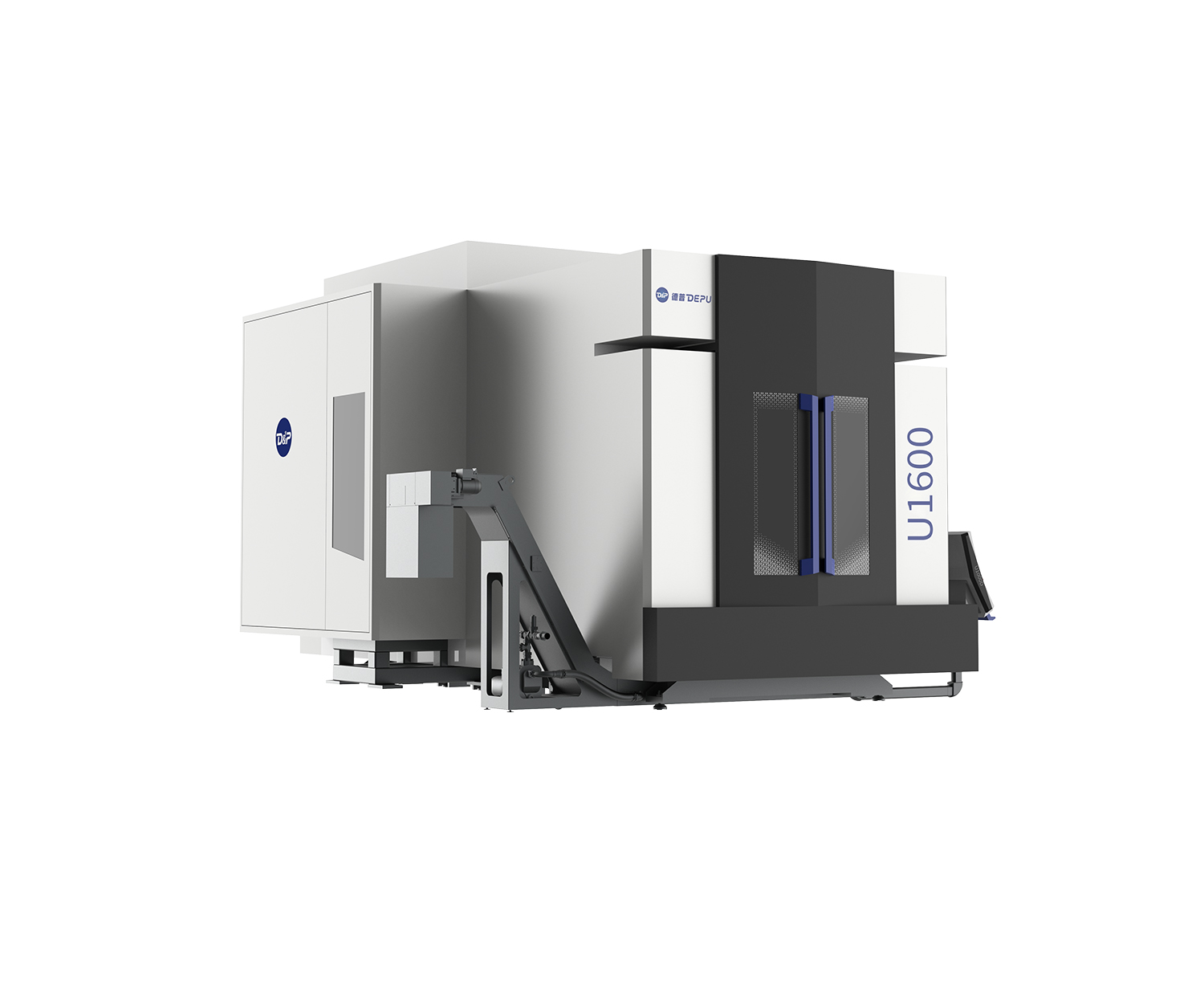
The DEPU U Series 5-axis machining center was engineered from the ground up with this principle at its core. As a vertical and horizontal conversion 5-axis platform, it combines structural rigor with intelligent configuration to deliver consistent, repeatable accuracy across demanding production environments.
1. CNC Machine Rigidity: The Foundation of Stable Multi-Axis Cutting
Achieving micron-level machining accuracy begins with a structure that resists deformation — not just under static load, but under the dynamic forces of high-speed 5-axis cutting.
The DEPU U Series addresses this through several structural decisions:
- Wall-type machine body with T-shaped base structure — The integral column and large cross-section contact surfaces give the frame exceptionally high rigidity, minimizing flex during aggressive cutting passes
- Full-stroke X-axis slide support — Unlike partial-support designs, the X-axis slide maintains contact along its entire travel, eliminating cantilever-induced deflection
- Y-axis three-rail structure — The triple-guideway Y-axis delivers higher response speed and superior vibration damping compared to dual-rail alternatives
This level of CNC machine rigidity ensures that the tool position remains stable even during complex simultaneous 5-axis movements — a prerequisite for maintaining positional accuracy below 0.006 mm across the full working envelope.
2. Thermal Stability CNC: Controlling Drift at the Micron Scale
Thermal variation is one of the most underestimated precision killers in high-volume machining. Steel expands approximately 10–12 microns per meter per degree Celsius. On a machine with 1,000 mm of X-axis travel, even a 1°C ambient shift can introduce dimensional errors that exceed tolerance limits for critical components.
The DEPU U Series manages thermal stability CNC through:
- Integrated water cooling system (standard) — Active cooling of the spindle and key structural zones reduces heat buildup during continuous operation
- Symmetrical structural design — Balanced load paths minimize asymmetric thermal expansion that causes positional drift
- Cabinet air conditioning (standard) — Stabilizes the electrical and control environment, preventing thermally induced servo errors
For manufacturers running long production cycles — particularly in aerospace and medical applications where batch consistency is critical — these thermal control measures are what separate repeatable micron-level results from intermittent ones.
3. Dynamic Stability: Managing Vibration in High-Speed 5-Axis Operations
Dynamic stability becomes the decisive factor when cutting speeds increase or when machining thin-walled components where chatter causes surface damage and dimensional deviation.
The DEPU U Series 5-axis machining center addresses dynamic stability through:
- High-precision ball screw and roller rail system (full series standard) — NSK/THK-grade components deliver the stiffness needed to maintain accurate positioning under dynamic cutting loads
- B-axis large rail span with heavy-duty turntable bearings — Completely independently designed and manufactured, the B-axis provides long service life and high load-bearing capacity with minimal backlash
- Moving mass optimization — All components are finite-element optimized to reduce inertia on moving assemblies, improving response and reducing resonance
The result is smoother surface finishes, extended tool life, and the ability to machine difficult materials — titanium, high-strength alloys, and hardened steels — without sacrificing positional accuracy.
4. Full Closed-Loop Control: Heidenhain Feedback Across All Axes
Machine structure provides the physical foundation, but full closed-loop control is what translates structural capability into sustained measurement accuracy.
The DEPU U Series 5-axis machining center is equipped with:
- Encoder / linear scale (standard) — Position feedback on all linear axes eliminates the accumulated error that open-loop systems cannot detect or correct
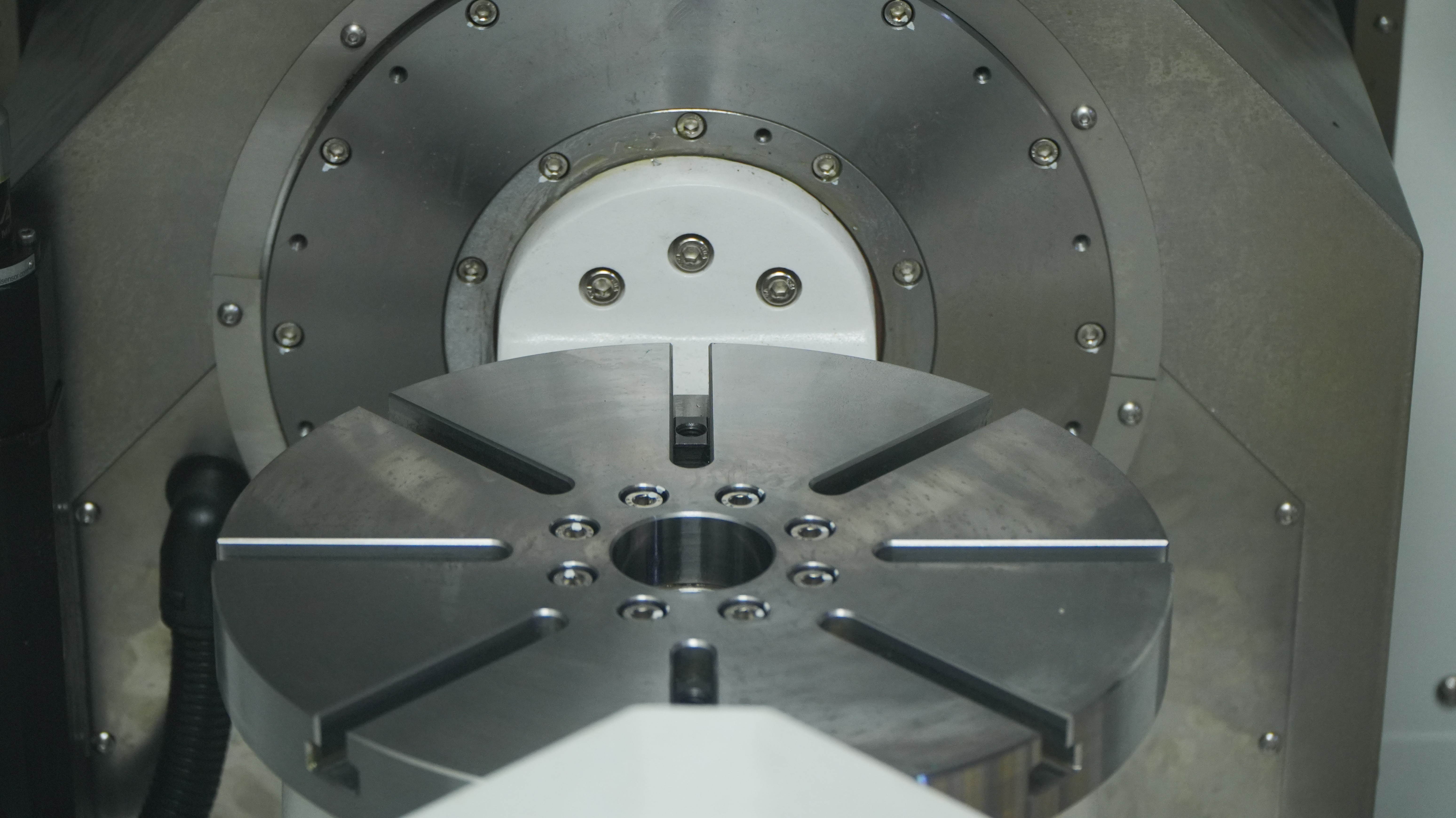
- DD rotary table with Heidenhain position feedback — The direct-drive turntable operates without mechanical transmission losses, and Heidenhain's angular feedback maintains rotary accuracy across extended production runs
- Servo tool magazine — Precise tool change positioning ensures consistent tool-length offset repeatability, preventing measurement variation between operations
This closed-loop architecture is particularly critical in 5-axis machining, where positioning errors on rotary axes amplify into surface errors on complex workpiece geometries. For the DEPU U Series, full closed-loop control across all five axes ensures that X/Y/Z positioning accuracy of 0.006–0.012 mm is not just a specification — it is a sustained production reality.
5. Vertical and Horizontal Conversion: Structural Design for Full-Surface Access
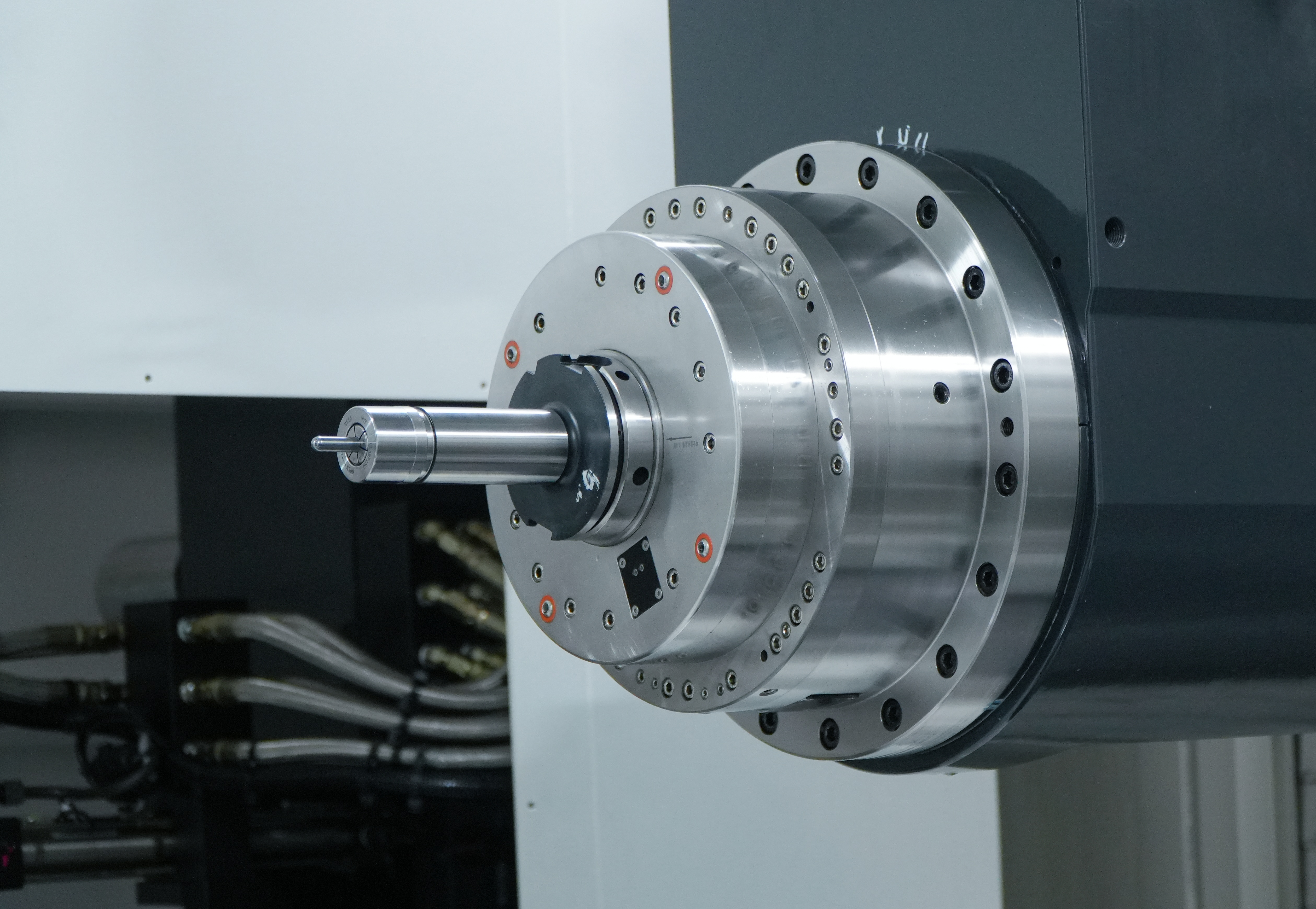
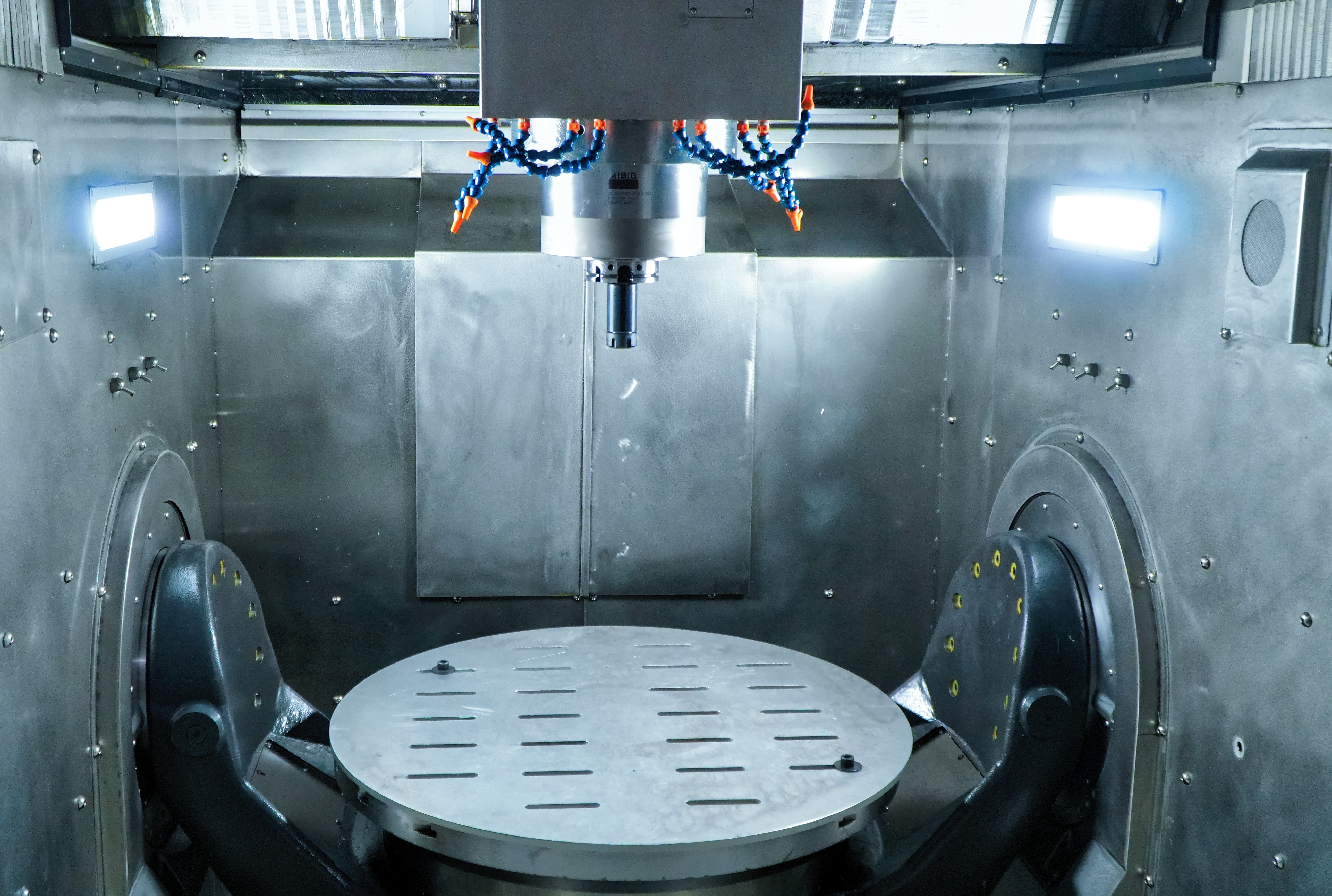
One of the most distinctive structural features of the DEPU U Series 5-axis machining center is its vertical-horizontal conversion swivel head — a design that eliminates a fundamental limitation of conventional 5-axis platforms.
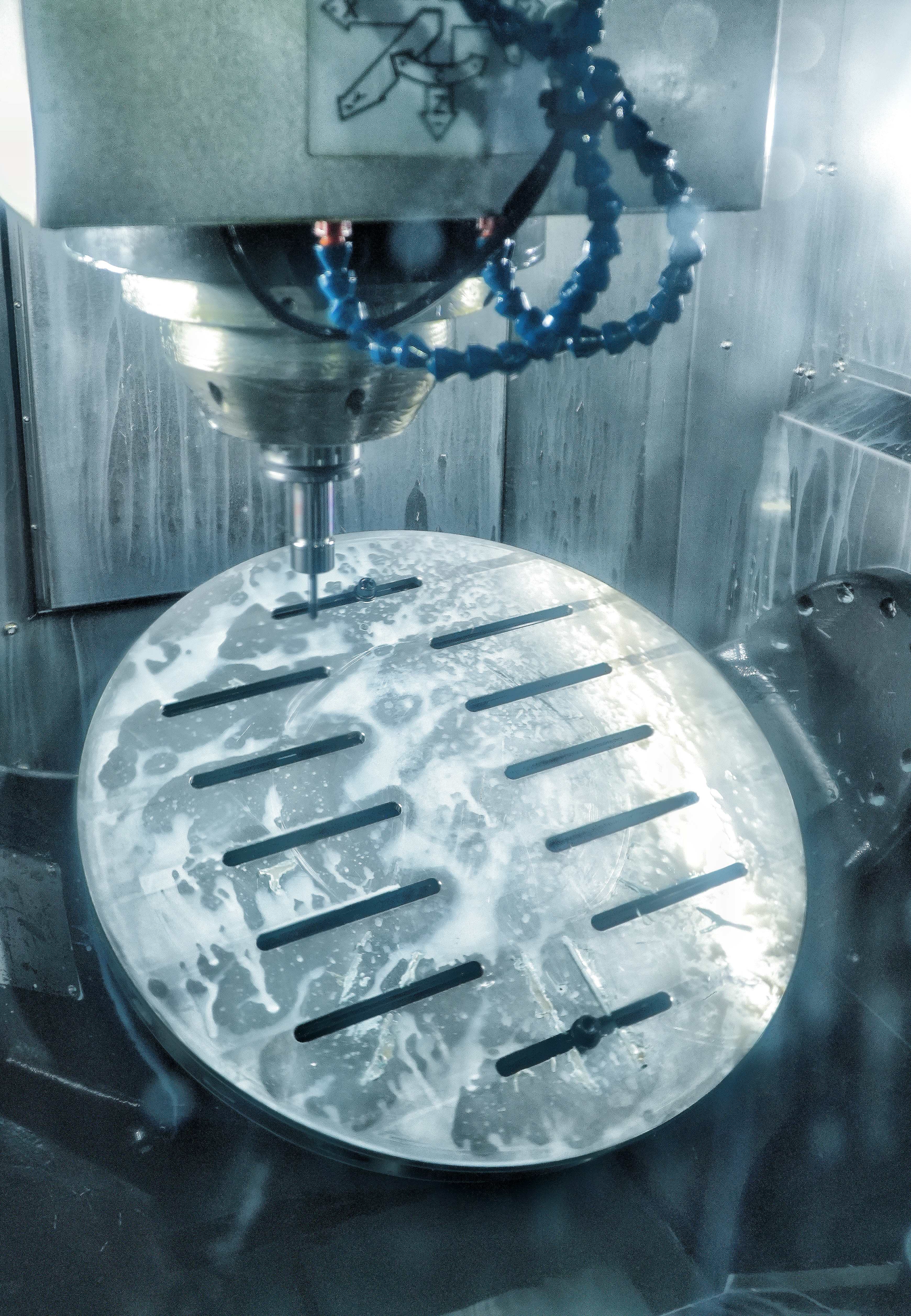
In vertical machining mode, the spindle center can traverse the entire table surface without generating tool join errors. This is made possible by:
- C-axis: 360° continuous rotation — Full rotational freedom without mechanical interference
- A-axis: -30° to +180° swivel range — Wide angular coverage for undercut features and complex approach angles
- T-shaped base with integral column — Provides the structural stability needed to maintain accuracy when the head operates in horizontal orientation, where gravitational loading changes significantly
For aerospace structural parts, large marine components, and precision molds requiring five-sided machining in a single setup, this conversion capability — backed by rigid structural support — is what enables the elimination of datum shifts and the cumulative positioning errors that multi-setup workflows inevitably introduce.
6. Long-Term Precision: Built for Production, Not Just Demonstration
True high precision machining reliability must be measured not at installation, but after months and years of continuous production use. Structural fatigue, thermal cycling, and environmental exposure all degrade machine accuracy over time if not accounted for in the original design.
The DEPU U Series ensures long-term stability through:
- Precision-grade linear components throughout — Full-series standard ball screws and roller rails from NSK/THK maintain specification-grade performance over extended service life
- Chiller system (standard) — Continuous spindle cooling prevents the thermal fatigue that degrades bearing preload and spindle runout accuracy over time
- Lubrication system (standard) — Automated lubrication of all guideway and screw interfaces prevents wear-induced backlash and maintains positioning repeatability
For manufacturers evaluating total cost of ownership, these built-in reliability features translate directly into lower maintenance frequency, fewer recalibration cycles, and consistent machining quality throughout the machine's operational life.
Conclusion: Structure Is What Sustains Precision
Software, control systems, and toolpath optimization all contribute to machining performance. But for the DEPU U Series 5-axis machining center, precision begins at the structural level — with a machine body designed to resist deformation, manage heat, absorb vibration, and maintain accuracy across every axis, every cycle, and every year of production.
For manufacturers in aerospace, automotive, marine, and medical device industries who require consistent micron-level machining accuracy, the structural foundation of the DEPU U Series is not a feature — it is the capability itself.
FAQ
1. Why is machine structure critical for micron-level machining accuracy in 5-axis operations? Machine structure directly determines rigidity, thermal stability, and vibration control — the three physical factors that define whether micron-level accuracy can be achieved and sustained across production runs. Even advanced control systems cannot compensate for structural deformation or thermal drift.
2. How does the DEPU U Series achieve CNC machine rigidity across its full working range? The U Series uses a wall-type machine body with a T-shaped base, an integral column, and a full-stroke X-axis slide support. Combined with a Y-axis three-rail structure, these design choices maintain structural stiffness across the complete travel envelope, not just at the center of the working zone.
3. What makes the vertical and horizontal conversion design of the U Series structurally significant? The swivel head's wide A-axis range (-30° to +180°) combined with 360° C-axis rotation allows the spindle to access all five faces of a workpiece in a single setup. The T-shaped base provides the structural counterbalance needed to maintain positional accuracy when the head operates in horizontal orientation, where load distribution changes substantially.
4. How does full closed-loop control contribute to sustained precision in the DEPU U Series? Heidenhain-based position feedback on all linear and rotary axes continuously corrects for any deviation between commanded and actual position. This eliminates the accumulated error typical of open-loop or semi-closed-loop systems, ensuring that positioning accuracy of 0.006–0.012 mm is maintained across extended production cycles rather than only at the start of a shift.
5. What industries benefit most from the DEPU U Series machine structure design? Aerospace (structural parts, brackets, engine components), marine (large structural assemblies), automotive (precision molds and dies), and medical device manufacturing all benefit from the U Series's combination of high load capacity (up to 8,000 kg), wide table range (1,000–2,500 mm), and sustained micron-level accuracy.