
Machine Bed and Frame Rigidity: The Foundation of CNC Machine Stability
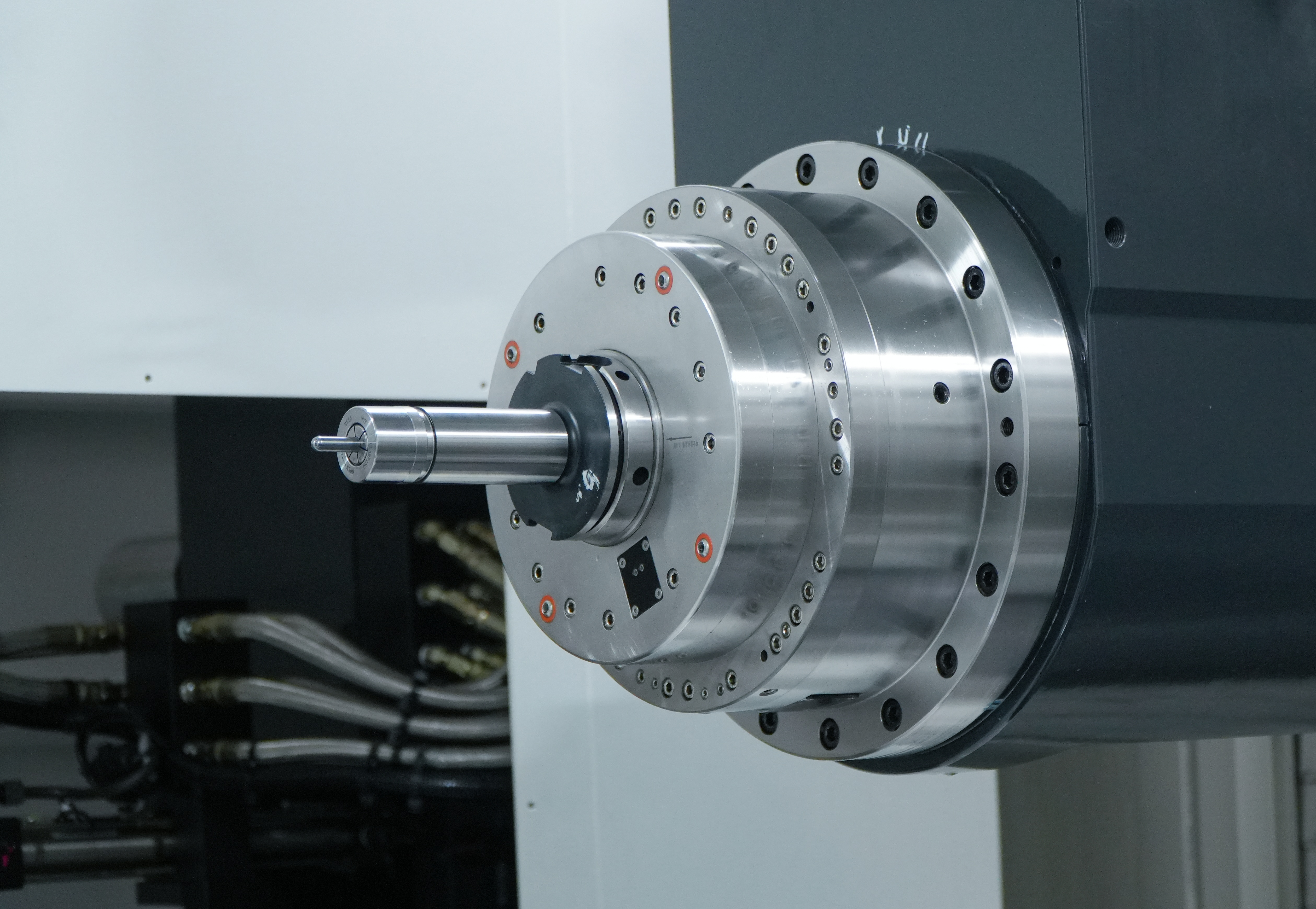
Cast Iron vs. Polymer Concrete Beds: Damping Performance and Thermal Drift Resistance
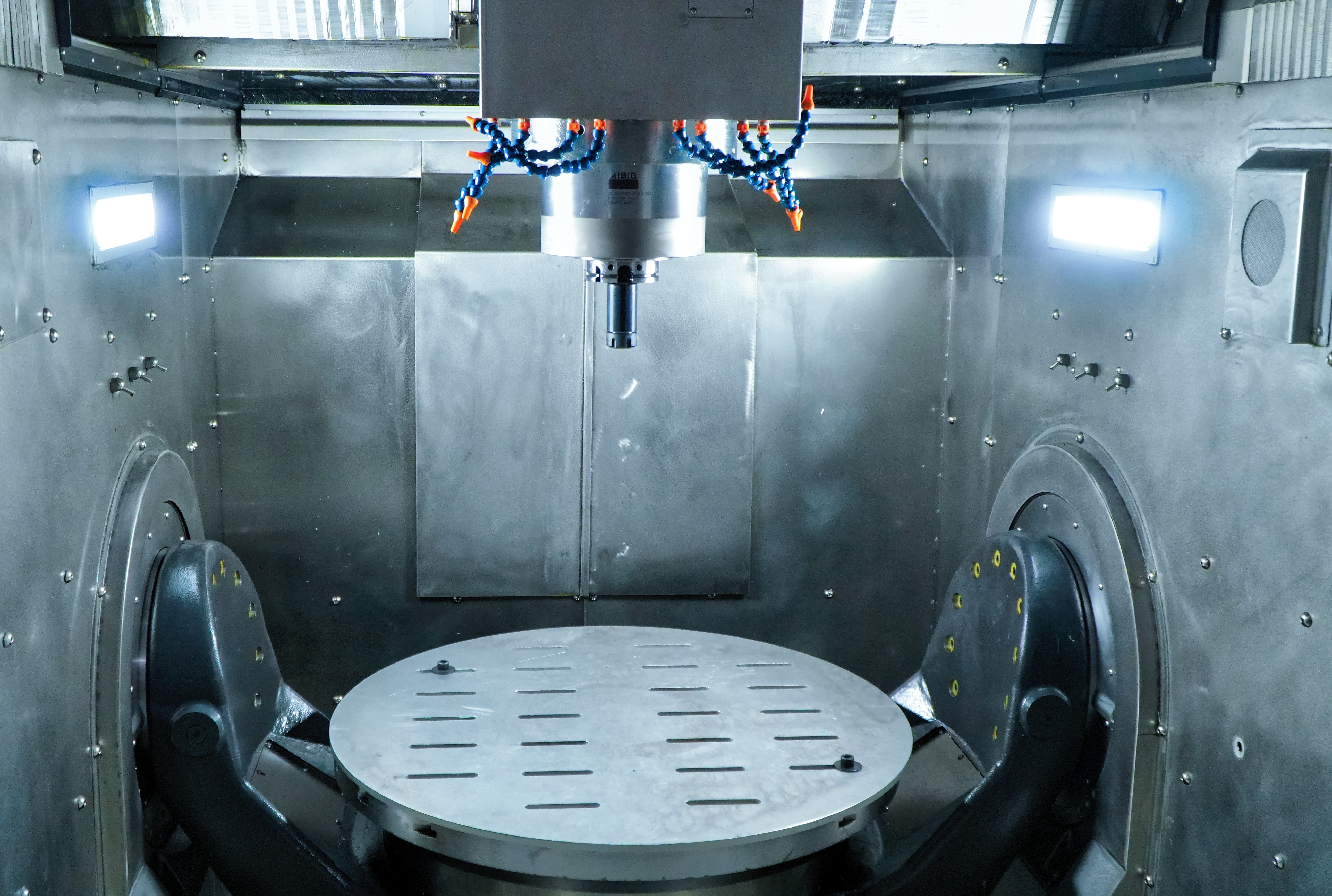
What kind of material we use for machine beds really affects how well they handle vibrations and maintain stable temperatures while cutting metals. Cast iron has been around forever because it packs a lot of weight per volume (about 7.1 grams per cubic centimeter), but it doesn't do much to absorb those annoying machine vibrations either (think somewhere between 0.001 and 0.01 loss factor). Polymer concrete tells a different story though. This stuff can dampen vibrations roughly six times better than traditional materials (with loss factors ranging from 0.05 to 0.1) and cuts down on temperature changes by almost 40%. That makes all the difference when working with delicate aerospace materials where even tiny temperature shifts can throw off measurements at the micron level. According to research published by Ponemon in 2023, this improved performance is becoming increasingly important as manufacturers push for tighter tolerances.
Optimized Ribbing and Geometry to Suppress Deformation Under Dynamic Cutting Loads
Using Finite Element Analysis helps confirm which ribbing patterns work best to reduce bending when dealing with those intense cutting forces that can go beyond 740 kN. Adding diagonal cross bracing makes things much stiffer against twisting forces, about a 22% improvement actually. And those honeycomb structures really do wonders for reducing vibrations during fast operations, cutting down on unwanted movement by around 60%. Combine all this with designs that balance heat distribution evenly throughout the part, and manufacturers can maintain position accuracy within plus or minus 3 microns even after running nonstop for eight whole hours. This kind of precision matters a lot in making medical implants where tolerances are extremely tight. Getting the weight just right across different sections also helps keep those annoying structural vibrations from kicking in at frequencies above 250 Hz, something that plagues many machining processes.
Moving Component Stiffness and Dynamic Response in CNC Machine Structures
The interplay between stiffness and dynamic behavior in moving assemblies—columns, saddles, and slides—directly determines machining accuracy. Rigidity prevents workpiece deviation under load, while tuned vibration control preserves precision at high feed rates.
FEA-Driven Stiffness Validation of Columns, Saddles, and Slides
FEA simulations help figure out how much a structure will bend or deform before actually building a prototype. These models look at what happens when forces as high as 40 kilonewtons are applied. What they find are problem spots in things like saddle shapes or where columns attach to other components. Once those weak areas are identified, engineers can strengthen them through methods like adding ribs or switching to better materials. This kind of strengthening work has been shown to cut down on elastic deformation by around two thirds in many cases. Why does this matter so much? Well, even something as small as 0.01 millimeters of movement along the Z axis during sliding can lead to dimensional errors measuring about 50 micrometers in the final product. That might not sound like much until it starts affecting part quality and fitment issues arise.
Modal Tuning and Mass Distribution Strategies to Avoid Resonance in High-Speed CNC Machine Operation
When spindles run past 8,000 RPM, tools start wearing out much faster—some studies show up to triple the normal rate—and surfaces get rougher too. To combat this issue, engineers use modal analysis to find those natural frequency points where everything starts vibrating uncontrollably. Once identified, several approaches work well. Tuned mass dampers are great for reducing chatter on sliding parts. Another trick is redistributing weights unevenly so resonance doesn't line up with regular operating speeds. Some manufacturers fill empty spaces in machine frames with special polymer concrete mixtures, which can boost damping properties around 70 percent according to test results. Machines built with these techniques stay within about plus or minus 2 microns of their target dimensions even when cutting through materials at impressive speeds of 25 meters per minute.
Geometric Error Mapping and Sensitivity Analysis for CNC Machine Accuracy
Six-DOF Error Characterization Across Linear Axes (X/Y/Z) and Its Impact on Positional Repeatability
Getting precision right in manufacturing means looking at how errors show up across all the main directions X, Y and Z. We need to track those six basic movements that matter so much: straight line shifts, angles going off course (like pitch, yaw and roll), plus when things aren't perfectly square. When we analyze what causes the biggest problems for overall accuracy, research points to something interesting. The Z axis tends to be a major trouble spot, responsible for more than 40% of all inaccuracies in these big gantry systems according to Fan and colleagues back in 2025. Take thermal issues as an example. If the machine starts pitching due to heat changes beyond 12 arc seconds, it can lead to positioning drift of about 15 microns every 100 mm along the Y axis. Engineers working on this problem model how errors spread throughout the system using differential kinematics techniques. They find that focusing compensation efforts on just three key areas cuts down volumetric errors by around two thirds in five axis setups. With this kind of systematic approach, manufacturers can actually correct positions in real time, improving repeatability from plus or minus 50 microns down to less than 8 microns in top quality CNC machines.
Transmission System Integration: Ball Screws, Bearings, and Thermal Compensation in CNC Machine Design
Preload Optimization, Bearing Support Rigidity, and Real-Time Axial Thermal Drift Mitigation
Getting preload right in ball screws helps eliminate backlash and cuts down on the heat generated by friction, which is really important because thermal issues cause more than 70% of all positioning problems in CNC machines. When it comes to keeping things aligned, rigid bearing support systems stop the screw from bending when weight is applied, so everything stays properly lined up. To deal with thermal drift, many modern systems now include temperature sensors built into the screw itself. These sensors pick up on expansion as it happens, allowing the machine to adjust its position dynamically and correct those tiny inaccuracies at the micron level. Putting all these methods together has allowed top manufacturers to hit positioning repeatability below 2 microns even after going through multiple heating and cooling cycles during operation.
FAQ
What are the advantages of using polymer concrete over cast iron for CNC machine beds?
Polymer concrete offers superior vibration damping and thermal stability compared to cast iron. It can dampen vibrations up to six times better and reduce temperature fluctuations by almost 40%, making it ideal for precision applications.
How does finite element analysis (FEA) improve CNC machine design?
FEA helps identify weak points in the machine's structure, allowing engineers to reinforce these areas with better materials or additional ribbing, ultimately reducing deformation and enhancing machining accuracy.
Why is stiffness important for CNC machine components?
Stiffness prevents deviations during machining operations, maintaining accuracy and ensuring high-quality output by minimizing vibrations and movements under load.
What is the role of modal tuning in CNC machines?
Modal tuning identifies natural frequencies that could cause vibrations in the machine. Engineers use techniques like tuned mass dampers and weight redistribution to avoid resonance and maintain precision during high-speed operations.