
How 5-Axis Machining Improves Geometric Accuracy in Complex Components
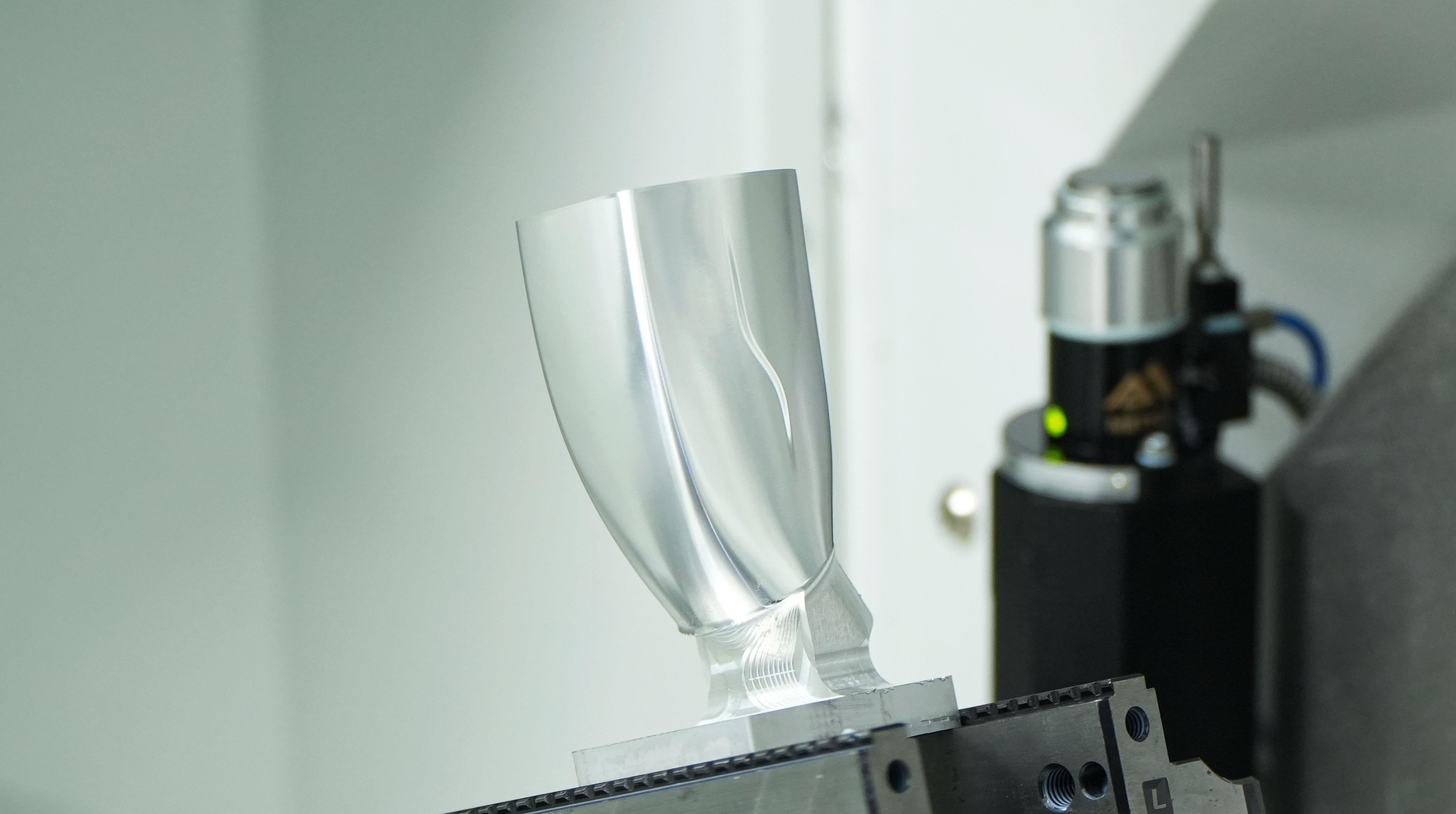
 Modern manufacturing increasingly relies on complex components with freeform surfaces, deep cavities, compound angles, and intricate geometries that exceed the capabilities of conventional machining. Industries such as aerospace, medical, automotive, mold manufacturing, and precision engineering require not only complex shapes but also extremely high geometric accuracy to ensure product performance and assembly consistency.
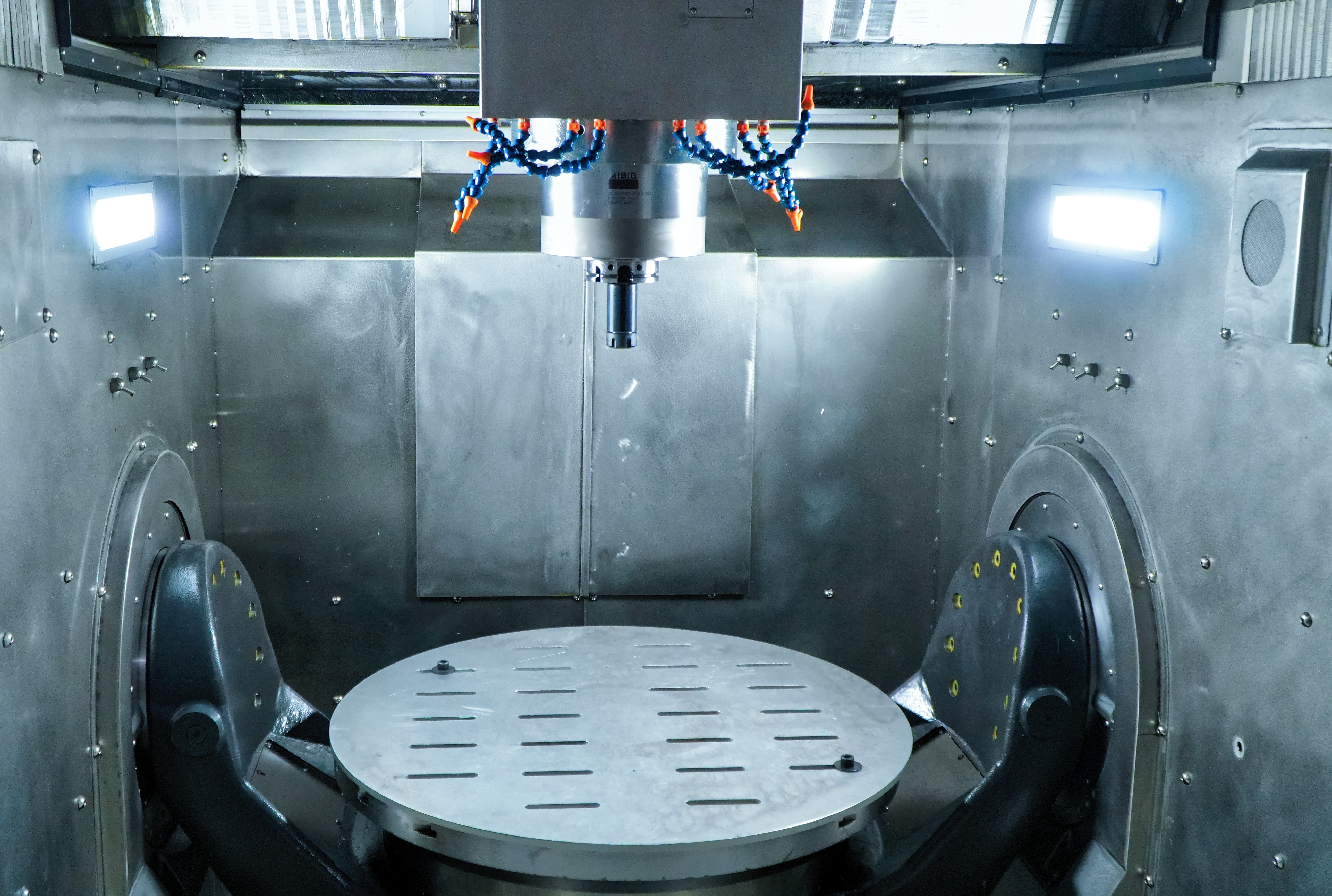
Compared with traditional three-axis machining, 5-axis machining provides continuous movement across three linear axes and two rotary axes, allowing the cutting tool to maintain the optimal orientation relative to the workpiece throughout the machining process. This capability dramatically improves geometric accuracy while reducing setup errors and improving overall manufacturing efficiency.
Why Geometric Accuracy Matters
Geometric accuracy refers to how closely a manufactured part matches its intended CAD design. Unlike simple dimensional tolerances, geometric accuracy includes:
- Surface profile accuracy
- True position
- Flatness
- Circularity
- Perpendicularity
- Angular relationships
- Feature-to-feature consistency
For complex components, maintaining these relationships is often more challenging than controlling individual dimensions.
Poor geometric accuracy may result in:
- Assembly interference
- Reduced mechanical performance
- Increased vibration
- Uneven load distribution
- Reduced service life
As product designs become increasingly sophisticated, maintaining geometric accuracy has become one of the primary advantages of 5-axis machining.
Single-Setup Machining Eliminates Cumulative Errors
One of the greatest advantages of 5-axis machining is the ability to complete nearly all machining operations in a single setup.
Traditional machining often requires multiple repositioning operations to reach different surfaces.
Each additional setup introduces:
- Fixture positioning variation
- Datum transfer errors
- Alignment inaccuracies
- Human intervention
These small deviations accumulate throughout production, reducing overall geometric accuracy.
Because 5-axis machining allows the tool to approach the workpiece from virtually any direction, multiple features can be machined within the same coordinate system, significantly improving feature-to-feature relationships.
Continuous Tool Orientation Improves Surface Geometry
Complex curved surfaces require the cutting tool to remain perpendicular—or at an optimized angle—to the workpiece surface.
In three-axis machining:
- Tool contact angles constantly change
- Tool deflection increases
- Surface scallops become larger
- Surface geometry becomes less accurate
With 5-axis machining, continuous rotary motion allows the tool orientation to adjust automatically throughout the toolpath.
Benefits include:
- Better surface conformity
- Reduced scallop height
- Improved freeform surface accuracy
- Consistent cutting engagement
This significantly improves geometric consistency across complex components.
Shorter Tools Reduce Deflection
Deep cavities and complex internal features often require long cutting tools on conventional machines.
Long tools introduce:
- Greater vibration
- Higher bending forces
- Increased tool deflection
- Reduced machining stability
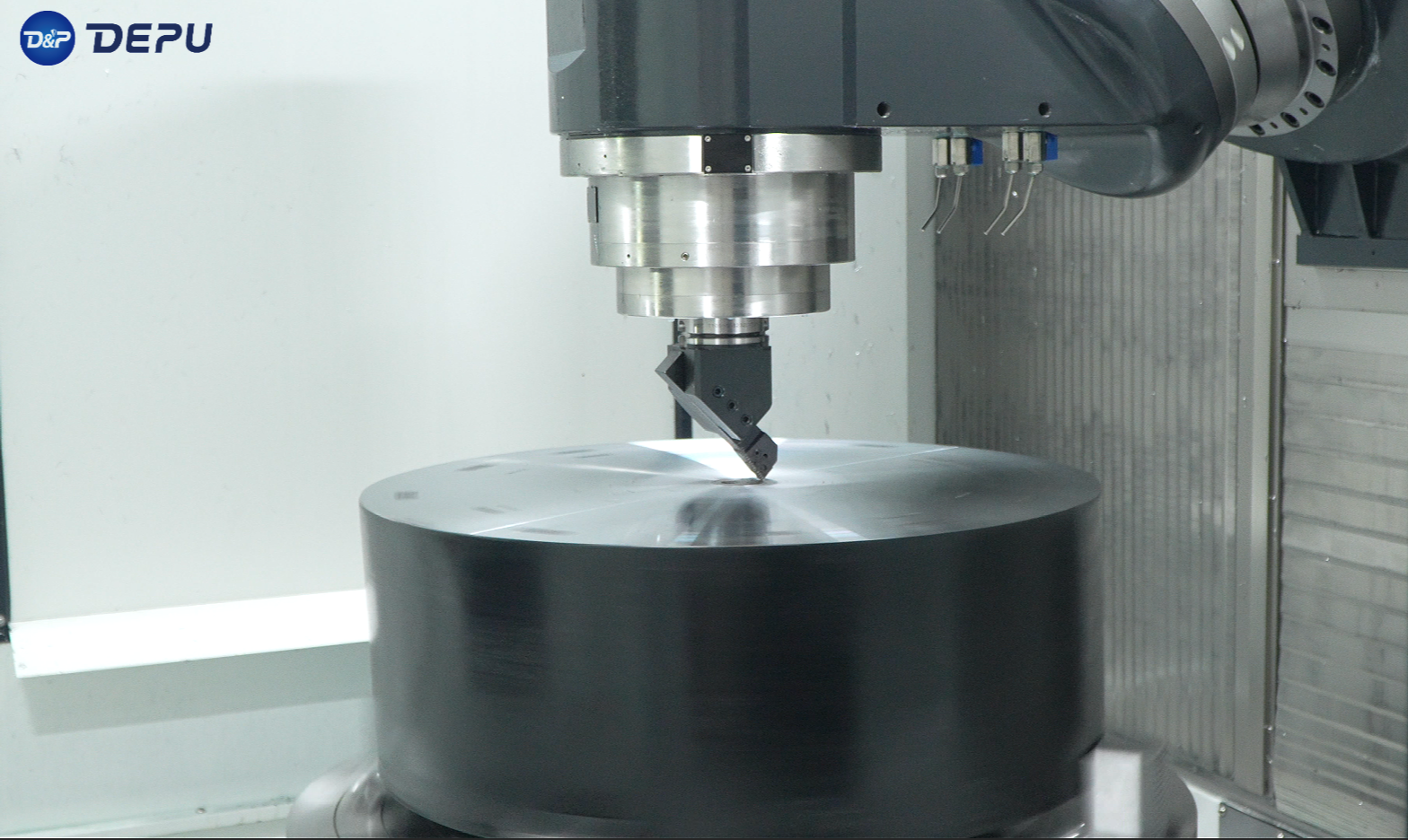
Because 5-axis machining can tilt both the tool and workpiece, much shorter cutting tools can often be used.
Shorter tools provide:
- Higher rigidity
- Better cutting stability
- Reduced positional deviation
- Improved geometric accuracy
This is particularly important when machining titanium, hardened steel, and other difficult materials.
Simultaneous Motion Produces Smoother Toolpaths
Modern 5-axis machining uses simultaneous interpolation across all five axes.
Instead of creating segmented toolpaths with repeated repositioning, continuous motion generates smoother trajectories that closely follow the CAD model.
Advanced CNC systems further improve this through:
- RTCP (Rotational Tool Center Point)
- Kinematic compensation
- High-speed interpolation
- Thermal compensation
Together, these technologies maintain precise tool positioning throughout the machining process.
Improved Accuracy Across Complex Features
Complex parts often contain multiple interacting features, including:
- Curved pockets
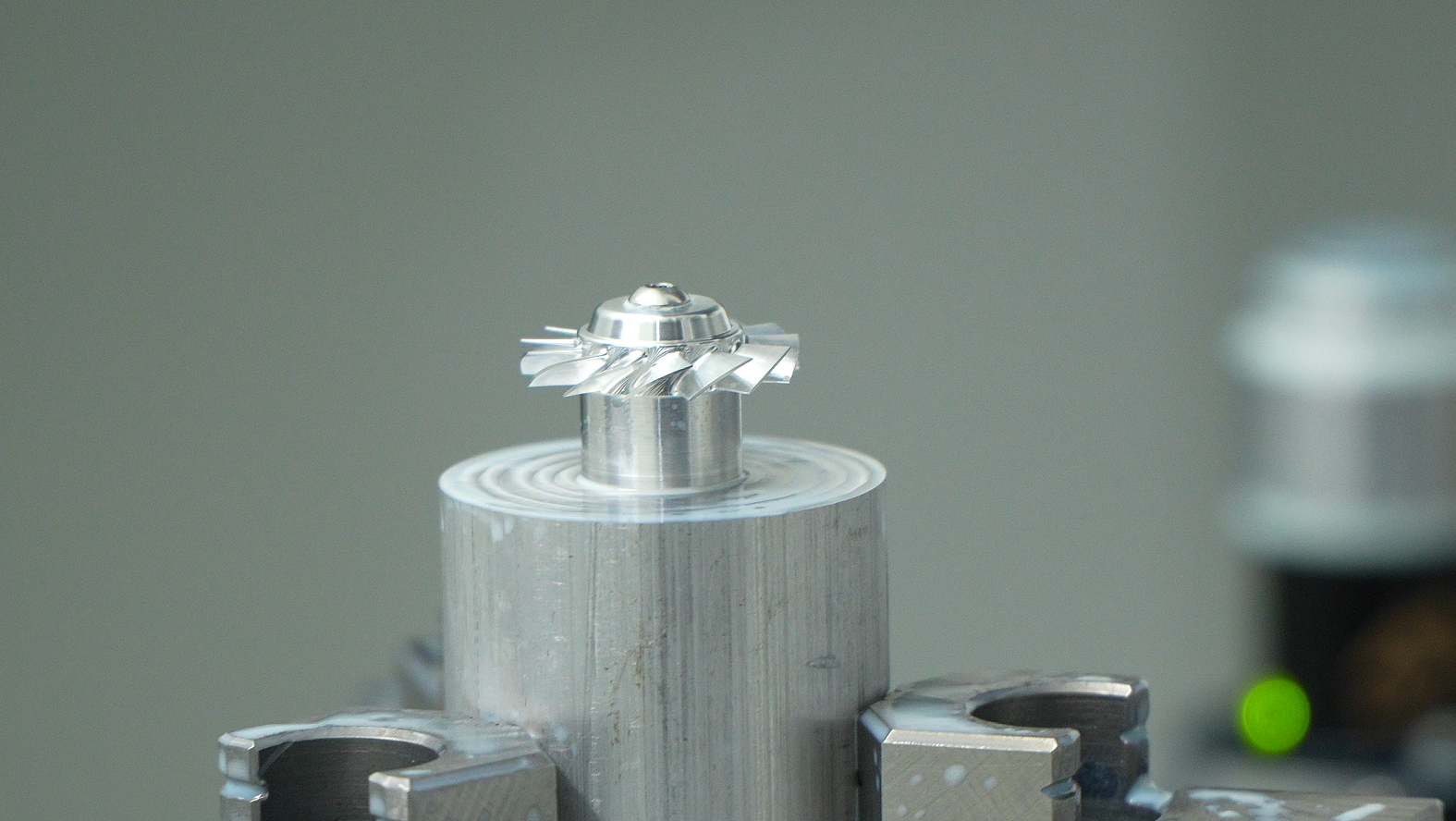
- Blades
- Impellers
- Thin walls
- Organic surfaces
- Compound angles
Maintaining the spatial relationship between these features is essential.
Because 5-axis machining keeps the part within a single coordinate system, positional relationships remain significantly more accurate than with repeated repositioning.
This improves:
- True position
- Profile accuracy
- Angular accuracy
- Overall geometric consistency
Better Surface Quality Supports Geometric Precision
Surface quality and geometric accuracy are closely connected.
Excessive vibration or unstable cutting can distort part geometry while simultaneously degrading surface finish.
Continuous 5-axis machining improves:
- Cutting stability
- Chip evacuation
- Heat distribution
- Tool engagement
The result is smoother surfaces that more accurately reflect the intended CAD geometry while requiring less secondary finishing.
Applications Requiring Exceptional Geometric Accuracy
The advantages of 5-axis machining are especially valuable in industries producing highly complex components.
Typical applications include:
- Aerospace turbine blades
- Aircraft structural components
- Medical implants
- Orthopedic devices
- Mold cavities
- Automotive performance parts
- Energy equipment
- Precision mechanical assemblies
These applications demand consistent geometric accuracy to ensure both functional performance and manufacturing reliability.
Conclusion
As component complexity continues to increase, maintaining geometric accuracy becomes one of the most important challenges in precision manufacturing.
By enabling single-setup production, continuous tool orientation, shorter cutting tools, smoother toolpaths, and advanced motion control, 5-axis machining significantly improves the geometric consistency of complex components.
For manufacturers seeking higher precision, reduced production errors, and improved machining efficiency, 5-axis machining has become the preferred solution for producing today's most demanding engineering components.
FAQ
1. What is geometric accuracy in machining?
Geometric accuracy refers to how closely a machined part matches the intended geometry of its CAD model, including profiles, positions, angles, and feature relationships.
2. Why does 5-axis machining improve geometric accuracy?
Because it allows continuous tool orientation and single-setup machining, reducing positioning errors and maintaining accurate feature relationships.
3. How does fewer setups improve machining accuracy?
Each setup introduces potential alignment errors. Single-setup machining eliminates cumulative positioning errors and improves overall geometric consistency.
4. Does shorter tooling improve geometric accuracy?
Yes. Shorter tools are more rigid, reducing vibration and tool deflection while improving machining stability and positional accuracy.
5. Which industries benefit most from improved geometric accuracy?
Aerospace, medical, automotive, mold manufacturing, energy, and precision engineering all rely heavily on high geometric accuracy for complex components.