
From Prototyping to Batch Production: When 5-Axis Truly Adds Value
Introduction: Why 5-Axis CNC Is Not Always Necessary—Until It Is
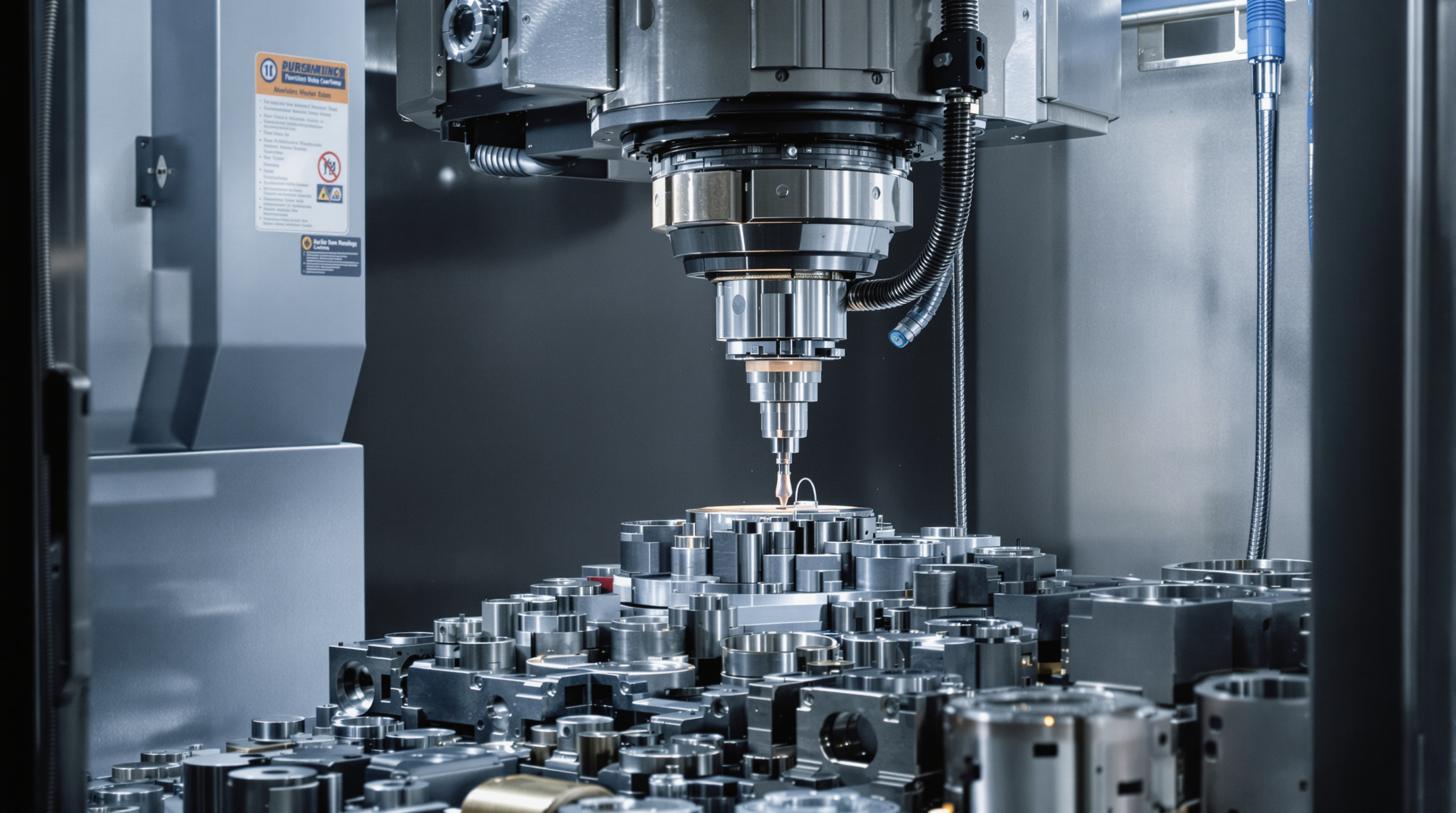
In modern manufacturing, 5-axis CNC machining is often viewed as the ultimate solution for complex parts. However, its real value does not lie in replacing every 3-axis or 4-axis process. Instead, 5-axis CNC machining adds value at specific transition points—from prototyping to batch production—where complexity, tolerance stack-up, and efficiency intersect.
Understanding when 5-axis CNC machining becomes essential helps manufacturers avoid unnecessary cost while unlocking higher accuracy, faster throughput, and better scalability when production ramps up.
Prototyping Stage: Where 5-Axis CNC Accelerates Design Validation
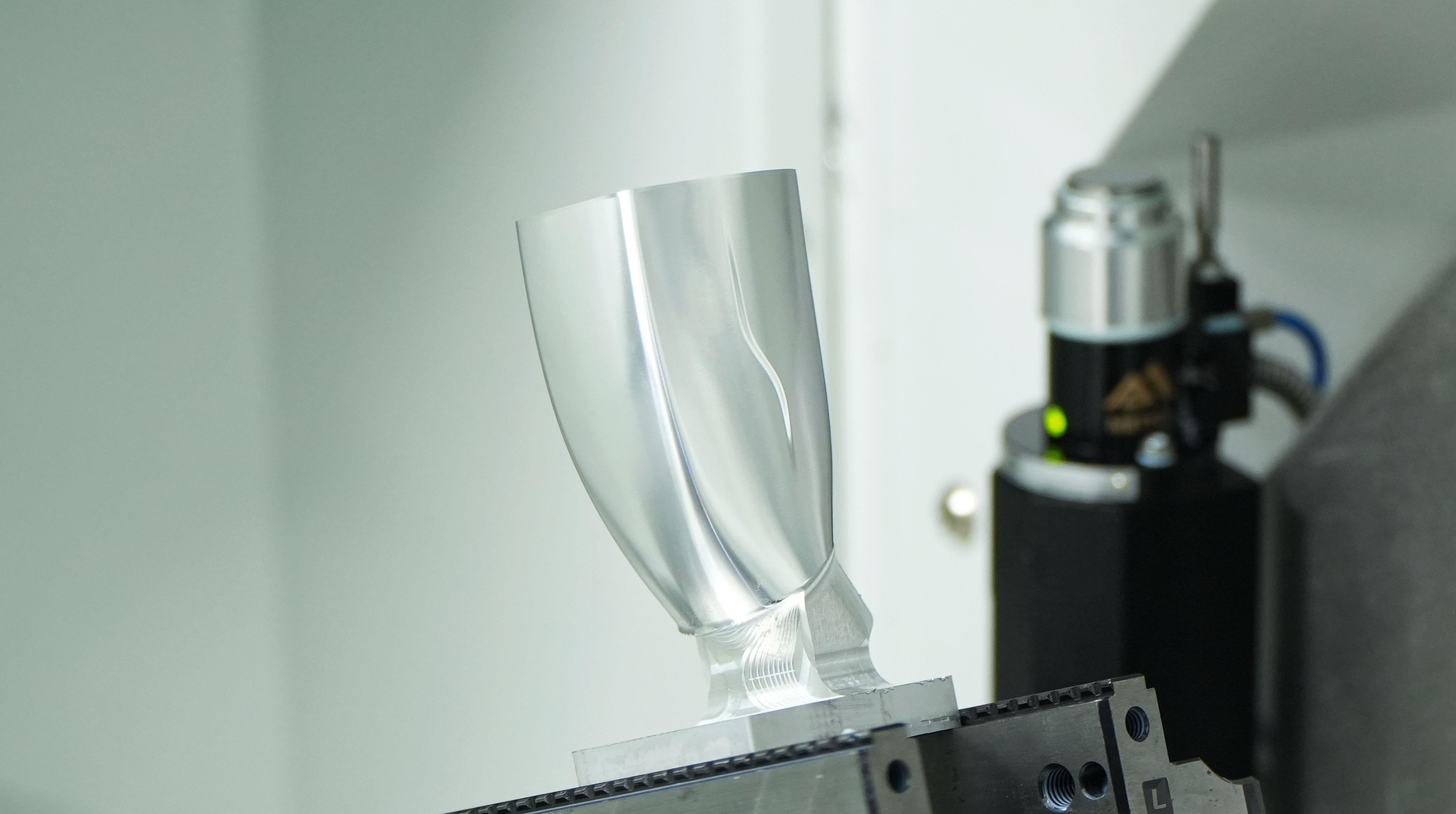
During early-stage prototyping, flexibility matters more than cycle time. 5-axis CNC machining enables engineers to validate complex geometries in a single setup, reducing re-fixturing errors and shortening design iteration loops.
Key advantages at the prototyping stage include:
-
Single-setup machining for complex freeform surfaces
-
Rapid verification of undercuts, compound angles, and deep cavities
-
Higher correlation between prototype geometry and final production intent
For aerospace brackets, turbine components, and medical implants, 5-axis CNC machining ensures the prototype accurately reflects real-world manufacturability—something 3-axis setups often fail to capture.
Low-Volume Production: Where Accuracy Starts to Outweigh Speed
As projects move beyond prototyping into low-volume production, tolerance consistency becomes critical. Repositioning parts across multiple setups introduces cumulative errors that quickly exceed ±5–10 microns.
Here, 5-axis CNC machining delivers measurable value by:
-
Maintaining geometric accuracy across complex features
-
Eliminating datum shift caused by manual re-clamping
-
Preserving surface continuity on blended or sculpted surfaces
For industries such as aerospace and high-end tooling, 5-axis CNC machining ensures that every part—not just the first—meets GD&T requirements.
Batch Production: When 5-Axis Becomes a Cost-Control Tool
Contrary to common belief, 5-axis CNC machining becomes more cost-effective as batch size increases, especially for complex parts.
In batch production, 5-axis systems reduce total cost by:
-
Minimizing fixture complexity and setup labor
-
Shortening overall process chains (fewer operations, fewer machines)
-
Improving tool life through optimized tool orientation
For titanium and Inconel components, adaptive toolpaths in 5-axis CNC machining reduce cutting forces and heat concentration, stabilizing dimensions across long production runs.
Surface Quality and Functional Performance at Scale
As production volume grows, surface consistency becomes as important as geometry. Multi-axis tool engagement allows constant cutting angles, directly improving surface finish and fatigue resistance.
With 5-axis CNC machining, manufacturers consistently achieve:
-
Surface roughness < 0.8 µm Ra on freeform parts
-
Reduced micro-crack initiation in high-stress zones
-
Better aerodynamic and fluid-flow performance
This is why 5-axis CNC machining is standard for turbine blades, orthopedic implants, and precision molds.
When 3-Axis Stops Scaling—and 5-Axis Takes Over
A practical rule of thumb:
If a part requires more than three setups, tight positional tolerances, or simultaneous multi-surface machining, transitioning to 5-axis CNC machining is no longer optional.
Warning signs include:
-
Rising scrap rates during batch expansion
-
Excessive inspection corrections
-
Fixture-induced distortion
At this point, 5-axis is not an upgrade—it is a process correction.
Industry Examples: Where 5-Axis Delivers Proven ROI
-
Aerospace: Structural brackets reduced by 30–40% in weight
-
Medical: Custom implants produced with sub-micron repeatability
-
Energy: Turbine components with extended fatigue life
In all cases, 5-axis CNC machining enables scalable precision that traditional machining cannot sustain.
FAQ
1. When does 5-axis CNC machining add the most value?
5-axis CNC machining adds the most value when parts move from prototyping to repeatable production and require tight tolerances, complex geometry, or reduced setup count.
2. Is 5-axis CNC machining suitable for small batch production?
Yes. For complex parts, 5-axis CNC machining often lowers total cost in small batches by reducing fixtures, setups, and inspection time.
3. Can 5-axis CNC machining replace all 3-axis processes?
No. Simple prismatic parts are often more cost-effective on 3-axis machines. 5-axis CNC machining is best reserved for complexity-driven applications.
4. How does 5-axis CNC machining improve surface quality?
By maintaining optimal tool orientation, 5-axis CNC machining ensures consistent cutting conditions, leading to better surface finish and fatigue performance.