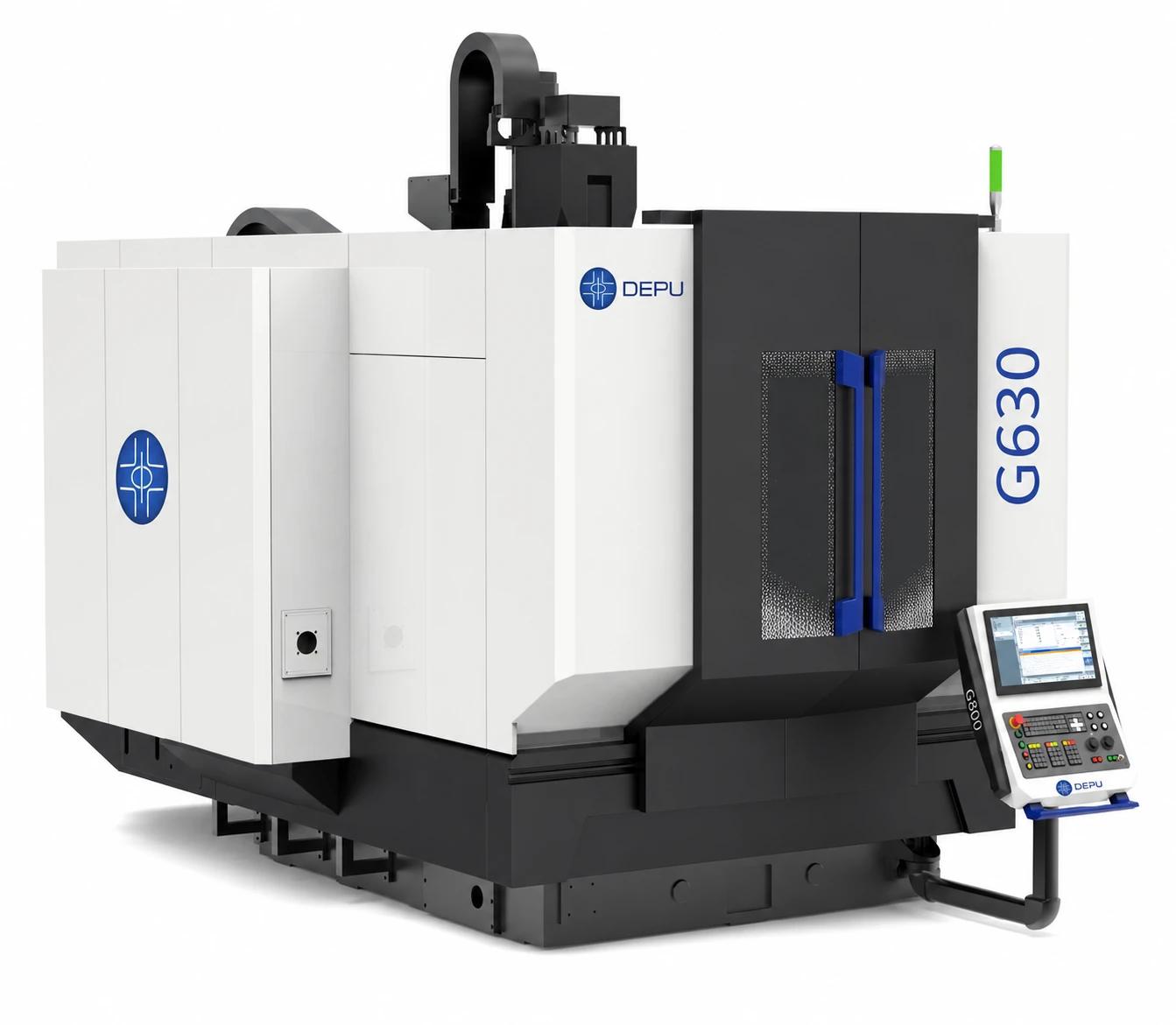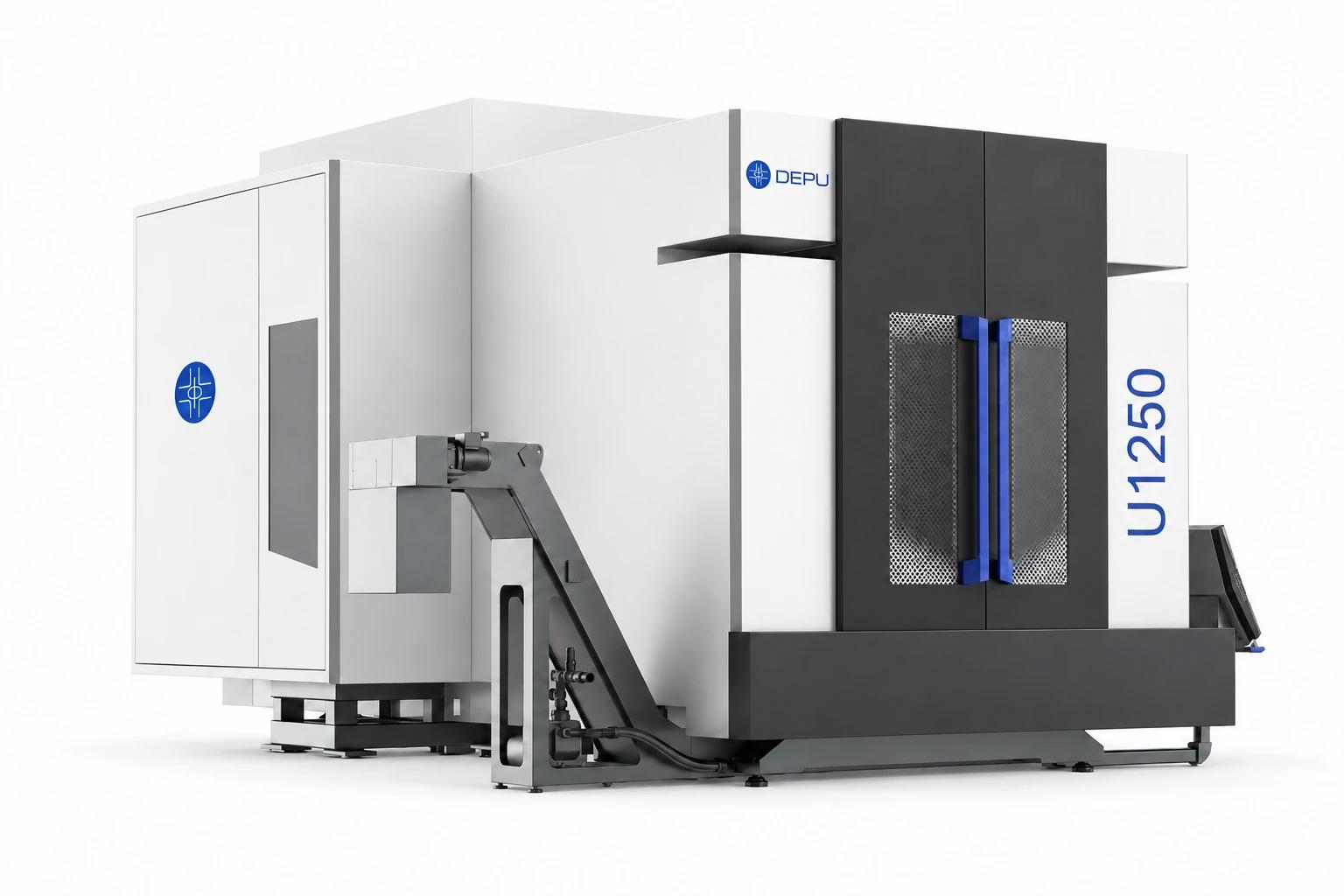
Machine structure plays a decisive role in determining the real accuracy of a 5-axis machining center, influencing rigidity, vibration control, and long-term stability.
Accuracy Begins with Structure
In high-precision machining, accuracy is often associated with control systems, servo motors, or linear scales. While these components contribute to positioning precision, the foundation of real machining performance lies deeper in the machine itself.
The machine structure in 5-axis machining centers determines how the machine behaves under load, heat, and dynamic movement. Without a rigid and stable structural foundation, even the most advanced control system cannot maintain consistent accuracy.
Precision in 5-axis machining starts with structural integrity.
Structural Rigidity and Cutting Stability
During machining operations, cutting forces continuously act on the tool, spindle, and machine frame. These forces generate stress throughout the machine structure.
A well-designed machine structure in 5-axis machining centers must resist deformation under these loads. High structural rigidity helps maintain axis alignment and tool positioning, which directly affects surface finish and dimensional accuracy.
High-rigidity machine designs typically include:
-
Heavy cast iron beds
-
Reinforced column structures
-
Wide-span guideway placement
-
Balanced load distribution
These design elements ensure stable cutting conditions during complex 5-axis operations.
Vibration Control and Surface Quality
Vibration is one of the primary factors affecting machining quality. Even minor structural resonance can lead to chatter, tool wear, and poor surface finish.
The machine structure in 5-axis machining centers plays a major role in suppressing vibration. Machines with greater structural mass and optimized load paths can absorb dynamic forces more effectively.
Improved vibration control allows:
-
smoother tool engagement
-
longer tool life
-
more consistent surface finishes
Structural stability directly influences machining reliability.
Thermal Stability and Dimensional Precision
Temperature variation affects every mechanical system. As machine components heat up during operation, expansion can alter geometric relationships between axes.
A well-designed machine structure in 5-axis machining centers addresses this challenge through symmetrical layouts and thermal management strategies.
These may include:
-
balanced structural design
-
controlled coolant circulation
-
thermal compensation algorithms
-
temperature-stable spindle assemblies
Thermal stability ensures that the machine maintains dimensional precision even during long machining cycles.
Multi-Axis Alignment and Structural Integrity
5-axis machining involves coordinated movement across multiple linear and rotary axes. Maintaining alignment between these axes requires a structurally stable machine platform.
If the machine structure in 5-axis machining centers lacks rigidity, small deviations in one axis can propagate through the entire kinematic chain.
This may result in:
-
contour errors
-
geometric distortion
-
inconsistent part accuracy
Robust structural engineering minimizes these risks and preserves precise multi-axis synchronization.
Long-Term Accuracy and Structural Durability
Accuracy is not only about the machine’s performance when it is new. Long-term stability is equally important.
Over time, structural fatigue, component wear, and thermal cycling can affect machine geometry. A strong machine structure in 5-axis machining centers helps maintain consistent accuracy throughout years of operation.
Durable machine structures typically incorporate:
-
reinforced casting designs
-
high-quality guideways
-
stable spindle assemblies
-
high-load rotary systems
These components ensure reliable performance under continuous production conditions.
Why Specifications Alone Are Not Enough
Many machine specifications focus on positioning accuracy, spindle speed, or travel range. However, these values often represent ideal conditions rather than real-world machining environments.
The machine structure in 5-axis machining centers ultimately determines how accurately the machine performs under cutting forces, dynamic motion, and thermal variation.
Manufacturers evaluating new equipment should therefore consider structural design as carefully as control systems or spindle specifications.
Real accuracy depends on the machine’s ability to maintain stability under real conditions.
Conclusion
The true performance of a 5-axis machining center is defined by its structural foundation. Rigidity, vibration control, thermal stability, and multi-axis alignment all originate from the machine’s mechanical architecture.
A robust machine structure in 5-axis machining centers allows advanced control systems and precision components to perform at their full potential.
In precision manufacturing, structural engineering is the starting point for real machining accuracy.
FAQ
1. Why does machine structure affect 5-axis machining accuracy?
Machine structure determines rigidity and stability, which influence how the machine responds to cutting forces and dynamic movement.
2. What materials are commonly used in CNC machine structures?
High-quality cast iron is widely used because it provides excellent rigidity and vibration damping.
3. How does vibration affect machining accuracy?
Excessive vibration can cause tool chatter, dimensional deviation, and poor surface finish.
4. Is machine structure more important than control systems?
Both are important, but without a rigid structure, advanced control systems cannot maintain consistent machining accuracy.
Originally published by DEPU on 10 Mar 2026.