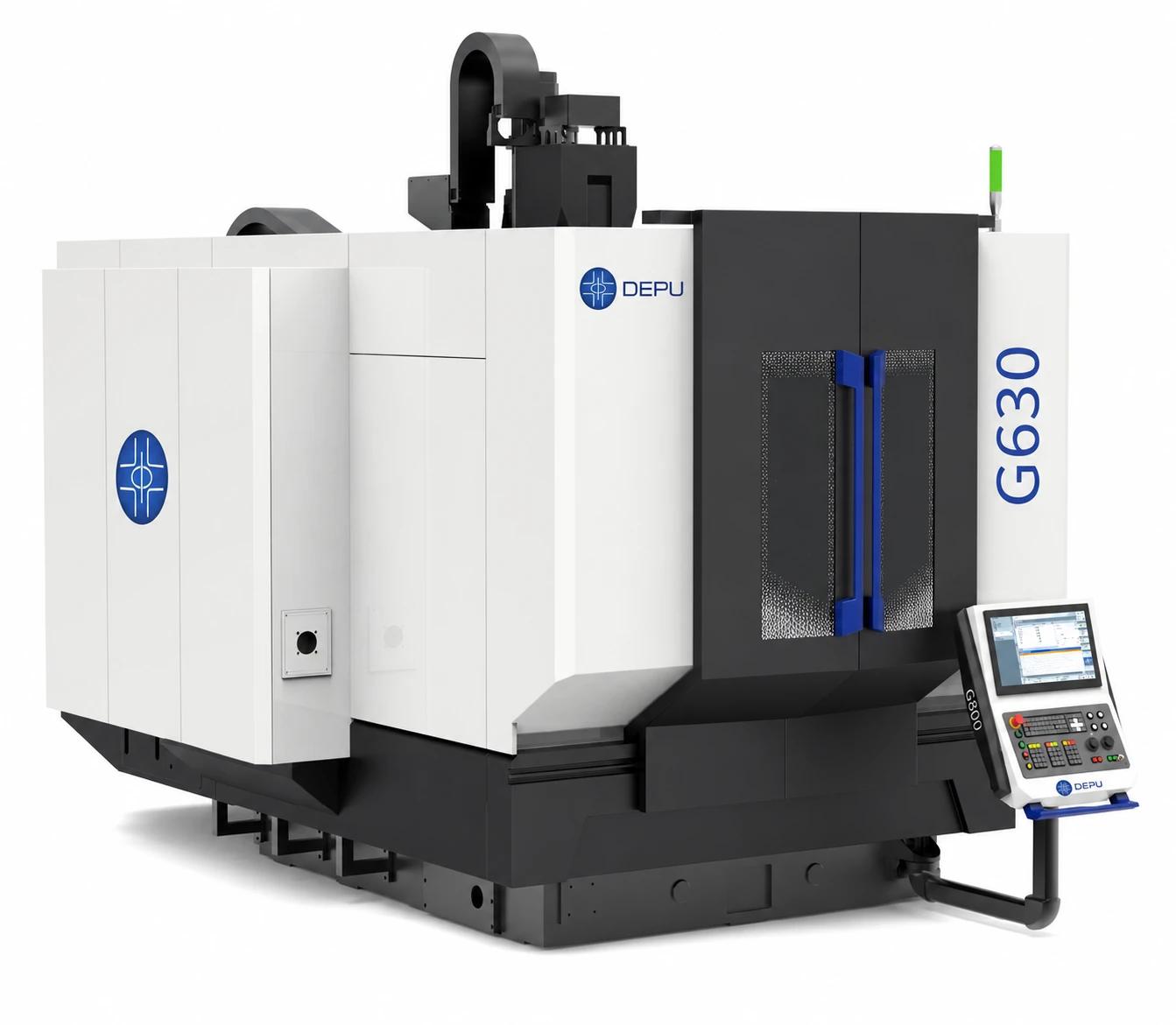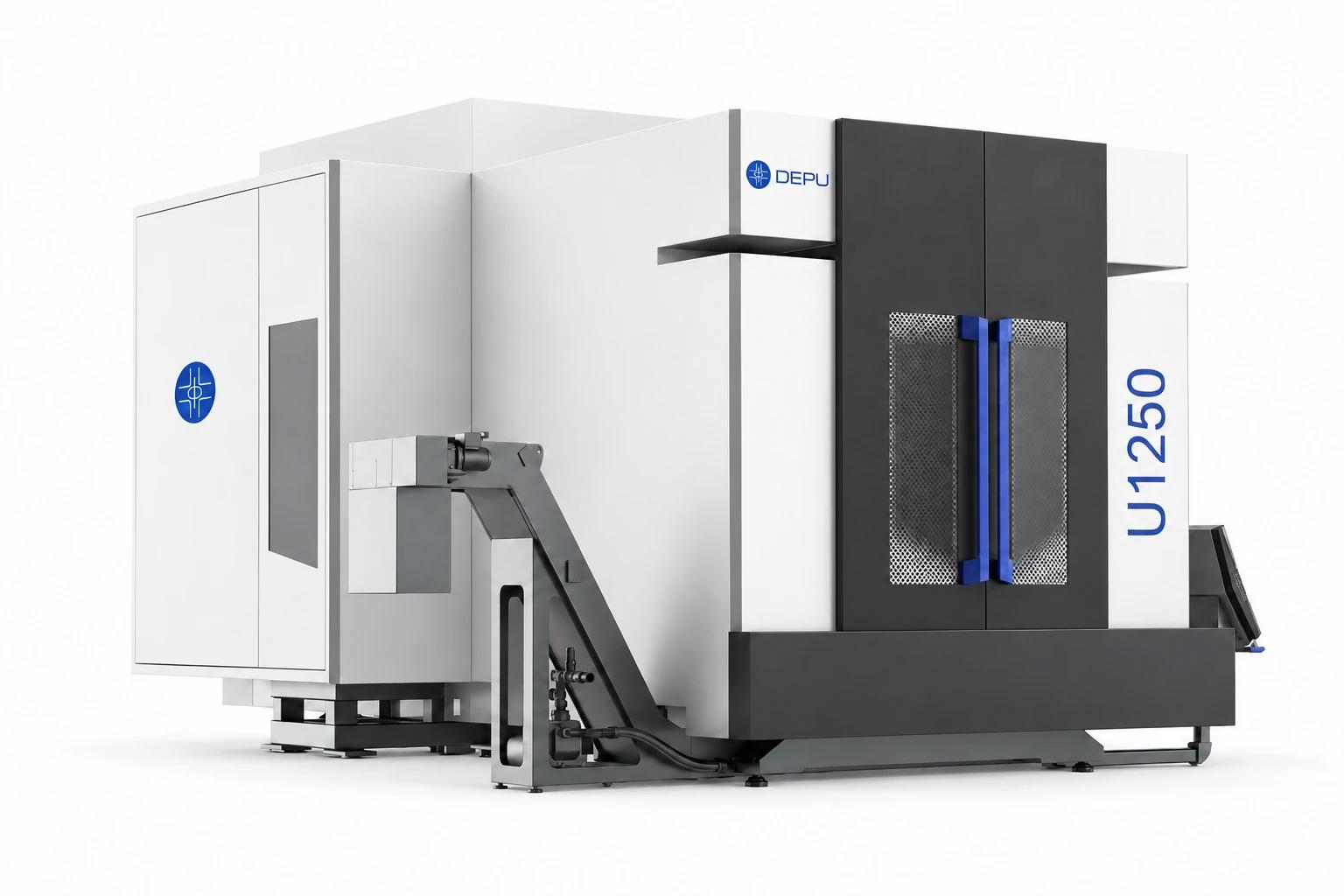
High-speed machining for complex parts requires more than spindle power. Structural stability determines accuracy, surface quality, and long-term machining consistency.
The Misconception: Power Equals Performance
When discussing high-speed machining, many manufacturers initially focus on spindle power or maximum RPM. While these specifications are important, they do not fully define machining capability.
In reality, high-speed machining for complex parts depends far more on machine stability than raw spindle power. Without a stable machine platform, increased speed can actually amplify vibration, reduce accuracy, and accelerate tool wear.
Speed without stability often leads to inconsistent results.
Why Complex Parts Amplify Instability
Complex parts typically involve intricate geometries, curved surfaces, and continuous toolpath adjustments. These operations require constant multi-axis coordination and rapid changes in cutting direction.
During high-speed machining for complex parts, the machine must handle:
-
rapid acceleration and deceleration
-
simultaneous multi-axis movement
-
variable cutting forces
If the machine structure lacks rigidity, these dynamic conditions can introduce vibration or micro-deflection that affects part accuracy.
Complex geometries magnify even small mechanical weaknesses.
Structural Rigidity Supports High-Speed Precision
Structural rigidity is the foundation of CNC machining stability. A rigid machine structure absorbs cutting forces and prevents deformation during aggressive high-speed operations.
Machines designed for high-speed machining for complex parts often incorporate:
-
heavy cast machine beds
-
reinforced columns
-
wide-span linear guide layouts
-
balanced load distribution
These design elements improve structural rigidity in CNC machines, enabling stable cutting even at high feed rates.
Stability allows speed to become productive rather than destructive.
Vibration Control and Surface Finish
At high spindle speeds, vibration becomes one of the most significant threats to machining quality. Even minor vibration can cause chatter marks, tool wear, and dimensional variation.
For high-speed machining for complex parts, effective vibration control in CNC machining is essential. Machine structures with higher mass and damping characteristics reduce resonance and maintain stable cutting conditions.
When vibration is minimized:
-
surface finishes improve
-
tool life increases
-
dimensional accuracy becomes more consistent
Stability protects both the machine and the workpiece.
Multi-Axis Synchronization at High Speed
High-speed 5-axis machining introduces additional complexity because multiple axes must move simultaneously with perfect synchronization.
During high-speed machining for complex parts, small delays or deviations between axes can produce contour errors or uneven surface quality.
Stable machine structures combined with advanced CNC control systems help maintain smooth multi-axis motion. This coordination ensures that the tool follows complex toolpaths precisely.
Multi-axis synchronization depends on both software control and mechanical stability.
Thermal Stability During Continuous Operation
High-speed machining generates heat through spindle rotation, friction, and cutting processes. Over long production cycles, thermal expansion can affect machine geometry.
Machines designed for high-speed machining for complex parts address this issue with thermal stability strategies such as:
-
symmetrical structural design
-
temperature-stable spindle assemblies
-
thermal compensation systems
These solutions help maintain dimensional precision even when the machine operates at high speed for extended periods.
Thermal stability supports consistent accuracy.
Balancing Speed, Power, and Stability
While spindle power remains important, its effectiveness depends on how well the machine structure can support high-speed operations.
A balanced machine design integrates:
-
sufficient spindle power
-
strong structural rigidity
-
effective vibration damping
-
precise motion control
For high-speed machining for complex parts, this balance allows manufacturers to achieve both productivity and precision.
Power alone cannot deliver stable machining performance.
Conclusion
High-speed machining is not simply about increasing spindle RPM or cutting power. True performance depends on how well the machine maintains stability under dynamic conditions.
Successful high-speed machining for complex parts requires strong machine structures, effective vibration control, precise multi-axis coordination, and thermal stability.
When stability is engineered into the machine design, high-speed machining becomes both accurate and reliable.
FAQ
1. Why is stability more important than power in high-speed machining?
Because excessive vibration or structural instability can reduce accuracy and surface quality, regardless of spindle power.
2. What machine features improve stability in high-speed machining?
Rigid machine structures, vibration damping designs, and precise motion control systems help maintain stable cutting conditions.
3. Does high spindle speed always improve productivity?
Not necessarily. If machine stability is insufficient, higher speeds can cause vibration and reduce machining quality.
4. Which industries benefit most from high-speed machining for complex parts?
Aerospace, medical device manufacturing, and precision mold production often rely on high-speed machining to produce intricate components efficiently.
Originally published by DEPU on 11 Mar 2026.