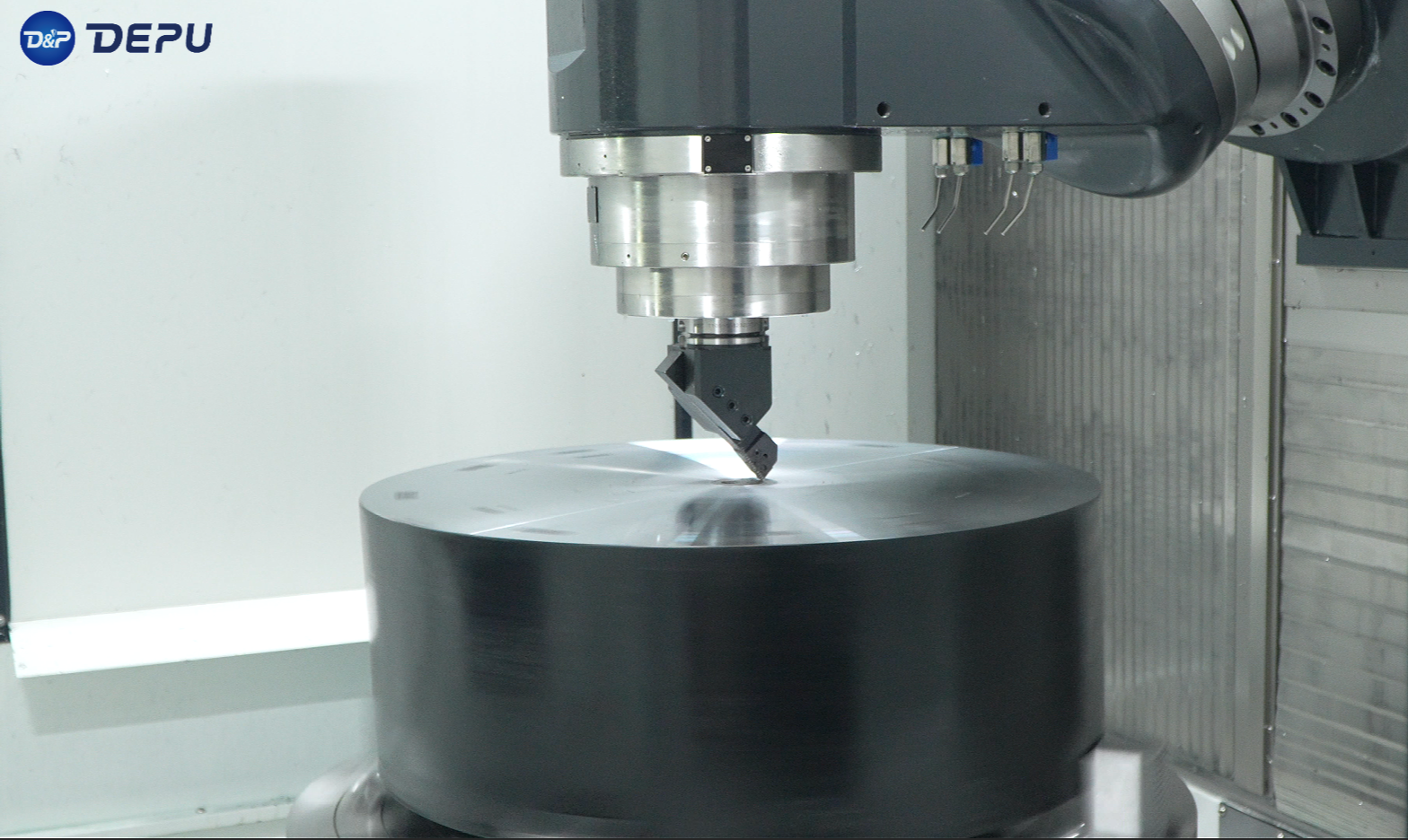

What Truly Defines a High-Performance 5-Axis Machining Center?
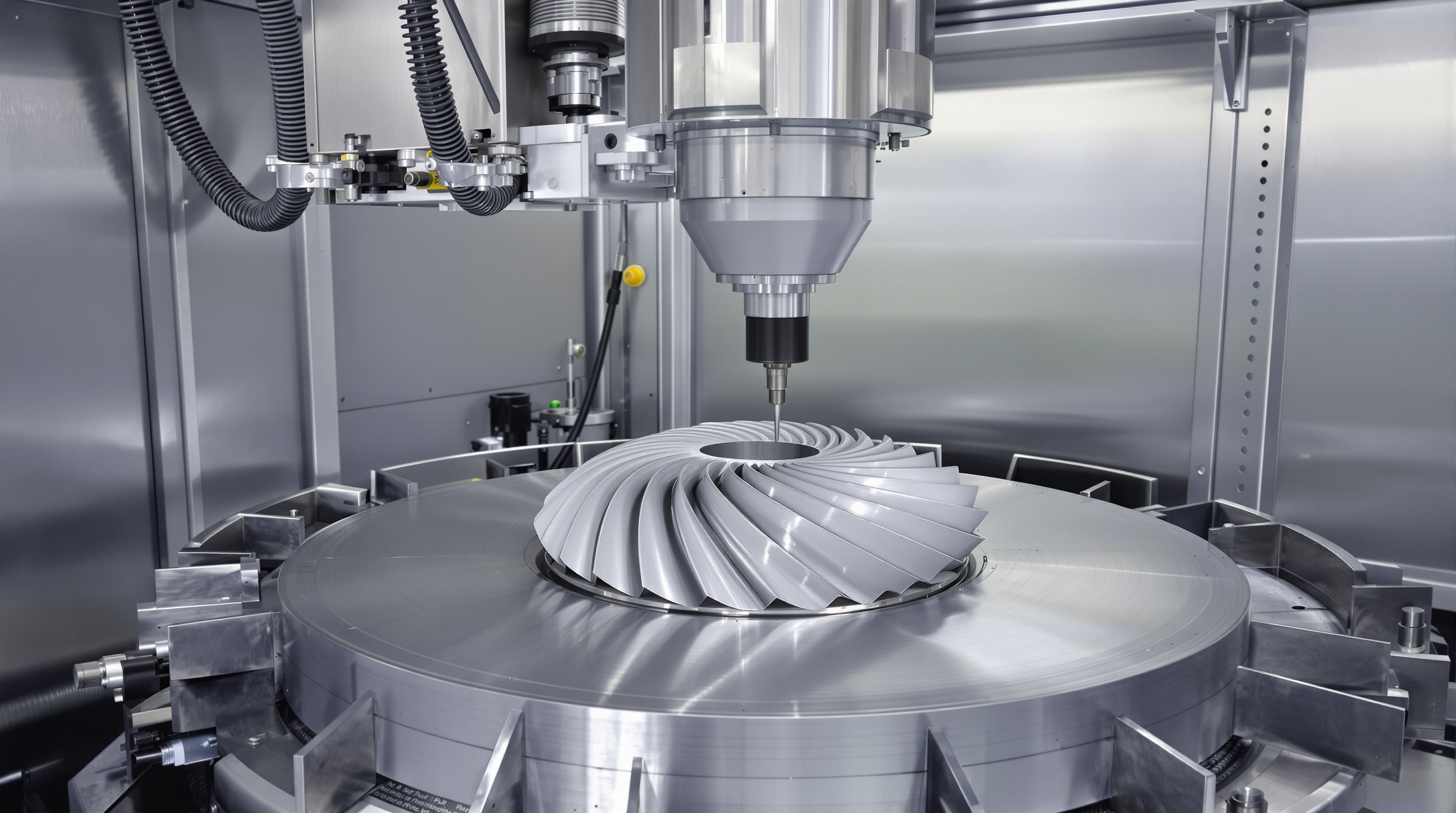
Why “5-Axis” Alone No Longer Defines Performance
In today’s manufacturing landscape, simply owning a 5-axis CNC machine does not automatically qualify it as a high-performance 5-axis machining center. As aerospace, medical, and energy components push toward tighter tolerances, heavier materials, and longer unmanned cycles, performance is now defined by how well a machine sustains accuracy under load, heat, and time—not by axis count alone.
Many entry-level 5-axis machines can interpolate five axes, but fail to maintain geometric consistency once cutting forces increase or thermal conditions drift. A true high-performance platform must deliver repeatable accuracy, structural stability, and dynamic control simultaneously, across real production conditions.Structural Rigidity: The Foundation of a High-Performance 5-Axis Machining Center
Rigidity is the first non-negotiable characteristic of a high-performance 5-axis machining center. This includes:
-
One-piece cast or polymer-concrete machine beds
-
Reinforced trunnion or rotary table structures
-
High-load linear guideways with preload optimization
Without sufficient stiffness, multi-axis motion amplifies deflection—especially during simultaneous 5-axis contouring. This directly impacts 5-axis machining accuracy, surface finish, and tool life when cutting titanium, Inconel, or hardened steels.
High-performance machines are designed to absorb cutting forces, not compensate for them after errors occur.
Kinematics: How Axis Configuration Impacts Accuracy and Stability
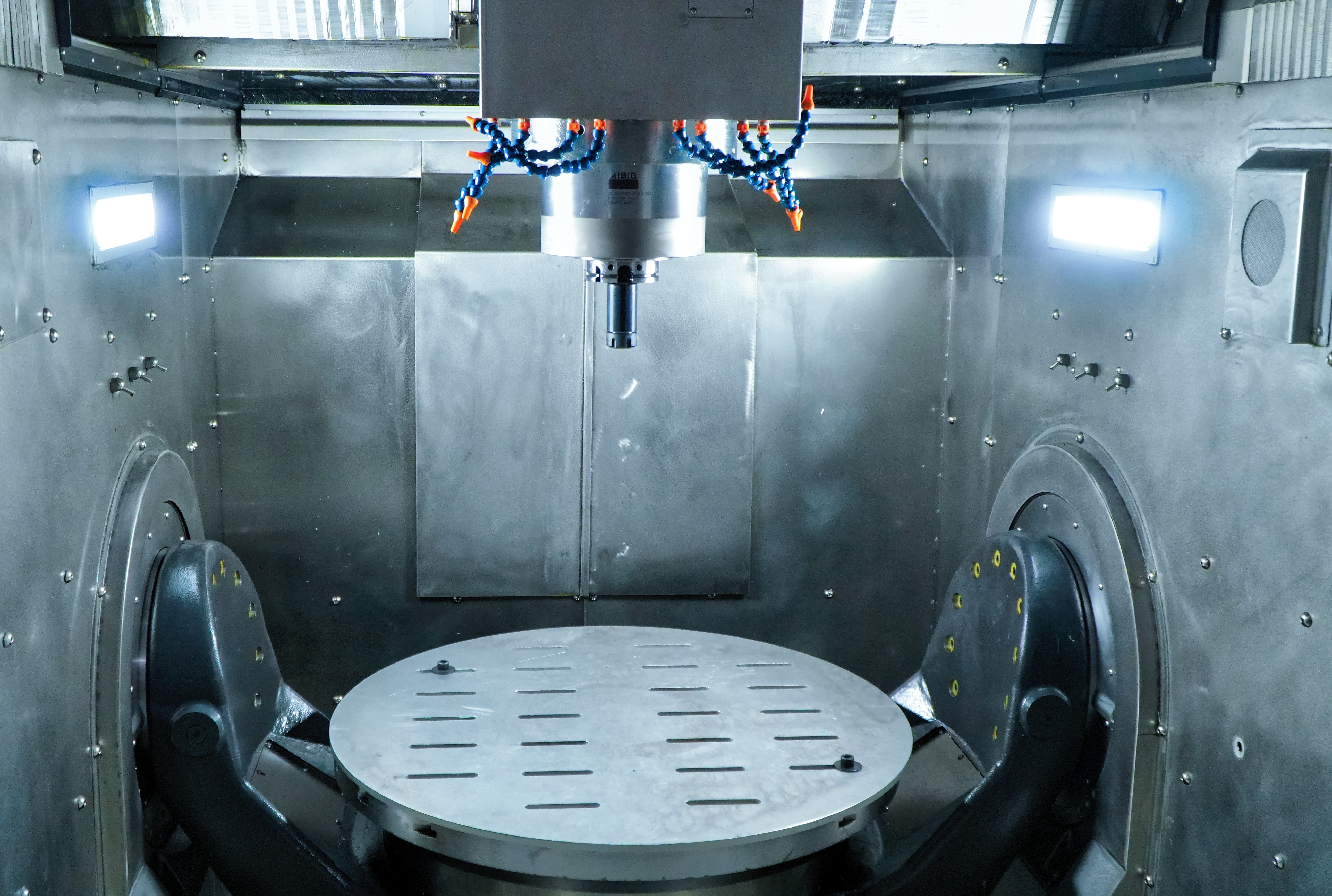
Kinematic design separates industrial-grade systems from light-duty platforms. Whether using a trunnion-style or rotary table configuration, a high-performance 5-axis machining center must ensure:
-
Short, rigid torque paths
-
Minimal overhang during rotation
-
Predictable center-of-rotation behavior
Poor kinematic layouts introduce cumulative errors, especially during long-cycle or batch production. Advanced machines integrate real-time kinematic compensation, ensuring 5-axis machining accuracy remains stable across the full working envelope.
Thermal Stability: The Silent Performance Killer
Thermal growth is one of the most underestimated limitations in 5-axis machining. A high-performance 5-axis machining center actively manages heat through:
-
Spindle cooling and temperature mapping
-
Axis growth compensation
-
Machine-wide thermal modeling
Without thermal stability, machines may pass initial inspections but drift out of tolerance during extended production. For aerospace and medical applications, maintaining micron-level accuracy over time is as critical as achieving it once.
Control System and Software Integration
Hardware alone does not define a high-performance machine. The CNC control system plays a decisive role by enabling:
-
True simultaneous 5-axis interpolation
-
Advanced look-ahead and jerk control
-
Adaptive feedrate and load compensation
An industrial 5-axis CNC machine with weak control logic cannot fully exploit its mechanical design. In contrast, a high-performance 5-axis machining center treats control, mechanics, and software as a unified system.
Production Reality: Performance Means Consistency, Not Peak Specs
Many machines advertise impressive positioning accuracy—but real performance is measured by:
-
Stability across long batch runs
-
Consistency under heavy cutting loads
-
Minimal recalibration and downtime
In real factories, a high-performance 5-axis machining center delivers predictable results day after day, not just under ideal demo conditions.
Who Actually Needs a High-Performance 5-Axis Machining Center?
This level of capability is essential for industries where failure is not an option:
-
Aerospace: structural brackets, turbine components, blisks
-
Medical: orthopedic implants, surgical tools, titanium housings
-
Energy & Heavy Industry: large, complex, high-load components
In these sectors, investing in a high-performance 5-axis machining center directly translates into lower scrap rates, higher part integrity, and long-term cost control.
FAQ
What defines a high-performance 5-axis machining center?
A high-performance 5-axis machining center is defined by rigidity, kinematic stability, thermal control, and advanced CNC integration—not merely by having five axes.
Is every 5-axis CNC machine considered high-performance?
No. Many 5-axis machines can interpolate five axes but lack the structural and thermal stability required for demanding production environments.
Why is thermal stability critical in 5-axis machining?
Thermal drift can cause micron-level dimensional changes over time, making thermal control essential for maintaining consistent 5-axis machining accuracy.
Which industries benefit most from high-performance 5-axis machines?
Aerospace, medical, and energy industries benefit most due to their strict tolerance, material, and reliability requirements.