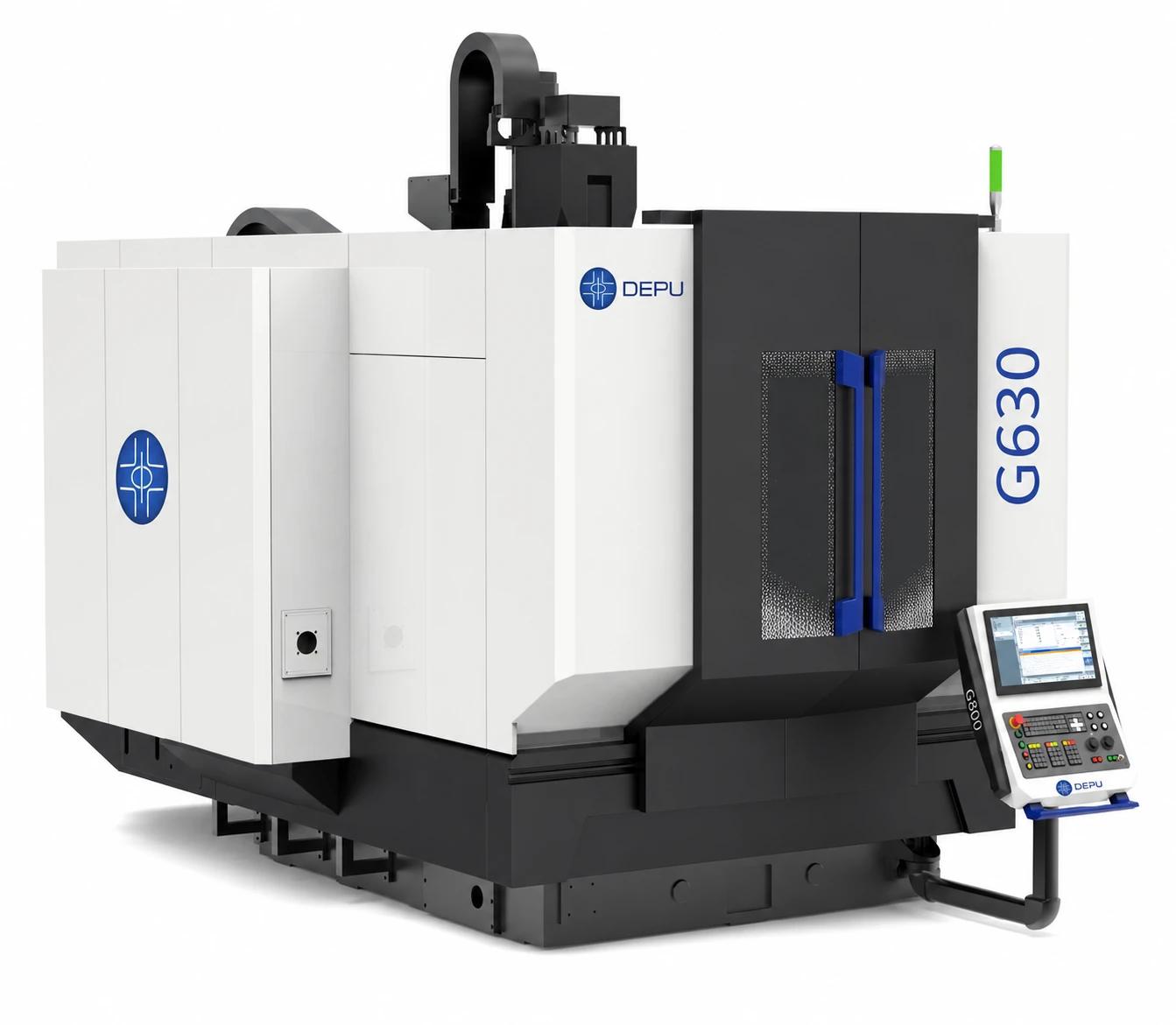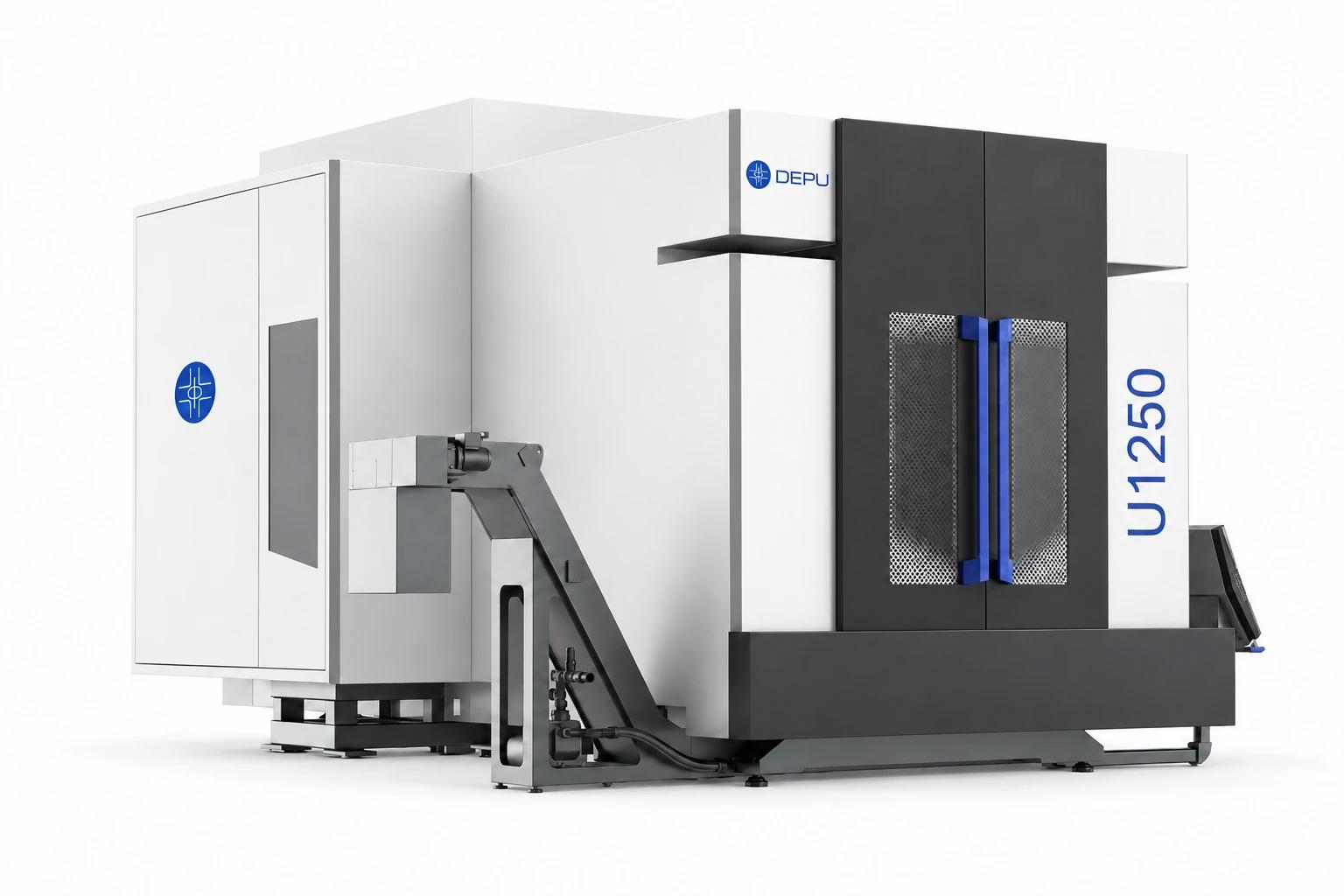
Modern 5-axis machines rely on advanced structural design, thermal control, and precision feedback systems to maintain long-term machining accuracy.
The Engineering Behind Long-Term Accuracy
Modern manufacturing industries require machines that maintain precision not only during initial operation but throughout years of production. Aerospace, energy, and high-end component manufacturing depend on consistent dimensional accuracy across thousands of parts.
This is where modern 5-axis machine design features play a critical role. A high-performance machine is not defined only by spindle speed or control software. Instead, long-term accuracy is the result of integrated engineering involving structural rigidity, motion control, thermal stability, and precision feedback systems.
These design elements work together to ensure that machining accuracy remains stable over time.
Structural Rigidity as the Foundation
One of the most important modern 5-axis machine design features is a rigid machine structure. The structural frame supports all motion systems and absorbs cutting forces during machining operations.
Machines designed for long-term accuracy often use heavy cast iron bases, reinforced columns, and wide-span guideway layouts. These structures distribute loads evenly and prevent deformation under heavy cutting forces.
Strong structural stability provides several advantages:
-
reduced vibration during high-speed machining
-
consistent tool positioning
-
improved surface finish
-
longer tool life
Without structural rigidity, even advanced control systems cannot maintain stable machining performance.
Precision Guideways and Motion Systems
Linear motion systems determine how smoothly and accurately machine axes move. Modern machines frequently use high-quality roller linear guides or box ways depending on the intended application.
These motion systems are another key component of modern 5-axis machine design features because they influence dynamic stability and positioning accuracy.
Precision guideways help maintain:
-
smooth axis acceleration
-
consistent feed motion
-
reduced mechanical backlash
When guideway systems are combined with high-performance servo drives, machines can maintain micron-level positioning accuracy during complex multi-axis movements.
Linear Scales for Direct Position Feedback
Direct position measurement plays an essential role in maintaining long-term accuracy. Linear scales measure axis position directly rather than relying solely on motor encoder feedback.
This approach is widely used in modern 5-axis machine design features because it eliminates many errors associated with mechanical transmission components such as ball screws.
Linear scales provide:
-
real-time position measurement
-
higher positioning accuracy
-
improved repeatability
-
compensation for thermal expansion
These systems help maintain stable accuracy over extended production cycles.
Thermal Stability and Heat Control
Temperature variation is one of the most common sources of machining error. Heat generated by spindles, motors, and cutting operations can cause structural expansion that affects machine geometry.
Advanced modern 5-axis machine design features address this challenge through thermal management strategies.
These may include:
-
symmetrical machine structures
-
spindle cooling systems
-
temperature monitoring sensors
-
thermal compensation algorithms
By controlling heat distribution within the machine, manufacturers can maintain dimensional stability even during long machining operations.
Multi-Axis Kinematic Precision
5-axis machining involves complex coordinated movements between linear and rotary axes. Maintaining precise alignment between these axes is essential for producing complex geometries.
Modern machines integrate sophisticated kinematic calibration systems as part of their modern 5-axis machine design features. These systems measure and compensate for small geometric deviations between axes.
As a result, the machine can maintain accurate tool positioning even during simultaneous multi-axis operations.
Durability and Long-Term Reliability
Long-term accuracy is not only about initial design but also about durability. Machines used in demanding industries must maintain precision despite continuous production cycles and heavy loads.
High-quality components used in modern 5-axis machine design features typically include:
-
precision bearings
-
reinforced rotary tables
-
high-performance spindle assemblies
-
stable casting structures
These components reduce wear and maintain machine geometry over time.
Why Long-Term Accuracy Matters
For manufacturers producing high-value components, small deviations can lead to costly part rejection or assembly problems. Maintaining stable accuracy over long production runs reduces these risks.
The integration of modern 5-axis machine design features allows manufacturers to achieve both productivity and reliability. Machines that maintain stable geometry over time support consistent machining quality and lower operational costs.
Conclusion
Modern 5-axis machining centers are complex engineering systems where every design element contributes to performance. Structural rigidity, precise motion systems, thermal management, and direct position feedback all play essential roles in maintaining accuracy.
By integrating these modern 5-axis machine design features, manufacturers can ensure stable, high-precision machining performance throughout the entire life cycle of the machine.
Long-term accuracy ultimately reflects the quality of machine engineering.
FAQ
1. What determines long-term accuracy in a 5-axis machine?
Structural rigidity, precision motion systems, thermal stability, and direct position feedback all contribute to long-term machining accuracy.
2. Why are linear scales important in CNC machines?
Linear scales measure axis positions directly, improving positioning accuracy and compensating for mechanical transmission errors.
3. How does thermal expansion affect machining accuracy?
Heat generated during machining can cause machine components to expand, altering geometry and reducing precision.
4. Why do high-end machines emphasize structural design?
A rigid and stable structure provides the foundation for precise motion control and consistent machining performance.
Originally published by DEPU on 12 Mar 2026.