
Selecting the right cnc machine for your shop is one of the most consequential decisions a machinist, shop owner, or production manager will make. The choice directly affects your output quality, operational efficiency, labor costs, and long-term profitability. With an enormous range of configurations, sizes, and capabilities available today, the process can feel overwhelming — especially when every model appears to offer something slightly different. Understanding what truly matters before you commit to a purchase will save you from costly mismatches between your shop's real needs and the machine sitting on your floor.
This guide walks through every critical factor involved in choosing a cnc machine that aligns with your shop's workflow, material requirements, production volume, and budget constraints. Whether you are setting up a new facility or upgrading existing equipment, the selection logic presented here will help you evaluate options with clarity and confidence. A well-chosen cnc machine becomes the backbone of your production capability — a poorly chosen one becomes a source of ongoing frustration and financial drain.
Understanding Your Shop's Production Requirements
Defining the Materials You Will Machine
Before evaluating any cnc machine, you must clearly define what materials your shop processes. Aluminum, mild steel, stainless steel, titanium, plastics, composites, and wood each place different demands on spindle power, feed rates, tooling, and rigidity. A cnc machine configured for aluminum milling will underperform when tasked with cutting hardened steel. Material hardness directly determines the required spindle torque, cutting speed range, and structural rigidity of the machine frame.
Shops that work with a single primary material have a clearer path — they can optimize around that material's specific cutting parameters. Multi-material shops face greater complexity and should prioritize cnc machine models that offer a wider spindle speed range, robust coolant systems, and the structural mass to dampen vibration across varying cutting conditions. Identifying your material mix early narrows the field significantly and prevents you from overpaying for capability you will never use.
Consider also the surface finish requirements your customers demand. Finishing passes on aerospace components require a fundamentally different level of machine precision and rigidity than rough cuts on structural brackets. The cnc machine you choose must be capable of delivering the tolerances your work demands, not just the tolerances typical of its class.
Assessing Your Volume and Part Complexity
Production volume is a primary driver of cnc machine selection. A low-volume prototype shop running five to fifty parts per month has entirely different needs compared to a high-volume production environment running thousands of identical components. High-volume environments benefit from machines with automatic tool changers, larger tool magazines, pallet changers, and robust automation integration. Prototype shops may prioritize flexibility and ease of setup over raw throughput.
Part complexity — specifically the number of unique features, tight tolerances, and the geometry of surfaces — determines whether a 3-axis, 4-axis, or 5-axis cnc machine is appropriate. Simple prismatic parts with features on flat faces can be efficiently produced on a 3-axis machine. Complex contoured surfaces, undercuts, and multi-face machining in a single setup demand 4-axis or 5-axis capability. Investing in unnecessary axes increases cost and programming complexity without returning corresponding value if your work does not require it.
Carefully audit your current job log and your projected backlog. Look for patterns in part families, setup times, and the operations that consume the most floor time. The right cnc machine eliminates those bottlenecks rather than introducing new ones.
Evaluating Machine Size, Configuration, and Work Envelope
Matching Work Envelope to Your Largest Parts
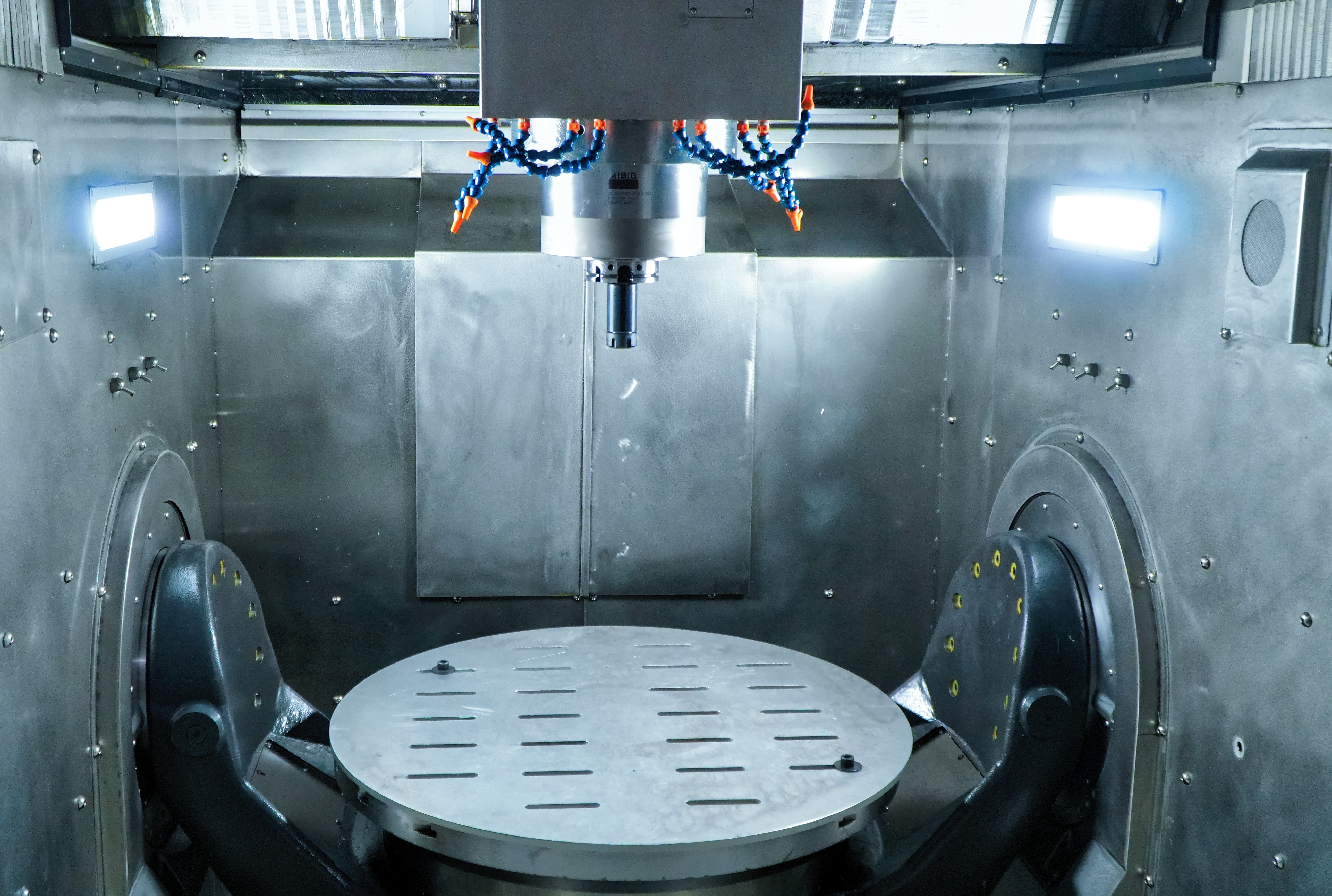
Every cnc machine has a defined work envelope — the maximum travel in X, Y, and Z axes that determines the largest part the machine can accommodate. Choosing a machine whose work envelope closely matches your largest part size is essential. Selecting a machine that is too small forces you to reposition parts, increasing setup time and risking geometric errors. Selecting a machine that is dramatically oversized adds unnecessary capital expense and floor space consumption.
Account for fixturing when evaluating the effective work envelope. Vises, clamps, tombstones, and custom fixtures consume a portion of the available travel. The usable cutting envelope is always smaller than the stated axis travel. Experienced shop managers typically add a 15 to 20 percent buffer over the largest anticipated part dimension when sizing the cnc machine work envelope.
Vertical machining centers are the most common configuration for milling operations and suit the majority of prismatic part work. Horizontal machining centers offer superior chip evacuation and are better suited for deep pockets and production work on multiple faces. Understanding the configuration best suited to your dominant work type prevents a mismatch that would undermine productivity from day one.
Floor Space, Installation, and Infrastructure Requirements
A cnc machine does not exist in isolation — it requires adequate floor space, proper power supply, compressed air, coolant management, and chip removal infrastructure. Before finalizing a purchase, measure your available floor space carefully, including the space required for operator access, door swing, and maintenance clearance on all sides. Some large cnc machine models require reinforced flooring due to their weight and dynamic cutting forces.
Electrical requirements vary significantly between machines. A smaller cnc machine may run on standard three-phase 208V or 240V power, while large machining centers may require 480V three-phase service with significant amperage. Confirm your facility's electrical capacity before committing to a machine specification. Upgrading electrical service after the fact is expensive and time-consuming.
Compressed air requirements, coolant tank sizing, and chip conveyor compatibility are practical infrastructure details that are easy to overlook during the excitement of machine selection. These elements directly affect day-to-day operation and should be resolved before installation day, not during it.
Spindle Performance and Tooling Compatibility
Spindle Speed, Torque, and Power Ratings
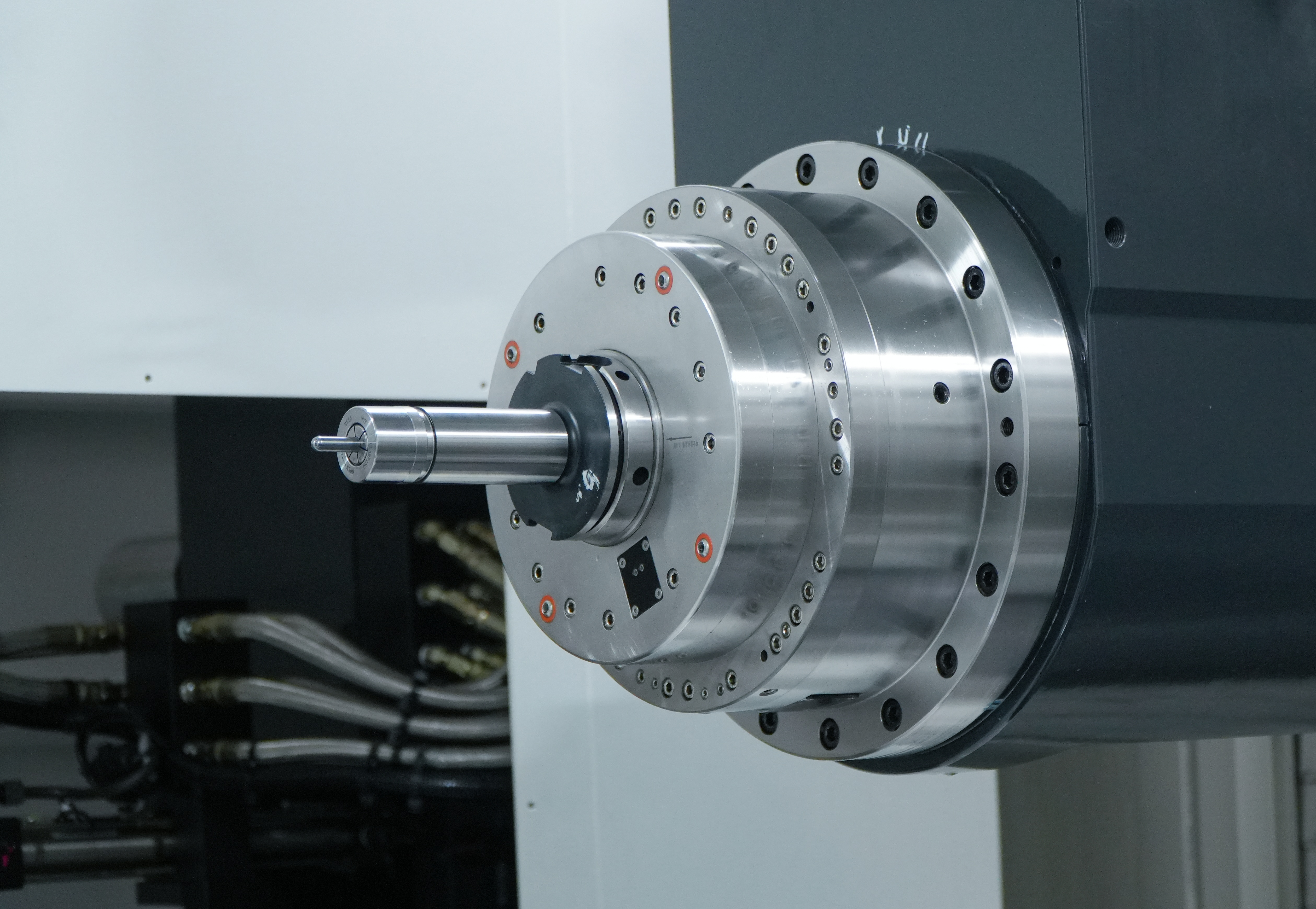
The spindle is the heart of any cnc machine. Its speed range, power output, and torque curve must align with the cutting operations you perform most frequently. High-speed spindles in the 15,000 to 40,000 RPM range are well-suited for aluminum, non-ferrous metals, and finishing passes with small-diameter tools. Machines designed for steel and heavy roughing work typically feature lower maximum RPM but significantly higher torque at mid-range speeds.
Do not evaluate spindle power alone. A cnc machine rated at 20 horsepower with poor torque at low RPM may underperform a 15-horsepower machine with a strong low-speed torque curve when it comes to heavy interrupted cuts in steel. Reviewing the spindle's torque-speed curve — not just the peak ratings — gives a more realistic picture of what the machine can actually deliver in your specific cutting conditions.
Spindle taper also matters. BT30, BT40, CAT40, CAT50, and HSK are common interfaces, each with different rigidity and maximum tool weight ratings. Your existing tooling investment may favor a particular taper standard, and switching standards requires replacing your entire tool library — a cost that must be factored into the total investment calculation.
Tool Magazine Capacity and Automatic Tool Changing
For production work, the tool magazine capacity of a cnc machine directly affects uninterrupted run time and programming flexibility. A machine with a 20-tool magazine may be perfectly adequate for simple parts with few operations. Complex parts requiring roughing, semi-finishing, finishing, drilling, tapping, and boring in a single setup may demand 30, 40, or even 60-tool capacity.
Automatic tool changer speed — measured as tool-to-tool change time — affects cycle time meaningfully in high-production environments. Even a two-second difference per tool change accumulates into significant time loss across thousands of daily cycles. Evaluate this specification carefully if your shop runs high-mix, high-volume production where tool changes are frequent.
Verify that the cnc machine's automatic tool changer supports the tool lengths and diameters common in your shop. Oversized tools, long boring bars, and heavy face mills sometimes exceed the standard weight or size limits of a machine's tool changer, requiring special handling or custom configurations.
Control System, Software, and Operator Usability
Choosing the Right CNC Control Platform
The control system is the interface between your programming team and the cnc machine. Commonly used control platforms each have their own G-code dialects, macro capabilities, parameter structures, and user interface logic. If your shop already runs a particular control brand, adding machines with compatible controls reduces retraining time, simplifies post-processor management, and allows operators to move between machines with minimal adjustment.
Evaluate the control's conversational programming capability if your shop runs quick-turn, low-complexity work where drawing-to-part speed matters. Conversational controls allow operators to program simple features directly at the machine without creating full CAM programs, which speeds up the process for small batches. For complex contoured work, full CAM integration and a control with robust program editing and verification tools is far more important.
Network connectivity, DNC file transfer capability, and compatibility with your shop's CAM software are practical integration factors that affect daily workflow. A cnc machine that cannot seamlessly receive programs from your existing CAM system creates unnecessary manual steps and increases the risk of file errors reaching the machine floor.
Operator Interface and Ease of Setup
A cnc machine's operator interface directly influences setup time, error rates, and operator confidence. Intuitive controls with clear feedback, easy work offset entry, and responsive manual jog functionality reduce setup time and minimize costly mistakes during first-article runs. Evaluate the ergonomics of the control panel — the physical placement of the screen, hand wheel, and emergency stop — as operators interact with these elements hundreds of times daily.
Probing systems — both tool length probes and workpiece probing cycles — dramatically reduce setup time and improve first-part accuracy. Machines with integrated probing routines allow automatic tool length measurement and work coordinate setting, eliminating manual measurement steps and reducing human error. For shops focused on reducing setup time as a competitive advantage, probing capability should be treated as essential rather than optional.
Operator training resources, the availability of local service technicians, and the responsiveness of the machine supplier's technical support team are non-technical but critically important factors. A cnc machine that goes down and cannot be serviced quickly costs your shop real money every hour it sits idle. Evaluate the local service infrastructure before finalizing your selection.
Total Cost of Ownership and Long-Term Value
Purchase Price Versus Lifecycle Cost
The purchase price of a cnc machine is only one component of its true financial impact on your shop. Lifecycle cost includes tooling, maintenance contracts, spare parts availability, power consumption, coolant management, and eventual resale value. A machine with a lower purchase price but high maintenance costs, poor spare parts availability, and limited resale value may ultimately cost significantly more than a higher-priced machine with strong support infrastructure.
Request the mean time between failures data and the typical maintenance schedule from the supplier. Understand what consumable components — spindle bearings, way covers, coolant pumps, tool changer mechanisms — are likely to require replacement over a 10-year service life and what those components cost. This analysis often changes the apparent value ranking between competing cnc machine options significantly.
Factor in financing costs and the expected payback period based on your realistic production utilization. A cnc machine that runs 80 hours per week pays back far faster than one that runs 20 hours per week. Overpaying for capacity that your shop cannot currently fill creates unnecessary financial burden. Conversely, underbying forces you back into the market sooner than expected, incurring additional transaction costs.
Accuracy Specifications and Long-Term Repeatability
Positioning accuracy and repeatability specifications define the quality ceiling of a cnc machine. These specifications are typically stated in terms of microns or thousandths of an inch and describe both the machine's ability to reach a commanded position and its ability to return to that position consistently over time. For shops holding tight tolerances — below 0.001 inch — these specifications must be evaluated carefully against actual independent test data rather than manufacturer marketing figures.
Thermal stability is a key contributor to accuracy in production environments. Machines without active thermal compensation systems drift dimensionally as spindles, ballscrews, and castings warm up during extended cutting cycles. This drift causes part-to-part variation that undermines quality in long production runs. Higher-quality cnc machine models include thermally compensated ballscrew systems and spindle cooling that actively counteract this dimensional shift.
Ask suppliers for independent accuracy verification data or arrange a test cut on the specific machine you intend to purchase. Validating accuracy specifications with real cutting tests on your actual part geometry is the most reliable way to confirm that the machine will meet your quality requirements before money changes hands.
 FAQ
FAQ
What is the most important factor when choosing a cnc machine for a small shop?
For a small shop, the most important factor is matching the cnc machine's capabilities to your actual work type and volume rather than buying the most capable machine available. Overspending on capability your shop cannot utilize creates financial strain without returning productivity gains. Focus on work envelope, spindle specification, and control usability relative to your real production needs and budget.
How do I determine the right axis configuration for my cnc machine?
The right axis configuration depends on the geometry of your parts. If your parts require machining on only one or two faces with no complex contoured surfaces, a 3-axis cnc machine is typically sufficient and more cost-effective. Parts that require simultaneous contouring on multiple faces, undercut features, or complex surface finishing benefit from 4-axis or 5-axis capability. Audit your actual part portfolio before committing to a configuration.
Should I prioritize spindle speed or spindle torque when selecting a cnc machine?
The priority depends entirely on your primary material. For aluminum and non-ferrous materials, high spindle speed is more valuable because these materials are cut most efficiently at high surface footage with smaller chip loads. For steel, cast iron, and other ferrous materials, torque at mid-range RPM is far more important than peak spindle speed. Matching the spindle's torque curve to your cutting conditions prevents underpowered cuts and premature tool wear.
How do I evaluate the long-term reliability of a cnc machine before purchasing?
Evaluating long-term reliability requires looking beyond the sales literature. Request maintenance records or mean-time-between-failure data from the supplier. Speak with other shops currently running the same cnc machine model and ask about their actual downtime experience, spare parts availability, and service response times. Review the warranty terms carefully, paying particular attention to spindle warranty coverage, as spindle repair or replacement represents one of the largest potential repair costs in a cnc machine's service life.