
5 Axis CNC Machining: How Single-Setup Machining Eliminates Repetitive Fixturing and Alignment
The Setup Bottleneck in Traditional 3-Axis Workflows
With traditional 3 axis CNC machines, getting at those complicated shapes often means stopping and starting several times. Every time they need to reposition the workpiece, someone has to manually set it up again, check if everything lines up properly, then clamp it down securely. These steps can eat away at almost three quarters of the time when the machine isn't actually cutting metal. What happens next? Well, all this repeated handling builds up tiny mistakes over each setup. We're talking about errors that add up to more than tenth of a millimeter between setups, which leads to expensive fixes later on. When dealing with parts where even small deviations matter a lot, like airplane engine blades or surgical implants, these positioning issues really start to show their teeth once the component goes into service and faces real world stresses.
How 5-Axis CNC Machining Enables Complete Part Completion in One Clamp
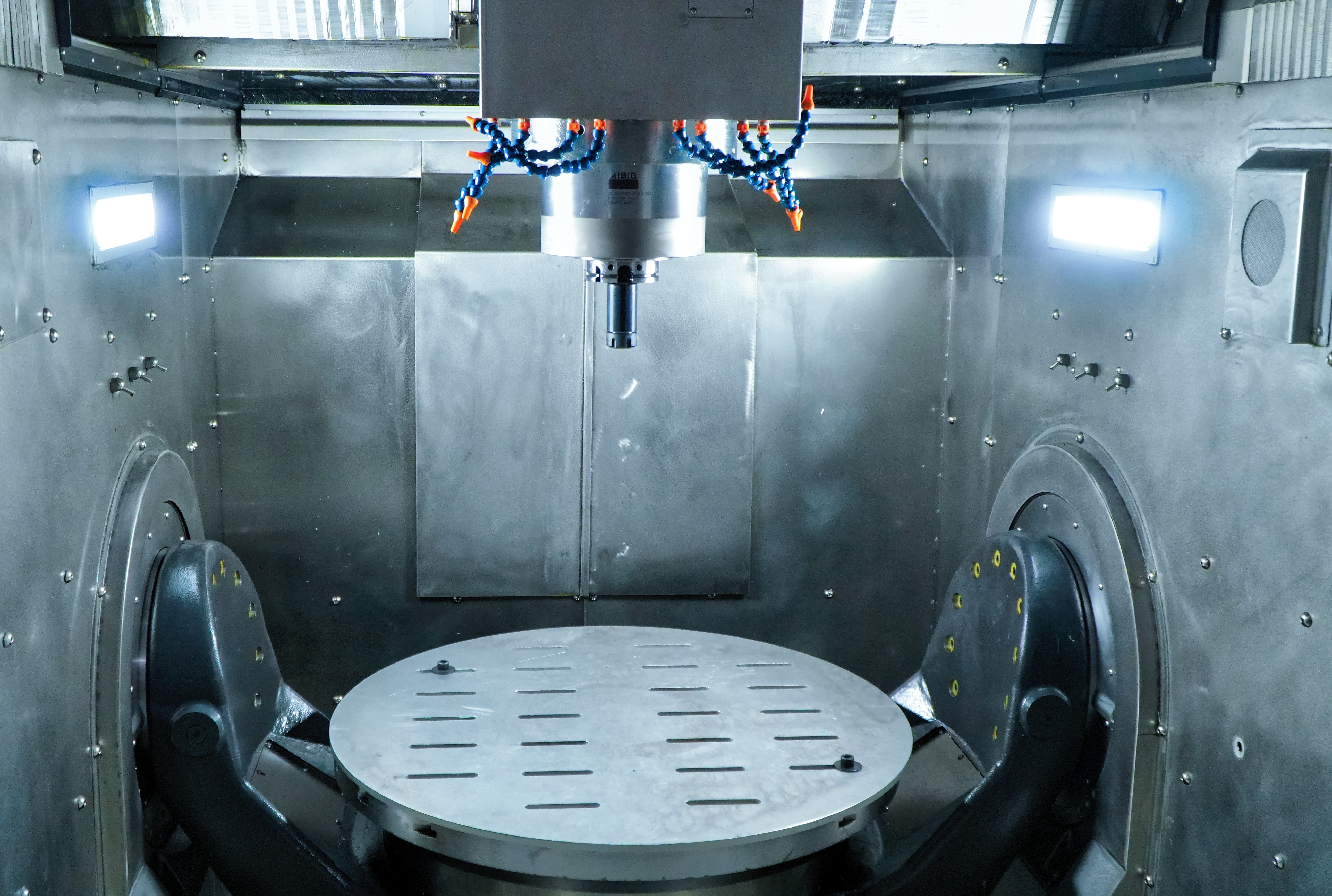
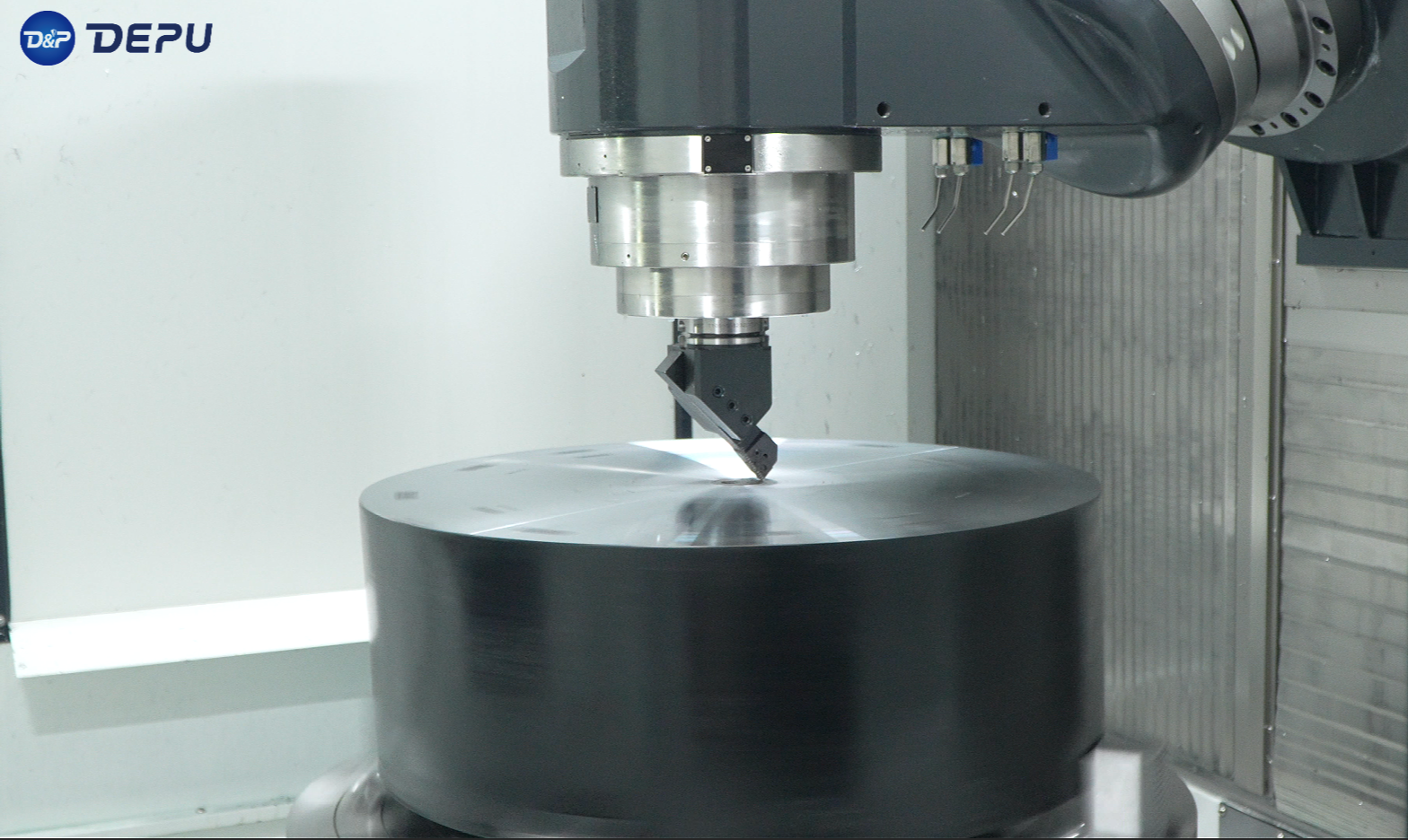
With 5 axis CNC machining, manufacturers can get rid of those pesky bottlenecks because complex parts are made during just one clamping operation. The machine controls all those rotating axes at once so the cutting tool stays in constant contact with tricky areas like curves, undercuts, and complicated angles. No more having to stop and reposition the workpiece. Setup times drop dramatically around 60% give or take depending on the shop, and there's less chance of accumulating tolerances when moving from feature to feature. What really matters though is how consistent everything stays down to the micron level. We tested this with some aerospace brackets and found that positioning errors stayed well within 0.02mm throughout production. The whole one step process opens up possibilities for completely automated manufacturing too. Parts coming off the line show practically no difference in dimensions whether they're number one or number one hundred.
Machining Complex Geometries Without Secondary Operations
Why Intricate Features Demand Continuous 5-Axis CNC Machining
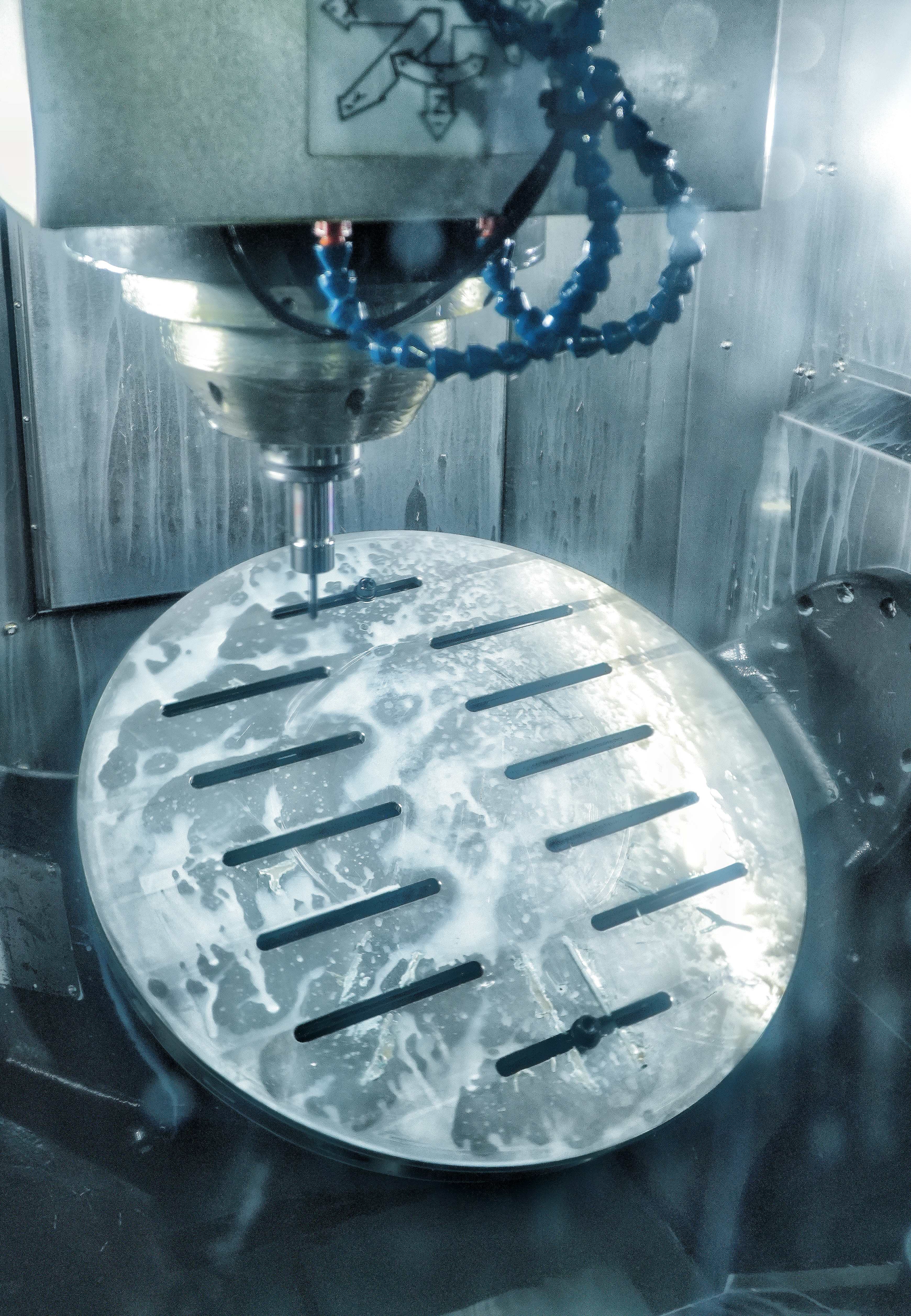
Turbine blades, orthopedic implants, and those complicated fluidic manifolds all have these really intricate shapes with curves, deep recesses, and places where multiple surfaces meet that regular 3-axis machines just can't reach properly. When manufacturers try to machine these parts using multiple steps, they run into problems with alignment drifting off track and tolerances stacking up over time. This means extra work down the line like hand finishing, EDM work, or having to go back and fix things based on inspection results. That's where continuous 5-axis machining comes in handy. It keeps the cutting tool positioned correctly relative to the part throughout the whole operation. With the machine rotating while it cuts, we get complete access to even the most complicated geometries in a single setup. No need for those frustrating post machining fixes anymore. For industries like aerospace and medical device manufacturing, this kind of precision matters a lot because their products need to be accurate within fractions of a millimeter to function properly.
Tool Orientation Control and Collision-Free Toolpaths
Getting precise results on complicated surfaces depends heavily on adjusting the tool angles in real time. Five axis systems keep recalculating their position based on the actual shape of what they're cutting. This helps maintain even chip loads, keeps tools from bending too much, and produces surfaces that look good across the board. Modern CAM software creates paths that won't cause collisions by running through the entire machining process first. It checks everything from tool holders to fixturing and considers all the mechanical limitations of the machine itself before touching any material. This kind of planning ahead saves money because it stops expensive crashes and cuts down waste by around 30 percent when compared to old school manual programming methods. When working on those tricky deep cavities or delicate walls found in aerospace parts, having this kind of spatial awareness becomes absolutely essential if manufacturers want to hit those tight Ra specs below 3.2 microns without needing extra polishing steps later.
Measurable Gains: Cycle Time Reduction and Throughput Optimization
Benchmark Data: 30–50% Faster Cycle Times vs. 3-Axis (MTI 2023)
Cycle time—the total duration from program start to finished part—directly governs factory throughput. MTI's 2023 benchmark study confirms 5-axis CNC machining delivers 30–50% faster cycle times than equivalent 3-axis workflows, primarily by eliminating secondary operations and tool repositioning. Real-world performance shows:
These metrics translate into strategic advantages:
- Capacity expansion: A 50% cycle time reduction effectively doubles machine availability without capital investment
- Resource optimization: Lower energy use per unit and extended tool life due to reduced retraction/repositioning
- Quality consistency: Eliminating re-fixturing removes a primary source of dimensional variation
Strategic Enablers: Integrated Workholding and AI-Driven Toolpath Optimization
There are two main factors that really boost these performance benefits. The first one involves integrated workholding solutions like those modular tombstone setups, vacuum chucks we see everywhere now, and those fancy kinematic locators. These help keep parts stable and consistent when doing those aggressive cuts across multiple planes, which stops vibrations from messing up the accuracy. Then there's the whole AI thing for toolpaths. Modern systems actually analyze how materials behave, what happens with the tools as they cut, and even track temperature changes while running. Based on all this data, they tweak feed rates, stepovers, and coordinate axes movements in real time. According to some recent studies from last year, this can knock another 15 to maybe 25% off cycle times depending on the setup. When manufacturers combine both approaches, they start seeing real differences in their day to day operations.
- 22% higher Overall Equipment Effectiveness (OEE) scores
- 30% reduction in work-in-progress inventory
- Near-elimination of manual intervention between operations
The shift to 5-axis CNC machining is not merely a technical upgrade—it's a strategic throughput multiplier that sustains precision while compressing lead times and unlocking scalable, lights-out production.
FAQ
What is the main advantage of 5-axis CNC machining over traditional 3-axis machining?
The primary advantage of 5-axis CNC machining is its ability to complete complex parts in a single setup, thereby reducing setup times by about 60% and minimizing the chances of errors due to repeated repositioning.
How does 5-axis CNC machining improve cycle times and throughput?
5-axis CNC machining increases cycle times and throughput by allowing for continuous machining of complex geometries in one go, eliminating the need for secondary operations and reducing tool repositioning, resulting in 30% to 50% faster cycle times compared to 3-axis machining.
Why is continuous 5-axis machining ideal for intricate features?
It maintains precise tool alignment relative to the workpiece throughout, thus handling complex geometries with ease while avoiding alignment drifts and improving overall part accuracy.
What role do integrated workholding solutions play in 5-axis CNC machining?
Integrated workholding solutions such as modular tombstones and vacuum chucks enhance the stability of the part during aggressive machining processes, ensuring accuracy and reducing vibrations.
How does AI-driven toolpath optimization contribute to machining efficiency?
AI-driven toolpath optimization continually adjusts machining parameters in real-time based on material behavior and tool conditions, effectively minimizing cycle times by 15% to 25% depending on the setup and ensuring consistent quality.