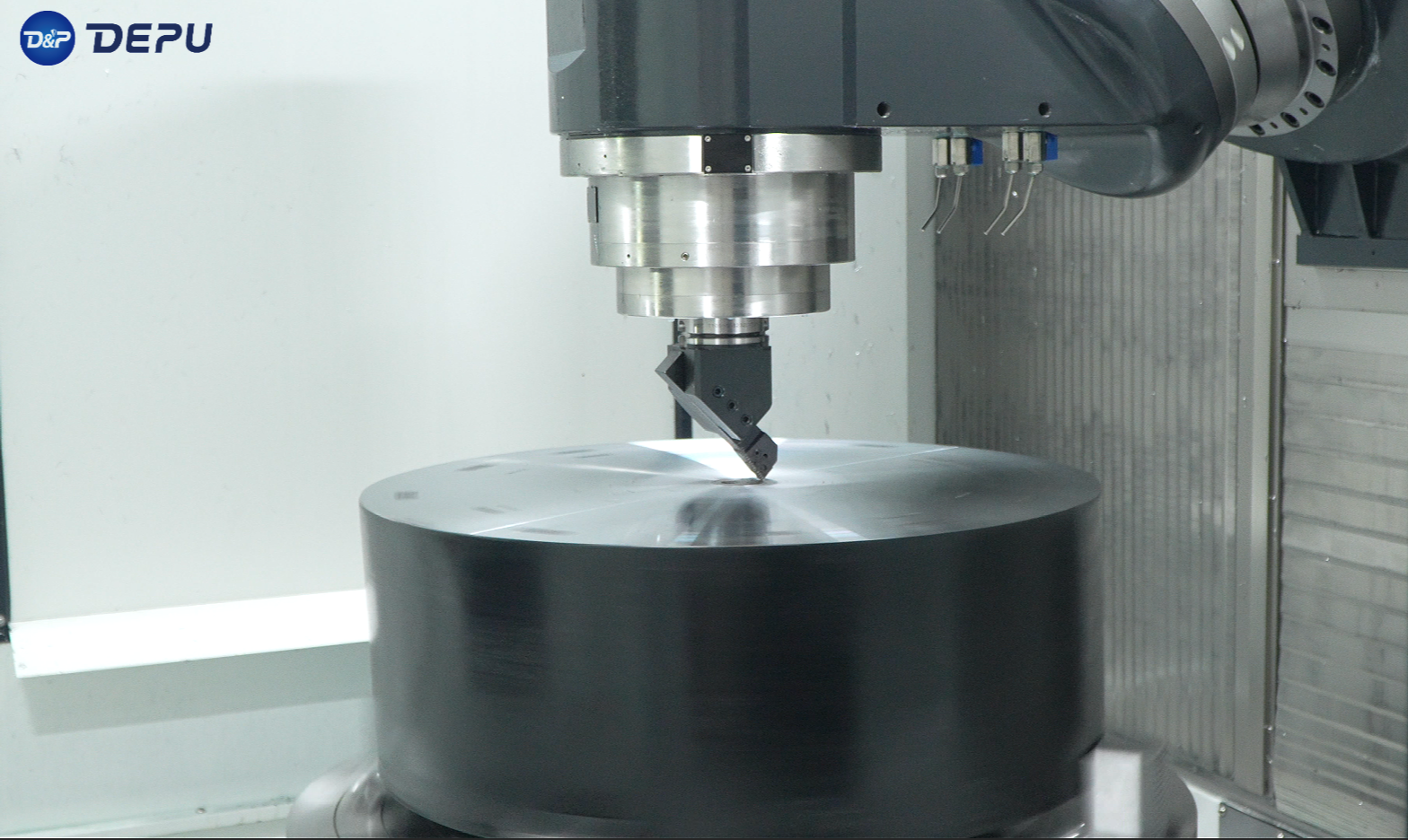

Why Machine Architecture Matters More at High Speed
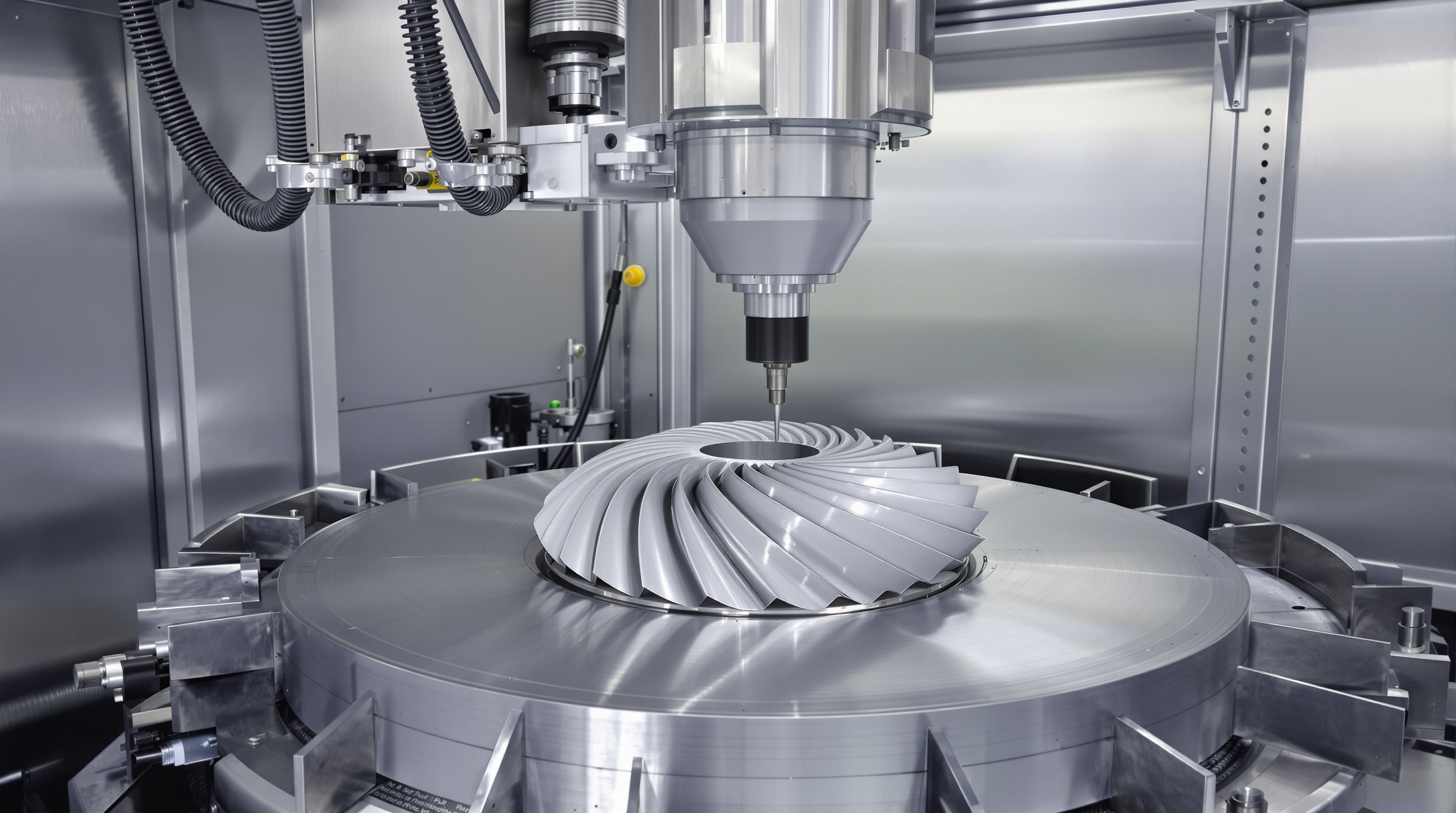
As spindle speeds increase and toolpaths become more complex, structural design becomes the defining factor in performance. In high-speed 5-axis machining, acceleration forces, rotary interpolation, and rapid axis transitions amplify even minor mechanical weaknesses.
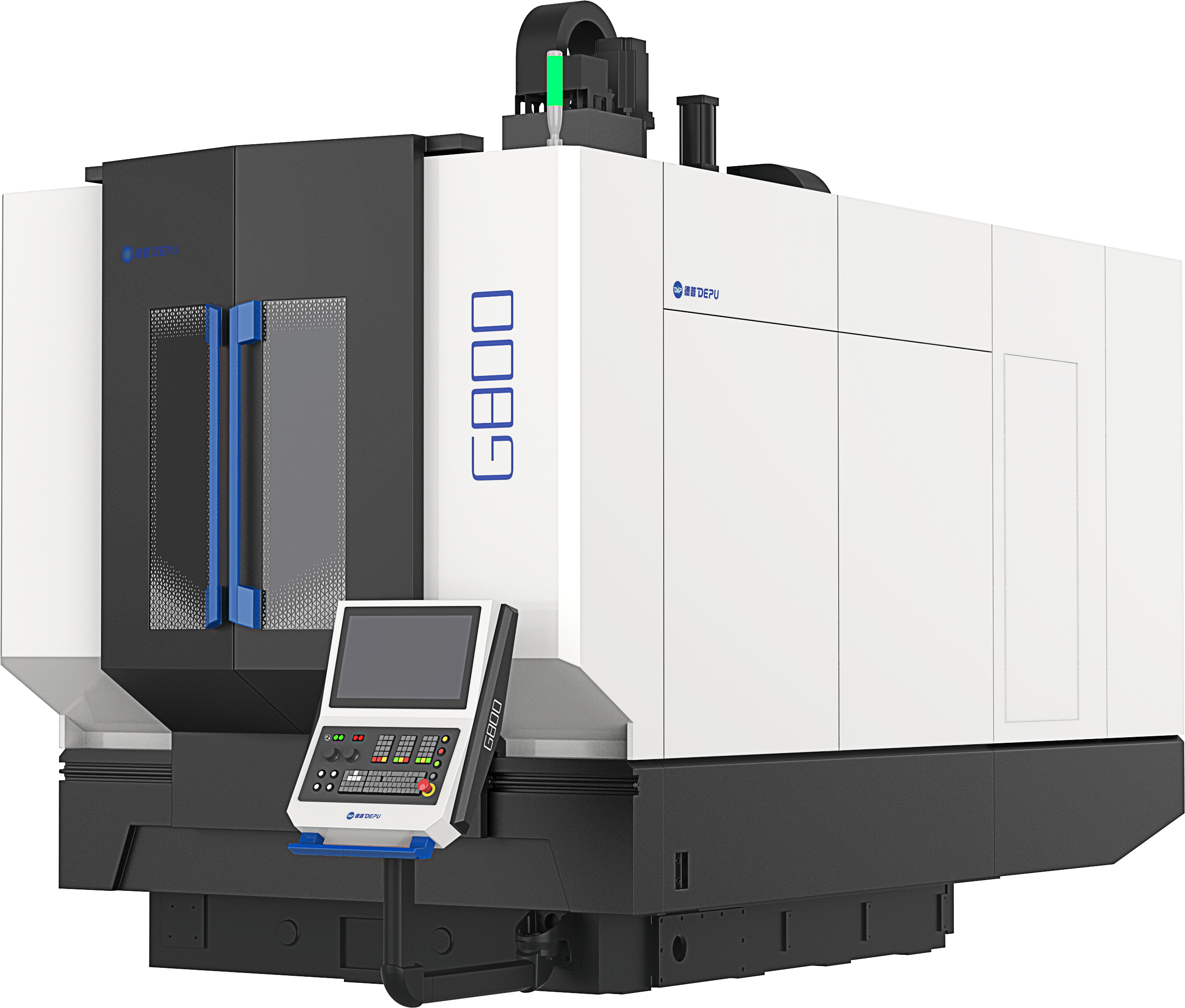
This is where the gantry structure in 5-axis machining demonstrates a distinct advantage. By distributing load symmetrically and reinforcing the machine frame, gantry-based systems maintain stability under aggressive dynamic conditions.
Speed exposes weakness. Structure prevents it.
What Defines a Gantry Structure?
A gantry configuration typically features:
-
Dual-column support
-
Symmetrical crossbeam construction
-
Balanced load distribution
-
Wide-span base reinforcement
Compared to traditional bridge or cantilever layouts, the gantry structure in 5-axis machining reduces torsional stress and improves overall rigidity.
When performing high-speed interpolation across five simultaneous axes, structural symmetry significantly reduces deformation.
Rigidity and Dynamic Stability
High-speed cutting introduces centrifugal force, tool pressure variation, and continuous axis reversal. Without a rigid 5-axis machine structure, vibration and micro-deflection become inevitable.
The gantry structure in 5-axis machining improves:
-
Bending resistance
-
Cross-axis stiffness
-
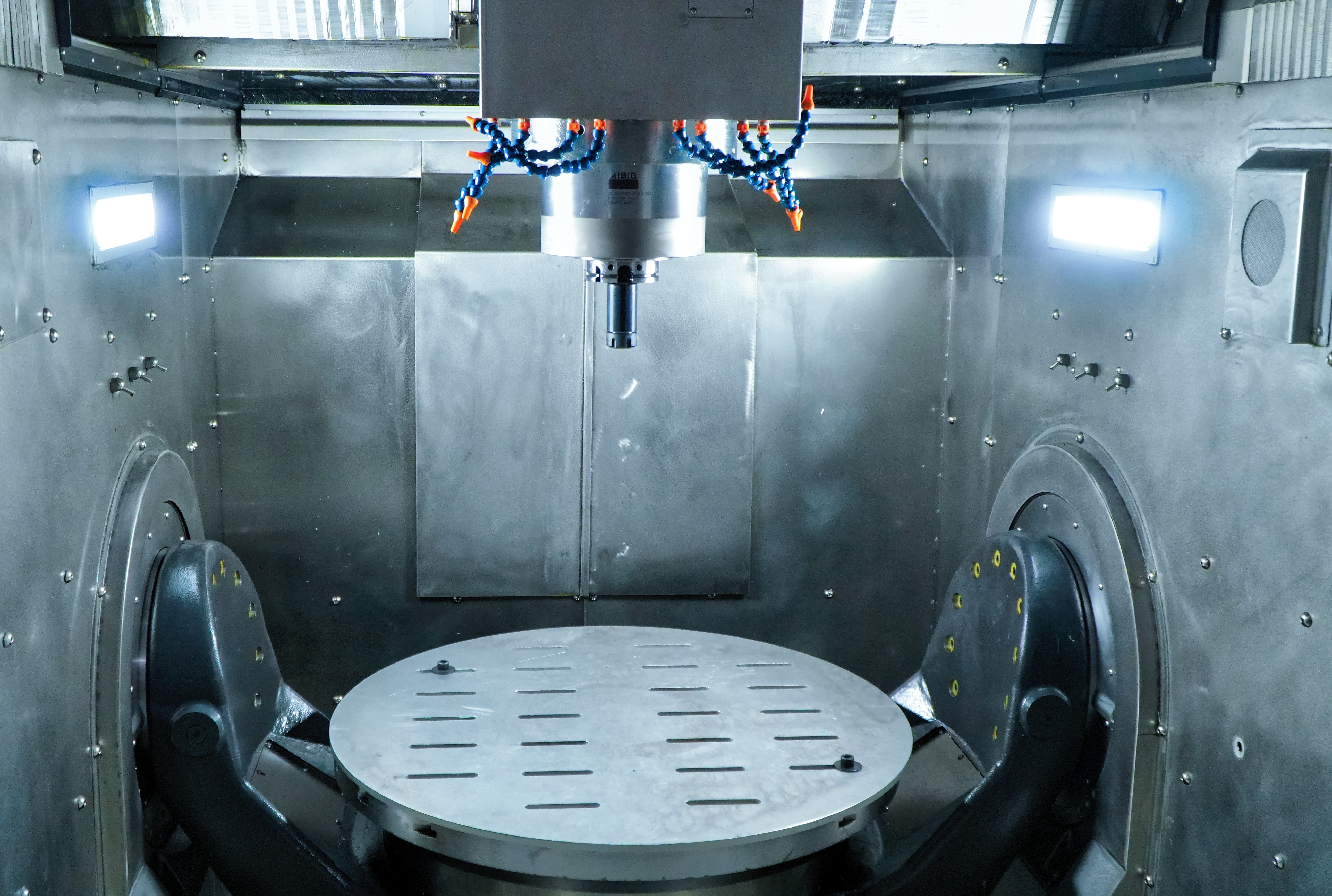
Rotary axis support integrity
This directly enhances high-speed 5-axis machining stability, especially when machining aerospace alloys, hardened steel, or large complex components.
Rigid architecture allows acceleration without sacrificing accuracy.
Vibration Control at High RPM
At elevated spindle speeds, vibration becomes a major source of:
-
Surface finish degradation
-
Tool wear acceleration
-
Dimensional inconsistency
The wide base and dual-column support inherent in a gantry structure in 5-axis machining reduce harmonic amplification during rapid feed transitions.
Effective vibration control in CNC machining is not only about spindle quality—it is fundamentally linked to structural mass and distribution.
The more stable the frame, the more controlled the cut.
Thermal Symmetry and Long-Term Stability
Heat buildup during continuous high-speed machining can distort machine geometry. Uneven structural layouts are more prone to asymmetric expansion.
The gantry structure in 5-axis machining provides thermal symmetry because both columns share mechanical load and heat distribution. This balanced design improves:
-
Axis alignment consistency
-
Rotary calibration retention
-
Long-term repeatability
High-speed 5-axis machining stability is not only about initial precision—it depends on how the machine behaves after hours of continuous operation.
Gantry vs Bridge CNC Design
When comparing gantry vs bridge CNC design, the key differences appear in:
| Factor | Gantry Structure | Traditional Bridge |
|---|---|---|
| Load Distribution | Symmetrical | Often asymmetric |
| Torsional Rigidity | Higher | Moderate |
| Dynamic Stability | Superior at high speed | Speed-sensitive |
| Thermal Balance | More consistent | Can vary |
While both designs can achieve high precision, gantry configurations tend to perform better in high-speed, heavy-duty, or large-format 5-axis applications.
Heavy Workpieces and Inertia Control
In aerospace, energy, and mold industries, workpieces can be heavy and geometrically complex. Rapid rotary movement combined with part inertia challenges structural integrity.
A rigid 5-axis machine structure built on a gantry layout maintains axis alignment under load. This ensures that high-speed toolpaths remain smooth and predictable.
The result is:
-
Reduced chatter
-
Improved surface finish
-
Stable dimensional repeatability
High-speed 5-axis machining stability depends on how the machine absorbs dynamic force—not just how fast it moves.
When Is a Gantry Structure the Right Choice?
A gantry-based 5-axis system is particularly advantageous when:
-
Machining large or heavy parts
-
Operating at sustained high spindle speeds
-
Requiring long continuous production runs
-
Demanding micron-level repeatability
In such scenarios, the gantry structure in 5-axis machining provides the mechanical foundation required for reliable performance.
Conclusion
High-speed machining amplifies structural weaknesses. Stability is not defined by spindle speed alone—it is determined by how the machine frame manages dynamic load, vibration, and thermal influence.
The gantry structure in 5-axis machining delivers superior rigidity, balanced force distribution, and long-term consistency. For manufacturers operating in demanding industries, this architecture offers measurable advantages in stability, surface quality, and production reliability.
When speed increases, structure decides the outcome.
FAQ
1. Why is a gantry structure more stable in 5-axis machining?
Because dual-column support distributes load symmetrically, reducing torsional stress and improving rigidity during high-speed motion.
2. Does gantry design improve surface finish?
Yes. Improved vibration control and structural stiffness reduce chatter, which enhances surface finish quality.
3. Is gantry better for large workpieces?
Typically, yes. Gantry systems provide better load-bearing stability and structural balance for heavy or oversized components.
4. Does gantry architecture affect long-term accuracy?
Yes. Thermal symmetry and balanced stress distribution help maintain alignment and repeatability over extended production cycles.