
Why Workpiece Positioning Accuracy Matters in 5-Axis Machining
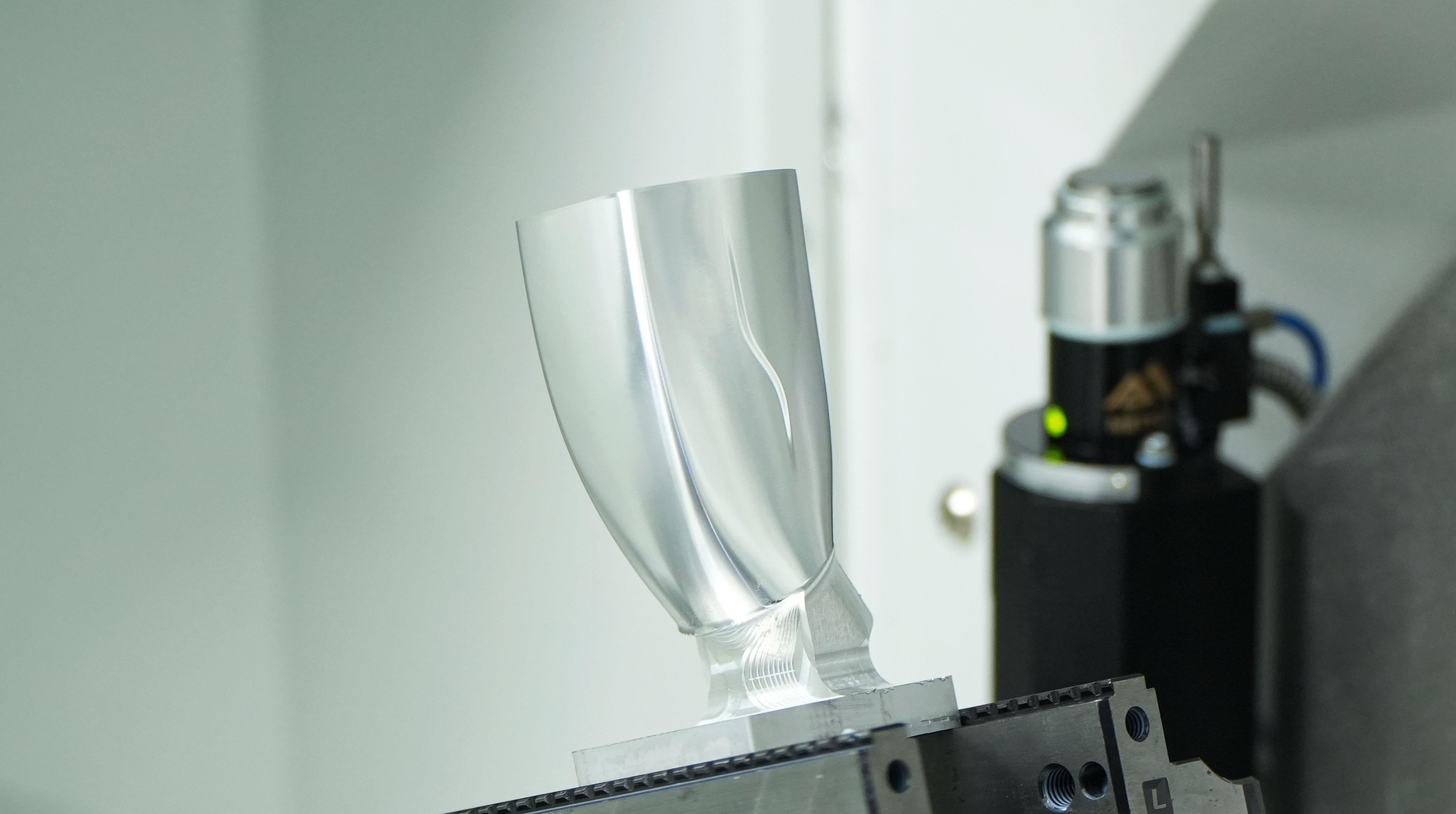
Introduction: Precision Starts with Positioning
In modern 5-axis machining, every machining operation begins with one critical step: accurately positioning the workpiece. No matter how advanced the control system, spindle, or toolpath strategy may be, machining performance ultimately depends on the accuracy of the part’s initial position.
As component geometries become increasingly complex, even small positioning errors can affect dimensional accuracy, surface quality, and overall machining consistency. For manufacturers pursuing micron level machining, maintaining high workpiece positioning accuracy is essential.
1. What Is Workpiece Positioning Accuracy?
Workpiece positioning accuracy refers to the ability to locate and secure a part in the exact intended position within the machine coordinate system.
Accurate positioning ensures:
- Correct alignment between the part and toolpath
- Consistent feature locations
- Reliable dimensional control
- Repeatable machining results
Inaccurate part positioning CNC setups can introduce errors before cutting even begins.
2. Why Positioning Errors Become More Critical in 5-Axis Machining
Traditional machining often relies on relatively simple tool movements and multiple setups. In contrast, 5-axis machining involves continuous movement across multiple linear and rotary axes simultaneously.
Because all axes work together:
- Positioning errors are amplified
- Rotary axis compensation becomes less effective
- Tool center point calculations may be affected
- Complex surfaces become more difficult to control
As a result, machining accuracy becomes highly dependent on precise workpiece alignment.
3. The Relationship Between Positioning Accuracy and Surface Quality
Surface finish quality is closely linked to workpiece positioning accuracy.
When a part is not properly positioned:
- Tool engagement changes unexpectedly
- Cutting forces become inconsistent
- Surface transitions may become uneven
- Visible marks or blending errors can appear
For industries such as aerospace, medical, and mold manufacturing, maintaining stable precision CNC machining requires highly accurate positioning throughout the machining process.
4. Positioning Accuracy Supports Machining Consistency
Consistency is one of the most important goals in production machining.
Accurate CNC positioning accuracy helps ensure:
- Repeatable part quality
- Stable dimensional performance
- Reduced scrap rates
- Improved process reliability
When workpiece positioning varies from one setup to another, achieving consistent machining consistency becomes significantly more difficult.
5. Impact on Multi-Sided and Complex Geometry Machining
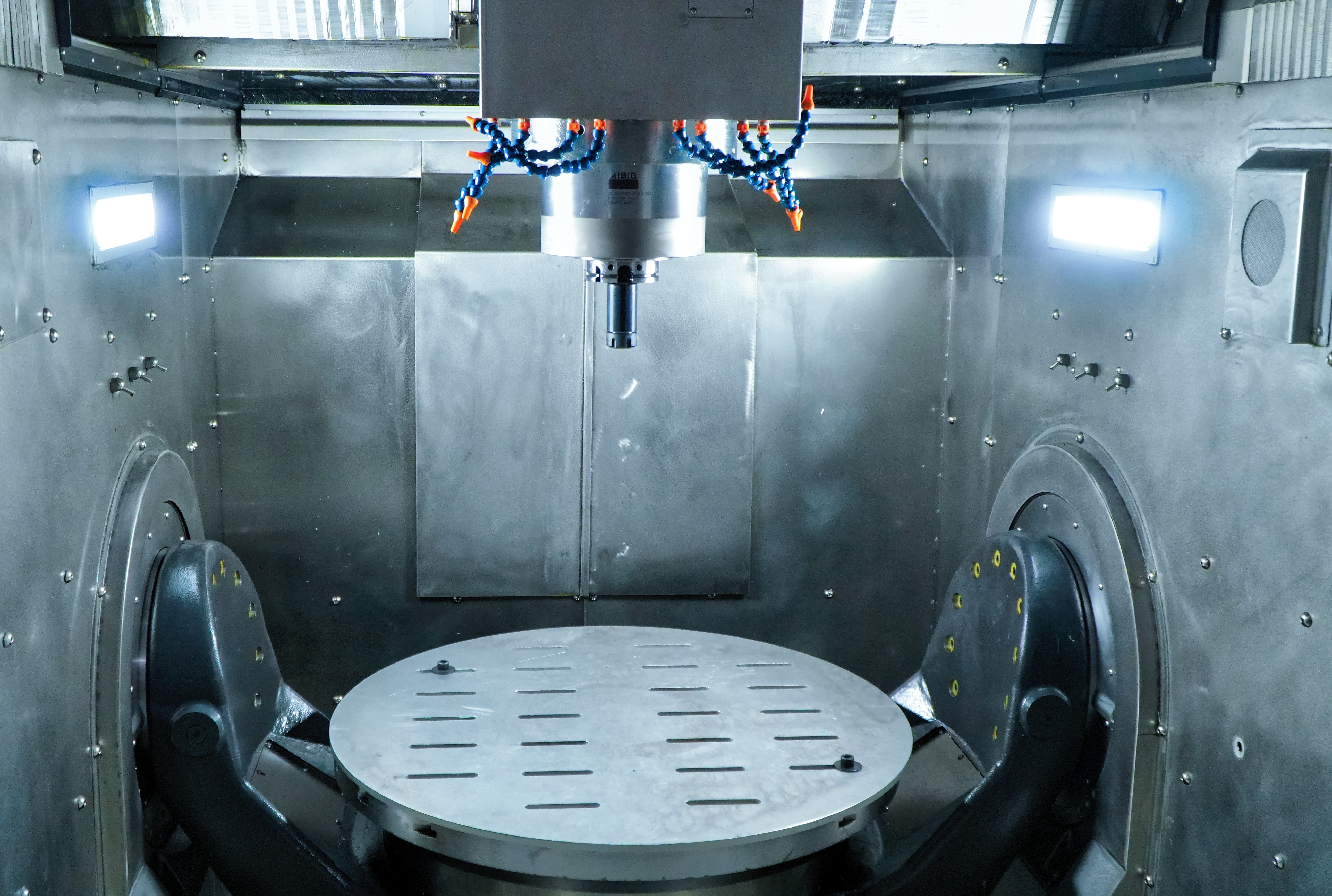
Many components produced on a 5 axis CNC machine require machining from multiple angles.
Examples include:
- Turbine blades
- Impellers
- Medical implants
- Precision molds
- Aerospace structural components
For these parts, accurate positioning is essential because every machined feature references the same coordinate system. Even small setup deviations can affect the relationship between critical features and reduce overall machining accuracy.
6. How Modern 5-Axis Machines Improve Positioning Accuracy
Advanced machine tools improve workpiece positioning accuracy through several technologies:
- High-resolution rotary encoders
- Precision probing systems
- Automatic workpiece measurement
- Full closed-loop feedback control
- Thermal compensation systems
These technologies help maintain stable precision CNC machining performance, even during long production cycles and complex multi-axis operations.
7. The Role of Machine Structure in Positioning Stability
Accurate positioning is not only about measurement systems. Machine structure also plays a critical role.
High-rigidity machine designs provide:
- Better structural stability
- Reduced vibration influence
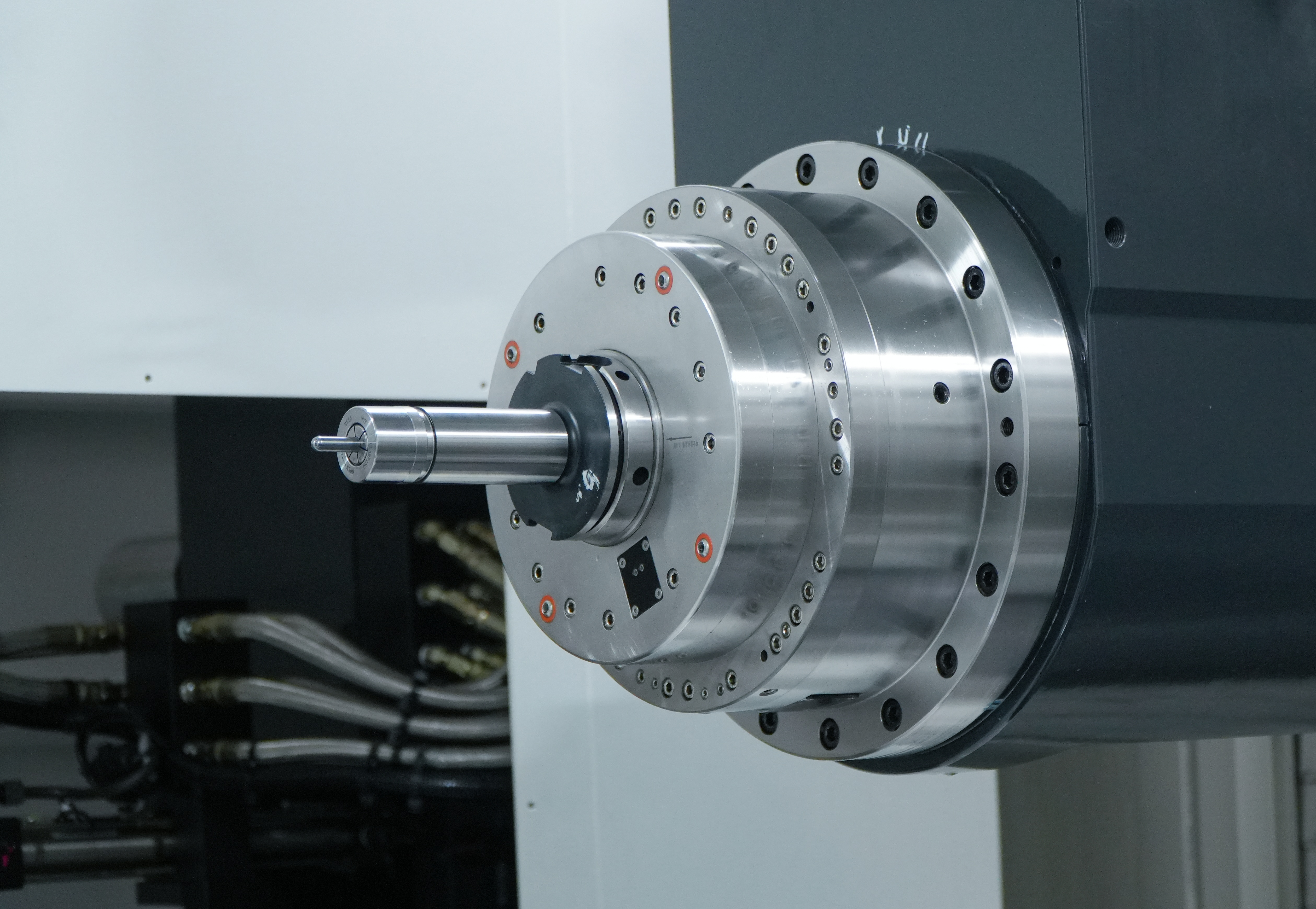
- Improved rotary axis accuracy
- Consistent positioning performance under load
For high precision machining, machine rigidity and workpiece positioning accuracy work together to achieve reliable results.
Conclusion: Accurate Positioning Creates Accurate Parts
In advanced 5-axis machining, machining quality begins long before the first cut is made.
High workpiece positioning accuracy helps manufacturers:
- Improve machining accuracy
- Maintain stable machining consistency
- Support reliable precision CNC machining
- Achieve repeatable micron level machining
As part complexity continues to increase, accurate positioning remains one of the most important foundations of successful high precision machining operations.
FAQ
1. What is workpiece positioning accuracy in CNC machining?
It is the ability to locate and secure a workpiece in the correct position relative to the machine coordinate system.
2. Why is positioning accuracy important in 5-axis machining?
Because small positioning errors can affect dimensional accuracy, surface quality, and feature relationships across multiple axes.
3. How does positioning accuracy affect surface finish?
Incorrect positioning changes tool engagement and cutting conditions, which can lead to inconsistent surface quality.
4. What technologies improve CNC positioning accuracy?
Probing systems, high-resolution encoders, closed-loop control systems, and thermal compensation technologies all help improve positioning accuracy.
5. Can machine rigidity influence positioning accuracy?
Yes. A rigid machine structure helps maintain stable positioning and reduces deformation during machining operations.