
When Is 5-Axis Machining Overkill—and When Is It Essential?
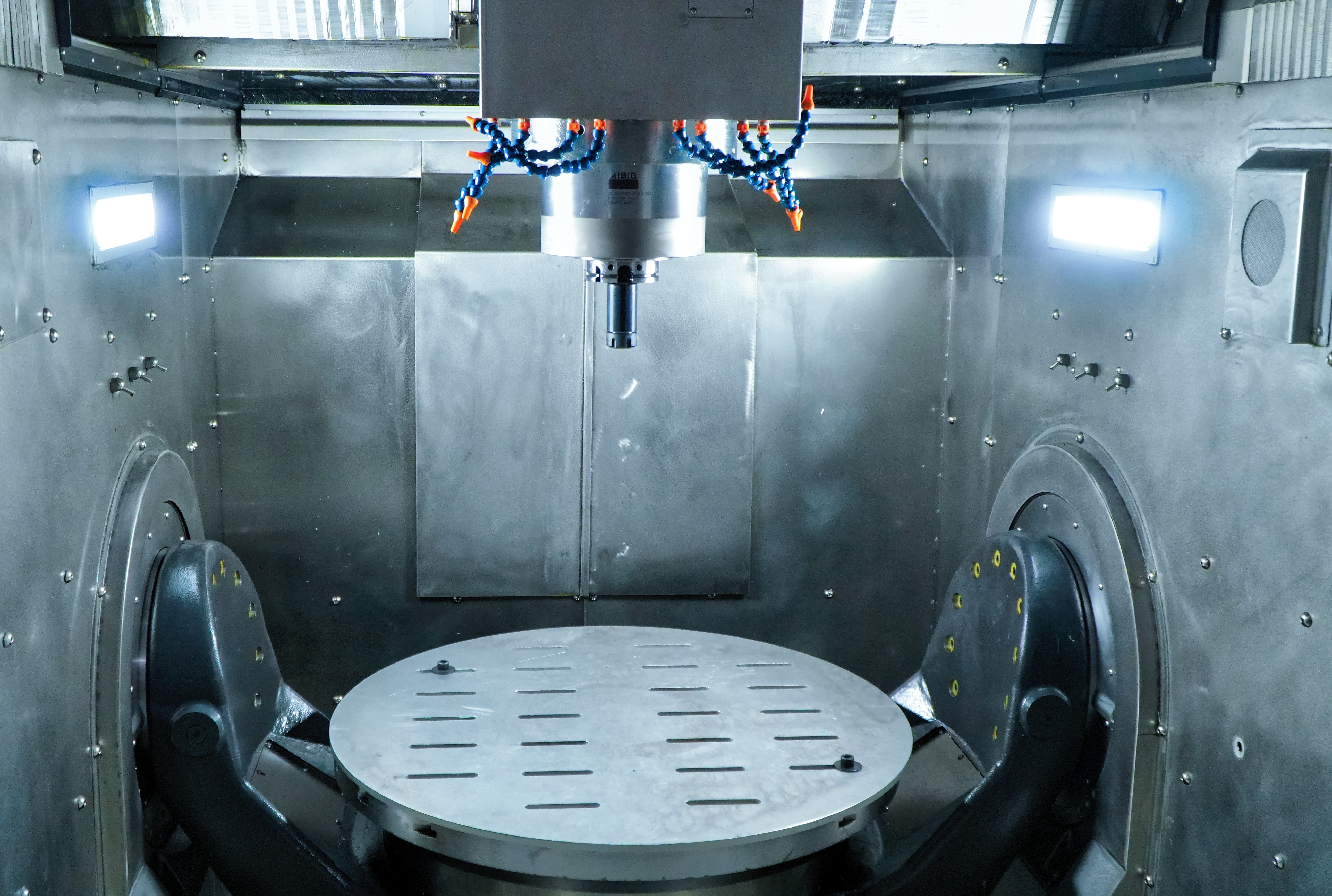
Investing in a 5-axis CNC machine can transform the way a machine shop approaches complex part manufacturing. With simultaneous movement across three linear axes and two rotary axes, 5-axis machining provides access to surfaces and geometries that can be difficult or impossible to machine efficiently with conventional 3-axis equipment.
But having five axes does not automatically make every machining operation better.
For simple components, a conventional 3-axis machine may complete the job faster, more economically, and with less programming complexity. For other components, however, attempting to use a 3-axis machine can lead to multiple setups, long tools, difficult fixturing, increased inspection requirements, and reduced accuracy.
The real question is therefore not whether 5-axis machining is more capable. It clearly is. The more important question is whether that additional capability solves a meaningful manufacturing problem.
Understanding when 5-axis CNC technology is overkill—and when it is essential—allows manufacturers to select equipment based on actual production requirements rather than simply choosing the machine with the largest number of axes.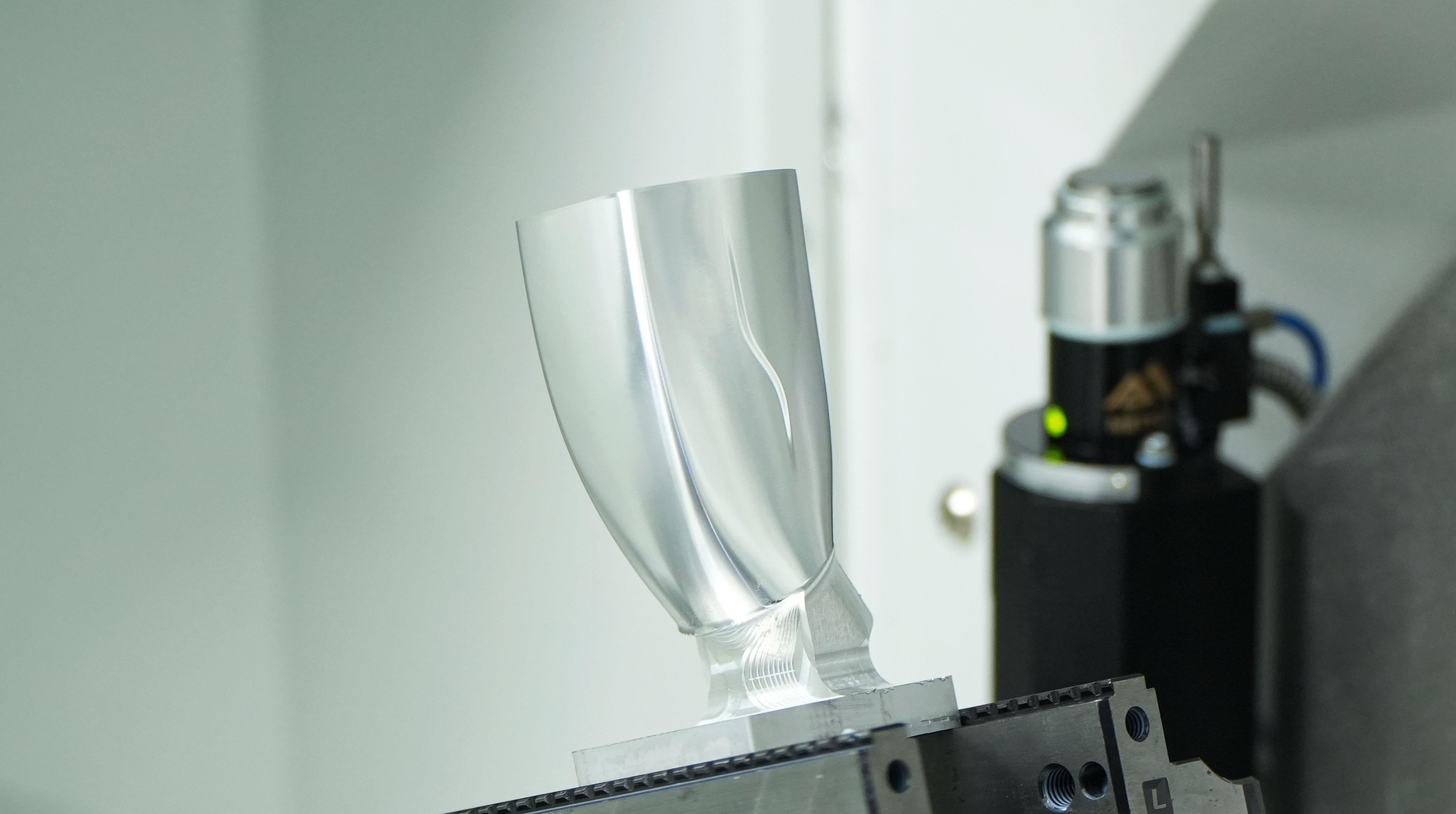
When 5-Axis Machining May Be Overkill
Simple Prismatic Parts
The most obvious situation where 5-axis machining may be unnecessary is when the workpiece has simple geometry.
If a component consists primarily of:
- Flat surfaces
- Straight pockets
- Simple holes
- Slots
- Basic contours
- Features accessible from one or two directions
then a 3-axis CNC machine may already provide everything required.
Using a 5-axis CNC machine for a simple part can introduce additional programming and setup considerations without creating a corresponding productivity benefit.
The machine is capable of much more than the part requires, but that capability remains unused.
Parts That Require Only One Setup Direction
If all critical features can be reached from the same tool orientation, additional rotary axes may provide little practical value.
A rigid 3-axis setup with an appropriate fixture can often produce excellent results for these applications.
For example, a simple aluminum plate containing pockets, drilled holes, and external profiles may not require the flexibility of 5-axis CNC technology.
The important consideration is not the number of features but their accessibility.
Extremely High-Volume Simple Production
For certain high-volume components, dedicated or highly optimized 3-axis machining processes may be more economical than 5-axis machining.
If the part geometry is simple and the process has already been optimized for:
- Short cycle times
- Automated loading
- Dedicated fixtures
- Minimal tool changes
- Stable cutting parameters
then replacing the process with a 5-axis CNC machine may not produce enough additional value to justify the investment.
In these cases, process specialization can be more important than maximum machine flexibility.
When 5-Axis Machining Becomes Essential
Complex Multi-Surface Components
The strongest case for 5-axis machining occurs when a component contains multiple surfaces that need to be machined from different orientations.
Traditional machining may require the operator to:
- Machine one face
- Remove the workpiece
- Reposition the workpiece
- Establish a new datum
- Verify alignment
- Machine another face
- Repeat the process
A 5-axis CNC machine can often perform many of these operations from a single setup.
This can dramatically simplify the manufacturing process.
Complex Curved Surfaces
Freeform and continuously curved surfaces are another major application for 5-axis technology.
Components such as:
- Blades
- Impellers
- Aerospace structures
- Turbine components
- Complex molds
- Medical implants
often require the cutting tool to change orientation continuously as it follows the geometry.
This is where simultaneous 5-axis machining provides capabilities that conventional 3-axis machining cannot easily replicate.
Difficult Tool Access
Deep cavities and complex internal features can create a fundamental accessibility problem.
A 3-axis machine may technically reach the feature using an extremely long cutting tool, but that does not necessarily make the process practical.
Long tools are more susceptible to:
- Deflection
- Chatter
- Vibration
- Poor surface finish
- Reduced tool life
A 5-axis CNC machine can often change the tool orientation to approach the feature more directly.
This can allow shorter, more rigid tools and produce better machining performance.
Setup Reduction Is One of the Strongest Reasons to Use 5-Axis CNC
Every Additional Setup Creates Risk
Multiple setups introduce more than additional labor.
Each repositioning creates opportunities for:
- Datum errors
- Alignment errors
- Fixture variation
- Operator mistakes
- Inspection delays
- Accumulated positional error
For high-precision components, these risks can become significant.
A 5-axis CNC machine can often machine multiple faces while maintaining the same primary workholding relationship.
This makes setup reduction one of the most important reasons to invest in 5-axis technology.
When Setup Time Becomes a Major Cost
A component may have relatively short cutting time but require several hours of setup and alignment.
In such cases, the total production cost is driven less by spindle time and more by the supporting operations.
If 5-axis machining can reduce four setups to one, the financial benefit can be much greater than a small improvement in cutting speed.
This is why manufacturers should evaluate total production time rather than comparing spindle cycle time alone.
Accuracy Requirements Can Make 5-Axis Machining Essential
Maintaining Relationships Between Features
Some components contain features on multiple faces that must maintain extremely precise positional relationships.
Machining those features through several independent setups makes the final relationship dependent on the accuracy of each repositioning operation.
By completing more features in a single setup, a 5-axis CNC machine can reduce the number of opportunities for positional variation.
This is particularly important in precision machining applications where feature-to-feature accuracy is critical.
Fewer Setups Do Not Automatically Mean Better Accuracy
It is important to recognize that 5-axis machining itself does not guarantee higher accuracy.
Machine calibration, rotary-axis accuracy, thermal stability, tool condition, fixturing, programming, and inspection all remain important.
The advantage is that 5-axis technology can eliminate certain sources of error associated with repeated workpiece repositioning.
3+2 Machining: The Middle Ground
Not every complex component requires full simultaneous five-axis motion.
Many parts can benefit from 3+2 machining, where the rotary axes position the workpiece or tool at a fixed orientation before the three linear axes perform the cutting operation.
This approach can provide many of the accessibility advantages of a 5-axis CNC machine without requiring continuous five-axis movement.
When 3+2 Is Enough
3+2 machining is often appropriate when:
- Surfaces are accessed from several fixed angles
- Complex simultaneous motion is unnecessary
- The part has multiple planar features
- Programming simplicity is important
- Tool orientation changes between operations rather than continuously
This makes 3+2 an important consideration when determining whether full simultaneous 5-axis machining is actually necessary.
Programming Complexity Should Also Be Considered
More Capability Can Mean More Programming Requirements
A 5-axis CNC machine provides significantly more freedom of movement than a 3-axis machine.
That freedom also increases programming complexity.
Successful 5-axis programming may require:
- Advanced CAM software
- Machine-specific post-processors
- Kinematic configuration
- Collision simulation
- Tool-axis control
- Rotary-axis verification
- Experienced programmers
For a simple component that can be programmed quickly on a 3-axis machine, introducing a more complicated 5-axis workflow may not make economic sense.
CAM Capability Is Part of the Investment
The cost of 5-axis machining should therefore not be evaluated only by comparing machine purchase prices.
The overall investment may also include:
- CAM software
- Post-processors
- Simulation software
- Programmer training
- Operator training
- Process development
These factors should be included when calculating the actual return on investment.
Tooling and Fixturing Can Change the Equation
Fewer Setups Can Reduce Fixture Requirements
Although 5-axis machining may require specialized workholding, it can also reduce the total number of fixtures needed.
A component that previously required three fixture configurations may potentially be completed with one optimized 5-axis fixture.
For production environments, this can reduce:
- Fixture manufacturing cost
- Fixture storage
- Setup changeover time
- Fixture maintenance
- Operator handling
Tooling Can Also Become More Efficient
Improved tool accessibility can allow manufacturers to use shorter tools.
Shorter tools generally provide greater rigidity, which can support higher cutting stability and better precision machining results.
This can create secondary savings through improved tool life and reduced scrap.
How Production Volume Influences the Decision
Production volume is an important part of the 5-axis investment calculation.
Low-Volume Complex Parts
For low-volume, high-complexity components, 5-axis machining can be particularly attractive because setup reduction provides significant value.
The ability to machine a part in one setup can reduce engineering and operator time even when only a small number of parts are produced.
High-Volume Complex Parts
For high-volume complex production, the advantages can become even greater.
Once a 5-axis process has been fully optimized, the combination of:
- Fewer setups
- Automated toolpaths
- Consistent workholding
- Reduced handling
- High machine utilization
can produce substantial long-term productivity gains.
A Practical Decision Framework
Before deciding whether 5-axis CNC technology is necessary, evaluate the part using several questions.
Question 1: How Many Surfaces Need Machining?
If most features are accessible from one direction, 5-axis may be unnecessary.
If the part requires machining from many orientations, 5-axis becomes increasingly attractive.
Question 2: How Many Setups Are Currently Required?
If the existing process requires several setups, calculate the actual labor, fixture, inspection, and alignment costs.
This often reveals the hidden value of 5-axis machining.
Question 3: Are Long Tools Required?
If conventional machining requires unusually long tools to reach complex features, evaluate whether 5-axis positioning would allow shorter tools.
Question 4: Are Feature Relationships Critical?
If features on different faces must maintain tight positional relationships, setup consolidation can provide substantial value.
Question 5: Does the Geometry Require Continuous Tool Orientation?
If the cutting tool must continuously change orientation while following a complex surface, full simultaneous 5-axis machining may be essential.
Question 6: Can 3+2 Solve the Problem?
If the part only requires several fixed machining orientations, 3+2 may provide sufficient capability without the additional complexity of continuous five-axis motion.
When the Investment Makes Sense
A 5-axis CNC machine becomes particularly compelling when several of the following conditions exist simultaneously:
- Complex geometry
- Multiple machining faces
- Difficult tool access
- Multiple conventional setups
- Tight positional tolerances
- Expensive workholding
- High-value components
- Long production lead times
- Significant manual handling
- Complex freeform surfaces
The more of these conditions apply, the stronger the business case for 5-axis technology.
When a 3-Axis Machine May Still Be the Better Choice
A conventional CNC machine can remain the better solution when:
- Parts are geometrically simple
- Features are accessible from one direction
- Setup times are already minimal
- Production volumes are extremely high
- Dedicated fixtures are highly optimized
- Tight multi-face relationships are not required
- No complex simultaneous tool orientation is needed
The goal should not be to maximize machine capability.
The goal should be to maximize manufacturing value.
Conclusion
5-axis machining is not automatically the right solution for every manufacturing application.
For simple parts, a 3-axis machine may provide a more economical and straightforward production process. For parts with multiple machining faces, complex surfaces, difficult tool access, and demanding positional relationships, however, 5-axis CNC technology can become essential.
The most important distinction is whether the additional two axes eliminate real manufacturing constraints.
If they reduce setups, improve accessibility, allow shorter tools, protect feature relationships, and shorten total production time, the investment can provide significant value.
If the part can already be produced efficiently with a simpler machine, five axes may simply add capability that the process does not need.
The best machine-selection decision is therefore based on the part, the process, and the economics—not simply on the number of axes.
FAQ
Is 5-axis machining always better than 3-axis machining?
No. 5-axis machining provides greater flexibility, but that does not mean it is more economical for every part. Simple components with features accessible from one or two directions may be produced more efficiently on a 3-axis CNC machine.
What type of parts truly require 5-axis machining?
Parts with complex freeform surfaces, multiple angled faces, deep or difficult-to-access features, and tight relationships between features are strong candidates for 5-axis CNC machining. Aerospace components, impellers, blades, complex molds, and certain medical components are common examples.
Is 3+2 machining a good alternative to full 5-axis machining?
Yes. 3+2 machining can provide many of the accessibility benefits of a 5-axis CNC machine while keeping the cutting motion primarily within three linear axes. It is particularly useful when surfaces can be machined from several fixed orientations rather than requiring continuous simultaneous five-axis motion.
Does 5-axis machining reduce production costs?
It can. The biggest savings often come from fewer setups, reduced workpiece handling, simpler fixturing, shorter tools, lower setup labor, and reduced rework. The actual savings depend on the part geometry, production volume, machine utilization, and process design.
How can I determine whether my shop needs a 5-axis CNC machine?
Start by analyzing your current parts and processes. Record the number of setups, setup time, fixture costs, tool lengths, inspection requirements, scrap rates, and total cycle times. If complex geometry and repeated setups are creating significant costs or quality problems, a 5-axis CNC machine may provide a strong return on investment.