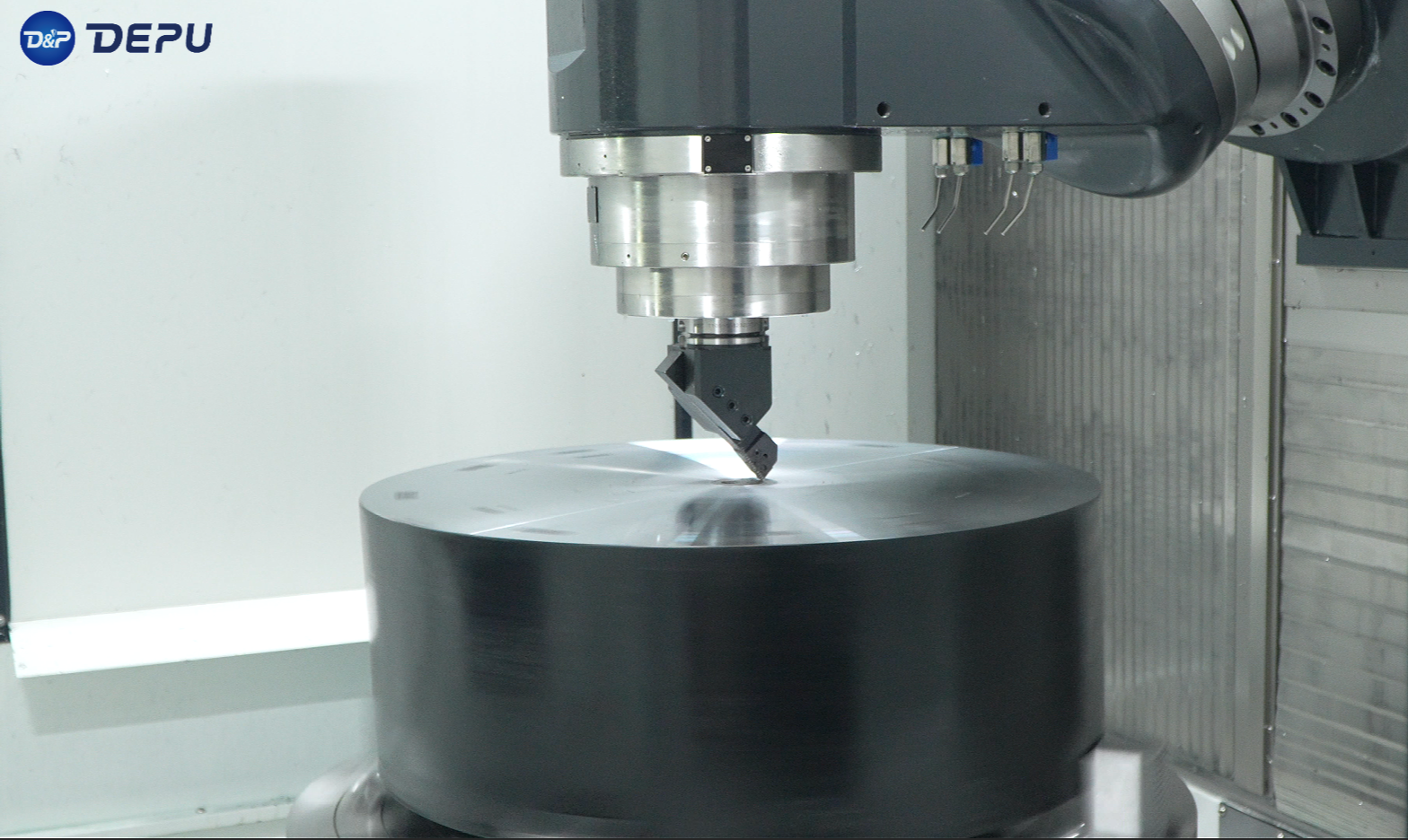

Aerospace: Precision, Complexity, and Lightweight Integration with 5 Axis Milling Technology
Why 5 Axis Milling Technology Enables Single-Setup Machining of Titanium Airframes
Working with titanium airframes requires really tight precision, particularly for those thin walled parts with complex curves. When there are alignment issues from having to set up multiple times, it can actually cause geometry problems growing by around 30%. The 5 axis milling tech solves this problem because it moves both rotationally (A/B/C axes) and linearly (X/Y/Z axes) at the same time. This means the cutting tool stays engaged continuously at just the right angle throughout the process. Maintaining steady chip removal helps prevent work hardening, something super important when dealing with titanium since its surface gets damaged easily if cuts get interrupted. Skilled machinists now hit about plus or minus 0.025mm accuracy on complicated rib structures all in one go, skipping the need for those 4 to 6 separate setups that used to be standard practice. This method tackles head on the difficulties caused by titanium's poor heat transfer properties and its tendency to react chemically while being machined. According to industry reports, shops that switch to this system see their scrap rates drop by roughly 18%.
Case Study: 42% Cycle Time Reduction in Boeing 787 Wing Fitting Production
An unnamed major player in the aerospace industry recently implemented advanced 5-axis milling technology to produce aluminum wing fittings for the Boeing 787 aircraft. These sizable 0.8 meter parts come with challenging features including deep pockets, angled mounting areas, and strict flatness specifications. Before this change, manufacturing these components involved no fewer than 11 separate operations spread across three different machines. Thanks to improvements in tool path programming and adjustments made during actual machining, everything can now be done in a single continuous run. Production times have been cut down significantly - we're talking about reducing cycle time by around 42% when looking at figures going from 37 hours down to just over 21 hours per part. Material waste has also decreased thanks to better rough cutting techniques, saving about 15% on raw materials. After processing, quality checks showed that surface flatness remained within acceptable limits, staying below 8 microns deviation. Given how critical weight reduction is for wings (remember, each gram saved means less fuel burned), this kind of consolidation makes a real difference both operationally and environmentally speaking.
Medical Devices: Patient-Specific Implants and Micro-Accuracy Demands Met by 5 Axis Milling Technology
How 5 Axis Milling Technology Achieves Sub-50 µm Surface Finishes on Titanium Spinal Cages
For titanium spinal cages, meeting strict biocompatibility standards is essential. The surface finish needs to be under 50 microns to stop bacteria from sticking and help with bone integration. With 5 axis milling tech, we can get those sub 50 micron finishes because the machine keeps the tool at the right angle relative to the workpiece even on complex, body-shaped geometries. The synchronized rotation of axes gives us positioning accuracy down to less than 0.005 mm without needing to manually adjust positions. This cuts down on vibrations that might otherwise create surface flaws. Our computer aided manufacturing systems automatically adjust cutting speeds and feeds to maintain around 0.4 microns Ra roughness, which meets ISO 13485 requirements for medical devices. Since we do both roughing and finishing in one setup, there's no need for separate polishing steps that could introduce contaminants. Production times drop by about 35% this way. Plus, when making custom implants for patients, the final product matches those detailed CT or MRI scans much better, giving surgeons what they actually need during operations.
Defense & Advanced Machinery: High-Tolerance, Classified, and Dual-Use Applications of 5 Axis Milling Technology
Securing Supply Chains Through Integrated 5 Axis Milling Technology for Weapon Systems
Modern weapon systems depend on tough, intricate parts like guidance housings and armor components that need precision down to the micron level and strict secrecy around their designs. The old way of making these parts through multiple machining stages creates problems in the supply chain because it involves so many outside vendors and lots of moving parts literally. With 5 Axis Milling Technology, manufacturers can produce sensitive components from start to finish in one setup, cutting reliance on outside suppliers by roughly 40%, according to recent defense manufacturing reports. When working with tough materials such as chromium nickel steels, doing everything in a single operation means no more adding up small alignment mistakes over time, which helps maintain consistent quality across batches. For defense companies operating in politically unstable regions, this all-in-one approach keeps production going smoothly even when things get tense internationally, ensuring that important military equipment stays ready without risking valuable trade secrets or losing track of where parts came from.
Cross-Industry Transfer: UAV Development Accelerating 5 Axis Milling Technology Adoption in Industrial OEMs
Innovation around unmanned aerial vehicles is really pushing forward what's possible with 5 axis milling technology. We're seeing major improvements in how we create lighter but stronger structures, integrate internal cooling channels, and achieve those super fast contour cuts. Manufacturers of industrial equipment have started jumping on board for their heavy machinery needs. A company making hydraulic valves cut down production time by almost half when they applied UAV-inspired toolpaths, hitting tolerances under 5 microns that used to be exclusive to aerospace work. This trend isn't stopping there either. Motor housings, turbine impellers, and even complex gear systems can now be manufactured in one setup instead of multiple stages, which boosts both thermal resistance and mechanical strength. With better batteries giving UAVs more power density, this research collaboration keeps getting stronger. Factories report cutting cycle times by 30% for big parts, something that's helping keep American manufacturing competitive in areas where military and commercial applications overlap.
Energy Sector: Turbine Maintenance, Hybrid Manufacturing, and Downtime Reduction via 5 Axis Milling Technology
In the energy field, 5 axis milling tech is helping tackle those annoying problems we all know too well: long periods when turbines aren't running and expensive part replacements. This technology can create these special corrosion resistant parts like pump impellers, wind turbine hubs, and even gas turbine blades that have those complicated internal channels and smooth aerodynamic surfaces. The result? Better fluid movement and improved heat management across the board. There's this new hybrid approach now where they mix additive manufacturing with traditional 5 axis milling techniques. What does that mean practically? Well, it allows repairs right on site for those really valuable components, which cuts down replacement costs somewhere around 60%. Think about what happens during unexpected shutdowns, particularly at those hard to reach offshore locations. That's when the single setup feature really shines. Parts get made much quicker, and every hour saved from being offline means roughly $88k in savings according to the Energy Infrastructure Council back in 2023. Plants benefit because they don't need all those extra steps with fixtures or moving things manually between operations. They get back online fast while still hitting those super tight tolerances below 0.01 mm that matter so much for systems under pressure.
| Application | Benefit | Operational Impact |
|---|---|---|
| Turbine blade refurbishment | Reduced material waste | 40% faster maintenance cycles |
| Valve body machining | Unified complex geometry production | Eliminates 3+ traditional setups |
| Heat exchanger components | Optimized thermal transfer surfaces | 15% efficiency gain in systems |
Frequently Asked Questions
What is 5 Axis Milling Technology?
5 Axis Milling Technology allows a cutting tool to move in five different directions simultaneously—three linear and two rotational axes—enabling complex geometries to be machined in a single setup without multiple adjustments.
How does 5 Axis Milling Technology benefit titanium machining?
In titanium machining, 5 Axis Milling Technology minimizes alignment issues and ensures continuous engagement of the cutting tool to prevent work hardening, which ultimately enhances precision and reduces scrap rates.
What industries benefit from 5 Axis Milling Technology?
Industries like aerospace, medical devices, defense, industrial OEMs, and energy sectors benefit from 5 Axis Milling Technology in terms of greater precision, reduced cycle times, and improved material savings.
Why is single-setup machining advantageous?
Single-setup machining is advantageous because it reduces the need for multiple stage setups, minimizing discrepancies and alignment errors, ensuring higher precision, and lowering production costs.