Precision metal parts are essential for safety-critical vehicle systems, including braking, steering, and ADAS components. They require tight dimensional tolerances to ensure stable performance, prevent leaks and malfunctions, and maintain signal integrity, while also needing strong corrosion resistance and durability to withstand harsh operating conditions and avoid catastrophic failures.
In 5-axis CNC machining, speed alone cannot guarantee results. Stable kinematics are essential for precision machining, improving accuracy, consistency, and surface quality in complex parts.
Machine bed and frame rigidity is the foundation of CNC machine stability, as it determines vibration damping, thermal drift resistance, and deformation control under dynamic cutting loads. Material choice, optimized geometry, and stiffness design work together to maintain precision and prevent dimensional errors during machining.
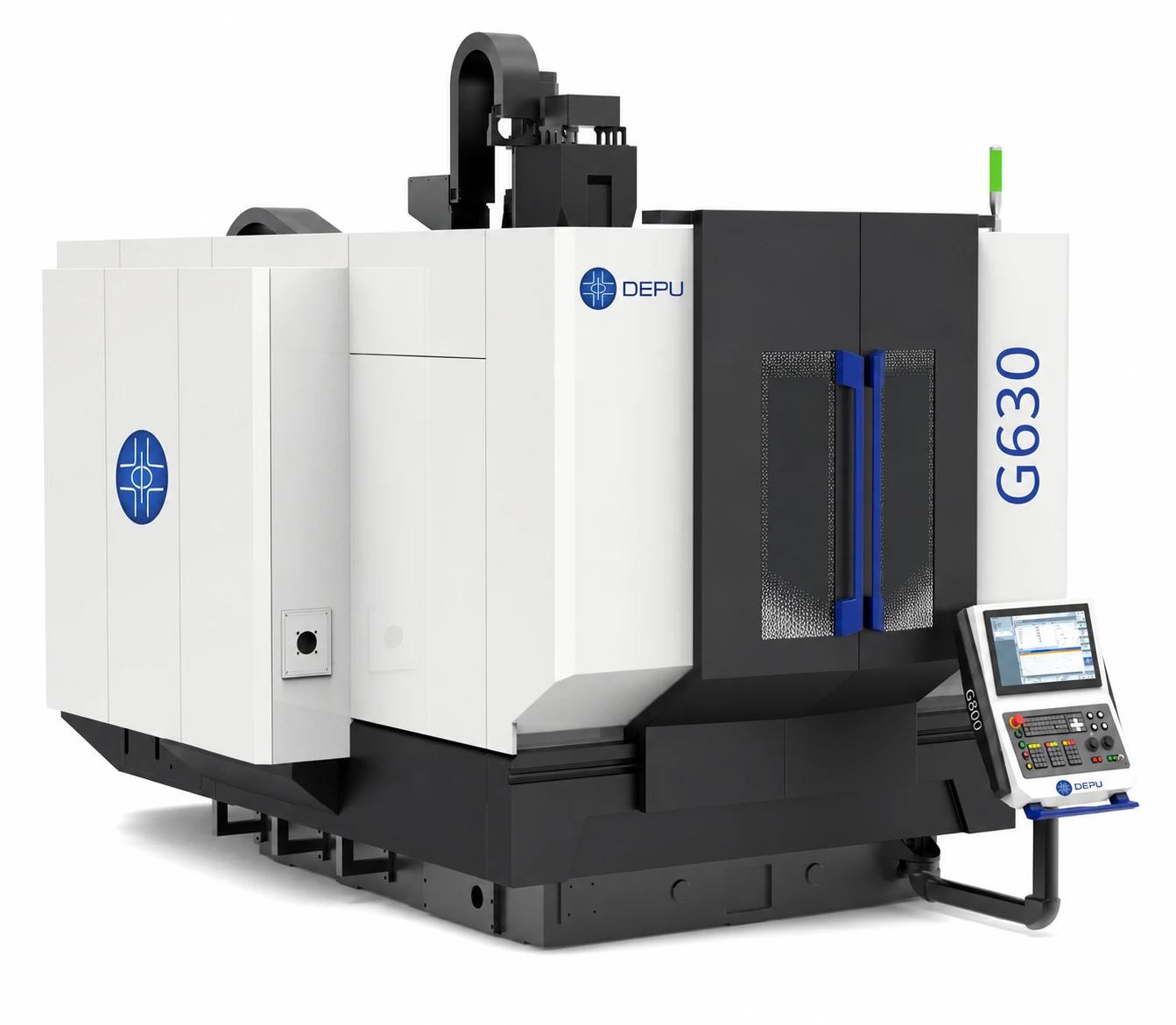
Long-term 5-axis precision depends on more than initial calibration. This article explains how the DEPU G Series uses gantry structure, thermal design, and full closed-loop control to maintain accuracy across extended production runs.
5 axis machining reduces rework in complex part production by improving accuracy, consistency, and process efficiency. Learn how precision CNC machining minimizes errors and increases productivity.