
Why Are You Still Using 3 Setups for a Part You Could Machine in One?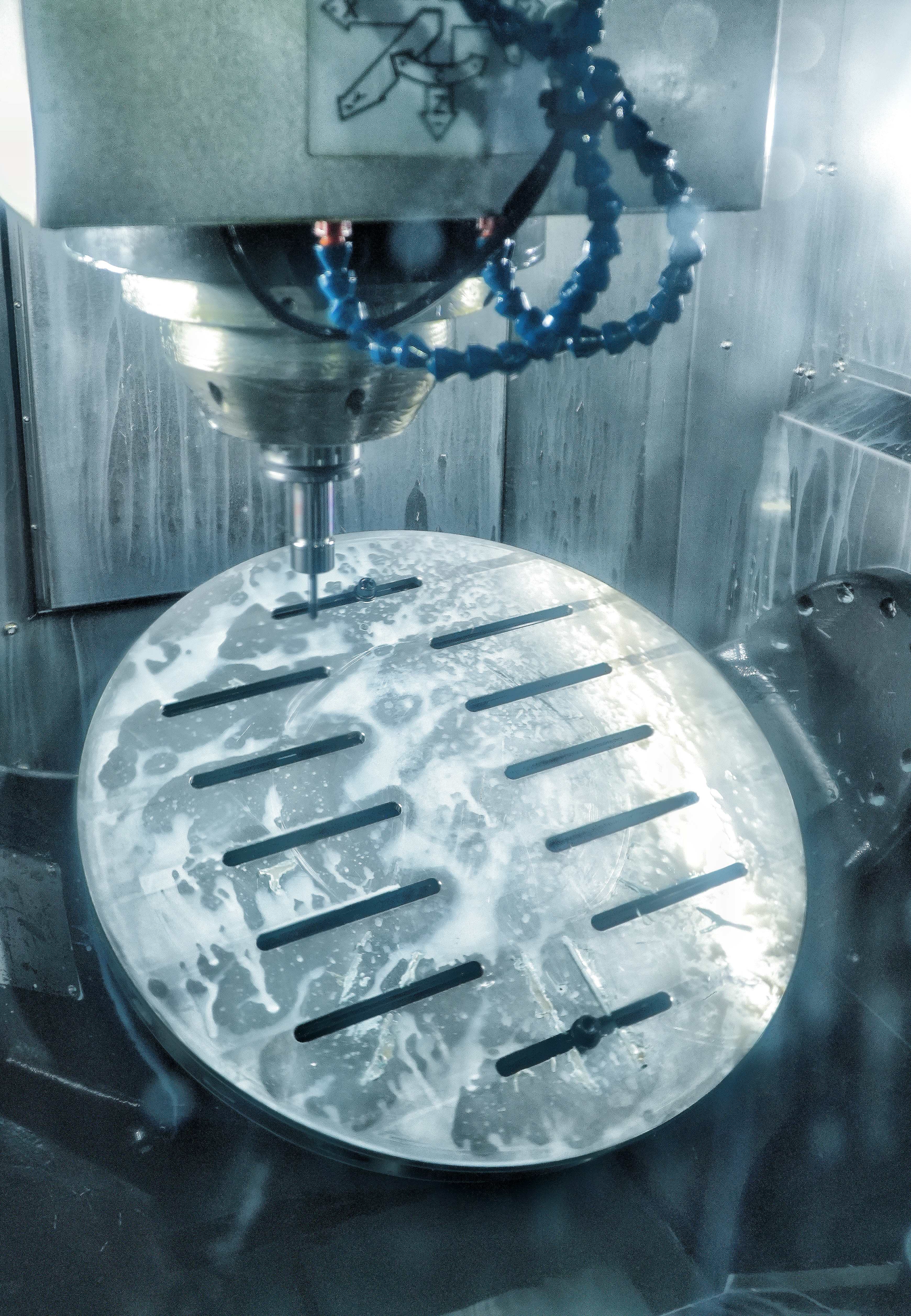
In CNC manufacturing, adding another setup often feels like a normal part of the process.
Clamp the part. Machine one side. Remove it. Reposition it. Re-zero it. Machine another surface. Repeat the process.
For simple parts, this may be unavoidable.
But what if a complex part that currently requires three setups could be completed in one?
That is where 5-axis CNC machining can fundamentally change the manufacturing process.
By simultaneously controlling three linear axes and two rotary axes, a 5-axis CNC machine can approach multiple surfaces and features from different directions without repeatedly removing and repositioning the workpiece.
The result is not simply fewer setups.
It can mean better precision, shorter machining time, fewer positioning errors, improved surface finish, and a more streamlined production process.
The Real Cost of Multiple CNC Setups
When manufacturers compare 3-axis and 5-axis machining, they often focus on machine price.
But the more important question is:
What does each additional setup actually cost?
A setup involves much more than physically clamping a workpiece.
A typical additional setup may require:
- Removing the workpiece
- Cleaning the fixture and workholding surfaces
- Repositioning the part
- Establishing a new work coordinate system
- Rechecking datums
- Re-aligning the workpiece
- Verifying tool paths
- Running a test cut
- Inspecting critical dimensions
For a high-volume production environment, these additional steps can quickly add up.
For precision machining, there is another problem: every time the part is repositioned, there is another opportunity for error.
Every Repositioning Creates Another Opportunity for Error
Imagine a component that requires three setups.
Setup 1
The first group of features is machined.
Setup 2
The part is removed and rotated.
Setup 3
The part is repositioned again to access another surface.
Even if each setup is performed carefully, small positioning deviations can accumulate.
The original work coordinate system may no longer perfectly match the new position.
A few microns here and a few microns there may not matter for a simple bracket.
But for aerospace components, medical parts, molds, precision components, and other demanding applications, these deviations can become critical.
This is one of the major advantages of 5-axis CNC machining.
Instead of repeatedly moving the part to reach different surfaces, the machine can change the cutting-tool orientation around the workpiece.
The fewer times you have to reposition the part, the fewer opportunities there are to introduce positioning errors.
One Setup Can Mean More Than Just Saving Time
The most obvious benefit of 5-axis machining is setup reduction.
But the advantages go much further.
1. Improved Positional Accuracy
When multiple features are machined in a single setup, their relationship to the original work coordinate system can be maintained throughout the operation.
This is particularly important when several surfaces or holes must maintain tight positional relationships.
With conventional multi-setup machining, each repositioning introduces another alignment step.
With 5-axis machining, many of these operations can be completed without removing the workpiece.
2. Better Access to Complex Surfaces
Some components simply cannot be machined efficiently from one direction.
Consider parts with:
- Deep cavities
- Angled surfaces
- Undercut features
- Compound curves
- Blades
- Impellers
- Turbine components
- Medical implants
- Complex molds
A conventional 3-axis machine may require multiple setups or specialized fixtures to access these surfaces.
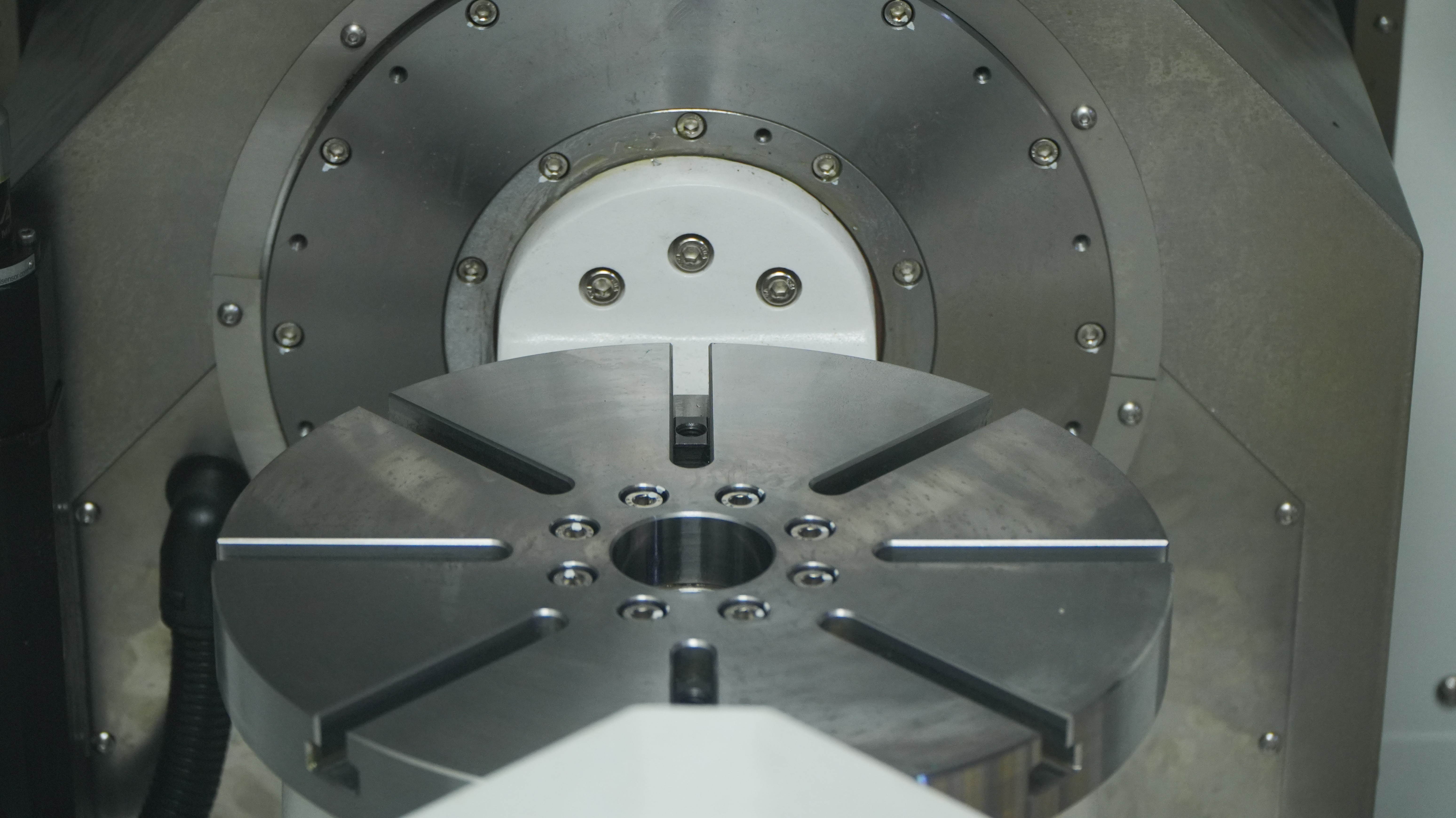
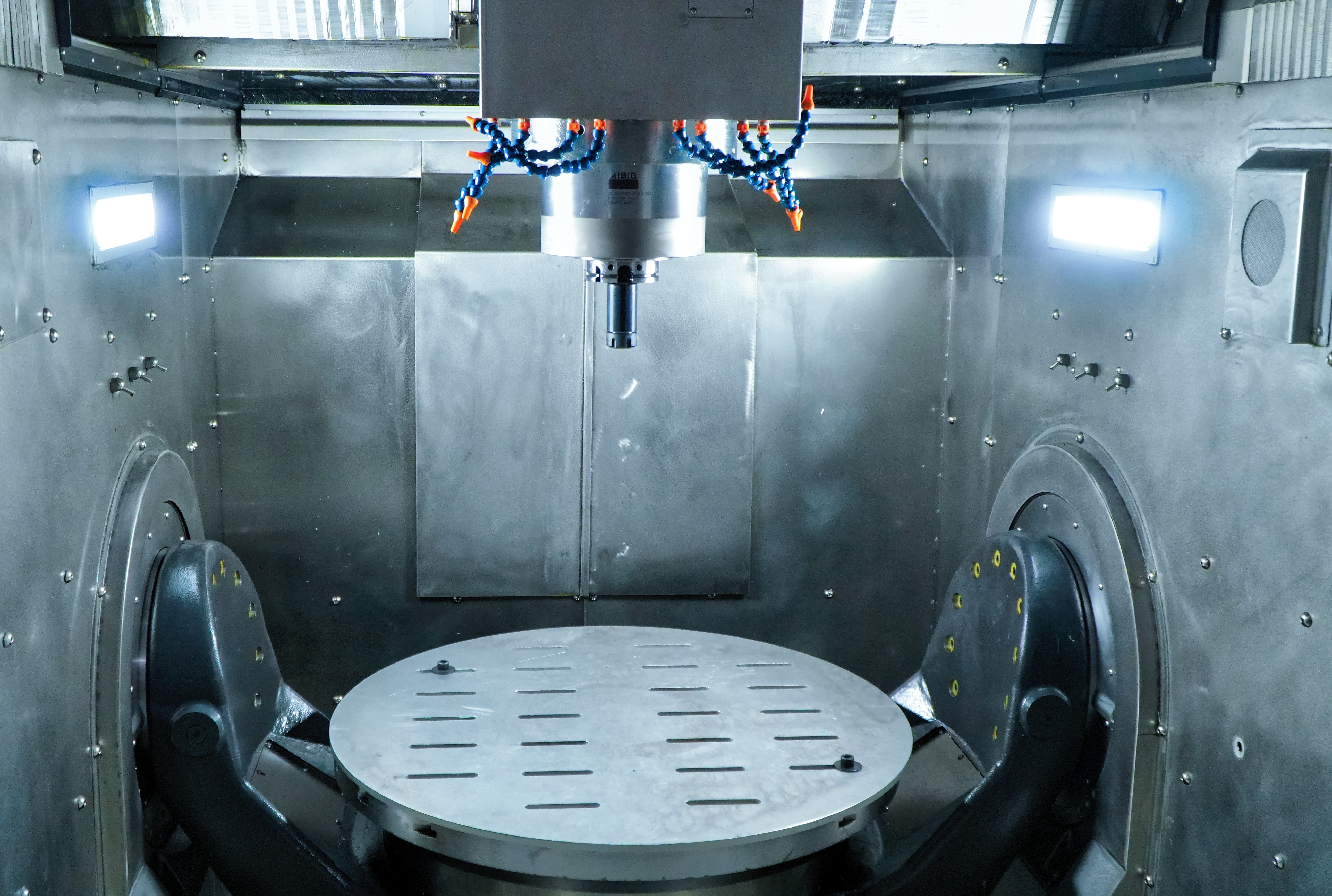
A 5-axis CNC machine can tilt and rotate the workpiece or cutting tool, allowing the tool to approach difficult surfaces from more suitable angles.
This is where 5-axis CNC becomes particularly valuable.
3. Better Tool Orientation
5-axis machining is not only about reaching more surfaces.
It is also about controlling how the cutting tool approaches the material.
In simultaneous 5-axis machining, the tool orientation can continuously change while the cutting tool moves along the programmed path.
This allows manufacturers to maintain a more suitable tool angle relative to the workpiece.
For complex curved surfaces, that can provide:
- More consistent cutting conditions
- Better surface finish
- Reduced tool interference
- More efficient material removal
- Reduced need for excessive finishing operations
For applications requiring high-quality surfaces, tool orientation can be just as important as axis travel.
4. Reduced Fixture Requirements
Multiple setups often require multiple fixture arrangements.
As part complexity increases, fixtures can become increasingly complicated.
A manufacturer may need:
- Custom soft jaws
- Angle plates
- Special clamps
- Additional locating points
- Dedicated fixtures for different operations
A 5-axis CNC machine can reduce the need for some of these arrangements because the machine has greater access to the workpiece.
This can simplify the manufacturing process and reduce fixture-related costs.
5. Shorter Overall Production Time
Suppose a component requires three setups.
The actual cutting time may be only part of the total manufacturing cycle.
There is also time spent on:
Setup → Alignment → Machining → Inspection → Repositioning → Alignment → Machining → Repositioning → Alignment → Final Machining
With 5-axis machining, the workflow can potentially become:
Setup → Alignment → Machining → Inspection
The exact time savings depend on the part, material, tooling, programming strategy, and machine configuration.
But for parts with multiple complex surfaces, eliminating two setups can have a significant impact on total production time.
6. Less Handling Means Less Risk
Every time an operator removes a precision component from the machine, something can happen.
The part can be:
- Misaligned
- Clamped incorrectly
- Damaged
- Contaminated
- Referenced incorrectly
For expensive materials or difficult-to-replace components, reducing unnecessary handling is a major advantage.
This is especially relevant for precision machining applications where dimensional consistency is critical.
3-Axis vs. 5-Axis: What Actually Changes?
It is important to understand that 5-axis machining does not automatically make every part faster.
A simple rectangular component with features on one or two faces may not benefit significantly from five axes.
The real advantage appears when part geometry and manufacturing requirements make multiple orientations necessary.
| Factor | 3-Axis CNC | 5-Axis CNC |
|---|---|---|
| Linear axes | 3 | 3 |
| Rotary axes | — | 2 |
| Complex surface access | Limited | Excellent |
| Multiple setups | Often required | Can often be reduced |
| Tool orientation | Fixed/limited | Flexible |
| Complex curved surfaces | More difficult | More suitable |
| Fixture complexity | Can increase | Can often be reduced |
| Positioning between features | Depends on setups | Can be maintained in one setup |
| Programming complexity | Lower | Higher |
| Best suited for | Simple to moderate parts | Complex, multi-sided parts |
The key point is not that 5-axis CNC is always better.
It is that the right machine should match the geometry and manufacturing requirements of the part.
When Should You Consider 5-Axis CNC?
Ask yourself a few simple questions.
Does the part require more than two or three orientations?
If yes, 5-axis machining may significantly simplify the process.
Are you repeatedly removing and repositioning the same workpiece?
If yes, you may be spending more time on setups than necessary.
Are multiple features required to maintain tight positional relationships?
If yes, reducing setups can help minimize accumulated positioning errors.
Are you machining complex curved surfaces?
If yes, flexible tool orientation can provide major advantages.
Are fixtures becoming complicated?
If yes, a 5-axis machine may allow you to rethink the workholding strategy.
Are you spending significant time on manual alignment and re-zeroing?
If yes, setup reduction could have a measurable impact on production efficiency.
But Is 5-Axis CNC Always the Answer?
No.
This is an important distinction.
A common mistake is to assume that every CNC machining job should move to five axes.
For simple prismatic parts, a 3-axis machining center may be more economical and easier to program.
The value of 5-axis machining increases as part complexity increases.
For example:
Simple block → 3-axis may be sufficient
Multiple angled faces → 3+2 may be advantageous
Complex curved surfaces → simultaneous 5-axis may be necessary
Understanding this difference is essential when selecting a CNC machine.
3+2 vs. Simultaneous 5-Axis Machining
Not every five-axis process requires continuous five-axis movement.
In 3+2 machining, the rotary axes position the workpiece or tool at a specific angle, and the cutting operation is then performed using three linear axes.
This can be an effective way to access multiple surfaces while maintaining relatively straightforward programming.
In simultaneous 5-axis machining, however, all five axes can move together during cutting.
This is particularly useful for complex freeform surfaces where the tool orientation needs to continuously change.
Therefore, the question is not simply:
“Do I need five axes?”
A better question is:
“Do I need 3+2 positioning, or do I need simultaneous 5-axis motion?”
The Bigger Advantage: Changing the Manufacturing Process
The biggest benefit of five-axis technology may not be the extra two axes themselves.
It is the ability to rethink how a part is manufactured.
Instead of asking:
“How can I hold this part for the next operation?”
you can start asking:
“Can I machine this entire part in one setup?”
That change in thinking can influence:
- Fixture design
- Tool selection
- CAM programming
- Machining strategy
- Inspection
- Production scheduling
- Labor requirements
- Overall manufacturing cost
This is why modern 5-axis CNC machines are increasingly used for complex precision components.
From Three Setups to One: When It Makes Sense
Moving from three setups to one does not mean every part should be forced into a single setup.
The goal is not simply to reduce the setup count.
The goal is to find the most efficient and reliable manufacturing strategy.
For a complex component, one well-planned setup can potentially provide:
Fewer setups → Less handling → Fewer alignment steps → Better positional consistency → Shorter production time
That is the real value of 5-axis CNC machining.
How DEPU Approaches 5-Axis Precision Machining
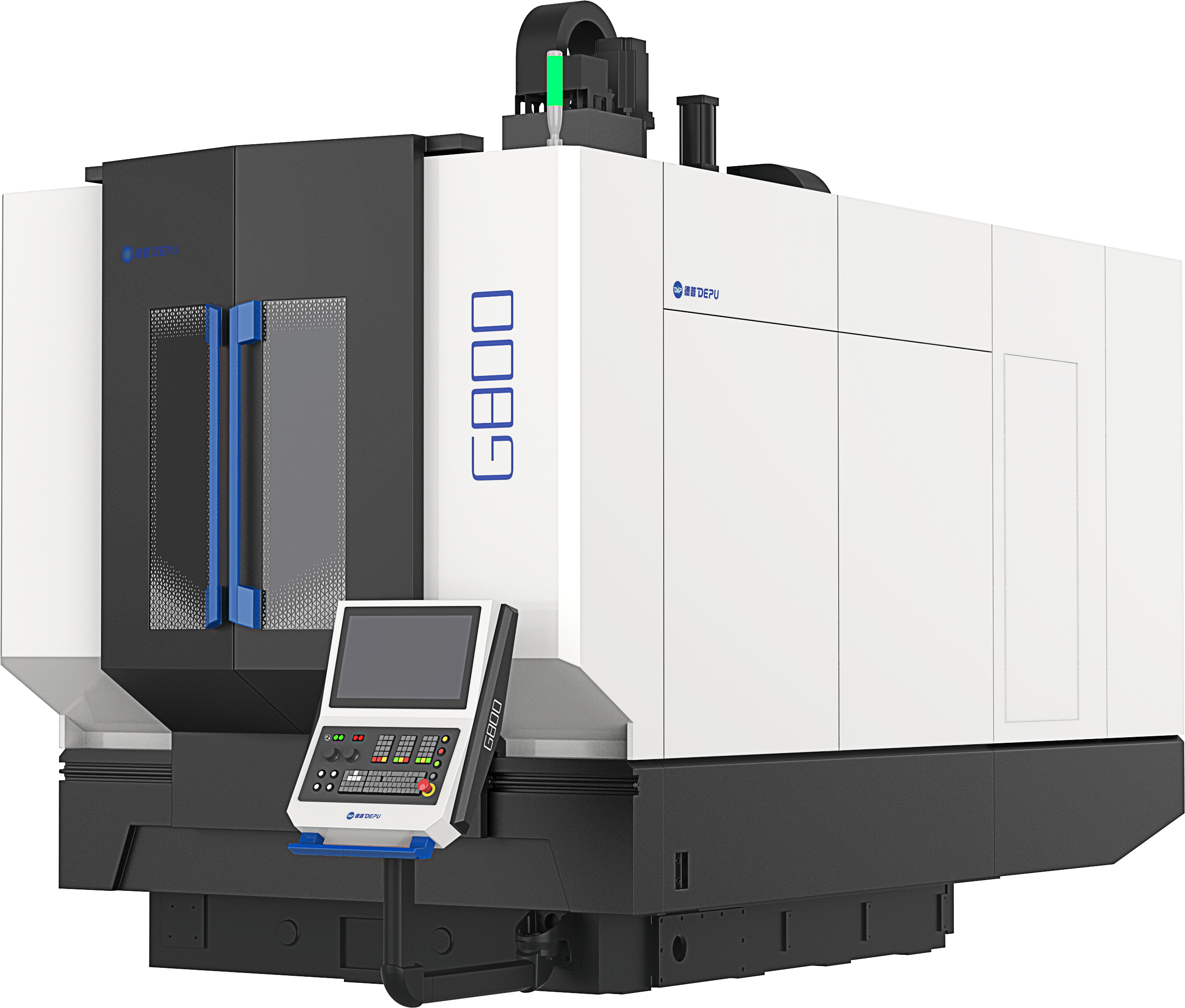
At DEPU CNC, our five-axis machining centers are designed for applications where accuracy, rigidity, accessibility, and machining efficiency are critical.
Our G Series vertical five-axis machining centers are suited to complex components that require multi-surface access while maintaining precision.
For larger and heavier components, the U Series provides a larger machining envelope and heavy-duty five-axis capability.
The objective is simple:
Machine more features with fewer setups while maintaining the precision required by demanding applications.
Whether the process requires 3+2 positioning or simultaneous five-axis machining, machine configuration should be selected according to the part geometry, material, size, tolerance, tooling, and production requirements.
Final Takeaway
If your current process looks like this:
Setup 1 → Machine → Reposition → Setup 2 → Machine → Reposition → Setup 3 → Machine
it may be time to ask a different question.
Could the part be machined in one setup?
For the right application, 5-axis CNC machining can reduce setup requirements, improve positional consistency, simplify workholding, improve tool orientation, and shorten overall production time.
The goal isn't simply to have more axes.
The goal is to make the manufacturing process simpler, more precise, and more efficient.
And sometimes, the biggest productivity improvement isn't cutting faster.
It's eliminating the second and third setup altogether.
Frequently Asked Questions
Is 5-axis CNC always faster than 3-axis machining?
No. 5-axis CNC is most advantageous when the part requires multiple orientations, complex surfaces, or difficult tool access. Simple parts may still be more economical on a 3-axis machine.
Can 5-axis machining eliminate all setups?
Not necessarily. The number of setups depends on part geometry, workholding, machining requirements, and machine capacity. However, 5-axis machining can significantly reduce the number of setups required for many complex parts.
What is the difference between 3+2 and simultaneous 5-axis machining?
3+2 machining uses the rotary axes to position the workpiece or tool before a three-axis cutting operation. Simultaneous 5-axis machining allows all five axes to move together during cutting, making it suitable for complex freeform surfaces.
Does fewer setups improve precision?
It can. Reducing the number of times a workpiece is removed and repositioned reduces the number of alignment and datum-transfer operations, which can help maintain positional consistency.
What industries benefit most from 5-axis machining?
Common applications include aerospace, automotive, medical, mold making, energy, semiconductor equipment, and precision component manufacturing.
How do I know if my part needs a 5-axis CNC machine?
Evaluate the number of required orientations, part geometry, tolerances, surface requirements, fixture complexity, and production volume. If a part requires multiple setups primarily to access different surfaces, 5-axis machining may be worth considering.