
The Part Isn't Too Complex—Your Machining Strategy Might Be
When a CNC programmer looks at a difficult part, the first reaction is often:
“This part is too complex.”
It has angled surfaces.
Deep cavities.
Curved geometry.
Features on multiple sides.
Tight tolerances.
Maybe even a surface that seems impossible to reach with a standard three-axis setup.
So the solution becomes familiar:
Add another setup.
Then another.
Use a longer tool.
Build a more complicated fixture.
Add more finishing passes.
Spend more time programming.
Eventually, a part that looked manageable on the CAD screen turns into a complicated manufacturing process.
But what if the part itself isn't the problem?
What if the machining strategy is?
This is where modern 5-axis CNC machining can change the way manufacturers approach complex parts.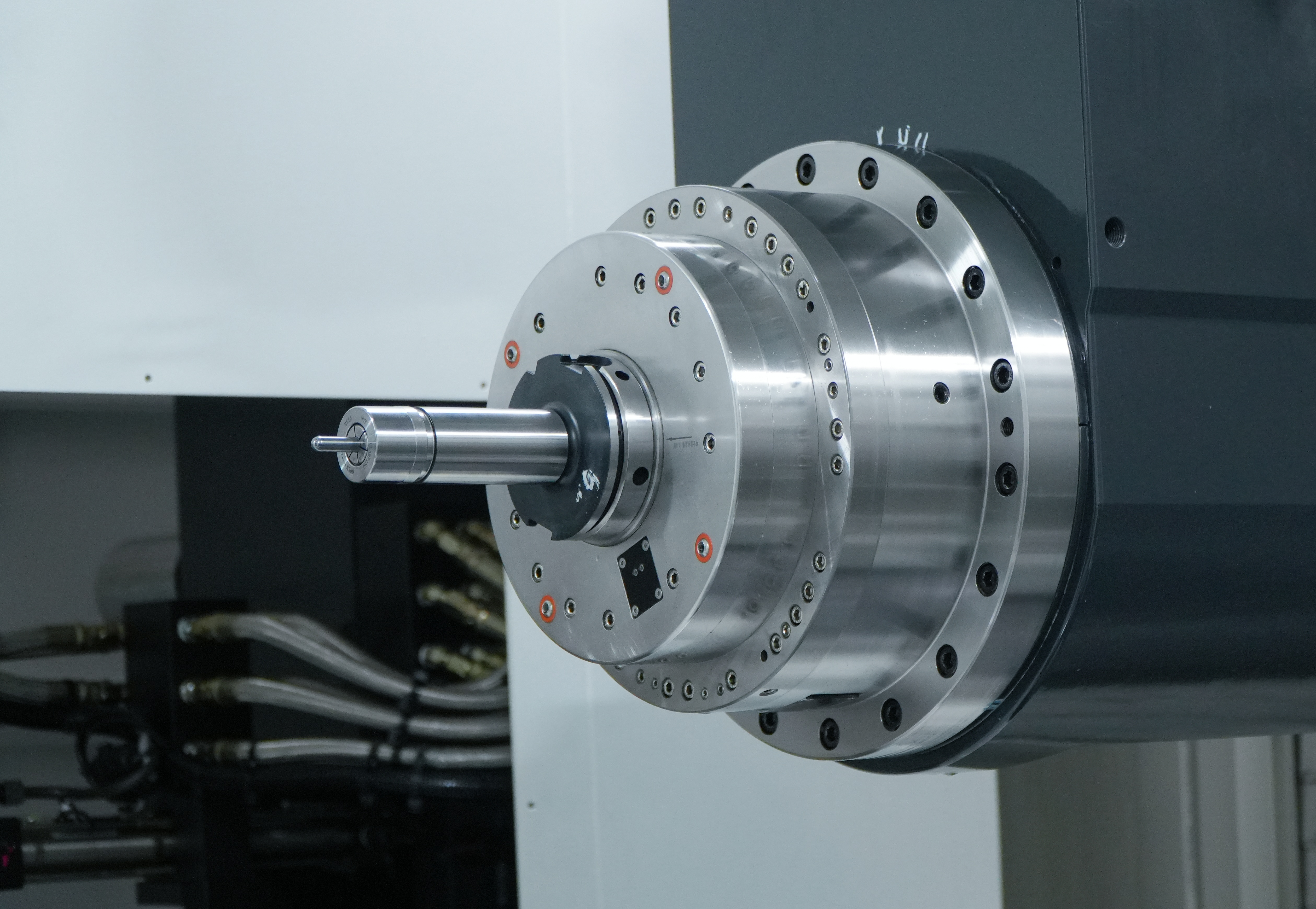
Complexity in CAD Doesn't Always Mean Complexity in Manufacturing
A part can look extremely complicated in a CAD model without actually requiring a complicated machining process.
Consider a component with five machined faces.
A three-axis machine may require:
Setup 1 → Machine → Reposition → Setup 2 → Machine → Reposition → Setup 3 → Machine
The geometry hasn't changed.
Only the manufacturing strategy has.
With a suitable 5-axis CNC machine, the same component may be accessible from multiple directions within a single setup.
The part is still geometrically complex.
But the manufacturing process becomes simpler.
That's an important distinction.
Part complexity and process complexity are not the same thing.
The First Question Shouldn't Be “How Do I Hold It?”
When a difficult component arrives on the shop floor, many manufacturers immediately start thinking about workholding.
Where should the fixture go?
How can the part be clamped?
Can the tool reach this feature?
Do we need to rotate the part?
Do we need another setup?
These are useful questions.
But there is a better question to ask first:
What is the best direction from which to machine this feature?
That small change in thinking can completely change the process.
Instead of designing the fixture around the limitations of the machine, you start designing the machining strategy around the geometry of the part.
This is one of the fundamental advantages of 5-axis machining.
Tool Orientation Can Solve Problems That More Setups Cannot
Imagine machining an angled surface deep inside a component.
On a conventional three-axis machine, you may have only a few options.
You could:
- Use a longer tool
- Create a special fixture
- Rotate the workpiece
- Add another setup
- Reduce cutting parameters
- Leave additional material for finishing
But each solution introduces another compromise.
A five-axis machine gives you another option:
Change the tool orientation.
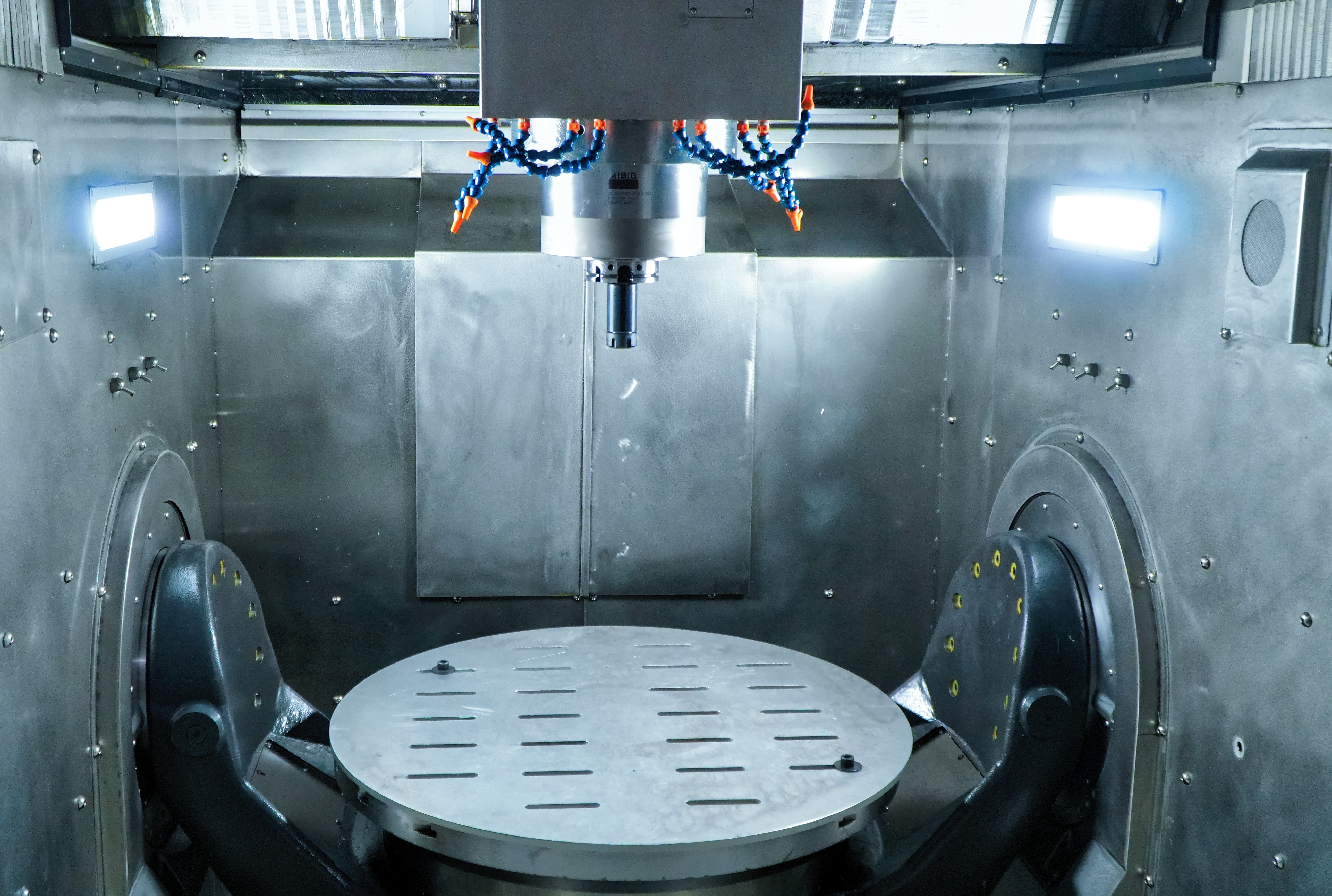
By rotating the workpiece or cutting tool, the machine can approach the feature from a more suitable direction.
This can make a difficult feature significantly easier to machine.
The Hidden Problem With Long Cutting Tools
One of the most common ways manufacturers deal with difficult tool access is simply to use a longer tool.
It works.
But there is a price.
As tool overhang increases, tool deflection and vibration can become more difficult to control.
That can affect:
- Dimensional accuracy
- Surface finish
- Tool life
- Cutting stability
- Material removal rates
For precision machining, this can become especially important.
Instead of asking:
“How long does the tool need to be?”
a five-axis strategy can ask:
“Can I change the tool angle so I don't need such a long tool?”
Sometimes, the answer is yes.
And that can turn a difficult machining operation into a much more stable one.
Fewer Setups Can Simplify the Entire Process
Multiple setups don't just consume operator time.
They add complexity throughout the manufacturing process.
Every additional setup may require:
- New work offsets
- New alignment procedures
- Additional fixturing
- Datum transfer
- Verification
- Additional inspection
- More handling
For a high-precision component, every repositioning also creates another opportunity for positioning variation.
A well-planned 5-axis CNC process can often reduce these operations.
Instead of designing three separate setups around three different machining directions, the manufacturer may be able to access those directions from a single setup.
The result is a simpler process:
One setup → Multiple orientations → Multiple surfaces → Fewer interruptions
But 5-Axis Doesn't Mean “Use All Five Axes All the Time”
This is where machining strategy becomes important.
Owning a five-axis CNC machine does not mean every job should be programmed as simultaneous five-axis machining.
Sometimes 3+2 machining is the better solution.
With 3+2, the rotary axes position the workpiece or tool at a particular angle, while the cutting operation is performed using three linear axes.
This can be ideal for parts with multiple angled surfaces but relatively straightforward cutting paths.
For more complex freeform surfaces, simultaneous five-axis machining may be more appropriate.
The goal is not to make the program look sophisticated.
The goal is to make the manufacturing process efficient and reliable.
3+2 or Simultaneous 5-Axis?
A simple way to think about the difference is:
3+2 Machining
Change orientation → Lock/maintain orientation → Cut
Best suited for:
- Angled faces
- Drilling from multiple directions
- Pockets on different planes
- Features that don't require continuous tool-axis movement
- Applications where simpler programming is preferred
Simultaneous 5-Axis Machining
Change position + change orientation + cut continuously
Best suited for:
- Freeform surfaces
- Blades
- Impellers
- Complex molds
- Aerospace components
- Medical components
- Difficult transitions between surfaces
Choosing the right strategy can make a bigger difference than simply choosing a machine with more axes.
The Problem May Be the Number of Setups—Not the Part
Let's take a hypothetical example.
A component requires three orientations.
Traditional approach
Setup 1
Machine the top and front features.
Setup 2
Rotate the workpiece.
Setup 3
Rotate it again.
The operator must establish the correct position each time.
Now consider a five-axis approach.
The workpiece remains clamped.
The machine changes orientation to access the required surfaces.
The manufacturing process becomes:
One setup → Multiple machining orientations
The geometry didn't become easier.
The strategy became smarter.
Better Tool Access Can Also Reduce Fixture Complexity
Fixtures exist to solve a problem:
How do I hold the part securely while giving the cutting tool access to the features I need to machine?
On a conventional machine, these two requirements can conflict.
The fixture must hold the part.
But it must not block the tool.
This can lead to increasingly complicated workholding solutions.
A five-axis machine provides greater freedom around the workpiece.
That additional movement can make it easier to access surfaces while keeping the component securely positioned.
In some applications, this can reduce the need for specialized fixtures.
Precision Is Often About Process Control
When people talk about precision machining, they often focus on machine specifications.
Positioning accuracy.
Repeatability.
Spindle accuracy.
Linear scales.
Thermal compensation.
All of these matter.
But precision also depends heavily on the manufacturing process.
Consider two processes.
Process A
- Three setups
- Three alignments
- Multiple work offsets
- Several fixture changes
Process B
- One setup
- One primary datum
- Multiple machining orientations
- Fewer repositioning operations
Even if both processes use the same machine accuracy, the second process may provide a more controlled manufacturing chain.
That's why precision machining is not simply about machine accuracy.
It is also about reducing opportunities for error throughout the process.
Don't Confuse a Complicated Process With a Capable Process
A common misconception in manufacturing is:
“If the process is complicated, it must be necessary.”
Not always.
A complicated process can simply mean the machine, tooling, fixture, and CAM strategy are not working together effectively.
For example:
More setups ≠ more capability
Longer tools ≠ better access
More finishing passes ≠ better strategy
More complicated fixtures ≠ better workholding
The objective should be to eliminate unnecessary complexity wherever possible.
A Better Way to Evaluate Your Machining Strategy
Before adding another setup, ask these five questions.
1. Can the feature be reached from another tool orientation?
If yes, a five-axis strategy may eliminate the need for repositioning.
2. Can a shorter tool be used?
If changing the tool orientation allows a shorter tool, cutting stability may improve.
3. Does this setup exist because of geometry—or because of machine limitations?
This is an important distinction.
If the setup exists only because the machine cannot access another surface, five-axis machining may offer a solution.
4. Do multiple setups create datum-transfer problems?
If several critical features must maintain tight relationships, reducing setups may improve process consistency.
5. Does simultaneous five-axis actually provide an advantage?
If the answer is no, 3+2 may be the better strategy.
When 5-Axis CNC Is Actually Overkill
There is one more important point.
Not every complicated-looking part needs a five-axis machine.
If a component can be efficiently manufactured with:
- One or two simple setups
- Standard tooling
- Straightforward workholding
- Conventional three-axis toolpaths
then moving it to five-axis machining may not provide enough benefit to justify the additional programming and equipment cost.
The right strategy depends on the part.
5-axis CNC is most valuable when its additional freedom solves a real manufacturing problem.
The Real Value of 5-Axis Machining
The biggest advantage of five-axis technology isn't simply that it adds two rotary axes.
It's that it gives manufacturers more options.
More options for:
- Tool orientation
- Workpiece positioning
- Surface access
- Setup reduction
- Fixture design
- Tool selection
- Cutting strategy
And more options often mean fewer compromises.
That's why a five-axis machine can make a complex manufacturing process simpler.
From “How Do We Machine It?” to “What's the Best Way to Machine It?”
This is perhaps the biggest mindset shift.
With conventional machining, the question often becomes:
“How can we make this geometry fit our machine?”
With five-axis machining, the question can become:
“What is the best machining approach for this geometry?”
That difference matters.
Because sometimes the part isn't too complex.
The process simply wasn't designed around the part.
How DEPU Five-Axis CNC Machines Fit Into This Approach
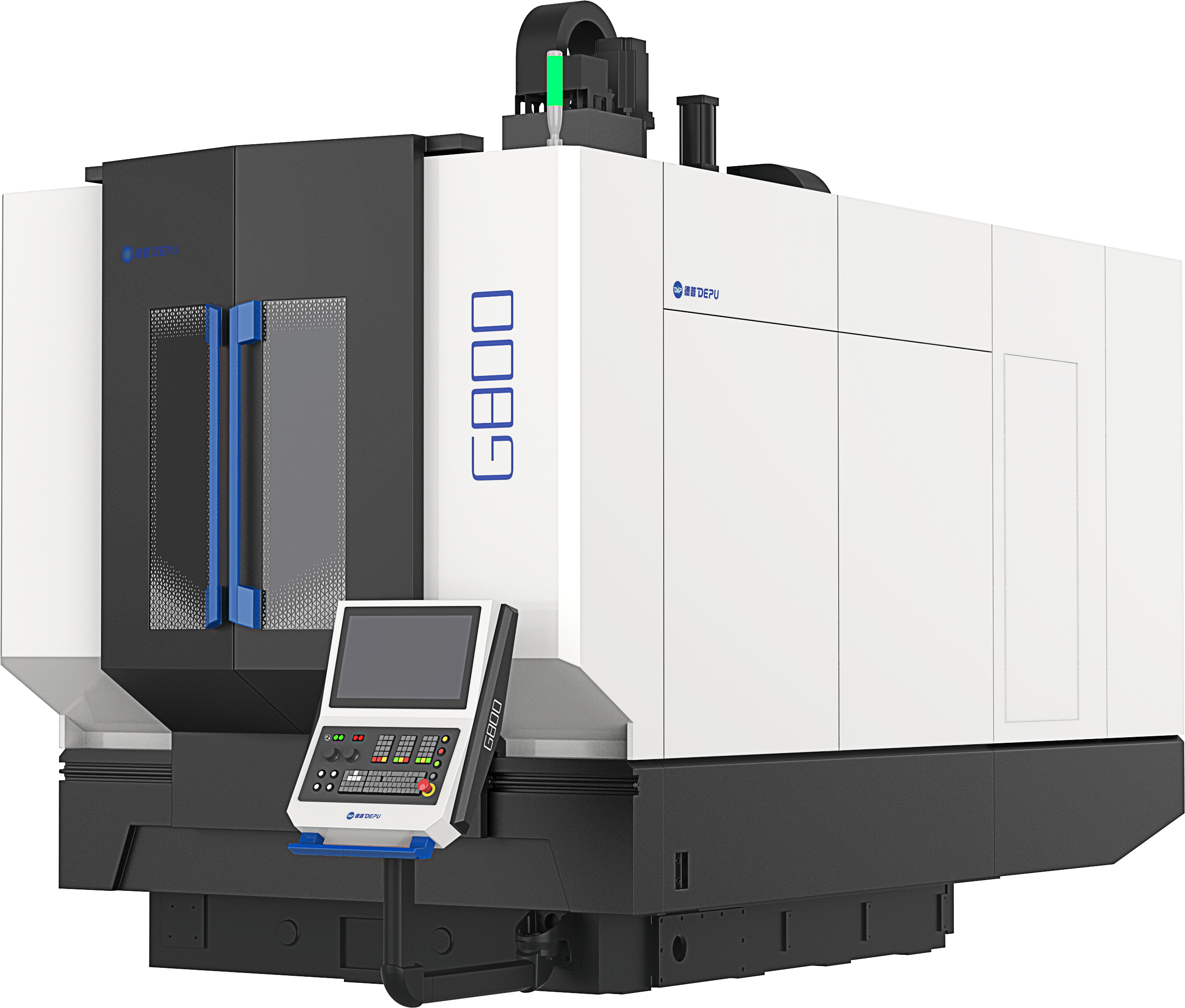
DEPU CNC develops 5-axis CNC machines for manufacturers working with complex and precision components.
Our G Series vertical five-axis machining centers are designed to provide multi-directional machining capability for applications where setup reduction, tool accessibility, rigidity, and precision are important.
For larger and heavier components, the U Series provides a larger machining envelope and heavy-duty five-axis capability.
The goal is not to use five axes simply because five axes are available.
The goal is to help manufacturers find a machining strategy that can:
Reduce unnecessary setups → Improve accessibility → Optimize tool orientation → Maintain precision → Simplify production
That is where the value of 5-axis machining really begins.
Final Takeaway
The next time you see a difficult CNC part, don't immediately assume:
“This part is too complex.”
Instead, ask:
“Is the part actually complex—or is my machining strategy making it complex?”
Could you reduce three setups to one?
Could a different tool orientation eliminate a long cutting tool?
Could 3+2 replace multiple fixture changes?
Could simultaneous five-axis machining simplify a complex surface?
Could a better strategy reduce the number of operations without compromising precision?
The geometry may not change.
But the way you approach it can.
The best machining strategy isn't the one with the most operations.
It's the one that removes the unnecessary ones.
Frequently Asked Questions
Does every complex part require 5-axis CNC machining?
No. Some complex-looking parts can still be efficiently machined using three-axis or 3+2 strategies. Five-axis CNC becomes especially valuable when multiple surfaces, difficult tool access, complex curves, or setup reduction are important.
Can 5-axis machining reduce the number of setups?
Yes. A five-axis CNC machine can access multiple surfaces and machining directions without requiring the workpiece to be manually repositioned between every operation.
Is simultaneous 5-axis machining always better than 3+2?
No. 3+2 can be more efficient for many parts with fixed angled surfaces. Simultaneous five-axis machining is particularly useful when the tool orientation needs to continuously change along complex surfaces.
Can five-axis machining improve precision?
Reducing setups can help improve positional consistency because fewer workpiece repositioning and alignment operations are required. Actual results depend on the machine, workholding, programming, tooling, material, and process conditions.
Does 5-axis machining eliminate the need for complex fixtures?
Not always. However, the additional machine movement can reduce the need for some specialized fixtures by providing better access to multiple surfaces within a single setup.
What industries benefit from this machining strategy?
Five-axis CNC is widely used for aerospace, automotive, medical, energy, mold making, semiconductor equipment, and other precision manufacturing applications where complex geometry and tight tolerances are important.