
Beyond Fewer Setups: The Less Obvious Benefits of 5-Axis Machining
When manufacturers evaluate a 5-axis cnc machine, fewer setups are usually the first benefit they consider. A complex component that previously required several fixture changes can often be machined in one or two operations. This reduces setup time and minimizes the opportunity for errors between operations.
However, the advantages of 5-axis machining extend well beyond setup reduction.
The ability to continuously control the orientation of the cutting tool changes how a part can be approached, how cutting forces are managed, and how much of the workpiece can be accessed from a single fixture position. These capabilities can influence surface quality, tool life, dimensional consistency, cycle time, and even the way parts are designed for manufacturing.
For manufacturers working with aerospace components, medical parts, molds, impellers, energy components, and other complex geometries, these less obvious benefits can have a major impact on overall production performance.
This article examines the advantages of 5-axis machining that are often overlooked when manufacturers focus only on the number of setups saved.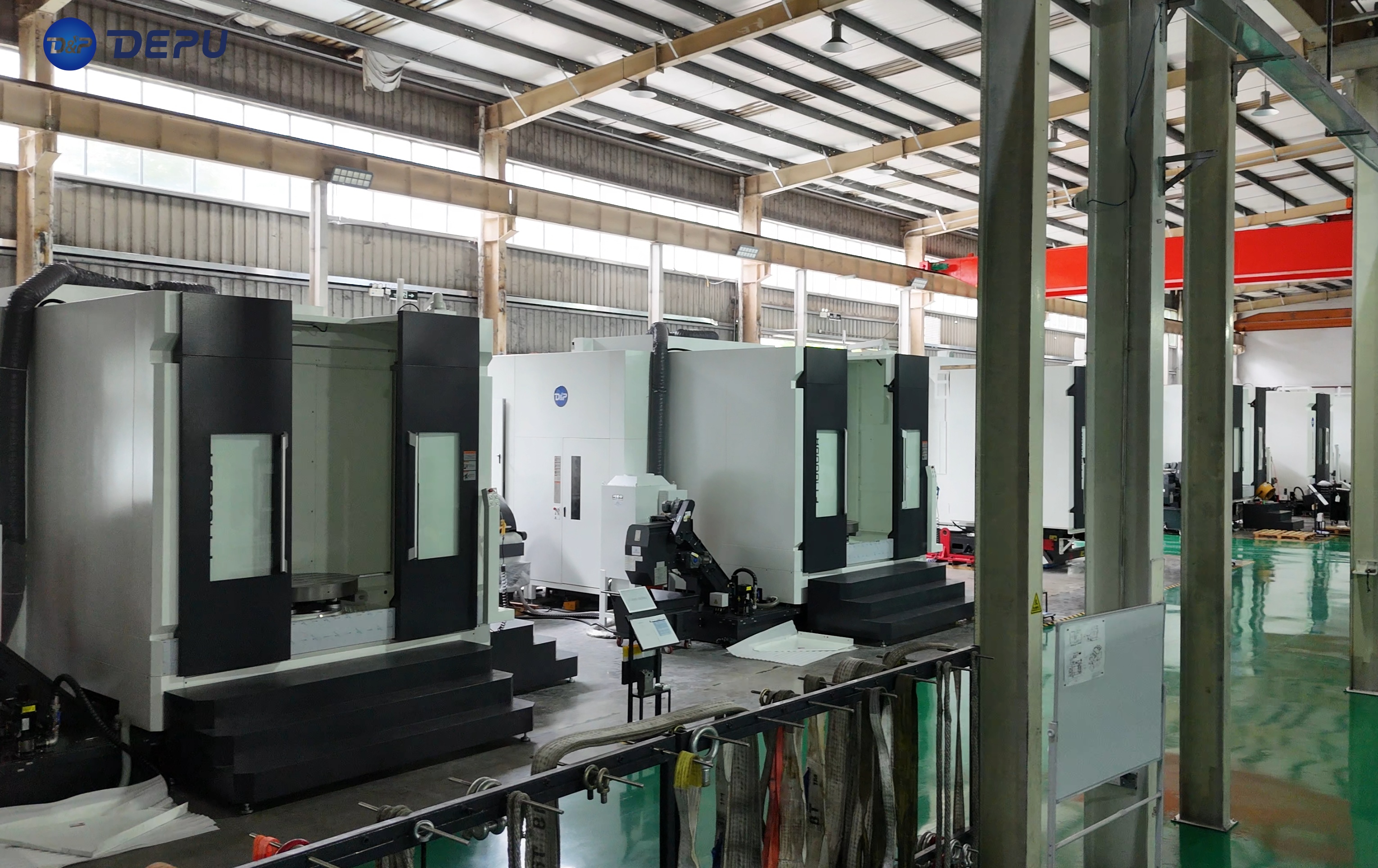

Improved Tool Accessibility Across Complex Geometries
Reaching Difficult Features More Effectively
One of the most important advantages of a 5-axis cnc machine is its ability to approach a workpiece from multiple directions.
In conventional 3-axis machining, the cutting tool is generally restricted to a fixed orientation while the linear axes move the tool through the part. When a feature is located on an angled surface, inside a deep cavity, or behind another geometric feature, the available tool orientation can become a major limitation.
A 5-axis machining system can rotate the workpiece or cutting head to position the tool at a more favorable angle.
This improved accessibility means that features that previously required special fixtures, extended tools, or additional setups can often be reached using a shorter and more rigid cutting tool.
The result is not simply fewer setups. Better tool accessibility can directly improve machining stability and reduce the mechanical disadvantages associated with long tool extensions.
Shorter Tools Can Improve Cutting Stability
Tool length is an important factor in precision machining.
As tool overhang increases, cutting tools become more susceptible to deflection and vibration. This can lead to poor surface finishes, dimensional variation, and reduced tool life.
Because a 5-axis cnc machine can change the tool orientation, programmers can often select a tool approach that allows a shorter cutting tool to reach the target surface.
This can make a significant difference when machining deep cavities or complex curved surfaces.
A shorter tool generally provides greater rigidity, allowing the machine to maintain more stable cutting conditions. In demanding applications, this can be more valuable than the simple reduction in setup count.
Better Surface Quality Through Controlled Tool Orientation
Maintaining a More Favorable Cutting Condition
Surface quality is another less obvious area where 5-axis machining can provide substantial advantages.
When machining complex surfaces with a 3-axis machine, the tool may need to remain perpendicular to the workpiece surface. Depending on the geometry, this can force the use of a ball-nose cutter with a relatively small effective cutting diameter.
A 5-axis cnc system allows the tool axis to tilt relative to the surface.
By controlling this tool orientation, programmers can position the cutting tool so that a more favorable portion of the tool engages the workpiece. This can increase the effective cutting diameter and improve the consistency of the cutting action.
For finishing operations, maintaining a controlled tool orientation can reduce scallop height and improve surface consistency.
Fewer Finishing Operations
Better tool orientation can also reduce the amount of manual finishing required after machining.
Complex molds, aerospace structures, medical components, and freeform surfaces often require high-quality surface finishes that are difficult to achieve with purely 3-axis strategies.
A 5-axis machining approach can produce smoother transitions and more consistent surface characteristics directly from the machine.
Reducing manual polishing or secondary finishing operations saves labor while also making the final surface quality less dependent on individual operator skill.
This is an important advantage of precision machining in production environments where repeatability matters as much as the appearance of an individual part.
Reduced Dimensional Errors Between Features
Maintaining Multiple Features From a Common Setup
Every time a workpiece is removed from a fixture and repositioned, there is a possibility of introducing a new positioning error.
Even when experienced operators use precision fixtures and measurement equipment, accumulated setup variation can affect the relationship between features.
A 5-axis cnc machine can reduce this risk by allowing multiple faces and features to be machined from the same primary datum.
This is particularly valuable for components where the relationship between holes, pockets, angled surfaces, and external profiles is critical.
Instead of relying on the accuracy of several independent setups, manufacturers can rely more heavily on the machine's coordinate system and rotary-axis positioning.
Improved Feature-to-Feature Accuracy
The benefit becomes particularly noticeable when machining components with multiple intersecting features.
For example, a part may contain holes on several angled faces that must maintain a precise positional relationship with one another. Machining these features in separate setups introduces additional opportunities for alignment errors.
With a 5-axis cnc machine, the rotary axes can position each surface while maintaining the original work coordinate reference.
This can improve the consistency of feature-to-feature relationships and reduce the need for manual alignment between operations.
More Efficient Cutting of Complex Surfaces
Continuous Tool Orientation
True simultaneous 5-axis machining allows the cutting tool orientation to change continuously while the tool moves along the programmed path.
This capability is especially useful for complex freeform surfaces.
Instead of machining a surface through a series of fixed orientations, the 5-axis cnc machine can continuously adjust the tool angle to follow the geometry.
This produces a smoother toolpath and can reduce abrupt changes in cutting direction.
For aerospace blades, impellers, turbine components, molds, and other complex parts, this capability can significantly improve the efficiency of surface machining.
Better Control of Tool Engagement
Tool engagement is another important consideration.
Sudden changes in engagement can increase cutting forces and create unstable machining conditions. With appropriate 5-axis toolpath strategies, the cutting tool can maintain a more consistent relationship with the workpiece.
This can help reduce sudden increases in cutting load and provide more predictable machining behavior.
For precision machining applications, predictable tool engagement is particularly valuable because it supports consistent dimensional results and surface quality across production runs.
Improved Tool Life and Cutting Efficiency
More Favorable Tool Angles
A major benefit of 5-axis machining is the ability to select a tool orientation that improves the cutting condition.
Instead of forcing the tool to approach every surface from the same direction, the programmer can tilt the tool to maintain a more effective engagement angle.
This can reduce inefficient cutting conditions and help distribute wear more evenly across the cutting edge.
The result can be longer tool life and more predictable tool replacement intervals.
Higher Productivity Without Simply Increasing Spindle Speed
Improving productivity does not always mean increasing spindle speed or feed rate.
A 5-axis cnc machine can improve productivity by allowing manufacturers to use more efficient toolpaths and cutting strategies.
Better tool access, shorter tools, fewer retracts, smoother tool motion, and improved engagement can all reduce machining time without requiring aggressive increases in cutting parameters.
This is particularly important when machining difficult materials where excessive cutting parameters can quickly lead to tool failure.
Greater Flexibility for Part Design and Manufacturing
Machining Geometries That Are Difficult With 3-Axis Equipment
The design freedom enabled by 5-axis machining is another benefit that is often overlooked.
Design engineers do not necessarily need to restrict part geometry to surfaces that are easily accessible from a single spindle orientation.
Angled walls, deep cavities, compound surfaces, undercuts, and complex transitions can become more practical to manufacture when a 5-axis cnc machine is available.
This can allow engineers to optimize the component for performance rather than designing primarily around machining limitations.
Supporting Design Changes More Efficiently
Production environments frequently deal with engineering changes.
A design modification that requires a new fixture or additional setup on a conventional machine can sometimes be accommodated more easily with 5-axis machining.
Because the machine can access the workpiece from multiple orientations, manufacturers may be able to modify toolpaths without completely redesigning the physical setup.
This flexibility can reduce the time required to move revised components from engineering into production.
Reduced Fixture Complexity
Simplifying Workholding Requirements
Although 5-axis machining often requires sophisticated fixturing strategies, it can also reduce the overall complexity of workholding.
When more surfaces can be accessed from a single setup, fixtures do not necessarily need to expose every feature individually.
A compact fixture can hold the part securely while leaving the cutting tool sufficient access to the majority of the workpiece.
This can reduce fixture manufacturing time and make fixture changes easier when production requirements evolve.
Better Access to the Workpiece
The value of a fixture is not simply how strongly it holds the workpiece.
It must also provide adequate access for the cutting tool.
A well-planned 5-axis setup can position the workpiece so that the cutting tool approaches difficult areas without requiring clamps to be relocated repeatedly.
This is especially valuable for complex parts with multiple machined faces.
Improved Production Consistency
Reducing Operator-Dependent Variables
Every manual setup introduces variables.
Operators may interpret drawing references differently, establish datums slightly differently, or position fixtures with small variations.
A 5-axis cnc machine can reduce the number of manual interventions required between machining operations.
Once the initial setup has been validated, multiple features can be produced using the same coordinate reference and programmed rotary movements.
This creates a more repeatable manufacturing process.
Supporting Repeat Production
For repeat production, process consistency becomes increasingly important.
A validated 5-axis machining program can be stored, documented, and reused for future production runs.
When combined with standardized tooling, workholding, inspection procedures, and machine maintenance, this creates a repeatable precision machining process that is less dependent on individual operator experience.
More Efficient Inspection and Process Control
Fewer Setup References to Verify
Reducing the number of setups also simplifies inspection.
When multiple features are machined from the same primary datum, inspectors have fewer independent setup references to evaluate.
This can simplify dimensional verification and reduce the time required to troubleshoot feature-to-feature deviations.
Better Process Traceability
Modern 5-axis cnc machines can also be integrated with digital manufacturing systems, tool monitoring, and production data collection.
When machining parameters, tool information, program revisions, and inspection results are documented systematically, manufacturers can create a stronger process history for each part.
This is particularly valuable in industries where traceability and repeatability are critical requirements.
When These Benefits Matter Most
Not every part requires 5-axis machining.
For simple prismatic components that can be completely machined from one or two fixed orientations, a conventional 3-axis or 4-axis machine may remain the most economical solution.
The less obvious benefits of 5-axis machining become more valuable when several conditions exist simultaneously.
These include:
- Complex or curved geometries
- Multiple angled machining surfaces
- Tight feature-to-feature tolerances
- Deep cavities requiring long tools
- High surface-finish requirements
- Expensive or difficult-to-machine materials
- Large numbers of secondary setups
- High-value components where scrap is costly
- Frequent engineering changes
- Requirements for consistent repeat production
In these situations, the value of a 5-axis cnc machine should not be measured only by the number of setups eliminated.
The more important question is how the machine changes the entire manufacturing process.
Evaluating the Real Value of 5-Axis Machining
A complete evaluation of 5-axis machining should consider more than machine purchase price or cycle time.
Manufacturers should examine the combined impact of setup reduction, tool accessibility, cutting stability, surface quality, dimensional consistency, tooling consumption, fixture complexity, inspection requirements, and operator involvement.
A machine that reduces cycle time but creates difficult programming or maintenance requirements may not deliver the expected return.
Conversely, a 5-axis cnc machine that improves several stages of the manufacturing process simultaneously can create value that is difficult to capture through a single cycle-time comparison.
The most effective approach is to evaluate a representative production part and compare the complete process from raw material to inspected finished component.
This should include:
- Number of setups
- Fixture requirements
- Programming time
- Tool requirements
- Machining cycle time
- Tool consumption
- Manual finishing requirements
- Inspection time
- Scrap and rework risk
- Operator involvement
This broader evaluation provides a much more realistic picture of the value created by 5-axis machining.
Conclusion
Fewer setups remain one of the most visible advantages of 5-axis machining, but they are far from the only reason manufacturers adopt the technology.
Improved tool accessibility, shorter and more rigid tools, better surface quality, reduced dimensional errors, more consistent tool engagement, longer tool life, simplified fixtures, and greater manufacturing flexibility can all contribute to better production performance.
For manufacturers working with complex components, these less obvious benefits can have a significant impact on the economics and reliability of precision machining.
The real advantage of a 5-axis cnc machine is therefore not simply that it can move in five axes. It is that those additional degrees of freedom allow manufacturers to rethink how a part is fixtured, approached, cut, inspected, and produced.
When evaluated as a complete manufacturing process rather than simply as a machine tool, 5-axis machining can provide a level of flexibility and process efficiency that conventional machining configurations may struggle to match.
FAQ
What are the main benefits of 5-axis machining besides reducing setups?
Beyond fewer setups, 5-axis machining can improve tool accessibility, surface quality, dimensional consistency, cutting stability, tool life, fixture flexibility, and overall production efficiency. These benefits are particularly valuable when machining complex geometries and high-value components.
Can 5-axis machining improve surface finish?
Yes. A 5-axis cnc machine can continuously adjust tool orientation to maintain a more favorable cutting condition on complex surfaces. This can improve tool engagement, reduce scallop height, and produce more consistent surface finishes, especially during freeform surface finishing.
Does 5-axis machining reduce tool wear?
5-axis machining can help reduce and better control tool wear by allowing the programmer to optimize tool orientation and cutting engagement. The ability to use shorter tools in difficult-to-access areas can also improve rigidity and reduce vibration, which can contribute to longer tool life.
Can 5-axis machining improve dimensional accuracy?
Yes. By machining multiple features from a common datum and reducing the number of times a workpiece must be removed and repositioned, 5-axis machining can reduce setup-related errors and improve feature-to-feature consistency.
Is 5-axis machining suitable for every part?
No. Simple parts that can be efficiently machined from one or two fixed orientations may not justify the additional cost and programming complexity of a 5-axis cnc machine. The technology provides the greatest value when parts contain complex surfaces, multiple angled features, tight tolerances, or difficult-to-access geometries.
How does 5-axis machining affect fixture design?
5-axis machining can simplify fixture requirements because more of the workpiece can be accessed from a single setup. A properly designed fixture can provide secure workholding while leaving multiple surfaces accessible to the cutting tool, reducing the need for repeated fixture changes.
Is 5-axis machining more efficient for difficult materials?
It can be. Materials such as titanium, hardened steels, and certain high-performance alloys can benefit from controlled tool orientation, stable cutting engagement, and shorter tool extensions. However, the actual productivity improvement depends on the machine, tooling, workholding, CAM strategy, and cutting parameters.
How should manufacturers evaluate the ROI of a 5-axis cnc machine?
Manufacturers should evaluate the complete production process rather than comparing machine prices alone. Setup time, fixture costs, programming, machining cycle time, tooling consumption, inspection time, scrap risk, manual finishing, and labor requirements should all be included when calculating the potential return on investment.