
How Workpiece Size and Weight Influence 5-Axis Machine Selection
Selecting a 5-axis CNC machine requires more than comparing spindle speed, positioning accuracy, or the number of available axes. The physical size and weight of the workpieces your shop needs to manufacture are equally important factors in determining whether a machine can deliver reliable precision machining performance.
A machine that is too small may not provide enough travel, table capacity, or clearance for the intended part. A machine that is significantly oversized, meanwhile, can increase capital investment, floor-space requirements, energy consumption, and tooling costs without providing meaningful benefits for typical production work.
For engineers, production managers, and procurement teams, understanding the relationship between workpiece dimensions, weight, machine structure, rotary-axis capacity, and machining envelope is therefore essential when selecting a 5-axis CNC machine.
The right machine should provide enough capacity for today's work while leaving reasonable room for future applications.
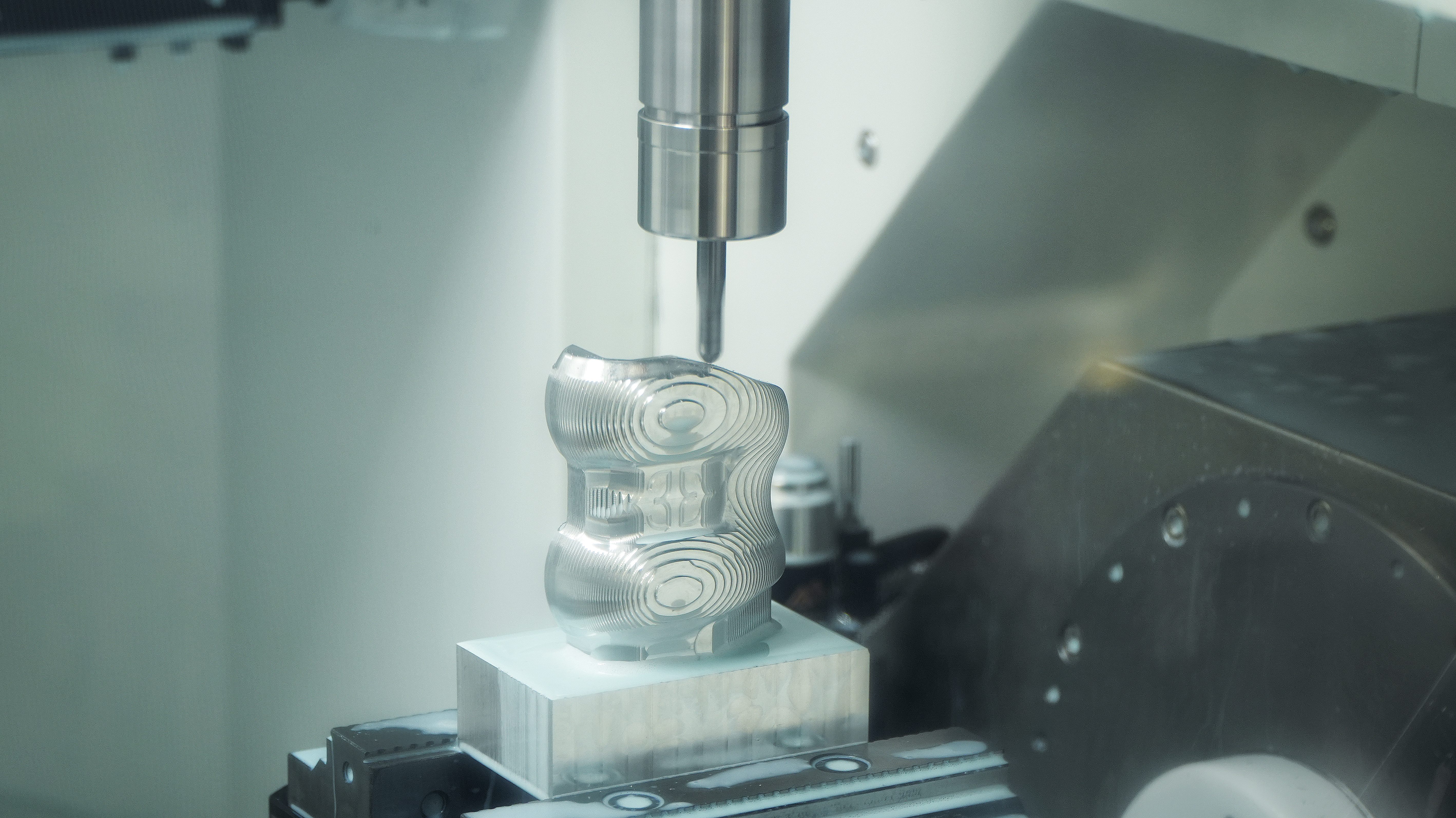
Why Workpiece Size Matters in 5-Axis CNC Machine Selection
Understanding the Complete Machining Envelope
Workpiece dimensions are directly related to the usable machining envelope of a 5-axis CNC machine.
The published X, Y, and Z axis travels provide an initial indication of the machine's linear movement range. However, these numbers alone do not tell you whether a specific part will actually fit and remain accessible during 5-axis machining.
The complete machining envelope also depends on:
- Worktable dimensions
- Rotary-axis diameter
- Rotary-axis travel
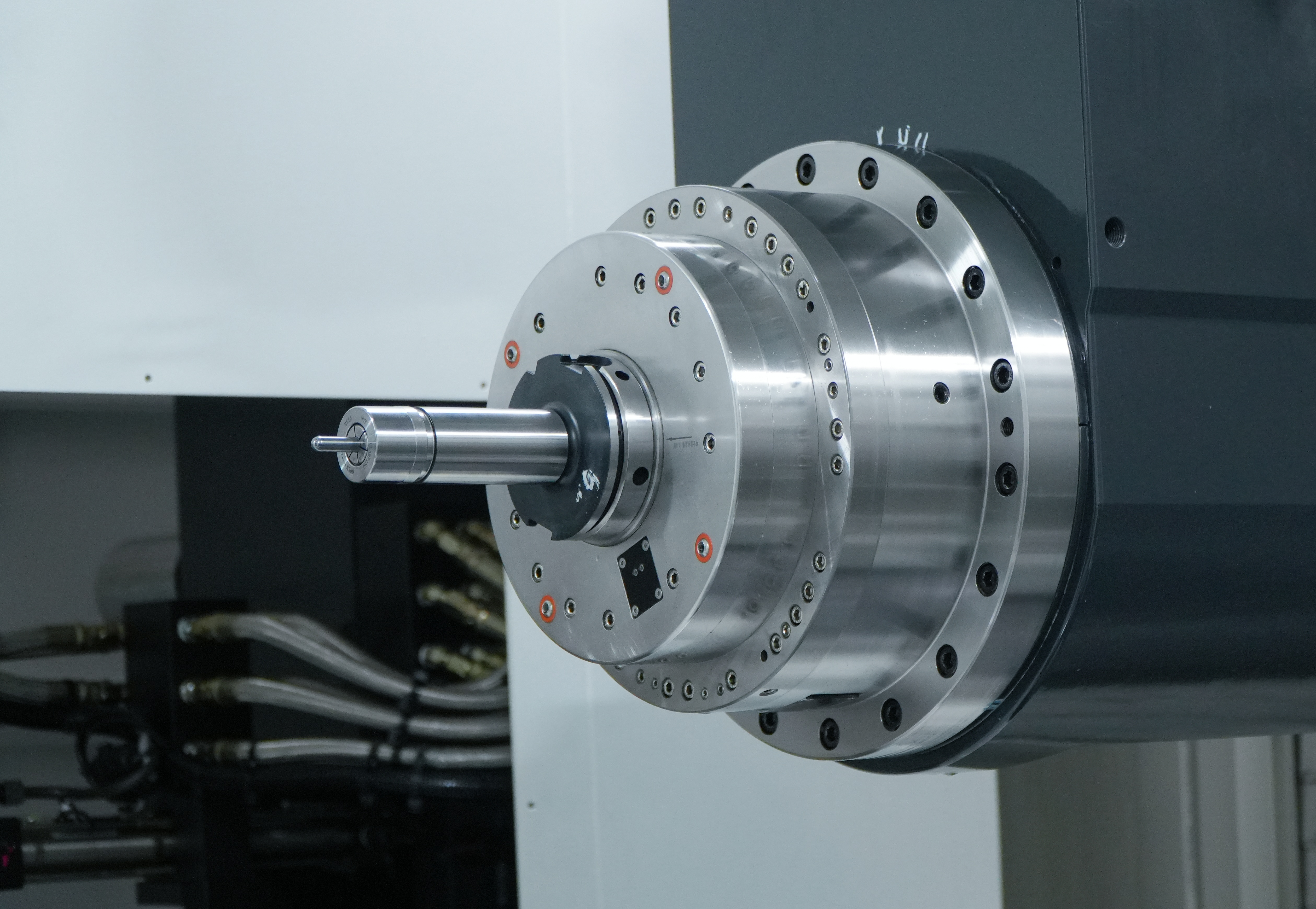
- Spindle nose position
- Tool length
- Fixture height
- Workholding hardware
- Collision clearance
- Part geometry
A workpiece may physically fit on the table but still be impossible to machine effectively because the spindle cannot reach certain surfaces after the rotary axes move into position.
This is why machine selection should always be based on the actual part geometry and required tool access rather than simply comparing nominal axis travel specifications.
Leave Enough Clearance for 5-Axis Movement
Five-axis machining introduces movement that does not exist in conventional three-axis machining.
As the workpiece or spindle rotates, the effective machining envelope changes continuously. A part that fits comfortably in a fixed orientation may come dangerously close to the spindle housing, tool holder, fixture, or machine enclosure after the rotary axis changes position.
For this reason, engineers should evaluate the maximum swept volume of the workpiece rather than only its static dimensions.
Adequate clearance should be maintained around the part to accommodate rotary movement, tool orientation changes, and safe repositioning.
A machine with slightly greater capacity than the largest expected workpiece can therefore provide significantly more practical flexibility than a machine selected purely according to minimum dimensional requirements.
How Workpiece Weight Affects Machine Selection
Worktable Load Capacity
Workpiece weight is one of the most important specifications to evaluate when purchasing a 5-axis CNC machine.
The machine's stated table load capacity must account for more than the part itself. The total load may include:
- Workpiece
- Fixture
- Rotary fixture
- Vise
- Tombstone
- Clamps
- Pallets
- Additional workholding equipment
For example, a 1,000 kg workpiece does not necessarily mean that a machine with a 1,000 kg table capacity is appropriate.
The combined weight of the workpiece and workholding system must remain within the manufacturer's recommended load rating, while also considering how the load is distributed across the table or rotary axis.
Weight Distribution Is as Important as Total Weight
Two workpieces with identical weight can impose very different mechanical loads on a 5-axis CNC machine.
A compact, dense component may place most of its weight close to the center of rotation. A long structural component with the same mass may create a much greater moment because its center of gravity is farther away from the rotary axis.
This is particularly important for trunnion-style machines.
The rotary table must be capable of accelerating, decelerating, and positioning the loaded workpiece without excessive vibration or loss of positioning accuracy.
Therefore, buyers should evaluate not only maximum load capacity but also allowable moment load and center-of-gravity limitations when available.
Workpiece Size and Rotary Axis Capacity
Rotary Table Diameter
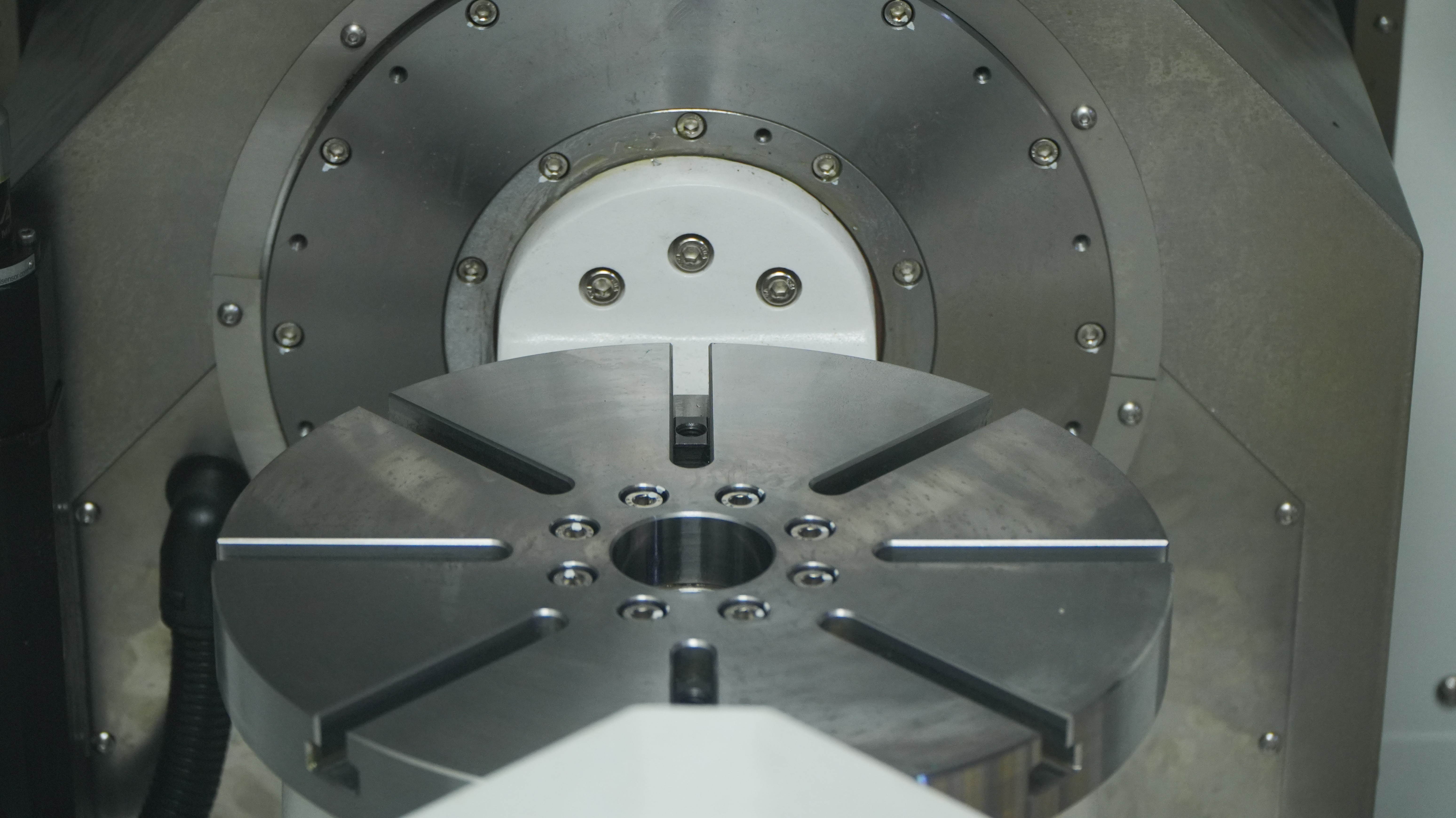
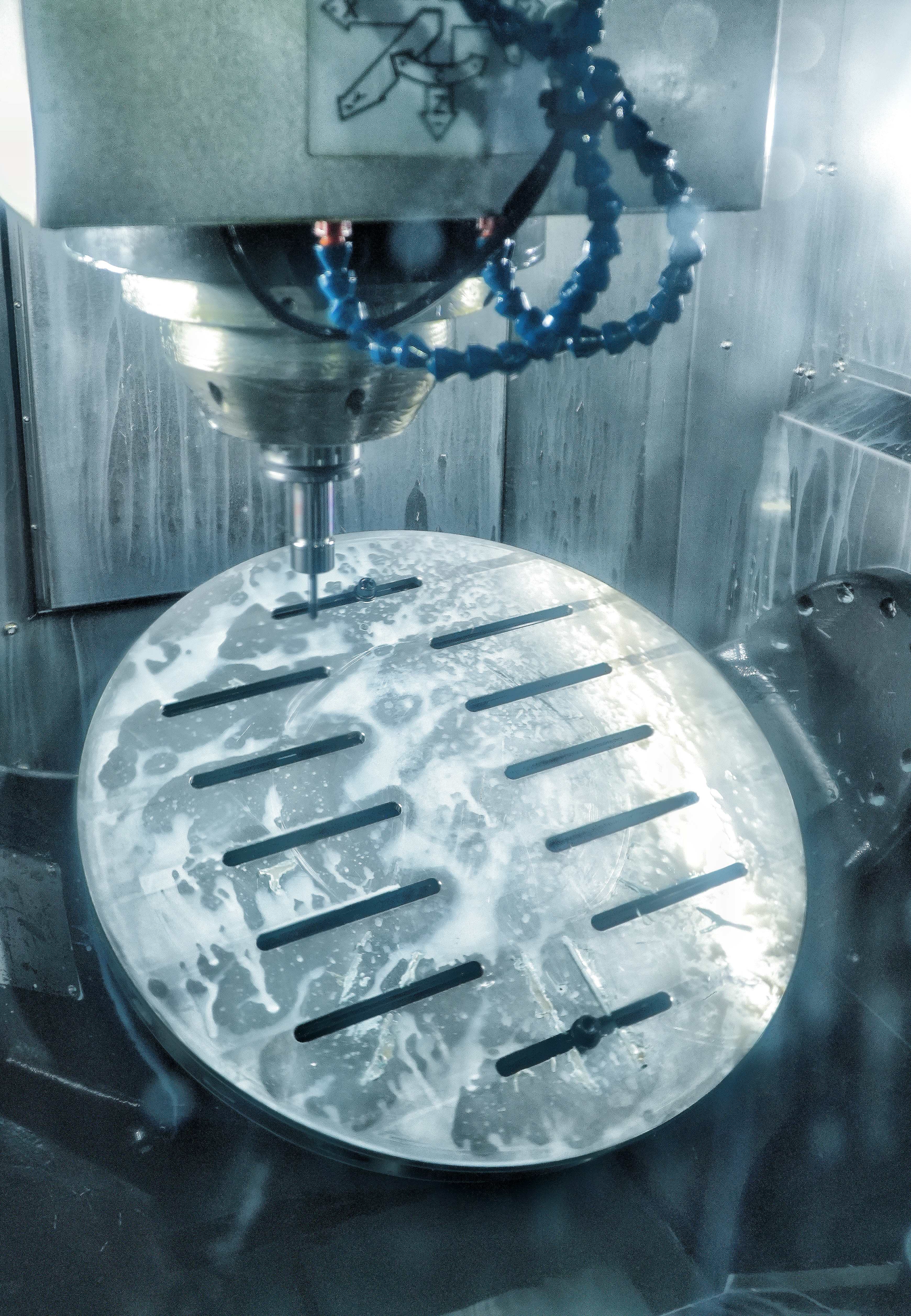
For a trunnion-style 5-axis CNC machine, rotary table diameter is a critical selection factor.
The table must be large enough to support the workpiece and fixture while providing sufficient clearance for rotary movement.
However, a larger table does not automatically mean that every large workpiece can be machined.
The actual usable diameter depends on the machine's enclosure, spindle position, axis travel, and the geometry of the component.
A large workpiece may extend beyond the table but still be machinable if the machine architecture and workholding system support it. Conversely, a relatively compact part may require a larger rotary table because of its fixture configuration or required tool angles.
Rotary Axis Load and Torque
When machining heavy components, rotary-axis torque becomes increasingly important.
The rotary axis must not only support the static weight of the workpiece but also handle the dynamic forces generated during machining.
Aggressive cutting operations can introduce substantial moments into the rotary system. If the rotary axis is undersized for the application, the machine may experience vibration, positioning instability, or reduced surface quality.
For heavy duty precision machining, the rotary axis should therefore be evaluated based on:
- Maximum workpiece weight
- Maximum allowable moment
- Rotary-axis torque
- Acceleration capability
- Positioning accuracy
- Repeatability
- Support structure
These specifications are particularly important for aerospace structures, energy components, molds, and other large precision parts.
Workpiece Size and Machine Rigidity
Larger Parts Require Greater Structural Stability
As workpiece size increases, the machine structure becomes increasingly important.
Large components often require deeper cuts, longer toolpaths, and higher cutting forces. The machine must maintain stability throughout these operations without excessive deflection.
A rigid 5-axis CNC machine typically uses a robust bed, column, spindle structure, and rotary-axis support system to maintain cutting stability under load.
For heavy duty machining, structural rigidity affects:
- Dimensional accuracy
- Surface finish
- Tool life
- Vibration
- Material removal rate
- Long-term machine stability
A machine may have impressive positioning accuracy specifications but still fail to deliver the required production results if its structure lacks sufficient rigidity for the intended workpiece and cutting conditions.
Tool Length Becomes More Important on Large Workpieces
Large workpieces often contain deep cavities or features located far from the accessible machine surfaces.
This can force the use of longer cutting tools.
Long tools are more susceptible to deflection and vibration, which can reduce precision machining performance.
A properly selected 5-axis CNC machine can often reduce this problem by changing the tool orientation and approaching the feature from a more favorable direction.
However, the machine must have sufficient rotary-axis range and clearance to take advantage of this capability.
Machine size and rotary-axis capacity therefore have a direct influence on practical tool length requirements.
Workholding Requirements for Large and Heavy Parts
Fixture Size Must Be Included in the Calculation
When selecting a 5-axis CNC machine, workholding should be considered at the beginning rather than after the machine has already been selected.
A large component may require a substantial fixture, tombstone, pallet, or custom clamping system.
These elements consume part of the machine's usable space and add to the total load.
A machine that appears suitable based on workpiece dimensions alone may become inadequate once the fixture height and weight are included.
The selection process should therefore calculate the complete setup envelope:
Workpiece + Fixture + Tooling + Required Clearance
This provides a much more realistic assessment of machine capacity.
Single-Setup Machining and Large Components
One of the major advantages of 5-axis machining is the ability to machine multiple surfaces without removing the workpiece from its original fixture.
This can be especially valuable for large components.
Every time a large workpiece is removed and reinstalled, the operator must realign the part and re-establish its datum. The larger and heavier the component, the more difficult this process becomes.
A 5-axis CNC machine with sufficient rotary capacity can reduce these repositioning operations.
The result can be:
- Fewer setups
- Lower alignment error
- Reduced handling time
- Better feature-to-feature accuracy
- Shorter overall production time
For large precision components, these benefits can justify investing in a machine with greater five-axis capability rather than relying on multiple conventional setups.
Matching Machine Size to Different Applications
Small and Medium Precision Components
For smaller workpieces, a compact 5-axis CNC machine can provide significant advantages.
Smaller machines often offer:
- Faster acceleration
- Higher spindle speeds
- Smaller footprint
- Lower energy consumption
- Lower initial investment
- Easier operator access
Applications may include medical components, precision mechanical parts, small molds, semiconductor components, and prototype work.
However, even for small parts, the machine should provide enough rotary clearance for the required tool orientations.
Large Aerospace and Energy Components
Large aerospace and energy components typically require a different machine architecture.
These parts may involve:
- Large structural dimensions
- High workpiece weight
- Complex curved surfaces
- Deep cavities
- Heavy material removal
- Multiple machining faces
- Tight positional tolerances
A larger 5-axis CNC machine with a high-capacity rotary system and rigid structure is usually more appropriate.
The goal is not simply to fit the component onto the table. The machine must maintain accuracy and cutting stability while the part is being rotated, machined, and repositioned.
How Workpiece Size Influences Machine Architecture
Trunnion-Style 5-Axis Machines
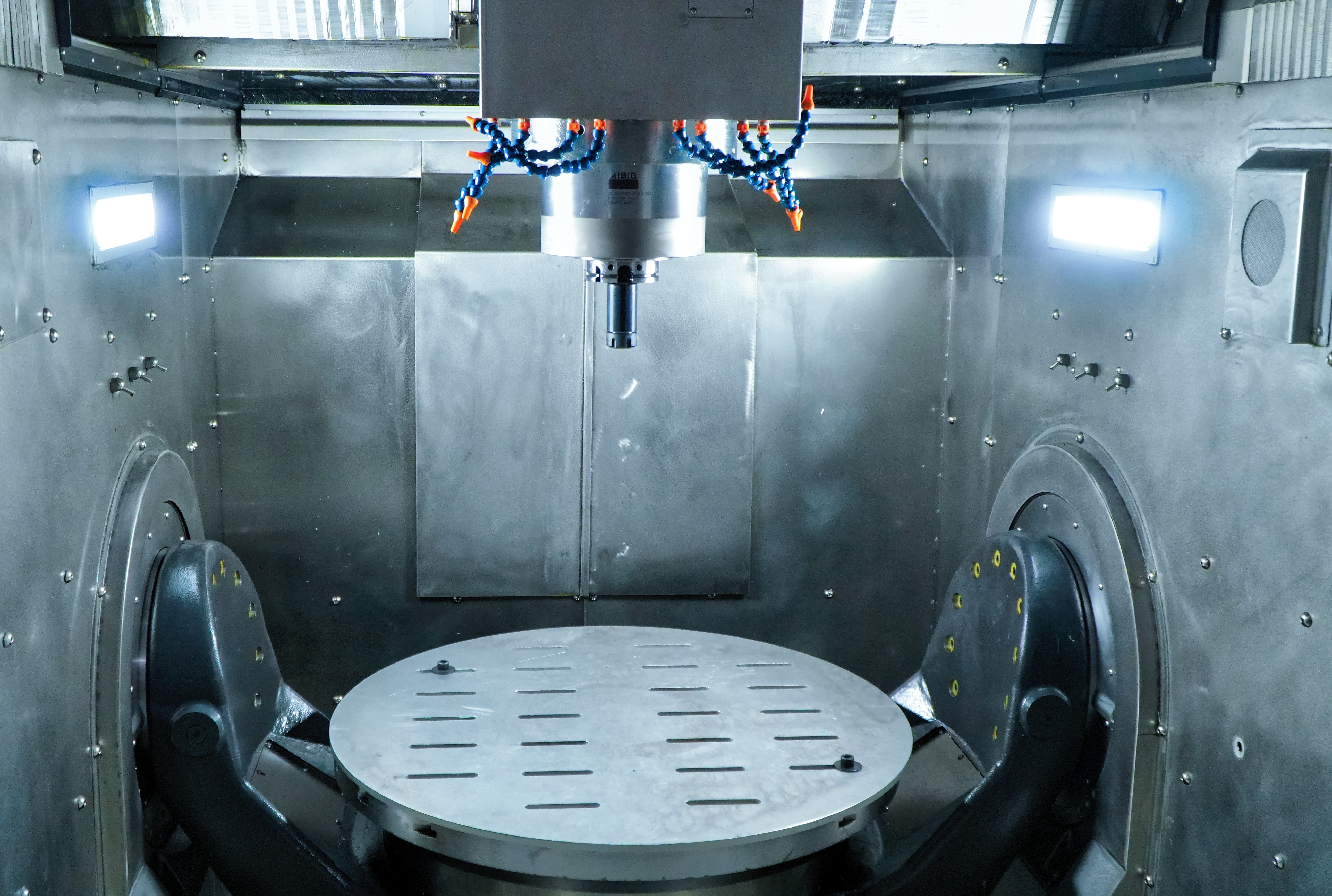
Trunnion-style machines rotate the workpiece around a rotary table.
They are well suited to small and medium-sized components that can be securely mounted on a rotary table.
The workpiece remains relatively close to the machine's central working area, which can provide excellent rigidity and five-axis accessibility.
However, the usable part size is constrained by the rotary table diameter, table load capacity, and available rotary clearance.
Tilting-Head 5-Axis Machines
Tilting-head configurations rotate the spindle rather than relying entirely on workpiece rotation.
This architecture can provide advantages when machining larger or heavier components because the workpiece itself does not need to rotate through large angular movements.
For large-format applications, the tilting-head configuration can therefore provide greater flexibility in workpiece dimensions and weight.
The appropriate architecture depends on the relationship between part size, part weight, required tool orientation, and machining envelope.
Workpiece Weight and Machine Accuracy
Static Load vs. Dynamic Load
A machine's ability to support a heavy workpiece is not only a question of whether the table can physically hold the weight.
During 5-axis machining, the workpiece may accelerate, decelerate, and rotate.
These dynamic movements create additional forces that can affect the machine structure and rotary axis.
A heavy component therefore places greater demands on:
- Rotary-axis bearings
- Drive systems
- Table structure
- Clamping system
- Machine foundation
- Control response
For high-precision applications, these factors should be evaluated together rather than relying solely on the published maximum table load.
Maintaining Accuracy Under Heavy Cutting
Large and heavy components are often associated with demanding material removal operations.
A machine designed for heavy duty machining should maintain structural rigidity even when high cutting forces are generated.
This is where machine construction becomes especially important.
A rigid 5-axis CNC machine can maintain better tool positioning under cutting load, reducing the risk of dimensional variation and surface defects.
For shops producing large precision components, this stability can be more important than achieving the highest possible spindle speed.
How to Select the Right 5-Axis CNC Machine
When selecting a machine, begin with the largest and heaviest parts your shop expects to manufacture regularly.
Create a complete list of the required specifications:
1. Maximum Workpiece Dimensions
Measure the actual length, width, and height of the largest component.
Do not forget features that extend beyond the primary part body.
2. Maximum Workpiece Weight
Calculate the maximum component weight and add the fixture, clamps, pallet, and other workholding equipment.
3. Required Machining Envelope
Determine the actual tool access requirements for all critical surfaces.
Consider the rotary-axis positions required during machining.
4. Rotary Table or Head Capacity
Check table diameter, load rating, allowable moment, rotary-axis torque, and angular travel.
5. Axis Travel
Verify X, Y, and Z travel after considering fixture height and tool length.
6. Machine Rigidity
Evaluate the machine structure, rotary-axis support, spindle construction, and expected cutting forces.
7. Tool Accessibility
Confirm that the machine can reach deep cavities, angled surfaces, and complex features without excessive tool stick-out.
8. Workholding Compatibility
Ensure the table, pallet, fixture, and clamping system can accommodate the intended components.
9. Future Production Requirements
Do not size the machine only for today's smallest parts.
Consider whether larger or heavier components may enter your production mix over the next several years.
A Practical Capacity Check Before Purchase
Before purchasing a 5-axis CNC machine, one of the most effective approaches is to test the machine against a representative part.
Provide the machine manufacturer with:
- 3D CAD model
- Part drawing
- Material specification
- Workpiece weight
- Fixture design
- Required tolerances
- Surface finish requirements
- Tool list
- Expected cutting parameters
The supplier can then evaluate whether the proposed machine can physically accommodate the part and whether the required tool orientations are practical.
For complex components, a machine simulation can also identify potential interference between the workpiece, fixture, tool holder, spindle, and machine structure.
This is far more reliable than making a purchasing decision based solely on a specification sheet.
Balancing Machine Capacity and Investment
Choosing the largest available 5-axis CNC machine is not always the best strategy.
An oversized machine can increase:
- Purchase cost
- Installation cost
- Foundation requirements
- Floor-space consumption
- Energy consumption
- Maintenance costs
- Tooling requirements
At the same time, selecting a machine that is too small can limit your ability to accept new work.
The best approach is to identify the actual workpiece range your business expects to handle and select a machine that provides sufficient capacity with a reasonable margin.
A practical margin is particularly valuable for rotary-axis clearance and workholding because these factors can reduce the usable machining envelope more than expected.
Conclusion
Workpiece size and weight are fundamental considerations when selecting a 5-axis CNC machine.
The right machine must provide more than enough table space to physically hold the component. It must have sufficient axis travel, rotary capacity, structural rigidity, workholding capability, and clearance to machine the entire part accurately and efficiently.
For smaller components, compact trunnion-style machines can provide excellent precision machining performance and efficient use of floor space. For larger and heavier components, high-capacity rotary tables or tilting-head architectures may provide the required combination of accessibility, rigidity, and load capacity.
The most important principle is to evaluate the complete machining setup rather than looking at workpiece dimensions or weight in isolation.
A successful machine selection considers the relationship between the part, fixture, tool, rotary axes, machine structure, and required machining strategy.
When these factors are matched correctly, a 5-axis CNC machine can provide the accessibility, accuracy, and productivity required for reliable complex part manufacturing.
FAQ
How much larger should a 5-axis CNC machine be than the workpiece?
There is no universal percentage because the required capacity depends on the machine architecture, fixture dimensions, rotary-axis movement, tool length, and part geometry. The machine should provide sufficient clearance for rotary movement and tool access rather than simply matching the physical dimensions of the workpiece.
Does workpiece weight affect 5-axis machining accuracy?
Yes. Heavy workpieces create greater loads on the table, rotary axes, bearings, and machine structure. Dynamic loads become particularly important when the part is rotated or accelerated. Selecting a machine with sufficient load and moment capacity helps maintain stable precision machining performance.
Is a trunnion or tilting-head 5-axis machine better for large workpieces?
It depends on the application. Trunnion machines are often well suited to small and medium-sized components, while tilting-head configurations can provide greater flexibility for large or heavy workpieces because the workpiece itself does not need to rotate through large angles.
Should fixture weight be included when calculating machine capacity?
Yes. Machine capacity should be evaluated using the complete machining setup. The combined weight of the workpiece, fixture, pallet, clamps, and other workholding components must remain within the machine's rated capacity.
Why is rotary-axis capacity important for heavy workpieces?
The rotary axis must support not only the static weight of the component but also the dynamic forces generated during acceleration, deceleration, and machining. Rotary-axis load, torque, moment capacity, positioning accuracy, and rigidity all affect the machine's ability to handle heavy components reliably.
Can a larger 5-axis CNC machine improve production flexibility?
Yes, provided the additional capacity is relevant to the shop's expected work. A larger machining envelope and higher load capacity can allow a manufacturer to accept larger components and accommodate more substantial fixtures. However, excessive machine capacity can also increase investment and operating costs.
What information should be provided to a machine manufacturer before selecting a 5-axis CNC machine?
At minimum, provide the manufacturer with the part's 3D CAD model, dimensions, weight, material, fixture concept, required tolerances, surface finish requirements, tooling information, and expected machining strategy. This allows the supplier to evaluate the actual machining envelope, rotary-axis requirements, workholding, and potential collision risks before purchase.