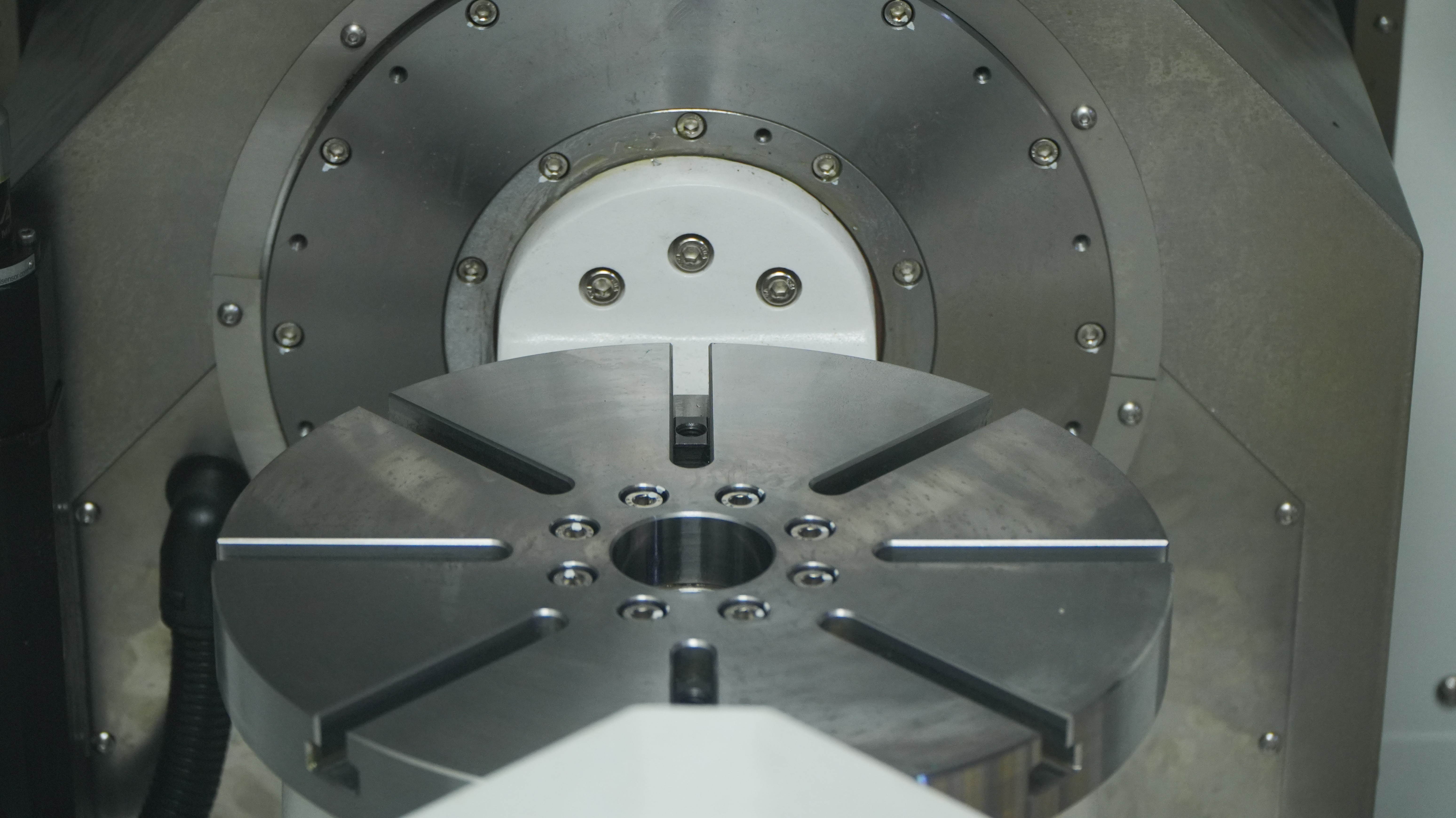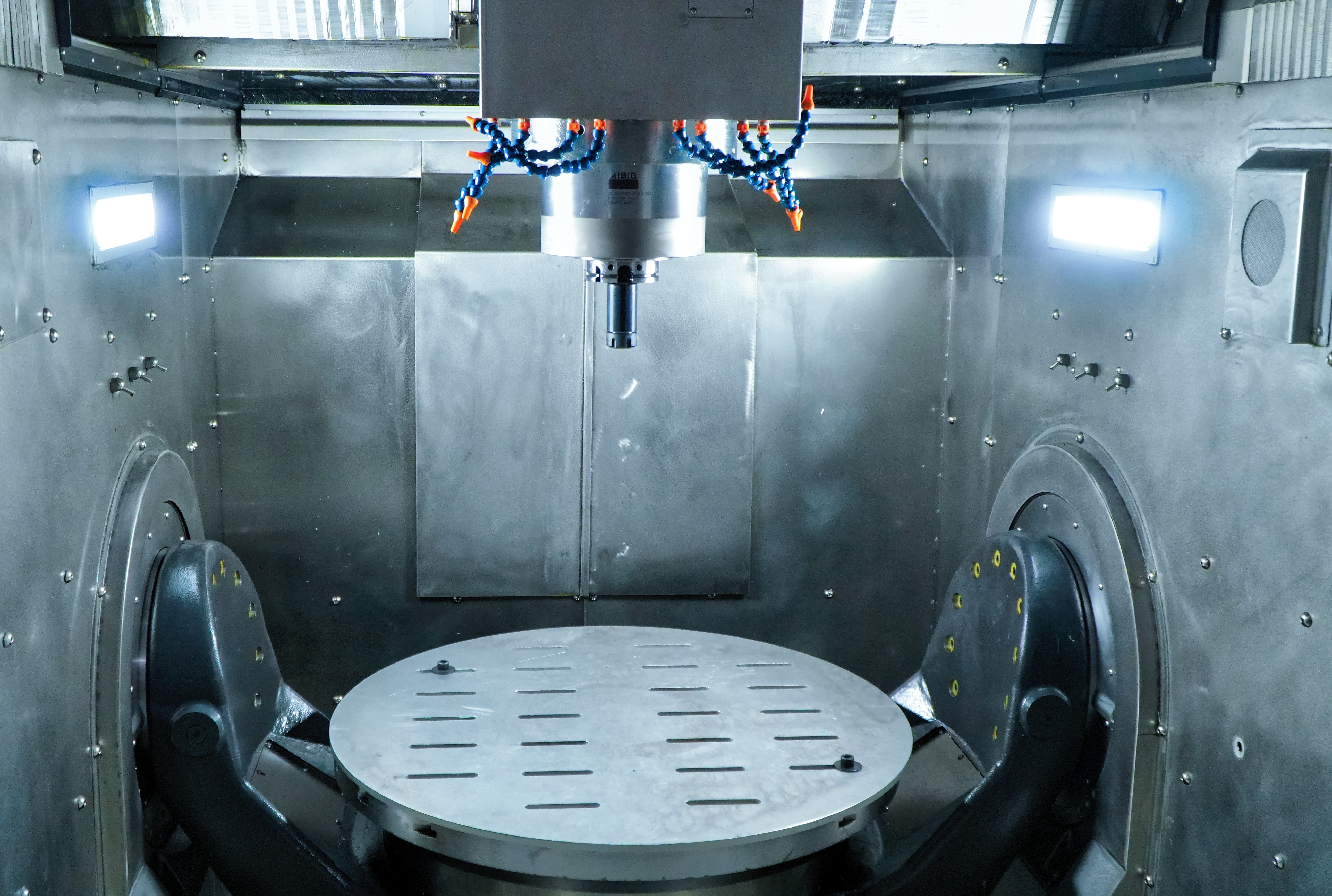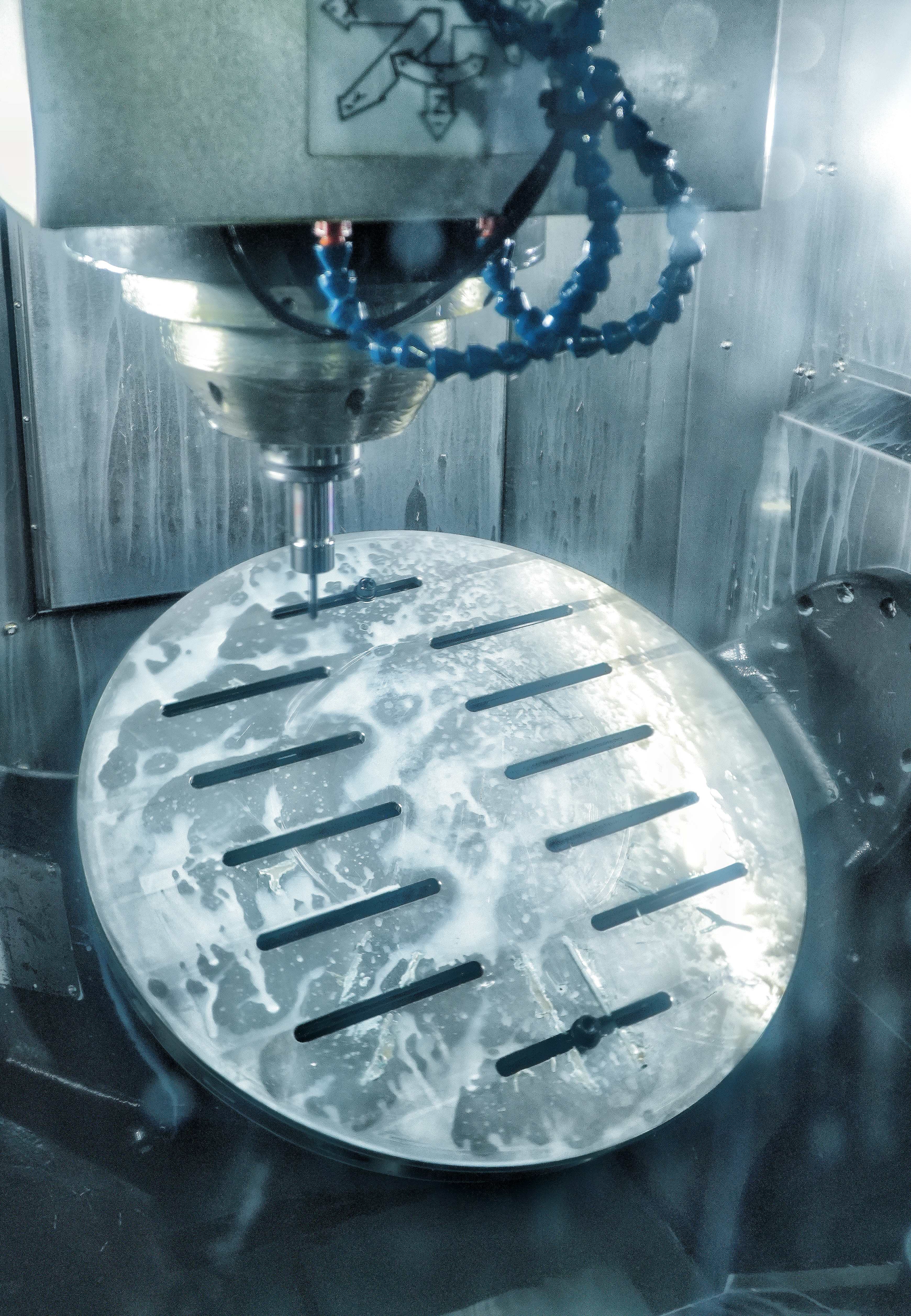

Why Workpiece Accessibility Can Matter More Than Machine Size in 5-Axis Machining
Selecting a 5-axis CNC machine based primarily on machine size can be misleading. A machine with a large work envelope may appear to offer greater capability, but if the spindle cannot reach critical surfaces, the rotary axes cannot achieve the required orientation, or the fixture blocks tool access, the additional capacity provides little practical value.
For complex part manufacturing, workpiece accessibility determines how effectively the cutting tool can reach the surfaces that actually need to be machined. This becomes particularly important in 5-axis machining because the primary advantage of the technology is not simply larger travel ranges — it is the ability to approach a workpiece from multiple directions and orientations.
A properly selected 5-axis CNC machine therefore needs to be evaluated based on the relationship between the workpiece, rotary axes, spindle, tooling, fixture, and machine structure. In many applications, this relationship matters more than the maximum X, Y, and Z travel listed in a machine specification sheet.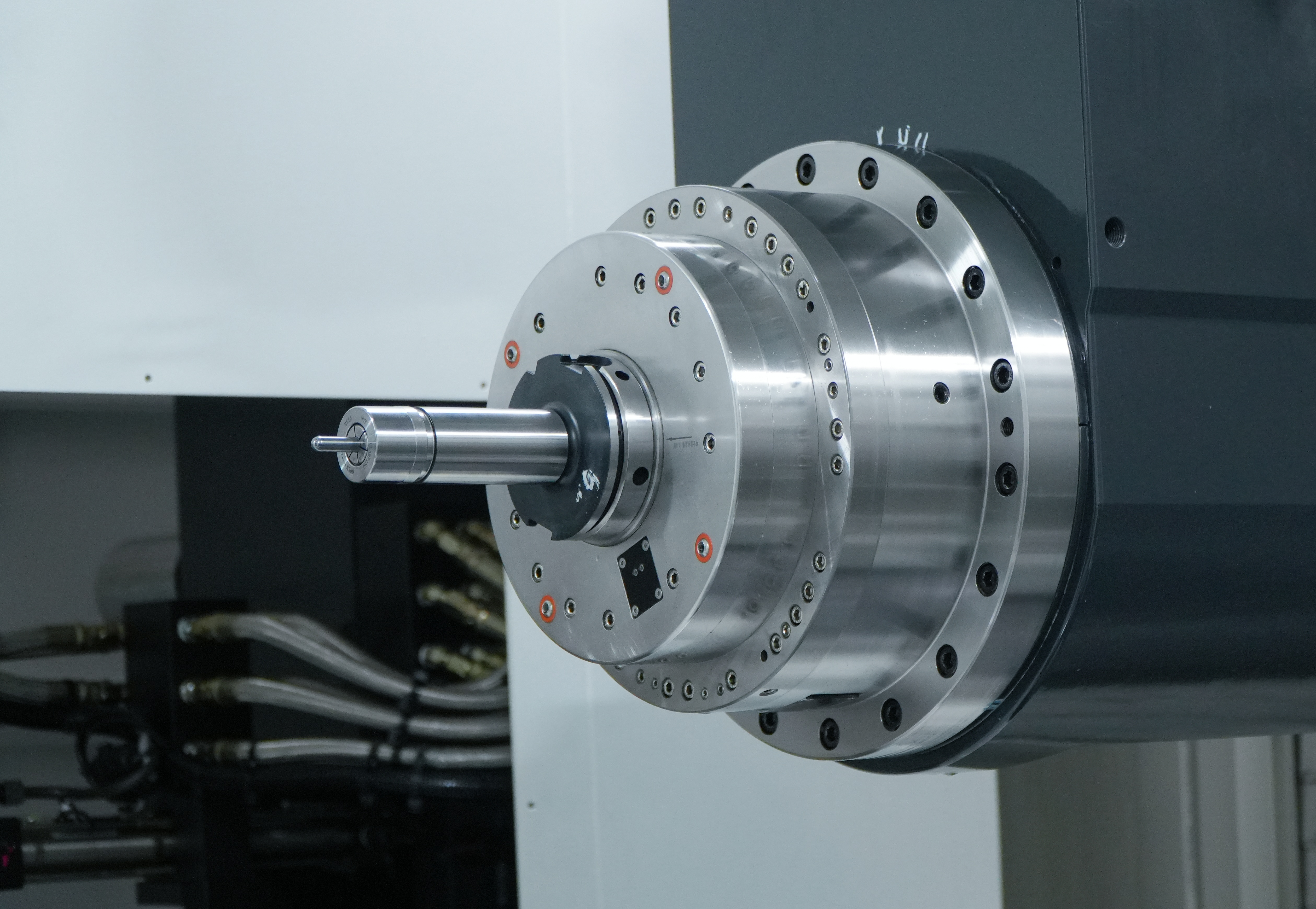
Understanding Workpiece Accessibility in 5-Axis Machining
What Does Workpiece Accessibility Mean?
Workpiece accessibility refers to the machine's ability to position the cutting tool at the required location and orientation without interference.
In a conventional 3-axis setup, accessibility is primarily determined by linear axis travel and the physical shape of the workpiece. In 5-axis machining, accessibility becomes more complex because the machine can change the relative orientation between the tool and workpiece.
The machine must provide enough movement for the tool to reach:
- Deep pockets
- Angled surfaces
- Side walls
- Undercuts
- Complex contours
- Internal features
- Multiple faces
- Difficult-to-reach finishing areas
A machine may have substantial physical size but still struggle to access these features if its rotary-axis range or kinematic configuration is unsuitable.
Machine Size Does Not Equal Machining Access
A larger machine generally provides a larger work envelope, but work envelope and accessibility are not the same thing.
For example, a large 5-axis CNC machine may have sufficient X, Y, and Z travel to physically contain a large component. However, the spindle may not be able to tilt far enough to reach an angled surface without contacting the workpiece or fixture.
Conversely, a more compact machine with an appropriate rotary-axis configuration may be able to reach the same feature efficiently.
This is why machine selection should begin with the geometry and machining requirements of the part rather than simply the overall dimensions of the machine.
Why Rotary-Axis Range Is Critical
The Additional Axes Create the Real Advantage
The defining capability of a 5-axis CNC system comes from its two additional rotational axes.
These axes allow the cutting tool and workpiece to change orientation during machining. Depending on the machine architecture, the rotary movement may come primarily from the table, the spindle head, or a combination of both.
The available angular range directly affects accessibility.
If a part requires machining from a steep angle but the rotary axis has insufficient travel, the machine may not be able to reach the feature effectively.
Therefore, when evaluating a 5-axis CNC machine, buyers should examine:
- Rotary-axis travel
- Rotary-axis angular range
- Rotary-axis speed
- Rotary-axis load capacity
- Rotary-axis interference zones
- Distance between the rotary center and spindle
- Machine-specific kinematics
These specifications can be more relevant to complex machining than simply looking at linear travel.
Kinematics Influence Tool Access
Two machines with similar work envelopes can provide very different machining capabilities because their kinematic structures are different.
Common 5-axis configurations include:
- Table-table
- Head-head
- Head-table
A trunnion-style machine rotates the workpiece, while a tilting-head machine changes the orientation of the cutting tool. Hybrid configurations divide the movement between the workpiece and spindle.
Each architecture creates different accessibility characteristics.
A machine that is ideal for one type of complex component may be less suitable for another because the required tool orientation, workpiece dimensions, and collision envelope are different.
Tool Clearance Can Be More Important Than Axis Travel
Reaching the Surface Is Only the First Requirement
Even when the cutting tool can technically reach a feature, the complete cutting system must have sufficient clearance.
The relevant geometry includes:
- Cutting tool
- Tool holder
- Spindle nose
- Spindle housing
- Rotary table
- Fixture
- Clamps
- Workpiece
A short cutting tool may reach a feature but leave the tool holder too close to the workpiece. A longer tool may provide access but introduce excessive deflection.
This creates an important trade-off between accessibility and rigidity.
Tool Length Affects Precision
In precision machining, tool accessibility should never be considered separately from tool rigidity.
Long tools can reach deeper features, but they are also more susceptible to:
- Deflection
- Vibration
- Chatter
- Reduced surface quality
- Shorter tool life
A machine with better inherent accessibility can allow the use of shorter, more rigid tools.
This can produce better machining results even if the machine itself is physically smaller.
Fixture Design Directly Affects Accessibility
The Fixture Is Part of the Machining Envelope
Workholding is often overlooked when comparing 5-axis CNC machines.
A workpiece may fit comfortably within the machine's advertised work envelope, but the fixture can significantly reduce the actual accessible area.
Clamps, bolts, fixture plates, tombstones, and other workholding components can become collision obstacles during rotary-axis movement.
For this reason, the usable machining envelope should always be evaluated with the actual fixture installed rather than considering the workpiece alone.
Single-Setup Machining Depends on Access
One of the major advantages of 5-axis machining is the ability to machine multiple surfaces in one setup.
However, this advantage only exists when the machine can access those surfaces without requiring the operator to reposition the workpiece.
A well-designed fixture combined with appropriate rotary-axis movement can expose multiple faces while maintaining a consistent datum.
If accessibility is poor, additional setups may still be required, reducing one of the major benefits of 5-axis technology.
Accessibility and Complex Part Geometry
Aerospace Components
Aerospace components frequently contain deep cavities, angled surfaces, thin walls, and complex freeform geometries.
For these applications, simply having a large machine envelope does not guarantee productive machining.
The machine must be able to position the tool at the required angle while maintaining clearance from the part and fixture.
A capable 5-axis CNC machine can use continuous rotary movement to maintain an optimized tool orientation along complex surfaces.
Medical and Precision Components
Medical components often combine small features with complex geometry and demanding dimensional requirements.
Accessibility is critical because small cutting tools may need to reach difficult areas while maintaining sufficient rigidity.
In these applications, a smaller machine with excellent accessibility can potentially provide better process control than a larger machine with less favorable kinematics.
Molds and Complex Mechanical Components
Mold cavities often contain deep walls and curved surfaces that are difficult to reach using conventional tool orientations.
Improved accessibility allows the programmer to select shorter tools and more favorable cutting angles.
This can improve both 5-axis CNC machining efficiency and surface finish.
Why Machine Size Still Matters
Workpiece accessibility may be more important than machine size in many applications, but machine size remains a critical selection factor.
The machine must still accommodate:
- Maximum part dimensions
- Fixture dimensions
- Part weight
- Tool magazine requirements
- Rotary table size
- Required axis travel
- Operator access
- Chip management requirements
A machine that is too small will simply be incapable of handling the component.
The key is to avoid assuming that bigger automatically means better.
The objective is to find the smallest machine that provides sufficient capacity while offering the required accessibility, rigidity, and machining performance.
How to Evaluate Accessibility Before Buying a 5-Axis CNC Machine
Start With Real Part Geometry
The best way to evaluate a 5-axis CNC machine is to test it using representative components from your actual production requirements.
Do not rely exclusively on generic specifications.
Provide the machine supplier with:
- CAD models
- Maximum part dimensions
- Part weight
- Required machining surfaces
- Critical tolerances
- Fixture concept
- Tool dimensions
- Required machining angles
The supplier can then evaluate whether the machine can reach the required features.
Perform a Full Machine Simulation
Machine simulation is particularly valuable when evaluating accessibility.
A complete simulation can identify potential interference between:
- Tool and workpiece
- Holder and workpiece
- Spindle and workpiece
- Tool and fixture
- Spindle and fixture
- Rotary table and machine structure
This gives engineers a much more realistic understanding of the machine's actual machining envelope.
Evaluate the Worst-Case Orientation
Do not evaluate only the easiest machining orientation.
Identify the feature that requires the most difficult tool approach and test that orientation first.
If the machine can successfully access the most challenging feature while maintaining appropriate clearance and tool rigidity, it is more likely to provide sufficient flexibility for the rest of the component.
Accessibility vs. Machine Size: What Should You Prioritize?
A practical machine-selection framework should evaluate several factors together.
| Selection Factor | Why It Matters |
|---|---|
| Work envelope | Determines maximum part capacity |
| Rotary-axis range | Determines angular accessibility |
| Kinematic configuration | Determines how the tool and workpiece move |
| Tool clearance | Prevents interference during machining |
| Fixture clearance | Determines actual usable machining area |
| Spindle-to-table distance | Affects tool access and workpiece positioning |
| Tool length | Influences both accessibility and rigidity |
| Table load capacity | Determines whether heavy components can be machined safely |
| Machine rigidity | Determines stability during cutting |
| CAM and simulation capability | Helps verify accessibility before machining |
The ideal 5-axis CNC machine balances all of these factors rather than maximizing one specification.
The Relationship Between Accessibility and Productivity
Better accessibility does more than make machining possible.
It can directly improve production efficiency.
When a machine provides good access to multiple surfaces, manufacturers can potentially:
- Reduce the number of setups
- Reduce fixture complexity
- Use shorter cutting tools
- Reduce tool deflection
- Improve surface finish
- Reduce manual repositioning
- Shorten overall production time
- Improve consistency between features
This is why accessibility is ultimately a productivity issue, not simply a machine-design characteristic.
Conclusion
When selecting a 5-axis CNC machine, machine size is important, but it should not be the only — or always the primary — consideration.
For complex parts, workpiece accessibility determines whether the machine can actually take advantage of its five-axis capability. Rotary-axis range, machine kinematics, tool clearance, fixture design, spindle positioning, and tool length all influence the usable machining envelope.
A larger machine can provide more physical capacity, but a machine with better accessibility may deliver greater practical machining capability for a specific component.
The right approach is therefore to select a 5-axis CNC machine around the parts you actually need to manufacture. Evaluate representative workpieces, simulate the most difficult machining orientations, and consider accessibility together with rigidity, accuracy, spindle performance, and load capacity.
In precision machining, the question is not simply "How large is the machine?" The more important question is "Can the tool reach every surface that needs to be machined — safely, accurately, and efficiently?"