
Why a Horizontal Mill Is Ideal for Heavy Duty Machining Applications
When production demands push beyond what conventional vertical setups can reliably handle, engineers and shop managers begin asking a critical question: which machine architecture truly supports heavy duty machining at scale? The answer, in many high-volume and high-precision industrial environments, points consistently toward the horizontal mill. This machine configuration has earned its reputation not by accident but through decades of demonstrated performance in demanding sectors like aerospace, energy, automotive, and heavy equipment manufacturing.
A horizontal mill places the spindle in a horizontal orientation, which fundamentally changes how cutting forces are distributed, how chips are evacuated, and how workpieces can be fixtured. These are not minor engineering details — they are the precise reasons why a horizontal mill consistently outperforms other configurations when the work is large, the tolerances are tight, and the cycle times need to stay competitive. Understanding why this machine type is the preferred choice for heavy duty work requires a closer look at its structural, operational, and productivity-related advantages.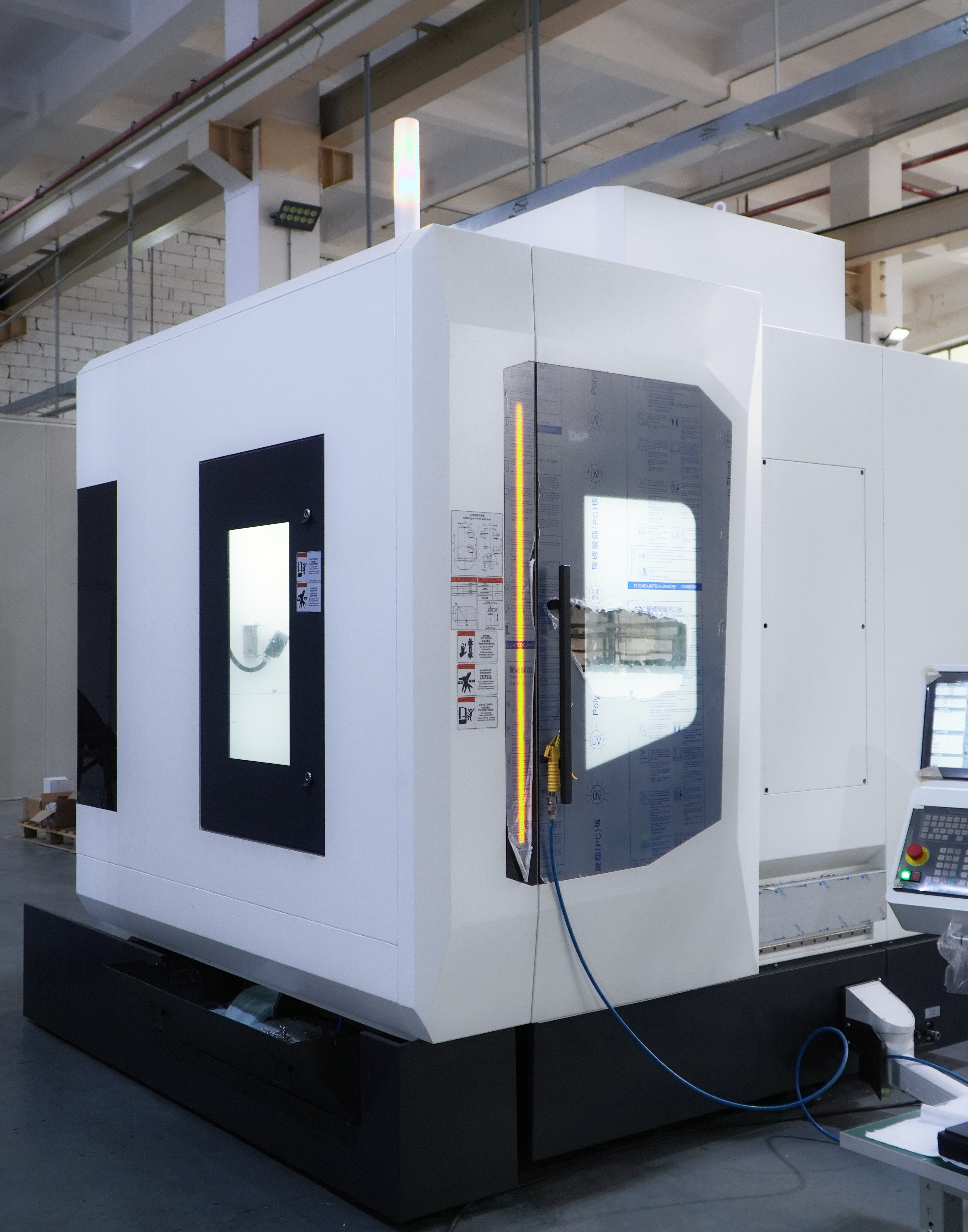
Structural Advantages That Define Heavy Duty Performance
Rigidity and Spindle Orientation
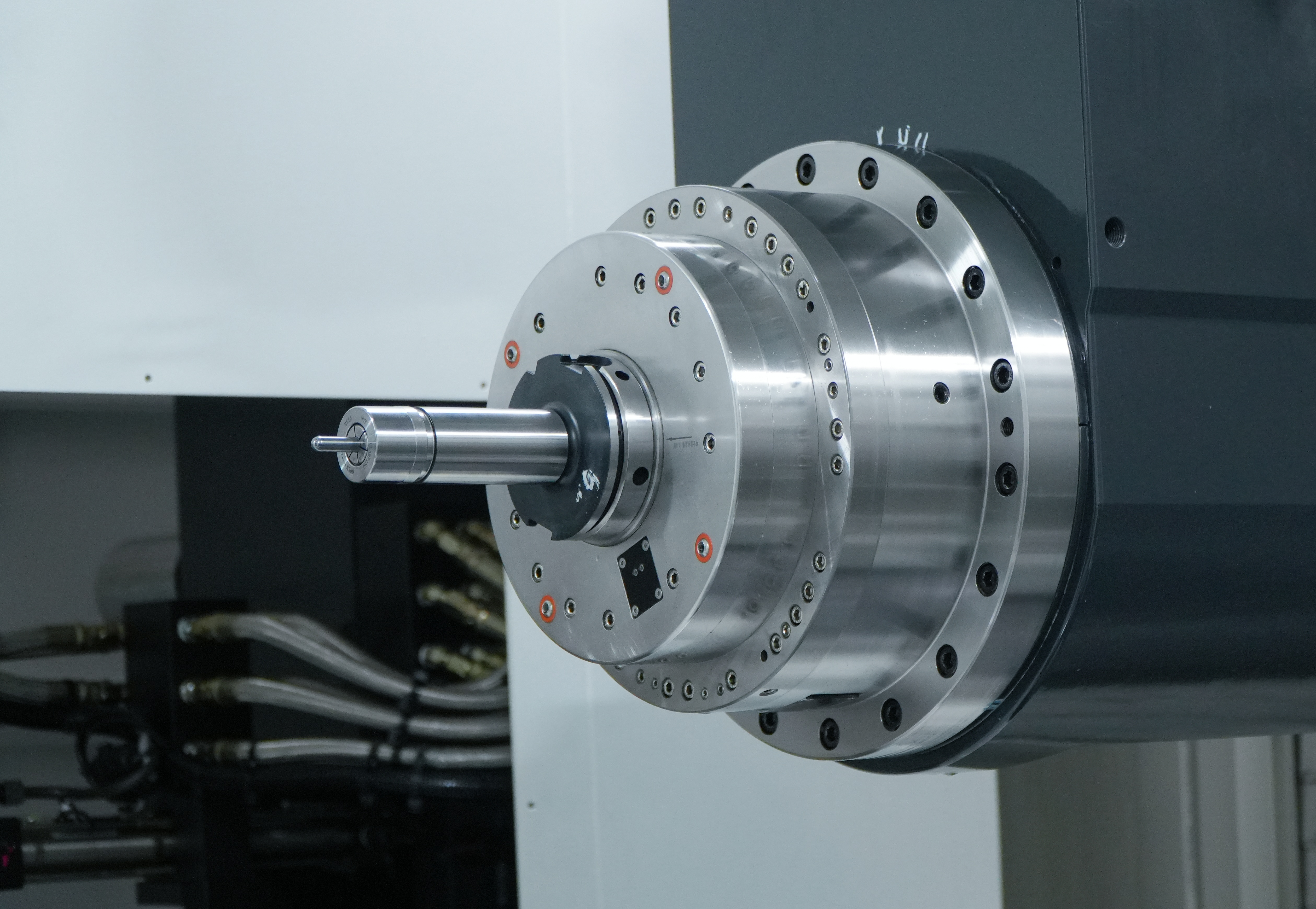
The backbone of any heavy duty machining solution is machine rigidity. A horizontal mill is engineered with a low center of gravity and a robust column and spindle housing that directly resists the deflection forces generated during aggressive cutting passes. When machining large castings, forgings, or structural components, the lateral forces involved are substantial, and a machine that flexes under load will always compromise dimensional accuracy.
The horizontal spindle orientation allows the cutting tool to engage the workpiece from the side rather than from above. This geometry means that gravity assists in chip evacuation rather than working against it. More importantly, the machine's column and bed can be designed with deeper cross-sections and more robust ribbing, since the structural load path is far more favorable in a horizontal configuration compared to a vertically oriented alternative.
In practice, this translates to a horizontal mill being able to take deeper cuts, use higher feed rates, and maintain tighter tolerances over a full shift of continuous heavy machining without accumulating thermal or mechanical drift that would otherwise require frequent recalibration or tool path corrections.
Pallet Changer Integration and Workholding Efficiency
Most industrial horizontal mill configurations are designed to integrate directly with automated pallet changing systems. This is not simply a convenience feature — it is a fundamental productivity multiplier in heavy duty environments. A pallet changer allows one workpiece to be machined while the next is being set up on an adjacent pallet station, eliminating the idle spindle time that plagues job shops relying on manual workpiece loading.
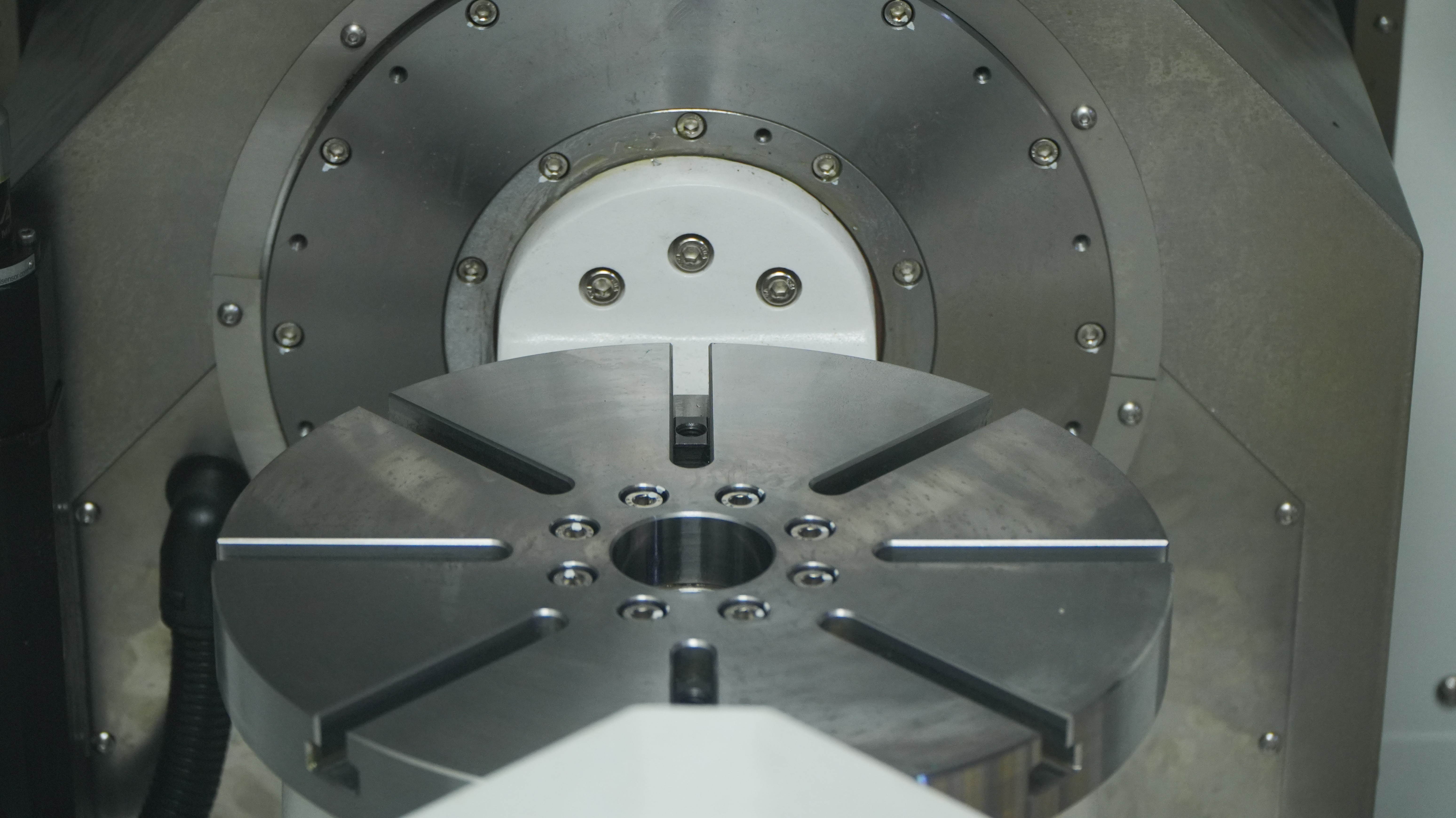
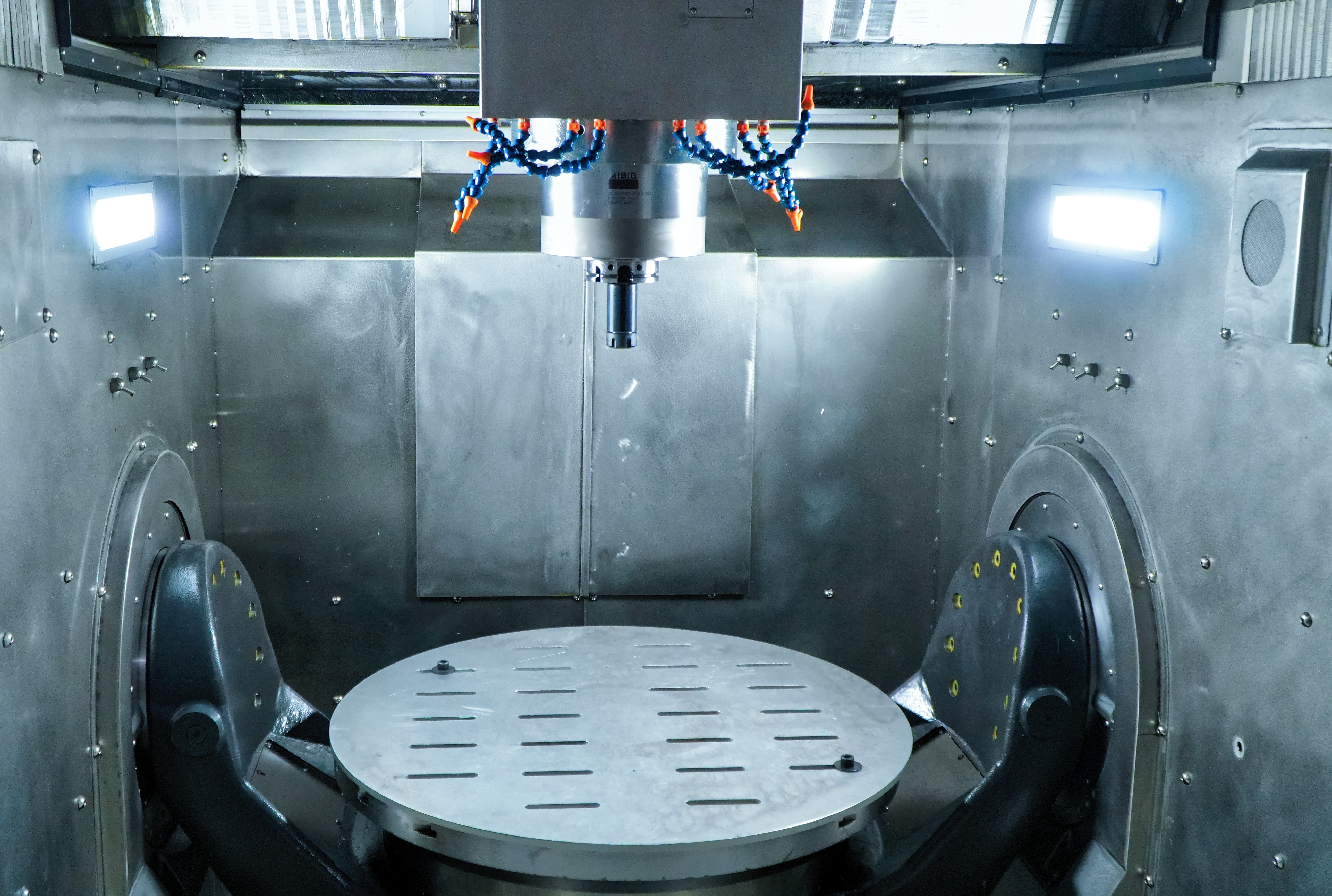
The horizontal mill's tombstone fixturing system extends this advantage further. A tombstone mounted on the rotary pallet axis can hold multiple workpiece faces simultaneously, meaning the machine's B-axis indexing can expose four or more machining faces in a single setup. For heavy components that would otherwise require multiple manual repositions on a vertical machine, this capability dramatically reduces setup time and improves the consistency of inter-feature relationships.
When a horizontal mill is equipped with a dual-pallet system, overall equipment effectiveness rises sharply because the machine almost never waits for the operator. In high-volume heavy duty environments, this operational rhythm is a decisive competitive advantage.
Chip Management in High-Material-Removal Operations
Gravity-Assisted Chip Evacuation
Heavy duty machining generates enormous chip volumes, and poor chip management is one of the most underestimated sources of downtime, tool wear, and surface quality problems in industrial operations. A horizontal mill addresses this challenge through its fundamental geometry: chips fall away from the cutting zone by gravity, landing below the workpiece and onto a conveyor rather than piling up around the tool or on the fixture.
On a vertical machine, chips accumulate on top of the workpiece and inside pockets. They must be actively blasted away with coolant or air, and they frequently get re-cut, which shortens tool life and degrades surface finishes. A horizontal mill avoids this problem structurally — the cutting zone is always positioned so that material removed from the workpiece has a clear, downward path to the chip management system.
This distinction becomes especially significant when machining materials like cast iron, titanium alloys, or hardened steel, where chip volume is high and chip re-cutting is particularly damaging to both the tool and the finished surface. A horizontal mill's inherent chip evacuation advantage directly supports longer tool life, better surface integrity, and fewer unplanned interruptions.
Coolant Delivery Effectiveness
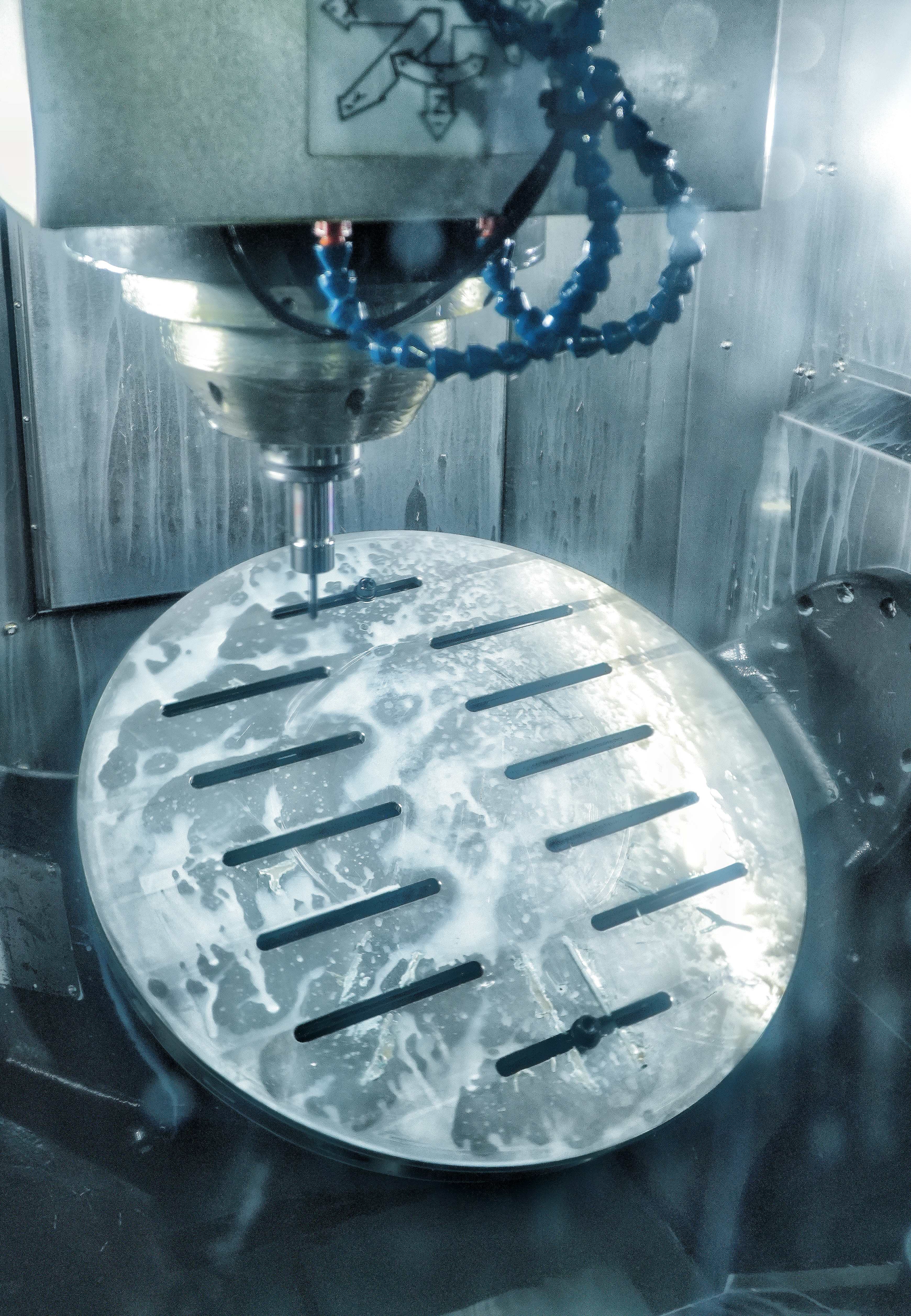
The horizontal spindle orientation on a horizontal mill also improves the effectiveness of through-spindle coolant delivery. Because the coolant follows the same gravitational direction as the chips, it actively flushes debris away from the cutting zone rather than simply washing it around. High-pressure through-spindle coolant on a horizontal mill reaches the tool tip directly and immediately carries swarf downward and away.
This matters in heavy duty machining contexts where deep pocket milling, long boring operations, and multi-axis contouring are standard requirements. Each of these operations generates heat and chip accumulation at the cutting interface, and a horizontal mill's coolant geometry provides consistently better thermal management than what is possible on machines where the cutting zone orientation works against coolant flow.
Thermal stability in the spindle and workpiece is a critical factor in maintaining tolerance control over long machining cycles. The horizontal mill's superior coolant delivery directly contributes to dimensional repeatability, which is non-negotiable in sectors where part rejection costs are high.
Multi-Face Machining Capability and Reduced Setup Time
The Value of B-Axis Indexing in Heavy Duty Work
One of the most operationally significant reasons to choose a horizontal mill for heavy duty machining is the machine's ability to index the workpiece around the B-axis without removing it from the pallet. For complex prismatic parts — housings, manifolds, gearboxes, and structural brackets — this means that features on multiple faces can be completed in a single clamping, maintaining the positional relationship between each machined surface with the accuracy of the machine itself rather than the accuracy of successive manual setups.
Every time a part is unclamped and re-fixtured, a new source of positional error is introduced. In heavy duty work, where parts are large and clamping forces are significant, setup error accumulation is a real production risk. A horizontal mill eliminates most re-clamping steps by using rotary pallet indexing to present each face of the workpiece to the spindle in sequence, holding all features to the same datum throughout the entire machining cycle.
This single-setup approach does more than protect tolerances — it compresses total cycle time significantly. Operations that would require three or four separate machining operations on a vertical machine can often be completed in one uninterrupted cycle on a horizontal mill, with direct positive effects on throughput and scheduling predictability.
Handling Large and Heavy Workpieces
Heavy duty machining frequently involves workpieces that are not only complex but also physically large and heavy. A horizontal mill is typically designed with robust pallet tables, high load ratings, and wide travel ranges that accommodate the kind of large-format components common in energy, mining, and heavy equipment industries. The horizontal configuration naturally lends itself to a stable, low-profile table that is easier to load with crane-assisted fixturing.
The workholding strategy on a horizontal mill also benefits from the horizontal orientation when securing heavy components. Gravity helps seat workpieces firmly onto the pallet table or tombstone fixture, and the clamping forces needed are often lower than would be required on a vertical machine where gravity pulls the workpiece away from the spindle. This results in more secure, distortion-free clamping for large parts, which supports accuracy throughout the machining cycle.
For shops handling components that weigh hundreds or even thousands of kilograms, the horizontal mill's structural design and load capacity make it the only realistic choice for achieving both the dimensional precision and the throughput required by serious heavy duty production contracts.
Productivity and Long-Term Value in Industrial Environments
Higher Material Removal Rates and Tool Life
The combination of structural rigidity, superior chip evacuation, and effective coolant delivery allows a horizontal mill to sustain higher material removal rates than comparably sized vertical configurations. In heavy duty machining, where roughing passes may remove several cubic centimeters of material per minute, the ability to push cutting parameters without sacrificing stability directly determines how competitive a shop's cost per part can be.
A horizontal mill's spindle and tooling interface are designed for the lateral forces and moments that arise from aggressive side milling, boring, and face milling operations. This robustness means that tools wear more predictably, fewer unexpected tool failures occur mid-cycle, and cutting parameter optimization is more reliable. Over the lifespan of a production program, these factors accumulate into measurable reductions in tooling cost and unplanned downtime.
Industrial buyers who evaluate the total cost of ownership for a horizontal mill consistently find that the initial investment is offset by productivity gains, reduced scrap, and lower indirect labor costs associated with fewer setups and more predictable maintenance schedules. In heavy duty machining environments where machine utilization is the primary driver of profitability, the horizontal mill's operating economics are compelling.
Scalability and Integration with Automation
A horizontal mill is architecturally well-suited to integration within automated manufacturing cells. The pallet-based workholding system connects naturally with automated pallet pools, robotic loading systems, and flexible manufacturing cell controllers, allowing shops to scale capacity without proportionally scaling labor. This scalability is particularly valuable in heavy duty sectors where order volumes fluctuate but quality standards remain constant.
Modern horizontal mill platforms support full integration with manufacturing execution systems, enabling real-time monitoring of spindle load, coolant flow, tool life, and pallet status. This data connectivity supports proactive maintenance strategies and provides the operational visibility needed to optimize scheduling in multi-machine environments. For industrial buyers planning capacity expansions, a horizontal mill that is automation-ready from the outset provides a sustainable path to increased output without the disruption and cost of major cell redesigns.
The combination of high machine utilization, automation compatibility, and built-in productivity features means that a horizontal mill represents not just a machining solution but a long-term strategic asset for manufacturers serious about heavy duty production capability.
FAQ
What makes a horizontal mill better suited for heavy duty machining than a vertical mill?
A horizontal mill provides superior rigidity, gravity-assisted chip evacuation, and multi-face access through B-axis indexing — all of which are critical in heavy duty machining contexts. These structural and operational advantages allow the horizontal mill to sustain higher cutting forces, maintain tighter tolerances, and complete complex parts in fewer setups compared to a vertical configuration.
How does a horizontal mill improve chip management during aggressive cutting operations?
Because the spindle is horizontally oriented, chips fall away from the cutting zone by gravity during machining on a horizontal mill. This prevents chip accumulation around the tool, reduces re-cutting of material, extends tool life, and supports better surface quality — all of which are especially important when machining high-volume material removal operations on tough alloys or cast materials.
Can a horizontal mill handle very large and heavy workpieces effectively?
Yes. A horizontal mill is typically designed with high-load pallet tables, wide travel ranges, and robust structural components that can support large and heavy workpieces. The horizontal fixturing orientation also helps gravity seat components securely, reducing the clamping forces needed and minimizing part distortion — a significant advantage when machining oversized structural or industrial components.
Is a horizontal mill a practical choice for automated production environments?
A horizontal mill is architecturally well-suited to automation. The pallet-based workholding system integrates naturally with automated pallet pools and robotic loading systems, allowing manufacturers to increase throughput without proportionally increasing labor. This makes the horizontal mill one of the most scalable and automation-ready machine tool investments available for heavy duty industrial production.
Conclusion
A horizontal mill has become a preferred solution for manufacturers that require reliable heavy duty machining performance, higher productivity, and consistent precision under demanding production conditions. Its advantages in structural rigidity, chip evacuation, coolant efficiency, multi-face machining capability, and automation integration make it uniquely suited for industries where large components, tight tolerances, and high material removal rates are standard requirements.
Compared with traditional vertical configurations, a horizontal mill provides a more stable machining environment for complex and heavy workpieces while reducing setup time and improving overall equipment utilization. The ability to complete multiple operations in a single setup not only improves accuracy but also reduces labor requirements and production variability.
For aerospace, energy, automotive, mining, and heavy equipment manufacturers, investing in a horizontal mill is not simply an equipment purchase — it is a long-term strategy for improving manufacturing capability, increasing competitiveness, and supporting future production growth. As industrial requirements continue to evolve toward higher precision and greater automation, the horizontal mill remains one of the most valuable machine tool platforms for serious heavy duty machining operations.