
How to Choose the Right Milling Machine: A Complete Buying Guide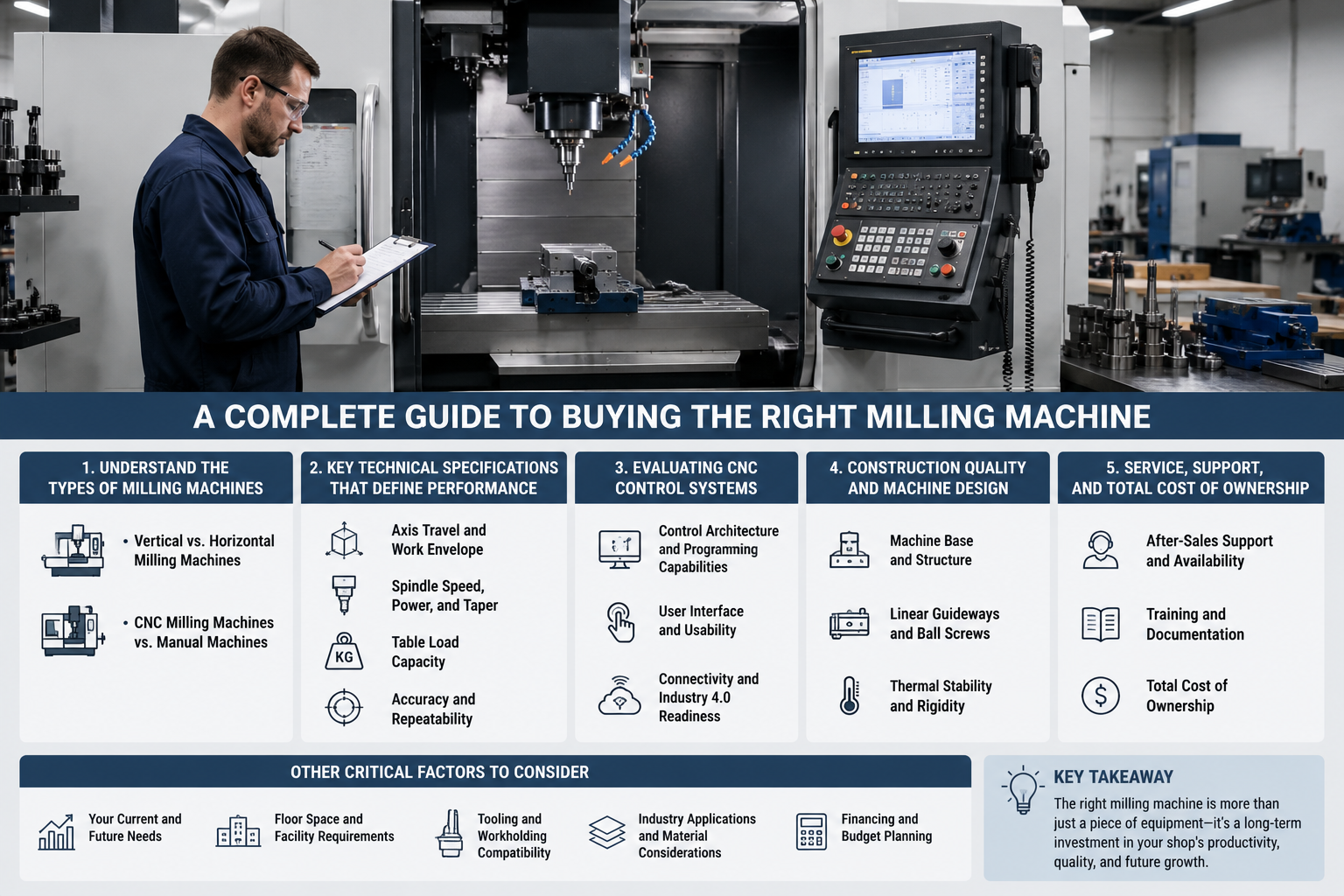
Choosing the right milling machine is one of the most consequential decisions a modern machine shop will make. Whether you are setting up a new facility, expanding production capacity, or replacing aging equipment, the right milling machine defines what your shop can produce, how fast it can produce it, and how competitively you can price your work. With so many configurations, specifications, and technology options now available, making an informed purchase requires more than simply comparing spindle speeds or price tags.
This buying guide is designed for production engineers, shop managers, and procurement teams who need to evaluate a milling machine against real operational requirements. We will walk through every major consideration — from understanding machine types and axis configurations to evaluating spindle performance, control systems, and long-term service support — so that your investment delivers measurable value from day one.
Understanding the Types of Milling Machines Available Today
Vertical vs. Horizontal Milling Machines
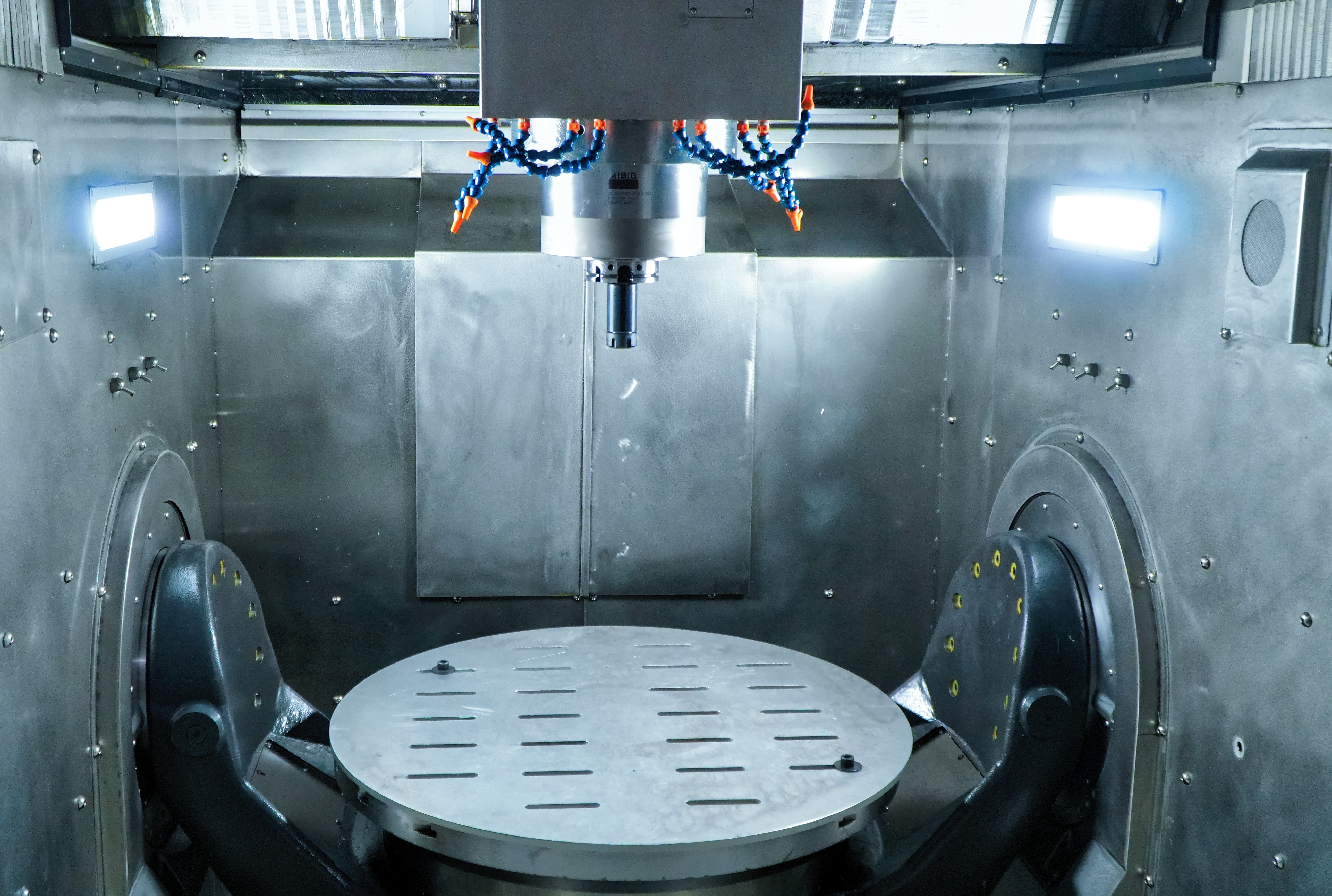
The most fundamental distinction when selecting a milling machine is the orientation of the spindle. A vertical milling machine positions the spindle perpendicular to the worktable, making it ideal for face milling, end milling, and drilling operations. It offers excellent operator visibility and is generally more intuitive for operators transitioning from manual machining environments.
A horizontal milling machine orients the spindle parallel to the worktable. This configuration excels in heavy material removal, slotting, and gang milling operations where multiple cutters work simultaneously. Horizontal machines tend to produce better chip evacuation and are preferred in high-volume production environments where cycle time and tool life are the dominant concerns.
Many modern machine shops opt for a universal milling machine that can operate in both orientations, providing production flexibility without requiring two separate capital investments. Understanding the dominant workpiece types your shop handles should guide this initial classification decision.
CNC Milling Machines vs. Manual Machines
A CNC milling machine uses computer numerical control to automate axis movement, tool changes, and machining sequences. For any shop producing complex geometries, repeating part programs, or working to tight tolerances, a CNC milling machine is the practical standard. It eliminates human input variability, supports unattended machining, and dramatically shortens setup time for repeat jobs.
Manual milling machines still hold relevance in toolrooms, educational settings, and shops that produce one-off custom parts where programming overhead would outweigh automation benefits. However, even in these contexts, a CNC milling machine with conversational programming capabilities can offer a middle ground that combines ease of use with repeatable precision.
For most modern machine shops operating competitively in today's market, a CNC milling machine is the baseline expectation, not a premium upgrade. Evaluating the control system's capabilities, programming environment, and integration with CAD/CAM software should be a central part of any purchase evaluation.
Key Technical Specifications That Define Performance
Axis Travel and Work Envelope
The work envelope of a milling machine describes the maximum range of movement in the X, Y, and Z axes. Selecting a machine with insufficient axis travel is one of the most common specification errors shops make, particularly when workpiece sizes are expected to grow over time. Always factor in fixturing height and the actual accessible cutting zone when interpreting axis travel figures.
A milling machine with generous axis travel gives production teams more flexibility to accommodate larger assemblies, tombstone fixtures, or multiple parts staged in a single setup. For shops doing aerospace, mold, or structural component work, extended Y-axis and Z-axis travel can be particularly critical to avoid secondary setups.
When evaluating axis travel, also review the machine's table load rating. A milling machine's table must support not just the workpiece weight but also the weight of the fixture, pallets, and any additional clamping hardware. Underestimating table load requirements can lead to accuracy degradation and premature wear.
Spindle Speed, Power, and Taper
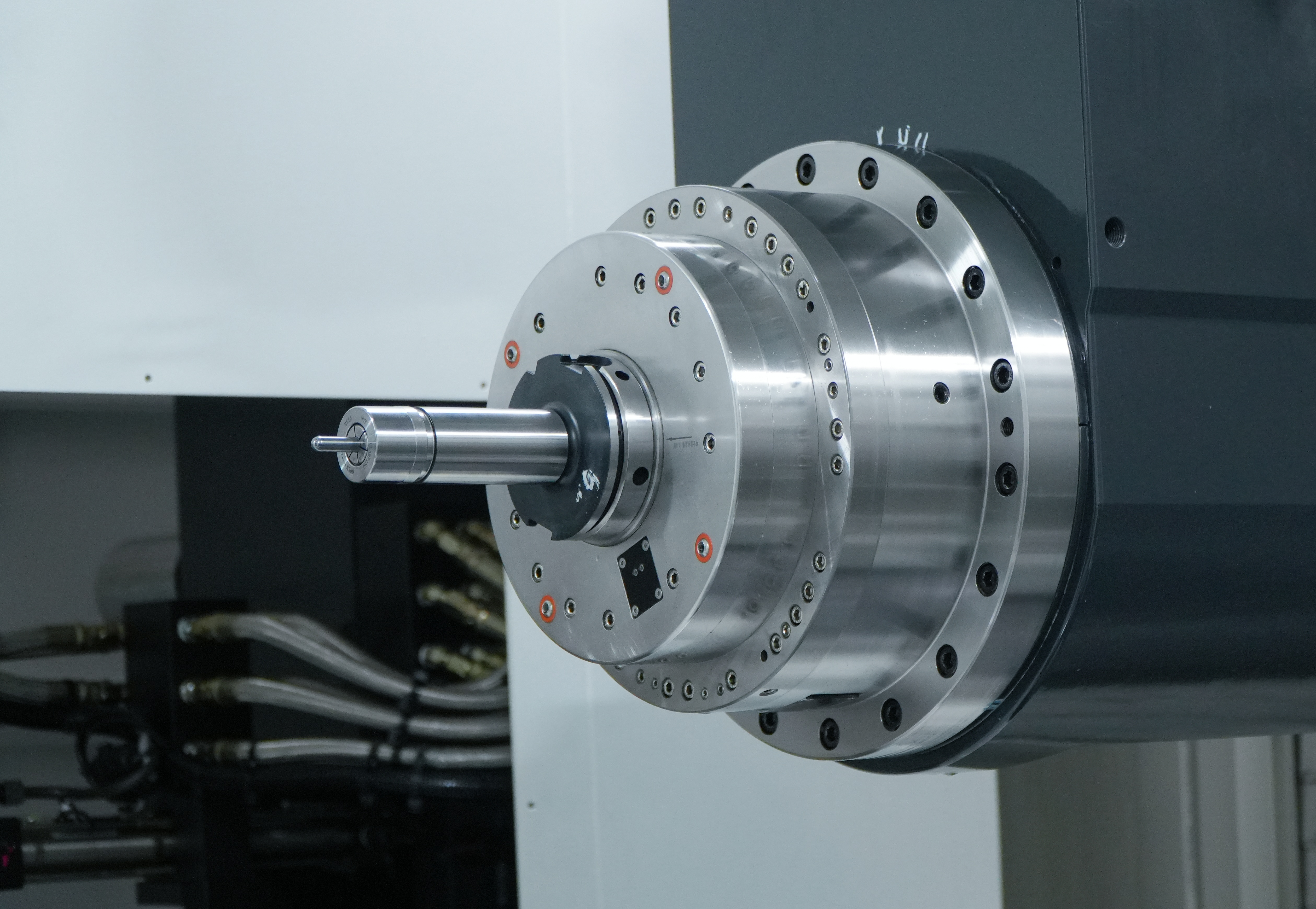
The spindle is the heart of any milling machine, and its performance specifications directly determine which materials and processes the machine can handle efficiently. Spindle speed range should match your intended cutting strategies — high RPM is essential for finishing aluminum or non-ferrous materials with small-diameter tools, while high torque at lower RPM is critical for roughing steel or titanium.
Spindle power, typically expressed in kilowatts or horsepower, determines how aggressively the milling machine can remove material without deflection or stalling. Insufficient spindle power forces operators to reduce feed rates and depth of cut, increasing cycle times and undermining the productivity gains that justified the capital investment.
Spindle taper — commonly BT30, BT40, or BT50 — affects toolholder rigidity and the range of tooling available to you. A milling machine with a BT40 or BT50 taper provides greater rigidity for heavy cutting, while BT30 is lighter and better suited to high-speed, light-cut applications. Compatibility with your existing toolholders and tool library is also a practical consideration that can affect upfront tooling investment.
Evaluating CNC Control Systems and Software Integration
Control Architecture and Programming Capabilities
The CNC control system is the interface between the operator, the program, and the milling machine's mechanical systems. Modern controls offer graphical simulation, background program editing, real-time override adjustments, and increasingly, connectivity features that support data logging and remote monitoring. Evaluating the control should go beyond brand preference and focus on how naturally it integrates with your shop's existing workflow.
Programming options matter significantly. A milling machine control that supports both G-code and conversational programming gives operators flexibility depending on part complexity. For high-volume production shops, direct integration with CAM software through post-processors is essential to eliminate manual code editing and reduce the risk of programming errors.
Look closely at the control's cycle time optimization features. Some modern milling machine controls include advanced look-ahead buffering and nano-interpolation that smooth motion paths and reduce vibration at high feed rates. These features contribute directly to surface finish quality and tool life, making them relevant beyond simple convenience.
Connectivity, Automation Readiness, and Industry 4.0 Features
For machine shops investing in long-term competitiveness, a milling machine's readiness for automation and digital connectivity is increasingly important. Ethernet connectivity, MTConnect compatibility, and OPC-UA protocol support allow the milling machine to share operational data with MES systems, ERP platforms, and shop-floor monitoring dashboards.
Automation readiness is another dimension to evaluate carefully. A milling machine equipped with standard interfaces for robotic loading, automatic pallet changers, and tool life monitoring systems can become the foundation of a lights-out or minimally attended production cell. This scalability protects the investment by allowing productivity upgrades without full machine replacement.
Even if your shop is not immediately implementing automation, choosing a milling machine that supports these capabilities ensures that the machine can grow with your operational strategy rather than becoming a bottleneck when automation becomes necessary.
Structural Rigidity, Accuracy, and Long-Term Reliability
Machine Construction and Casting Quality
The structural design of a milling machine determines its ability to maintain accuracy under cutting forces and thermal loads over thousands of operating hours. Cast iron construction, particularly Meehanite or equivalent high-grade castings, provides excellent vibration damping and thermal stability. Inspect the column, bed, and saddle designs to understand how well the machine will resist deflection under heavy cuts.
Finite element analysis (FEA) is now commonly used by manufacturers to optimize machine structure before production. A milling machine designed with FEA-validated casting geometry will typically exhibit better dynamic stiffness than machines designed purely from historical precedent. Ask manufacturers for structural analysis documentation when evaluating premium machines.
Thermal compensation is another accuracy-related feature worth examining. A milling machine that runs for extended periods will experience spindle and structural heating that causes dimensional drift. Built-in thermal compensation algorithms — particularly for the Z-axis — help maintain part accuracy during long production runs without manual operator correction.
Ballscrew, Linear Guideway, and Positioning Accuracy
The motion system of a milling machine governs its positioning accuracy, repeatability, and surface finish capability. High-precision ballscrews with preloaded nuts eliminate backlash and ensure that rapid reversals do not introduce dimensional errors. The pitch accuracy and preload class of the ballscrew directly affect the tolerance capability of the machine across its service life.
Linear roller guideways provide low friction, high rigidity, and excellent load capacity compared to traditional box-way designs. For a milling machine handling high-speed finishing operations, linear guideways allow faster rapid traverse speeds and smoother feed motion. Box-way construction, while heavier and slower, provides superior damping for heavy roughing in steel and other tough materials.
Always request the manufacturer's positioning accuracy and repeatability specifications in ISO standard format. A milling machine quoted at ±0.005mm positioning accuracy should be verifiable through ballbar testing and linear measurement, and understanding how the machine is tested and calibrated before delivery is essential information for quality-driven shops.
Total Cost of Ownership and Vendor Support Evaluation
Purchase Price vs. Lifecycle Cost
The purchase price of a milling machine is only the beginning of the financial conversation. Lifecycle costs include preventive maintenance, consumable parts such as filters and seals, coolant management, spindle repair, and eventual control system upgrades. A milling machine purchased at a lower initial price but with higher ongoing maintenance burden can easily exceed the total cost of a premium machine over a five-to-ten-year horizon.
Evaluate the availability and cost of spare parts before committing to a purchase. A milling machine that requires specialized imported components with long lead times creates production risk every time an unplanned failure occurs. Shops that prioritize uptime should favor machines with well-established parts distribution networks and local technical support capabilities.
Energy consumption is an increasingly relevant lifecycle cost as energy prices rise globally. A milling machine with efficient servo drives, standby power modes, and regenerative braking can generate meaningful savings over its operational lifetime. Reviewing the machine's power consumption specifications relative to its cutting performance gives a realistic picture of operational efficiency.
After-Sales Service, Training, and Application Support
The quality of vendor support can make or break the productivity impact of a new milling machine. Evaluate whether the supplier offers on-site installation, calibration, and operator training as part of the purchase package. A milling machine that is incorrectly installed or where operators are not properly trained will never achieve its rated performance regardless of how capable the machine is on paper.
Technical support responsiveness is critical in production environments where a downed milling machine directly translates to missed delivery commitments. Evaluate the supplier's average response time for service calls, the availability of remote diagnostics, and whether the service team has application knowledge relevant to your specific machining processes.
Application engineering support — the ability to consult with technical experts during the quoting and selection process — is a differentiator that adds genuine value beyond the machine itself. A supplier willing to review your part drawings, discuss fixturing strategies, and recommend appropriate tooling for your milling machine is a partner, not just a transaction counterparty.
FAQ
What size milling machine does a small-to-medium machine shop typically need?
The appropriate size depends primarily on the maximum workpiece envelope your shop handles regularly, not your largest occasional job. For a general-purpose machine shop, a milling machine with approximately 600mm to 900mm of X-axis travel and a table load capacity of 400 to 600 kilograms covers the majority of prismatic part work. Oversizing the machine increases capital cost and floor space requirements without productivity benefit if your typical parts are smaller.
How important is spindle speed range when selecting a milling machine?
Spindle speed range is highly important because it directly determines which materials and cutter diameters you can use efficiently. A milling machine with a maximum spindle speed of 8,000 RPM may be sufficient for steel and cast iron work but will be limiting if your shop also mills aluminum or requires small-diameter tool finishing at high surface footage. If your shop handles a broad mix of materials, prioritize a milling machine with a wide speed range and a high-torque zone at lower RPM.
Can a milling machine be retrofitted for automation after purchase?
Yes, many modern milling machines are designed with automation interfaces that allow robotic loading and automatic pallet changers to be added after initial purchase. However, retrofitting is typically more expensive and technically complex than specifying automation-readiness at the time of purchase. If there is any reasonable likelihood that your shop will pursue automation within five years, it is strongly advisable to select a milling machine with the necessary control interfaces, door opening dimensions, and structural provisions already built in.
What is the most common mistake shops make when buying a milling machine?
The most common mistake is evaluating the milling machine primarily on purchase price without adequately assessing lifecycle cost, axis travel adequacy for future work, and the quality of after-sales support. Shops frequently discover that a milling machine chosen on cost grounds requires costly spindle repairs, has limited spare parts availability, or cannot accommodate the larger or more complex parts they eventually win contracts to produce. A thorough evaluation framework that prioritizes total value over initial price consistently delivers better long-term outcomes.
Conclusion
Selecting the right milling machine is a strategic investment that directly influences machining capability, production efficiency, product quality, and long-term profitability. From understanding the differences between vertical milling machines, horizontal milling machines, and CNC milling machines to evaluating spindle performance, machine rigidity, control systems, lifecycle costs, and after-sales support, every purchasing decision should be aligned with your shop's actual production requirements rather than short-term budget considerations.
By carefully assessing technical specifications, automation potential, service support, and total cost of ownership, manufacturers can invest in a milling machine that delivers reliable performance, higher productivity, and long-term value. Whether you are expanding an existing machine shop or building a new production facility, choosing the right milling machine today will provide the flexibility and precision needed to remain competitive in tomorrow's manufacturing environment.