
How Advanced 5-Axis CNC Technology Supports the Future of Precision Manufacturing
The future of manufacturing is being defined by higher precision requirements, increasingly complex part geometries, shorter production cycles, and the need for smarter automation. Industries that once relied on multiple machining operations and manual repositioning are now adopting advanced machining technologies to achieve greater efficiency and consistency.
Among these technologies, 5-axis CNC machining has become one of the most important innovations supporting the next generation of precision manufacturing.
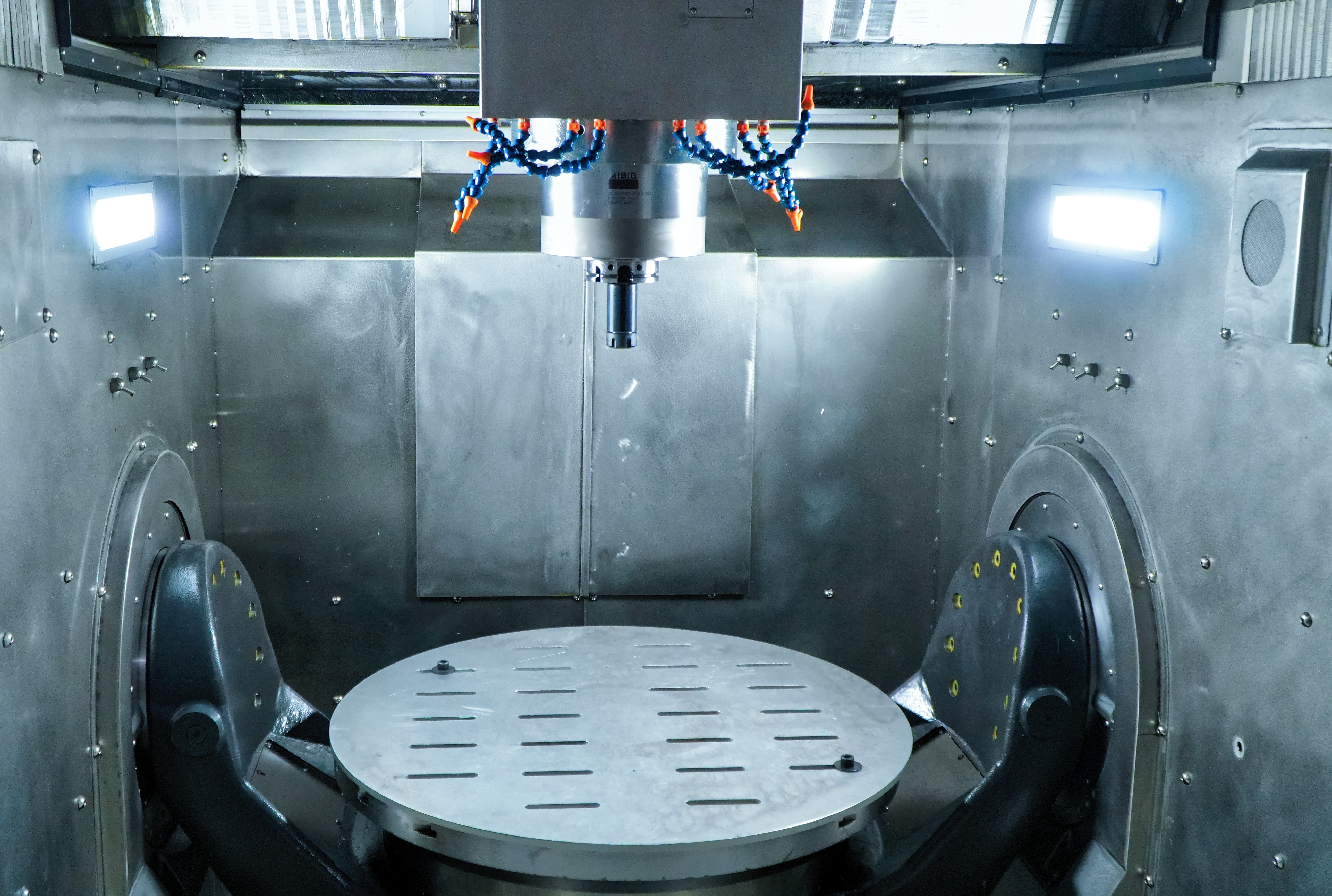
Unlike traditional 3-axis machining systems, a 5-axis CNC machine allows the cutting tool or workpiece to move simultaneously along five different axes. This additional movement capability enables manufacturers to machine complex surfaces, angled features, and intricate geometries in a single setup.
For industries such as aerospace, medical equipment, automotive, semiconductor manufacturing, and precision engineering, advanced 5-axis CNC technology is no longer simply a productivity upgrade. It has become a strategic manufacturing capability that determines competitiveness in a rapidly evolving industrial environment.
This article explores how advanced 5-axis CNC machining supports the future of precision manufacturing and why more manufacturers are investing in this technology.
1. Enabling Higher Precision for Complex Components
The Growing Demand for Precision Manufacturing
Modern products require components with increasingly demanding specifications.
Aerospace structures, medical implants, semiconductor equipment, and energy components often require:
- Micron-level accuracy
- Complex three-dimensional geometries
- Tight dimensional tolerances
- Excellent surface finishes
Traditional machining methods often struggle with these requirements because complex parts require multiple setups and manual alignment processes.
Every additional setup introduces potential sources of error, including:
- Datum variation
- Fixture positioning errors
- Manual adjustment differences
- Accumulated tolerance deviation
As manufacturing requirements continue to increase, companies need machining solutions that can maintain accuracy throughout the entire production process.
How 5-Axis CNC Improves Precision
An advanced 5-axis CNC machine allows manufacturers to complete multiple machining operations in a single setup.
By reducing the number of times a workpiece must be repositioned, manufacturers can maintain better geometric relationships between different features.
The advantages include:
- Improved dimensional consistency
- Reduced setup errors
- Better repeatability
- Higher-quality finished components
For complex precision parts, maintaining the original workpiece reference throughout machining significantly improves final accuracy.
This capability makes 5-axis CNC machining especially valuable for industries where even small errors can result in expensive part rejection.
2. Reducing Production Time Through Fewer Setups
The Limitations of Conventional Machining
Many complex components require machining from multiple directions.
With traditional equipment, manufacturers often need:
- Machine one surface
- Remove the workpiece
- Reposition the fixture
- Realign the part
- Continue machining from another angle
Although this process can produce acceptable results, it increases:
- Labor requirements
- Production time
- Fixture costs
- Inspection workload
For high-value components, these additional steps significantly increase manufacturing costs.
Single-Setup Machining with 5-Axis Technology
A major advantage of a 5-axis CNC machine is its ability to access multiple surfaces without removing the workpiece.
The rotary axes allow the cutting tool to approach the part from optimized angles, reducing the need for additional setups.
This improves:
Production efficiency
More machining operations can be completed in one cycle.
Process consistency
The part remains fixed to the same datum reference.
Manufacturing flexibility
Complex components can be produced faster with fewer specialized fixtures.
For modern precision manufacturing, reducing setup time is one of the most important ways that 5-axis CNC technology improves productivity.
3. Improving Tool Accessibility and Machining Capability
Machining Difficult Geometries
Many advanced components contain features that are difficult or impossible to machine efficiently using traditional methods.
Examples include:
- Curved aerospace surfaces
- Deep cavities
- Angled holes
- Complex mold structures
- Medical implant geometries
With conventional machining, operators may need longer tools or additional fixtures to reach these areas.
However, longer tools create problems:
- Reduced rigidity
- Increased vibration
- Lower cutting performance
- Poor surface quality
Optimized Tool Orientation
Advanced 5-axis CNC machining solves these challenges by continuously controlling tool orientation.
Instead of forcing the cutting tool into a fixed position, the machine adjusts the tool angle to maintain ideal cutting conditions.
This provides:
- Shorter and more rigid tools
- Improved cutting stability
- Better surface finish
- Higher machining efficiency
For complex part manufacturing, the ability to control tool orientation is one of the key reasons why 5-axis CNC machines outperform traditional machining solutions.
4. Supporting Automation and Smart Manufacturing
The Role of CNC Automation in Future Factories
The future of manufacturing is moving toward:
- Automated production cells
- Digital process monitoring
- Data-driven optimization
- Reduced dependence on manual operations
A modern 5-axis CNC machine is designed to integrate with these smart manufacturing systems.
Advanced CNC platforms can support:
- Automatic tool management
- Robotic loading systems
- Production monitoring
- Remote diagnostics
- Manufacturing data collection
These capabilities allow manufacturers to improve machine utilization and create more efficient production environments.
5-Axis CNC as a Foundation for Smart Manufacturing
Because 5-axis CNC machining combines flexibility, precision, and automation capability, it provides an ideal foundation for future intelligent factories.
Manufacturers can use one advanced machine platform to produce multiple types of complex components while collecting valuable production data.
This reduces operational complexity and improves long-term manufacturing scalability.
5. Expanding Applications Across Advanced Industries
Aerospace Manufacturing
The aerospace industry has always been one of the strongest drivers of 5-axis CNC technology.
Aircraft components often require:
- Lightweight structures
- Complex curved surfaces
- High-strength materials
- Extreme dimensional accuracy
A 5-axis CNC machine enables manufacturers to efficiently process aluminum alloys, titanium, and composite-related components while maintaining strict quality requirements.
Medical Device Manufacturing
Medical components require exceptional precision and surface quality.
Examples include:
- Surgical instruments
- Orthopedic implants
- Dental components
- Medical equipment parts
Advanced 5-axis CNC machining allows manufacturers to create complex shapes while maintaining strict dimensional control.
Semiconductor and Precision Equipment Manufacturing
The semiconductor industry requires extremely accurate mechanical components.
Manufacturers rely on 5-axis CNC machines to produce:
- Precision structural parts
- Vacuum chamber components
- High-accuracy equipment assemblies
The ability to maintain stability and repeatability makes 5-axis technology increasingly important in these advanced applications.
6. Improving Long-Term Manufacturing Competitiveness
Investing in advanced 5-axis CNC technology is not only about improving today's production performance. It is about preparing manufacturers for future challenges.
Companies adopting 5-axis CNC machines can achieve:
- Greater production flexibility
- Faster response to new projects
- Reduced labor dependency
- Higher product quality
- Stronger market competitiveness
As customer requirements become more customized and product cycles become shorter, manufacturing companies need equipment that can adapt quickly.
A modern 5-axis CNC machine provides this flexibility by allowing manufacturers to produce increasingly complex components without completely redesigning their production processes.
FAQ
What is the biggest advantage of advanced 5-axis CNC technology?
The biggest advantage of advanced 5-axis CNC technology is the ability to manufacture complex components with fewer setups while maintaining high precision. A 5-axis CNC machine improves accuracy, reduces production time, and increases machining flexibility.
Why is 5-axis CNC important for future precision manufacturing?
Future manufacturing requires higher accuracy, automation, and the ability to produce complex geometries efficiently. 5-axis CNC machining supports these requirements by combining multi-directional cutting, reduced setups, and advanced process control.
Which industries benefit most from 5-axis CNC machines?
Industries including aerospace, medical devices, automotive, semiconductor equipment, energy, and precision engineering benefit significantly from 5-axis CNC machines because they require complex components and high manufacturing accuracy.
Can a 5-axis CNC machine improve production efficiency?
Yes. A 5-axis CNC machine improves efficiency by reducing setup time, minimizing fixture changes, increasing tool accessibility, and allowing more operations to be completed in a single machining cycle.
Is 5-axis CNC technology suitable for automated manufacturing?
Yes. Modern 5-axis CNC systems can integrate with automation solutions such as robotic loading, tool management systems, and digital manufacturing platforms, making them suitable for future smart factories.
Conclusion
Advanced 5-axis CNC technology is becoming a critical foundation for the future of precision manufacturing.
By combining higher accuracy, reduced setups, improved tool access, automation capability, and production flexibility, 5-axis CNC machining enables manufacturers to meet increasingly demanding industrial requirements.
As industries continue moving toward smarter, faster, and more customized production, companies equipped with advanced 5-axis CNC machines will have a significant advantage in efficiency, quality, and long-term competitiveness.
For manufacturers seeking to improve precision machining capability and prepare for future production challenges, investing in advanced 5-axis CNC technology is a strategic step toward the next generation of manufacturing.
Explore DEPU CNC Advanced 5-Axis Machining Solutions:
www.depu.com