
Can One 5-Axis Machine Replace Multiple Dedicated CNC Setups?
In conventional CNC manufacturing, complex parts often require multiple machining setups to reach different surfaces and features. A part may begin on one machine for roughing, move to another setup for side machining, and require additional repositioning before all features are complete. Every additional setup consumes time and introduces another opportunity for positioning error.
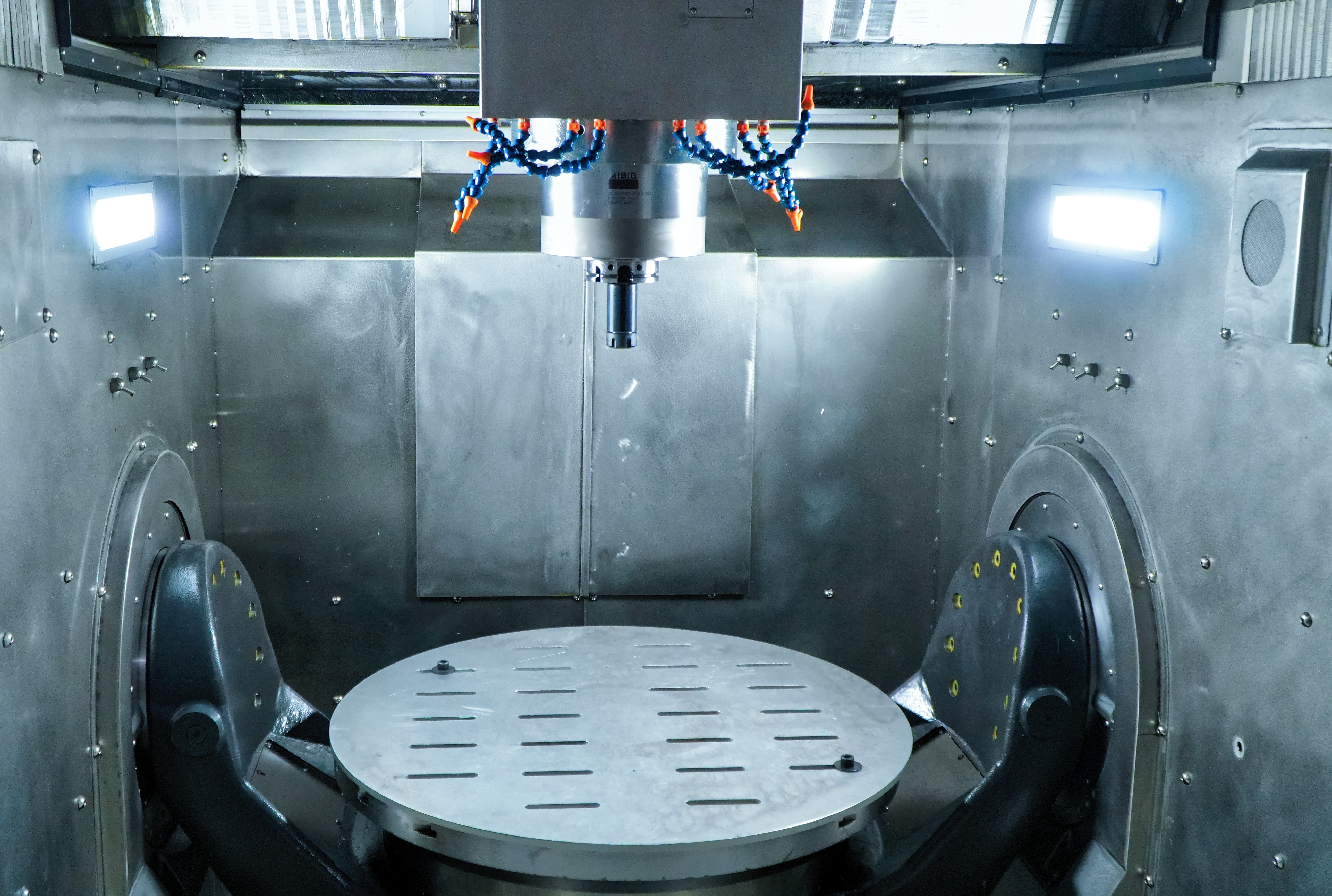
A modern 5-axis CNC machine can significantly reduce this dependence on multiple dedicated CNC setups. By rotating the workpiece and/or cutting tool around two additional axes, 5-axis machining provides access to multiple faces and complex geometries from different orientations without removing the workpiece from its primary fixture.
This does not mean that every conventional CNC machine can simply be replaced by one 5-axis machine. The practical question is whether the machine's work envelope, spindle capability, rotary-axis configuration, load capacity, tooling system, and application requirements are suitable for the parts being produced.
For manufacturers producing complex components, understanding where a 5-axis CNC machine can consolidate operations — and where dedicated machines may still provide advantages — is essential for making an informed equipment investment.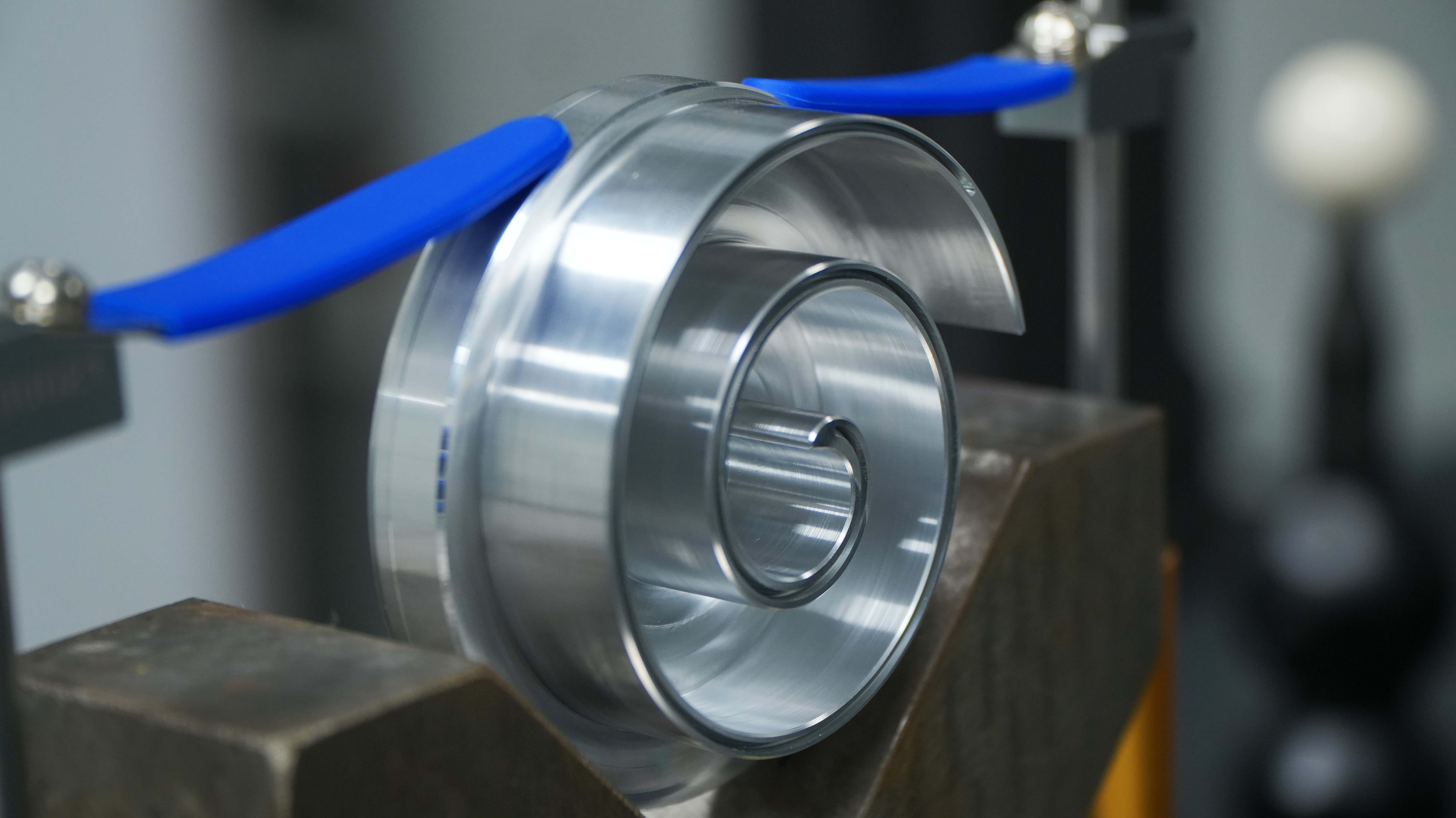
Why Multiple CNC Setups Are Often Necessary
Accessing Multiple Part Faces
A conventional 3-axis CNC machine primarily moves the cutting tool along the X, Y, and Z axes. When a component contains features on several sides, the workpiece often needs to be repositioned manually.
For example, a housing may require machining on the top, front, rear, and side surfaces. A conventional process could involve several separate setups, with the operator removing and repositioning the workpiece between operations.
Each repositioning step requires the workpiece to be realigned and referenced again. Even when experienced operators perform these tasks carefully, additional setup operations create opportunities for variation.
A 5-axis CNC machine can rotate the workpiece or tool to expose different surfaces while maintaining the same fundamental work coordinate relationship. This allows many features to be completed without completely removing the workpiece from its fixture.
The Hidden Cost of Repositioning
Setup time is more than the time required to physically clamp a part.
Operators may need to:
- Remove the workpiece
- Clean the fixture and reference surfaces
- Reposition the part
- Re-establish the datum
- Recheck alignment
- Reset work offsets
- Verify tool access
- Perform another first-piece inspection
For low-volume or complex production, these activities can represent a substantial percentage of total manufacturing time.
By reducing the number of times a workpiece must be repositioned, 5-axis machining can compress the overall manufacturing workflow.
How 5-Axis Machining Consolidates Operations
Machining Multiple Faces in One Setup
One of the biggest advantages of a 5-axis CNC machine is its ability to access multiple faces without requiring the same number of manual setups.
The rotary axes change the orientation between the cutting tool and workpiece. This makes it possible to machine features that would otherwise require the workpiece to be removed and repositioned.
For complex components, this can transform a process such as:
Setup 1 → Setup 2 → Setup 3 → Setup 4
into:
One primary setup → multiple machining orientations
The exact reduction depends on the geometry of the component and the machine configuration, but the underlying principle remains the same: fewer physical setups mean fewer opportunities for setup-related variation.
Maintaining a Common Datum
Datum consistency is particularly important in precision machining.
When a component is removed and repositioned, the relationship between previously machined features and newly machined features depends partly on the accuracy of the second setup.
With 5-axis machining, multiple surfaces can often be produced while maintaining the same primary workholding relationship. This helps preserve positional relationships between features.
For components with tight geometric tolerances, this can be more valuable than simply reducing setup time.
Reducing Accumulated Positioning Errors
Every Setup Introduces Another Reference
Consider a component that requires four separate setups.
Even if each setup is performed accurately, every repositioning introduces another reference operation. Small alignment deviations can accumulate as machining progresses.
A 5-axis CNC machine can reduce this accumulation by completing more operations without removing the workpiece.
The benefit is particularly relevant when machining:
- Complex housings
- Aerospace components
- Impellers
- Manifolds
- Medical components
- Mold components
- Precision mechanical parts
These components often contain multiple interrelated surfaces where positional accuracy between features matters as much as individual dimensional accuracy.
Better Relationship Between Features
Machining multiple features from a common setup can improve the consistency of their spatial relationship.
For example, if several holes, angled surfaces, pockets, and reference faces must maintain precise relationships, completing them within one coordinated setup can eliminate some of the variability associated with transferring the part between machines or fixtures.
This is one of the strongest reasons manufacturers consider 5-axis CNC technology for complex part manufacturing.
Reducing the Need for Dedicated Fixtures
Fixture Complexity Can Increase With Conventional Machining
When a part requires multiple orientations, conventional machining may require several fixtures or a highly specialized fixture capable of presenting the part to different operations.
Dedicated fixtures take engineering time to design and manufacturing time to produce.
They also require:
- Storage
- Maintenance
- Setup documentation
- Inspection
- Replacement components
For high-volume production of a single component, dedicated fixtures can be justified. But for shops producing many different complex components, fixture investment can become a significant operational burden.
5-Axis Machines Can Simplify Workholding
A 5-axis CNC machine can reduce the number of specialized fixtures required by providing more tool access from different directions.
This does not eliminate workholding requirements. The part still needs to be securely and accurately clamped, and the fixture must allow the required rotary movements without interference.
However, a well-designed 5-axis fixture can provide significantly greater machining access from a single setup.
Improving Overall Production Efficiency
Shorter Setup Times
Reducing setup changes directly reduces non-cutting time.
Instead of repeatedly stopping production to reposition the workpiece, operators can complete more machining operations within one continuous cycle.
This can improve machine utilization and make production scheduling more predictable.
For shops where machine time is expensive, reducing non-cutting operations can have a meaningful effect on cost per part.
Fewer Transfers Between Machines
A complex component may traditionally move between several machines because each machine provides a different machining orientation or capability.
A sufficiently capable 5-axis CNC machine can consolidate many of these operations.
This reduces:
- Internal material handling
- Queue time
- Work-in-process inventory
- Operator intervention
- Setup documentation
- Inspection points between operations
The result is a shorter manufacturing flow from raw material to finished component.
Can One 5-Axis Machine Replace Every CNC Machine?
The answer is no.
A 5-axis CNC machine is highly versatile, but versatility does not automatically make it the most economical solution for every operation.
Simple components may be faster and more cost-effective on a dedicated 3-axis machine.
High-volume production may also favor specialized equipment designed around a narrow operation, particularly when cycle time is optimized for thousands of identical parts.
The real advantage of 5-axis machining appears when part complexity, setup frequency, tolerance requirements, and geometry make multiple conventional setups expensive or technically challenging.
When 5-Axis Consolidation Makes the Most Sense
A 5-axis machine is particularly attractive when a component has:
- Multiple machined faces
- Complex angled features
- Deep or difficult-to-access surfaces
- Tight positional relationships
- Complex freeform geometry
- Expensive or complicated fixtures
- Low-to-medium production volumes
- Frequent engineering changes
In these applications, the machine's flexibility can offset its higher initial investment.
Comparing Multiple Setups With One 5-Axis Setup
A simplified comparison illustrates the difference.
| Conventional CNC Process | 5-Axis CNC Process |
|---|---|
| Multiple workpiece setups | One primary setup |
| Repeated datum establishment | Common datum maintained |
| Multiple fixture arrangements | Potentially simplified fixture |
| More operator intervention | Reduced intervention |
| More machine transfers | Fewer transfers |
| Higher setup-related error risk | Reduced repositioning error |
| Longer overall workflow | More consolidated workflow |
The actual result depends on the part, machine, tooling, and programming strategy. A 5-axis CNC machine does not automatically reduce cycle time simply because it has five axes. The process must be engineered around the machine's capabilities.
The Importance of CAM Programming
Machine Capability Alone Is Not Enough
The ability to consolidate setups depends heavily on programming.
The CAM system must accurately understand the machine's kinematics, rotary-axis limits, tool orientation, fixture geometry, and collision envelope.
For simpler features, indexed 3+2 machining may be sufficient. The rotary axes position the workpiece or tool, after which the cutting operation proceeds using three linear axes.
For more complex surfaces, simultaneous 5-axis motion may be required.
The correct strategy depends on the geometry rather than simply using all five axes whenever possible.
Simulation Becomes More Important
As the number of axes increases, programming and verification become increasingly important.
A proper 5-axis CNC workflow should include:
- CAD model preparation
- Workholding definition
- Tool selection
- Toolpath generation
- Machine simulation
- Collision verification
- Post-processing
- First-article inspection
- Program optimization
This process ensures that the additional flexibility of 5-axis machining translates into real production value.
Where a 5-Axis Machine Delivers the Greatest Value
The strongest business case for 5-axis machining is not simply the ability to perform five-axis movement.
It is the ability to consolidate manufacturing operations.
When one machine can perform operations that previously required several setups, manufacturers can potentially reduce:
- Setup labor
- Fixture costs
- Work-in-process
- Material handling
- Repositioning errors
- Inspection requirements
- Production lead time
For complex parts, these indirect benefits can be more significant than the machine's cutting speed alone.
Evaluating Whether Your Shop Should Consolidate Setups
Before replacing multiple CNC setups with one 5-axis platform, analyze your existing production process.
Start by identifying how many setups each major part requires.
Then calculate:
- Average setup time
- Fixture cost
- Operator labor
- Machine transfer time
- Scrap caused by setup errors
- Inspection time
- Average cycle time
- Annual production volume
Next, determine which of these activities could realistically be eliminated through 5-axis machining.
This provides a more accurate business case than comparing machine purchase prices alone.
A 5-axis CNC machine should be evaluated as a complete manufacturing system rather than simply as a machine with two additional axes.
Conclusion
Can one 5-axis machine replace multiple dedicated CNC setups?
For many complex parts, yes — but not universally.
The primary advantage of a 5-axis CNC machine is its ability to access multiple surfaces and complex geometries while maintaining a consistent workholding relationship. By reducing repositioning, fixture changes, and machine transfers, 5-axis machining can simplify the manufacturing process and improve overall production efficiency.
The greatest benefits appear when parts are geometrically complex, require multiple setups, or demand tight positional relationships between features.
For simple, high-volume components, dedicated CNC equipment may remain the more economical choice. But for manufacturers producing complex precision components, consolidating multiple setups into one capable 5-axis CNC machine can create a significant advantage in productivity, accuracy, flexibility, and total manufacturing cost.
FAQ
Can a 5-axis CNC machine completely replace a 3-axis CNC machine?
Not in every application. A 5-axis CNC machine can perform many operations handled by a 3-axis machine, but simple high-volume parts may still be more economical on dedicated 3-axis equipment. The decision depends on part complexity, production volume, setup requirements, and machine utilization.
How many CNC setups can a 5-axis machine eliminate?
There is no fixed number. A complex component that previously required three or four setups may potentially be completed in one primary setup, while another part may still require multiple operations. The geometry, workholding strategy, tool access, and machine configuration determine the actual reduction.
Does 5-axis machining always reduce cycle time?
No. A 5-axis CNC machine can reduce total manufacturing time by eliminating setups and repositioning, but the cutting cycle itself may not always be shorter. The greatest efficiency gains often come from reducing non-cutting time, fixture changes, and workpiece transfers.
Is 5-axis machining better for complex parts?
Generally, yes. 5-axis machining is particularly valuable for parts with multiple faces, angled surfaces, undercuts, complex contours, and tight positional relationships. The ability to machine more features from a common setup can simplify both manufacturing and inspection.
What should I consider before replacing multiple CNC setups with one 5-axis machine?
Evaluate the machine's work envelope, rotary-axis configuration, spindle performance, table load capacity, tooling, CAM compatibility, automation capability, and after-sales support. Most importantly, analyze your existing setup time, fixture costs, repositioning errors, and machine-transfer requirements to determine whether setup consolidation will produce a measurable return.