
From First Setup to Final Surface: Where 5-Axis Machining Creates the Biggest Gains
The biggest advantages of 5-axis machining are not limited to the moment when the cutting tool begins removing material. The real gains appear throughout the entire manufacturing process — from initial workholding and datum establishment to roughing, semi-finishing, finishing, inspection, and final part release.
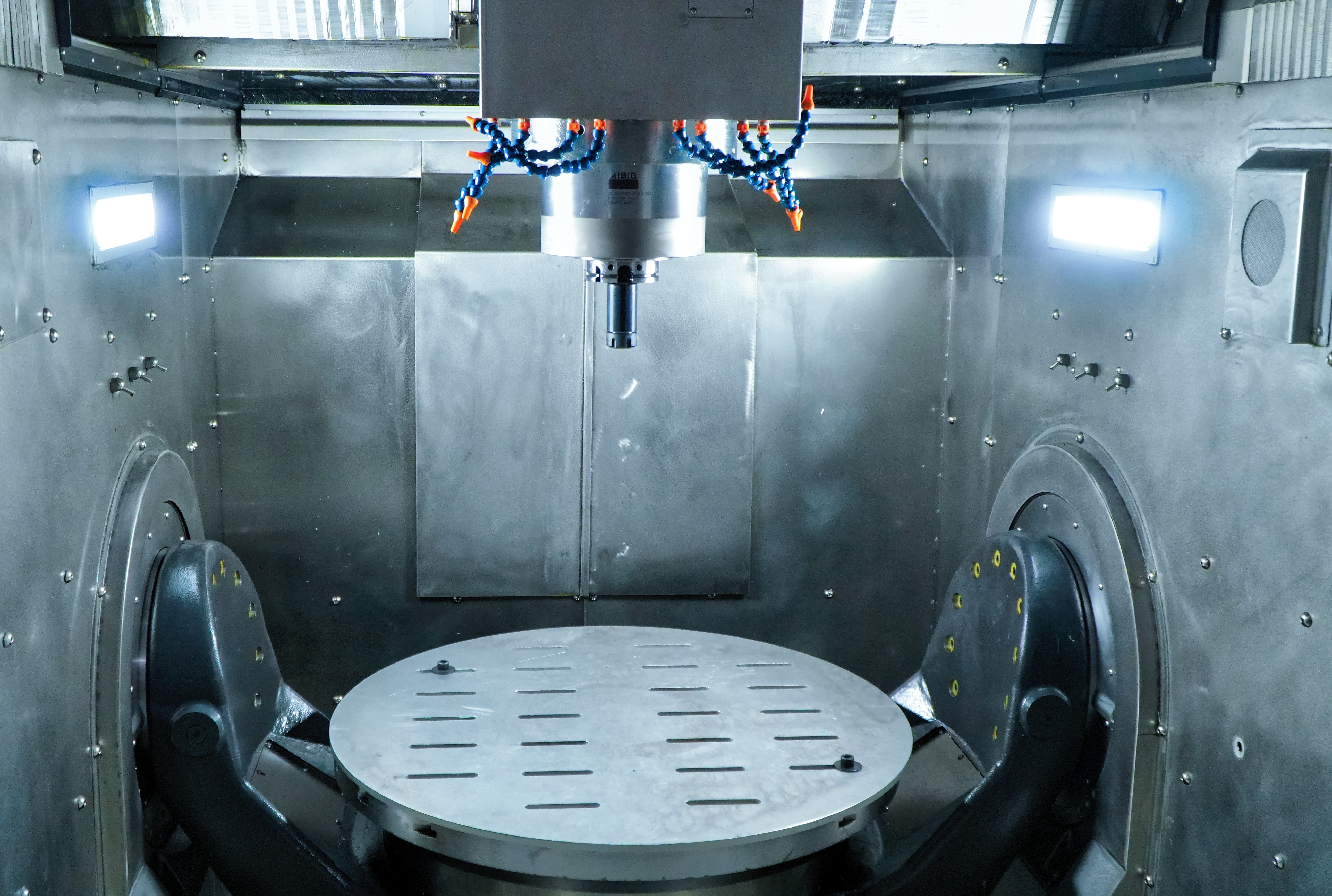
Traditional machining workflows often require multiple setups to reach different surfaces of a complex component. Each additional setup creates more handling time, more fixture requirements, and another opportunity for positioning error. A 5-axis CNC machine can reduce many of these limitations by changing the orientation between the cutting tool and workpiece during machining.
This capability allows manufacturers to approach complex surfaces from more favorable directions while maintaining a common workholding relationship. The result can be fewer setups, shorter production cycles, better tool access, and more consistent relationships between machined features.
For manufacturers evaluating 5-axis CNC technology, the important question is therefore not simply whether five axes can move simultaneously. The more useful question is where those additional axes create measurable gains throughout the complete machining process.
The First Gain: Reducing Initial Setup Complexity
Establishing the Workpiece Once
The first major advantage of 5-axis machining often appears before the spindle starts cutting.
A complex component may traditionally require several setups because different surfaces cannot be reached from a single tool orientation. The operator must remove the part, reposition it, establish a new datum, and verify alignment before continuing.
A 5-axis CNC machine can often access multiple surfaces from one primary setup.
This can reduce:
- Workpiece repositioning
- Datum re-establishment
- Fixture changes
- Operator intervention
- Setup documentation
- Intermediate inspection
The exact reduction depends on the geometry, but the principle is straightforward: fewer physical setups generally mean a shorter and more consistent manufacturing workflow.
Preserving the Original Datum
Every time a workpiece is repositioned, there is a possibility of introducing a new alignment error.
With 5-axis machining, more features can be completed while maintaining the same primary workholding relationship.
This is especially valuable when multiple surfaces must maintain tight positional relationships.
Rather than relying on the accuracy of several independent setups, the machining process can maintain a common reference throughout a greater portion of the component's production cycle.
The Second Gain: Better Tool Access
Reaching Difficult Geometry
Complex parts often contain surfaces that are difficult to reach with a fixed vertical or horizontal tool orientation.
Examples include:
- Angled walls
- Deep cavities
- Undercuts
- Curved surfaces
- Blades
- Impellers
- Complex mold features
- Multi-face housings
A 5-axis CNC machine can rotate the workpiece and/or cutting tool to create a more favorable approach angle.
This is one of the fundamental reasons why 5-axis technology is so effective for complex part machining.
Reducing Excessive Tool Length
Poor tool access often forces conventional machines to use long cutting tools.
Long tools can introduce:
- Deflection
- Vibration
- Chatter
- Poor surface finish
- Reduced tool life
Improved accessibility allows programmers to use shorter and more rigid tools whenever possible.
This can create a direct connection between machine kinematics and precision machining performance.
Better access is therefore not simply about reaching the feature. It is about reaching the feature with a cutting tool that remains stable during machining.
The Third Gain: More Efficient Roughing
Optimizing Tool Orientation
During roughing, the primary objective is usually efficient material removal while maintaining stable cutting conditions.
A 5-axis CNC machine provides additional freedom to orient the tool relative to the workpiece.
This can help maintain more favorable cutting conditions as the geometry changes.
Instead of relying on one fixed tool orientation, the programmer can adjust the tool axis to improve accessibility and reduce unnecessary tool extensions.
Reducing Air Cutting
Complex components frequently contain irregular stock conditions.
When the cutting tool cannot approach the material efficiently, significant amounts of air cutting can occur between machining regions.
5-axis toolpath strategies can reduce unnecessary repositioning and allow the tool to follow the actual geometry more efficiently.
The result can be shorter machining cycles and improved machine utilization.
The Fourth Gain: More Efficient Semi-Finishing
Semi-finishing prepares the component for final finishing operations.
At this stage, maintaining a consistent amount of remaining material becomes particularly important.
A 5-axis CNC machine can maintain more consistent tool orientation across complex surfaces, helping the tool follow the geometry more effectively.
This can reduce areas of excessive remaining stock and make the final finishing operation more predictable.
For complex freeform components, this consistency can have a significant influence on both cycle time and final surface quality.
The Fifth Gain: Better Final Surface Finish
Maintaining Favorable Tool Contact
Surface finishing is one of the areas where 5-axis machining can create particularly visible benefits.
When the cutting tool remains fixed in one orientation, the effective cutting geometry can change significantly across a complex surface.
With simultaneous or indexed 5-axis motion, the tool orientation can be adjusted to maintain a more favorable relationship with the surface.
This can improve:
- Surface consistency
- Tool engagement
- Cutting stability
- Surface finish
- Tool life
Reducing the Need for Extremely Small Stepovers
For certain freeform surfaces, optimized tool orientation can allow finishing strategies that cover more surface area efficiently while maintaining the required finish.
Modern 5-axis machining can therefore reduce the need to rely exclusively on extremely small stepovers to achieve acceptable surface quality.
The actual result depends on cutter geometry, material, toolpath strategy, machine accuracy, and surface requirements.
The Sixth Gain: Fewer Repositioning Errors
One Setup Can Preserve Feature Relationships
Complex components frequently contain features that must maintain tight relationships with one another.
For example, a housing may require:
- Holes on multiple faces
- Angled pockets
- Precision reference surfaces
- Intersecting bores
- Complex contours
When these features are produced across several setups, each repositioning introduces another opportunity for alignment variation.
A 5-axis CNC machine can often produce a greater number of these features without removing the workpiece from its primary fixture.
This helps preserve the relationship between features and reduces the accumulated effects of multiple setup operations.
The Seventh Gain: Simplified Workholding
Fewer Dedicated Fixtures
Multiple machining setups often require multiple fixture configurations.
For high-volume production, dedicated fixtures can be justified. But for complex, low-to-medium volume components, fixture development and storage can become significant costs.
5-axis machining can reduce the number of fixture changes required by allowing more surfaces to be accessed from one workholding arrangement.
A well-designed fixture should therefore be considered part of the overall 5-axis process rather than an independent component.
Better Access Around the Workpiece
The fixture must provide sufficient clearance for the rotary movement of the machine.
When properly designed, this allows the cutting tool to approach multiple faces without interference from clamps or fixture structures.
The result is a more flexible setup with fewer manual interventions.
The Eighth Gain: Shorter Overall Production Time
The most important productivity benefit of 5-axis CNC is often the cumulative effect of many smaller improvements.
Consider a conventional workflow:
Setup → Roughing → Reposition → Semi-Finishing → Reposition → Finishing → Inspection
A consolidated 5-axis workflow may become:
One Setup → Roughing → Multi-Axis Machining → Finishing → Inspection
The cutting time itself may not always decrease dramatically.
However, total manufacturing time can be reduced through:
- Fewer setups
- Less workpiece handling
- Fewer fixture changes
- Reduced intermediate inspection
- Reduced machine transfers
- Reduced tool changes caused by accessibility limitations
This distinction is important when evaluating the actual productivity of a 5-axis CNC machine.
The Ninth Gain: More Consistent Production
Repeatability Across Production Runs
Once a 5-axis process has been properly developed and verified, the same setup and machining strategy can be reproduced across production batches.
A controlled process with fewer physical setup changes can reduce operator-to-operator variation.
This is particularly useful when manufacturing precision components where dimensional consistency is critical.
Reduced Human Intervention
Every manual intervention introduces a potential source of variation.
Reducing the number of times an operator must reposition the workpiece or re-establish a datum can improve process consistency.
For production environments, this can be just as important as reducing cycle time.
The Tenth Gain: Easier Process Optimization
Once the initial process has been established, a 5-axis CNC machine provides additional opportunities for optimization.
Engineers can evaluate:
- Tool orientation
- Cutting direction
- Feed rate
- Spindle speed
- Step-over
- Tool engagement
- Retract strategy
- Rotary-axis movement
Small improvements across these parameters can accumulate into meaningful production gains.
A well-developed 5-axis process is therefore not simply a replacement for several conventional setups. It becomes a more flexible manufacturing platform that can be continuously optimized.
Where 5-Axis Machining Creates the Biggest Gains
Not every operation benefits equally from five-axis technology.
The largest gains typically occur when several of the following conditions exist:
Complex Geometry
Parts with multiple angled or curved surfaces benefit significantly from additional tool orientation.
Multiple Machining Faces
If a component requires three or more orientations, setup consolidation can become a major advantage.
Tight Positional Relationships
When features on different faces must maintain precise relationships, reducing repositioning can improve accuracy.
Difficult Tool Access
Complex cavities and deep surfaces can benefit from shorter and more rigid tools.
Expensive Workholding
When fixture design and setup time represent a significant part of manufacturing cost, setup reduction becomes valuable.
High-Value Components
For aerospace, medical, energy, and precision mechanical components, reducing scrap and setup-related errors can have a substantial financial impact.
When 5-Axis Machining May Not Create Significant Gains
A 5-axis CNC machine is not automatically the best choice for every part.
Simple prismatic components with only one or two accessible faces may receive little benefit from additional axes.
Similarly, extremely high-volume parts may be more economical on dedicated production equipment optimized for one specific operation.
The value of 5-axis machining should therefore be measured against the actual production process.
The question is not:
"Does this machine have five axes?"
The better question is:
"How many manufacturing problems will these additional axes eliminate?"
Measuring the Return From 5-Axis Machining
Manufacturers evaluating a 5-axis CNC machine should compare the complete process rather than only spindle cycle time.
Useful metrics include:
- Number of setups per part
- Average setup time
- Fixture cost
- Operator handling time
- Total cycle time
- Scrap rate
- Rework rate
- Tool consumption
- Inspection time
- Machine utilization
- Overall production lead time
This provides a much more realistic picture of where 5-axis machining creates value.
A machine that takes slightly longer to perform one cutting operation may still be substantially more productive if it eliminates three additional setups.
Conclusion
The biggest gains from 5-axis machining are created across the entire manufacturing process — not at one isolated stage.
From the first workpiece setup to the final surface finish, a 5-axis CNC machine can improve the way complex components are manufactured by reducing repositioning, improving tool access, simplifying workholding, maintaining feature relationships, and enabling more efficient finishing strategies.
The most significant advantage is often the combination of these improvements.
One setup can reduce alignment variation. Better accessibility can allow shorter tools. Shorter tools can improve rigidity. Better rigidity can improve surface finish. Fewer setups can reduce production time. Together, these advantages create a more efficient precision machining process.
For manufacturers producing complex components, the value of 5-axis technology should therefore be evaluated across the complete workflow — from first setup to final surface.
FAQ
Where does 5-axis machining provide the biggest productivity improvement?
The biggest gains typically come from reducing the number of setups and improving access to complex surfaces. By machining more features from one setup, a 5-axis CNC machine can reduce workpiece handling, fixture changes, datum re-establishment, and intermediate inspection.
Does 5-axis machining always improve surface finish?
Not automatically. Surface finish depends on tool geometry, cutting parameters, machine rigidity, toolpath strategy, and material. However, 5-axis machining allows the tool orientation to be optimized across complex surfaces, which can create better and more consistent cutting conditions.
Can 5-axis machining reduce tool length?
Yes. Improved workpiece accessibility can allow the programmer to approach difficult features from more favorable directions. This can make it possible to use shorter tools, which generally provide greater rigidity and lower susceptibility to deflection and vibration.
Does 5-axis machining reduce the need for multiple fixtures?
It can. When multiple surfaces can be accessed from a single workholding arrangement, fewer fixture configurations may be required. The actual reduction depends on the part geometry, machine configuration, and fixture design.
Is 5-axis machining mainly useful for aerospace parts?
No. Aerospace is an important application, but 5-axis CNC technology is also valuable for medical components, molds, automotive parts, energy components, impellers, housings, and other complex precision components where multiple setups or difficult tool access create manufacturing challenges.