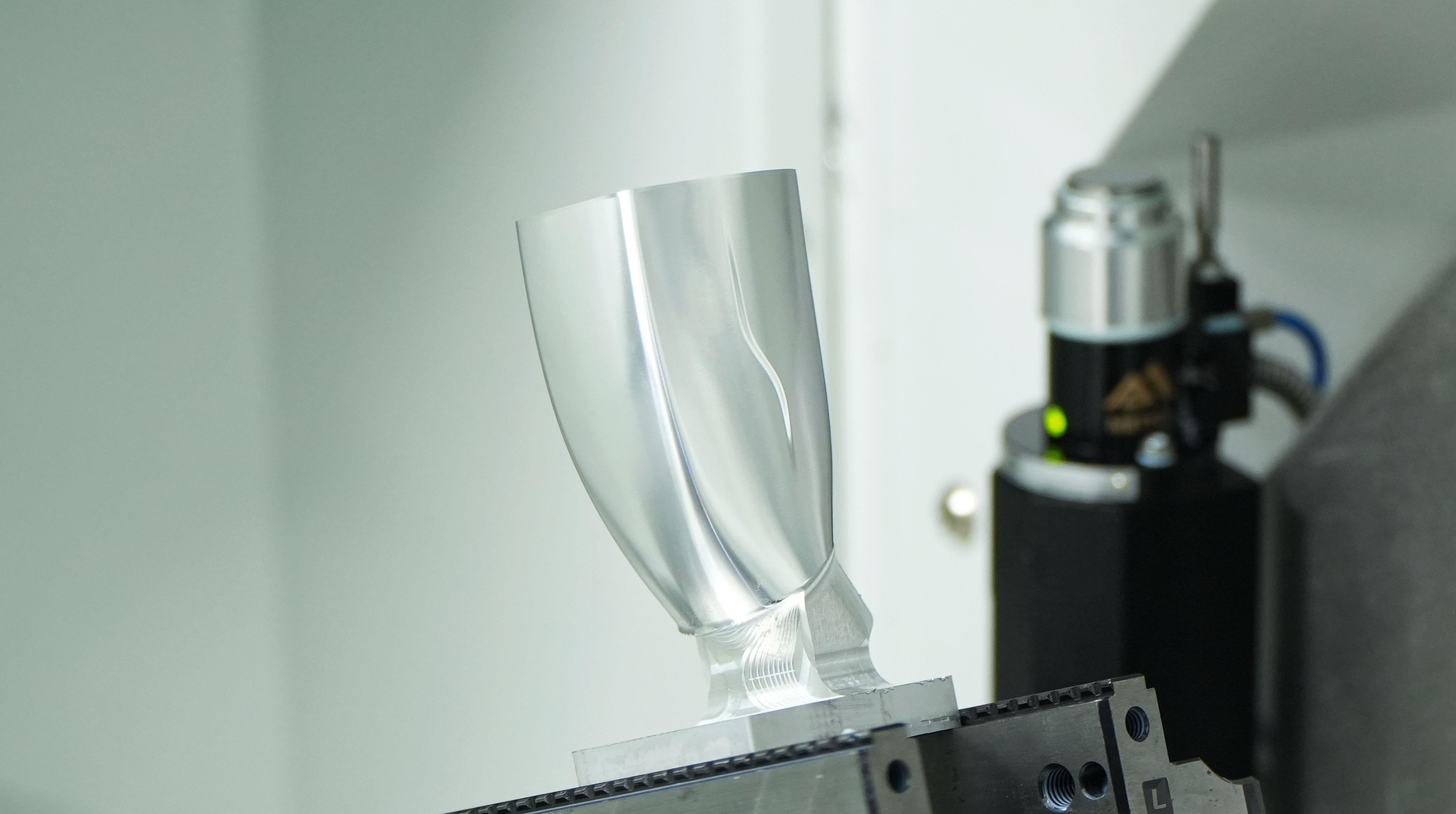

The Non-Negotiable Role of 5-Axis CNC Machining in Critical Component Manufacturing
How 5-Axis CNC Machining Enables Single-Setup Complexity for Aerospace Structures and Implants
The 5 axis CNC machining process has really changed how we approach manufacturing these days, especially when it comes to making those complicated parts like aerospace brackets and medical implants all in one go. No more messing around with manual adjustments which can throw off measurements over time. This means parts made from tough materials like titanium for airplanes stay dimensionally stable, and the same goes for those cobalt chromium joints people need replaced. Take turbine blades as an example. Manufacturers report cutting down their weight by around 35 to 37 percent while still keeping everything strong enough. That kind of performance just wasn't possible back when everyone was stuck using old school 3 axis machines. And let's not forget about medical devices either. When hospitals need urgent shipments of implant parts, this single fixture approach speeds things up by roughly two thirds compared to older methods, all while maintaining that crucial level of accuracy doctors demand.
Tolerance Integrity and Surface Finish: Why ±0.0005" and <0.4 µm Ra Are Standard, Not Optional
In aerospace and medical manufacturing, component failure is catastrophic. 5-axis CNC machining delivers non-negotiable tolerances of ±0.0005" and surface finishes under 0.4 µm Ra through continuous, multi-directional toolpath control. This level of precision prevents micro-fractures in load-bearing implants and eliminates aerodynamic turbulence in flight-critical parts. Industry benchmarks illustrate the gap:
| Parameter | 3-Axis Machining | 5-Axis CNC Machining |
|---|---|---|
| Geometric Tolerance | ±0.005" | ±0.0005" |
| Surface Roughness (Ra) | 1.6–3.2 µm | <0.4 µm |
| Primary Error Source | Fixture repositioning | Machine calibration |
Such exactness meets FDA 21 CFR Part 820 requirements for implant biocompatibility and FAA fatigue-resistance standards. Adaptive toolpaths dynamically compensate for material stress during Inconel machining, maintaining micron-level accuracy across full production runs.
Aerospace Reliability: From Flight-Critical Parts to Zero-Failure Performance
Case Study: Titanium Landing Gear Brackets — 37% Weight Reduction and 12 Million Safe Flight Hours
Advanced 5-axis CNC machining enabled a 37% weight reduction in titanium landing gear brackets—without compromising structural integrity—validated by 12 million cumulative flight hours without failure. This outcome stems directly from single-setup processing, which eliminates alignment errors inherent in multi-stage fixturing of complex geometries.
In aerospace manufacturing, there's simply no room for mistakes. Each bracket gets checked thoroughly with ultrasonic scans and strain gauge tests to meet those tough AS9100 requirements for how well it can handle repeated stress over time. The production process keeps track of quality metrics too, aiming for a capability index above 1.67 so parts perform reliably even when subjected to intense forces equivalent to nine times gravity. When working with titanium alloys, careful temperature control during machining helps avoid tiny cracks forming in the material. After everything is done, detailed inspections show surface roughness measurements coming in under 0.4 microns Ra, which actually beats what most aviation specs call for these days.
Key Outcomes
- Weight reduction: 37% (vs. legacy steel designs)
- Fatigue life: 3× industry standard
- Maintenance interval: Extended by 200%
- Failure rate: 0 incidents across deployment
The results underscore a fundamental truth: in aerospace engineering, manufacturing precision directly correlates with operational safety—and this methodology now informs next-generation aircraft design where weight savings and failure prevention are non-negotiable.
Medical Device Safety: Biocompatibility, Traceability, and Regulatory Compliance Through Precision
Meeting FDA 21 CFR Part 820 and ISO 13485 with Fully Documented, Repeatable 5-Axis CNC Processes
The medical device manufacturing sector must deal with strict regulatory requirements when it comes to material selection and product tracking. Using precision 5 axis CNC machining helps ensure materials comply with USP Class VI standards for biological safety, which basically means no harmful substances can leach out over time. Modern automated systems keep detailed digital records of all machining parameters and tool paths, something that's absolutely necessary for meeting FDA 21 CFR Part 820 and ISO 13485 standards. These records track components right from the initial raw materials through to final testing stages. When quality issues arise, this comprehensive documentation allows for quick identification of problems. It also prevents any mistakes in parts where sterility is critical, making the whole production process much more reliable and transparent for regulators and customers alike.
Custom Orthopedic Implants: Sub-Micron Accuracy as a Clinical Requirement, Not Just Engineering Preference
When making patient specific orthopedic implants, getting the geometry right down to sub micron levels becomes absolutely critical. Just think about it a moment - even something as small as 0.1 mm off track can lead to serious problems later on, including chronic pain or issues with movement. That's where 5 axis CNC machining comes into play. These machines are capable of hitting tolerances tighter than plus or minus 0.0005 inches, which makes all the difference when it comes to how well the implant integrates with bone tissue and distributes weight properly throughout the body. And let's not forget about surface finish either. Getting those surfaces polished down to under 0.4 microns roughness average really helps cut back on bacteria sticking around and prevents irritation from surrounding soft tissues. Studies published in reputable orthopedic journals actually show that these improvements result in better overall surgical results and cut down on the need for follow up operations by nearly 20%. So while some might see this level of precision as just another engineering detail, for doctors and patients alike, it's truly a matter of life changing importance.
Advanced Materials Challenge: Why Titanium, Inconel, and Composites Demand Next-Gen Machining Capabilities
Thermal Stability, Adaptive Toolpath Compensation, and Vibration Control in Nickel-Based Superalloy Machining
Working with nickel based superalloys such as Inconel is no easy task for machinists. These tough materials have serious issues when it comes to machining because they work harden quickly, conduct heat poorly, and exert cutting forces over 50 thousand pounds per square inch. To handle this stuff properly, shops need advanced 5 axis equipment. Thermal management systems are essential to keep parts at stable temperatures around plus or minus 1 degree Celsius. Then there's the software side too. Adaptive toolpaths constantly tweak feed rates and angles while cutting to fight off tool deflection problems. Specialized spindles with vibration damping help eliminate those annoying resonances that happen during fast cuts. All these technologies combined allow for surface finishes under 0.4 microns Ra and maintain accurate dimensions throughout production runs. Manufacturers who skip any of these components will see their tools wearing down at an alarming rate about three times faster than when working with regular steel. Plus, the resulting parts often end up with geometry errors that can seriously impact performance in critical applications from aircraft components to medical implants where both strength and compatibility with human tissue matter.
FAQ
What is 5-axis CNC machining?
5-axis CNC machining involves a machine that moves a tool or part along five different axes simultaneously, allowing intricate and complex components to be manufactured in a single setup with higher precision than traditional 3-axis machining.
Why is precision important in aerospace and medical manufacturing?
High precision is crucial in these industries to ensure the safety and reliability of components, prevent failures, and maintain compliance with strict regulatory standards.
What materials benefit from 5-axis CNC machining?
Materials such as titanium, nickel-based superalloys (Inconel), and composites are better processed using 5-axis CNC machining due to their difficult properties and the need for high precision.
How does 5-axis CNC machining improve the production of medical devices?
It provides the precision needed to create custom implants that properly integrate with human tissue and meet stringent regulatory standards, reducing the likelihood of complications and improving patient outcomes.